
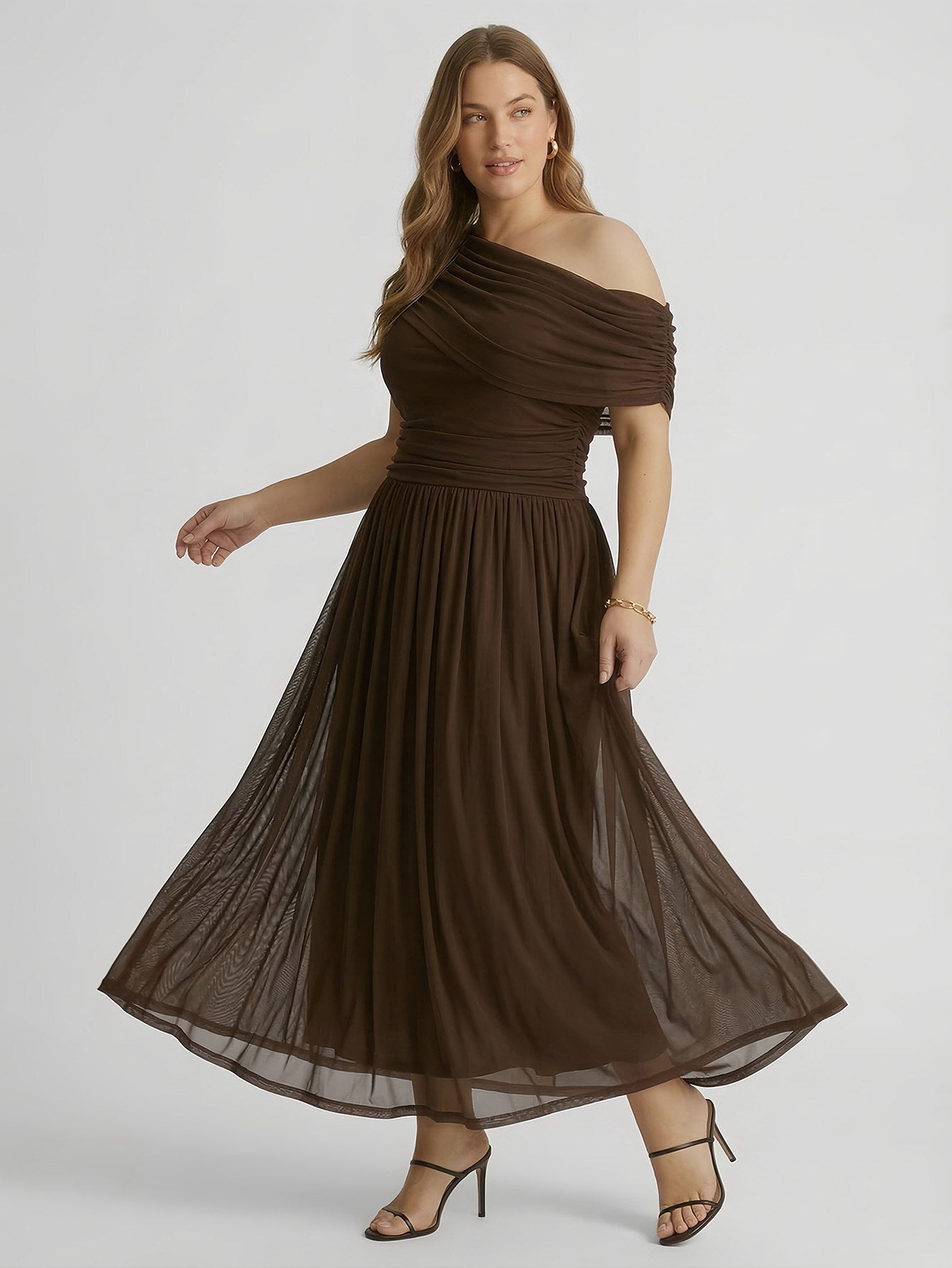
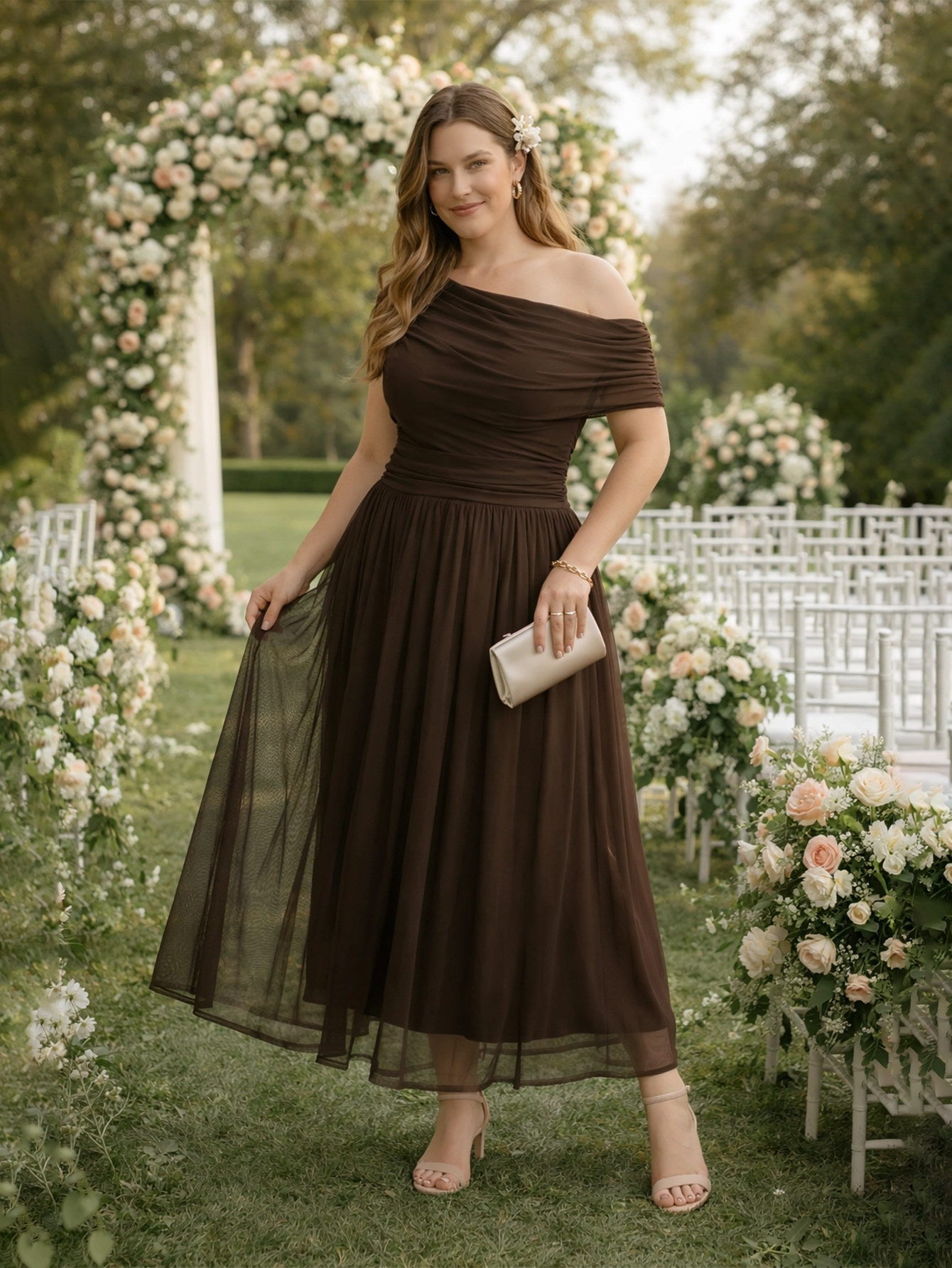
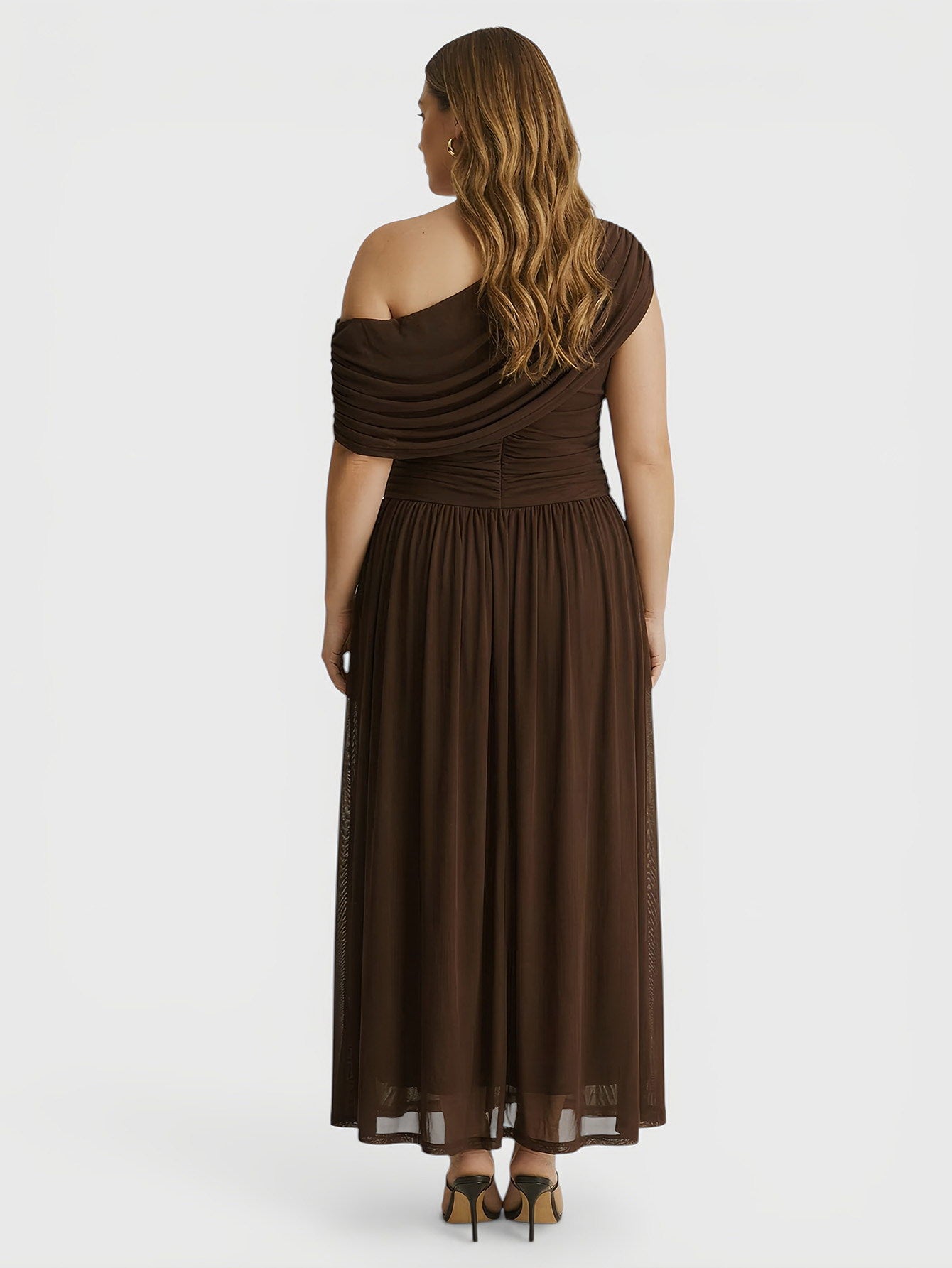

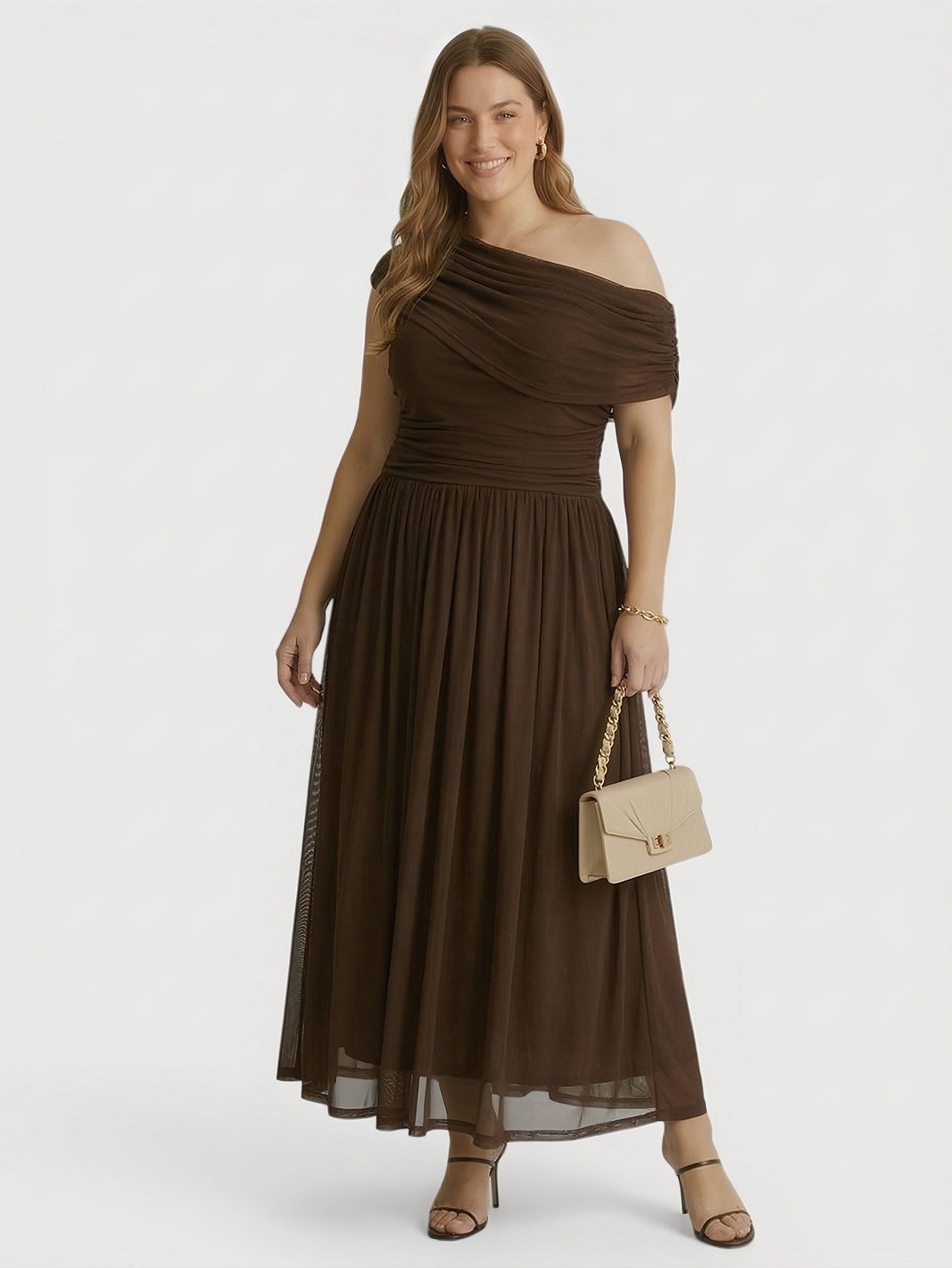
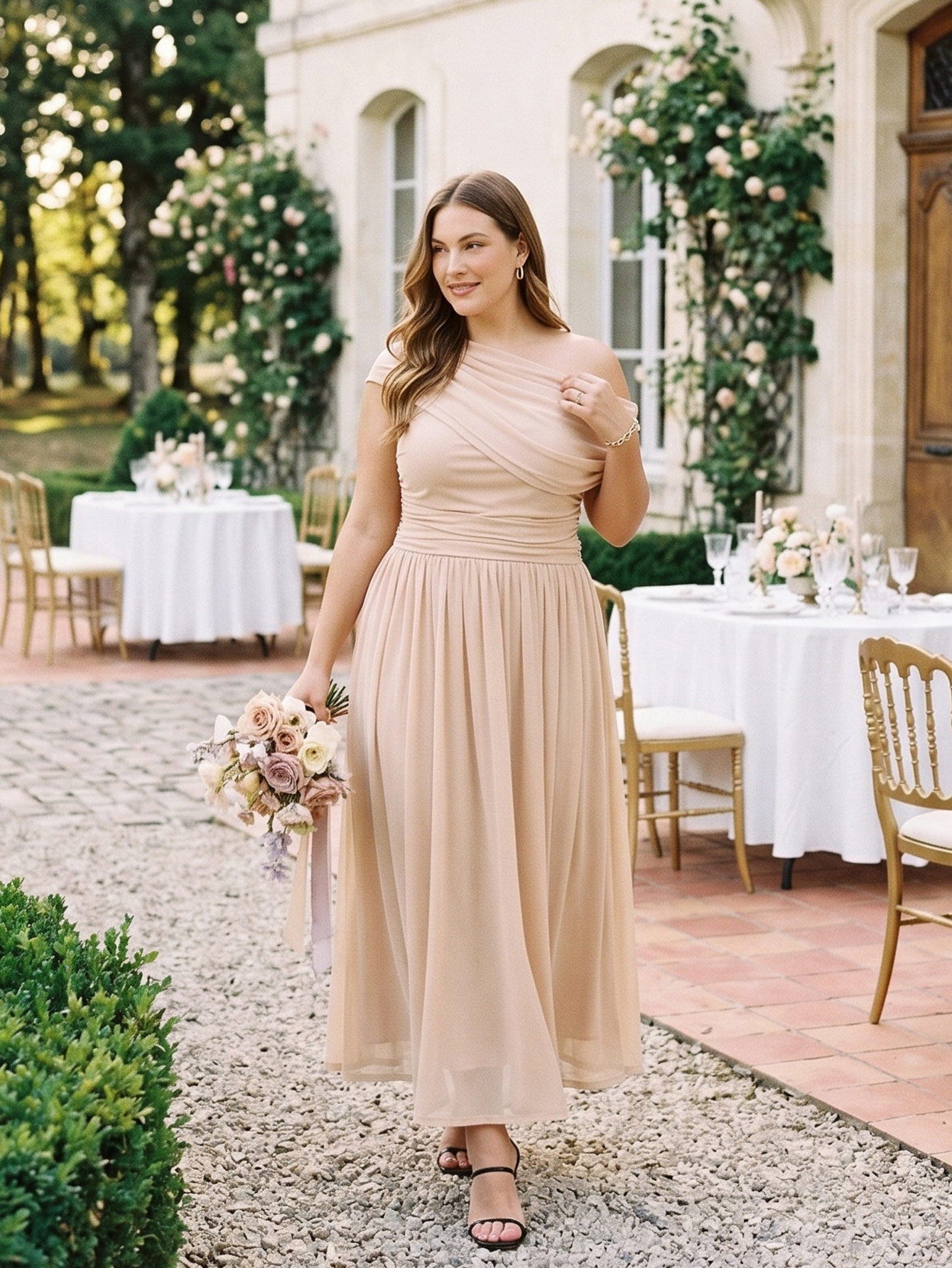
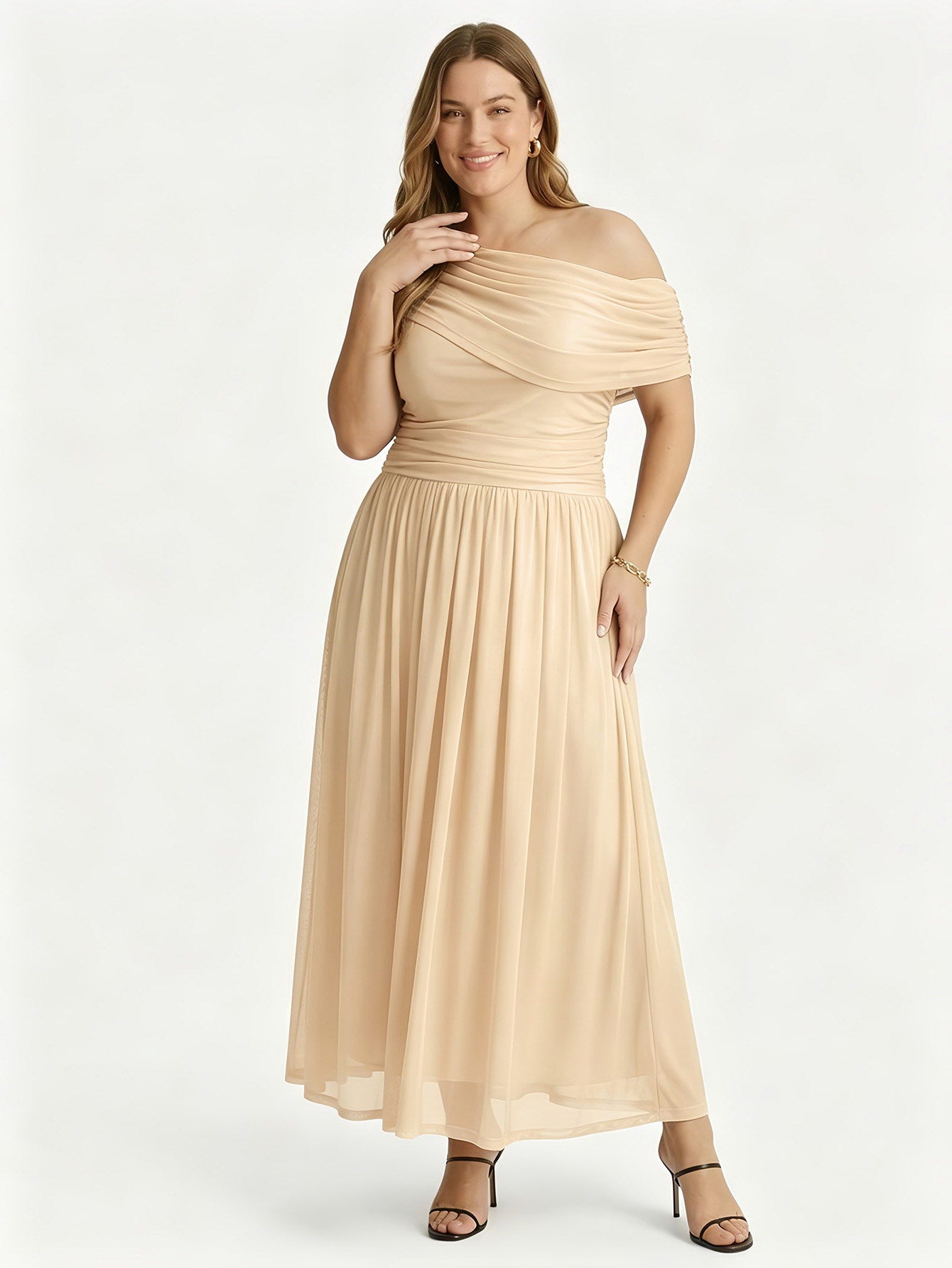
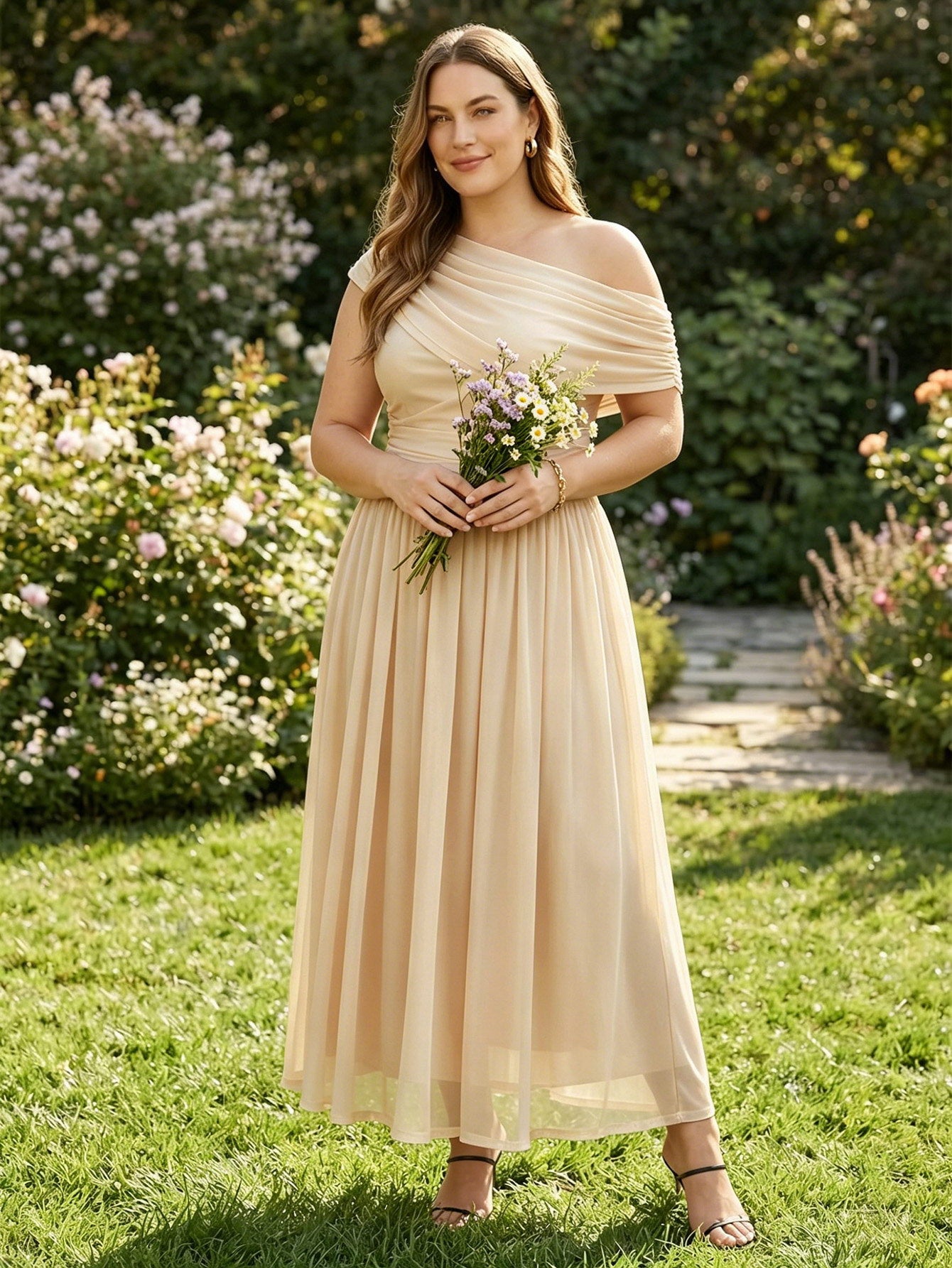
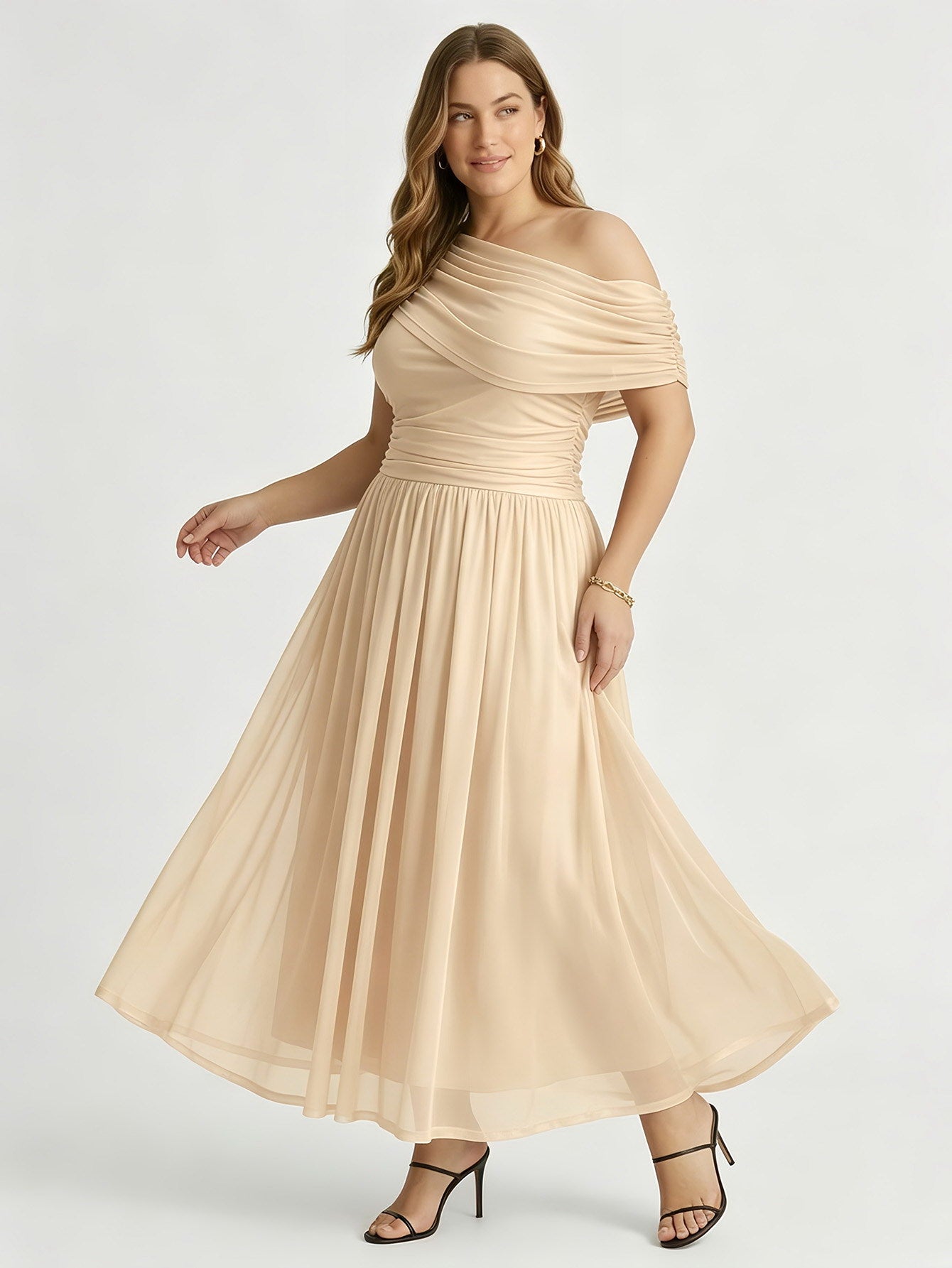
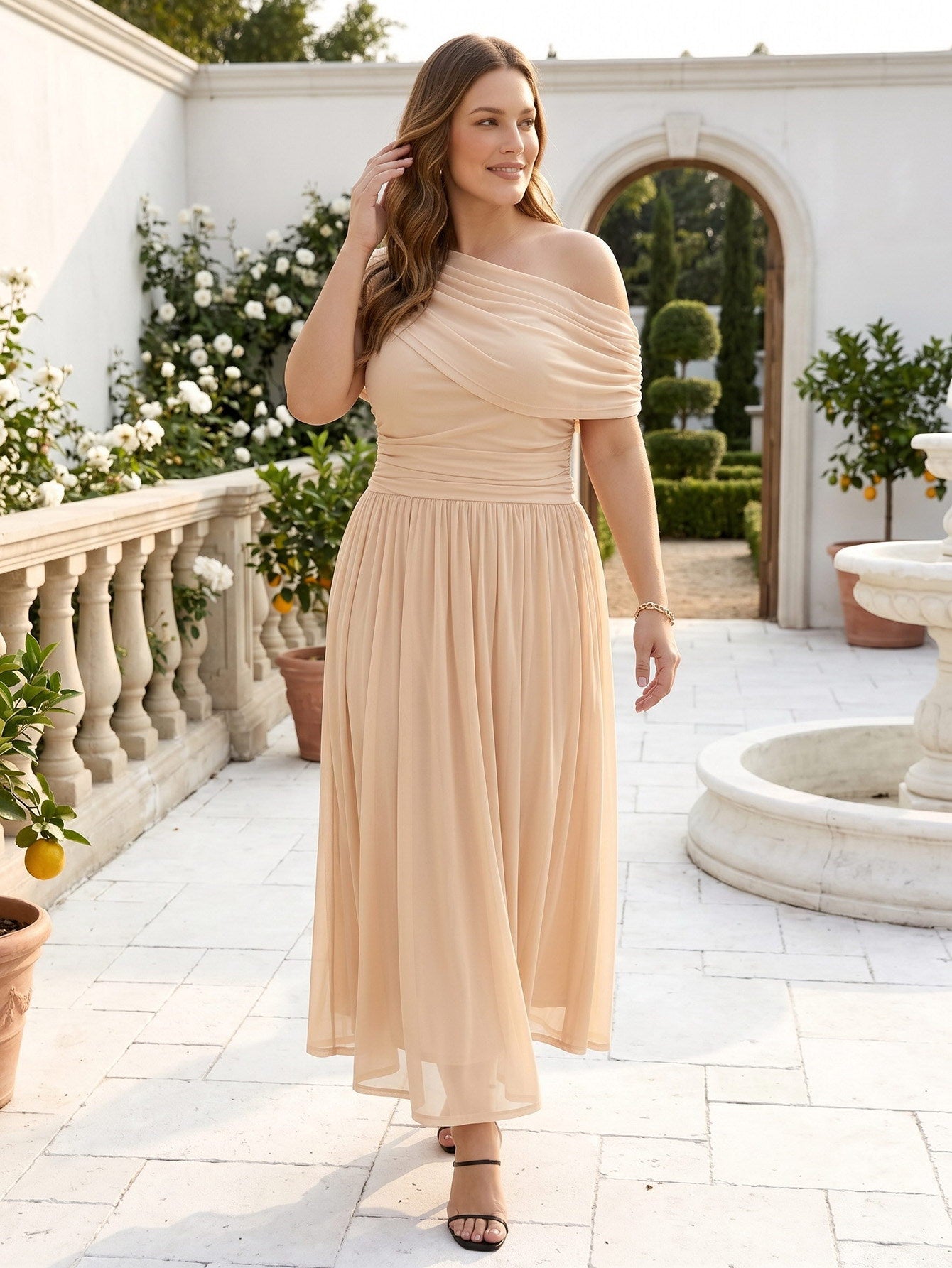
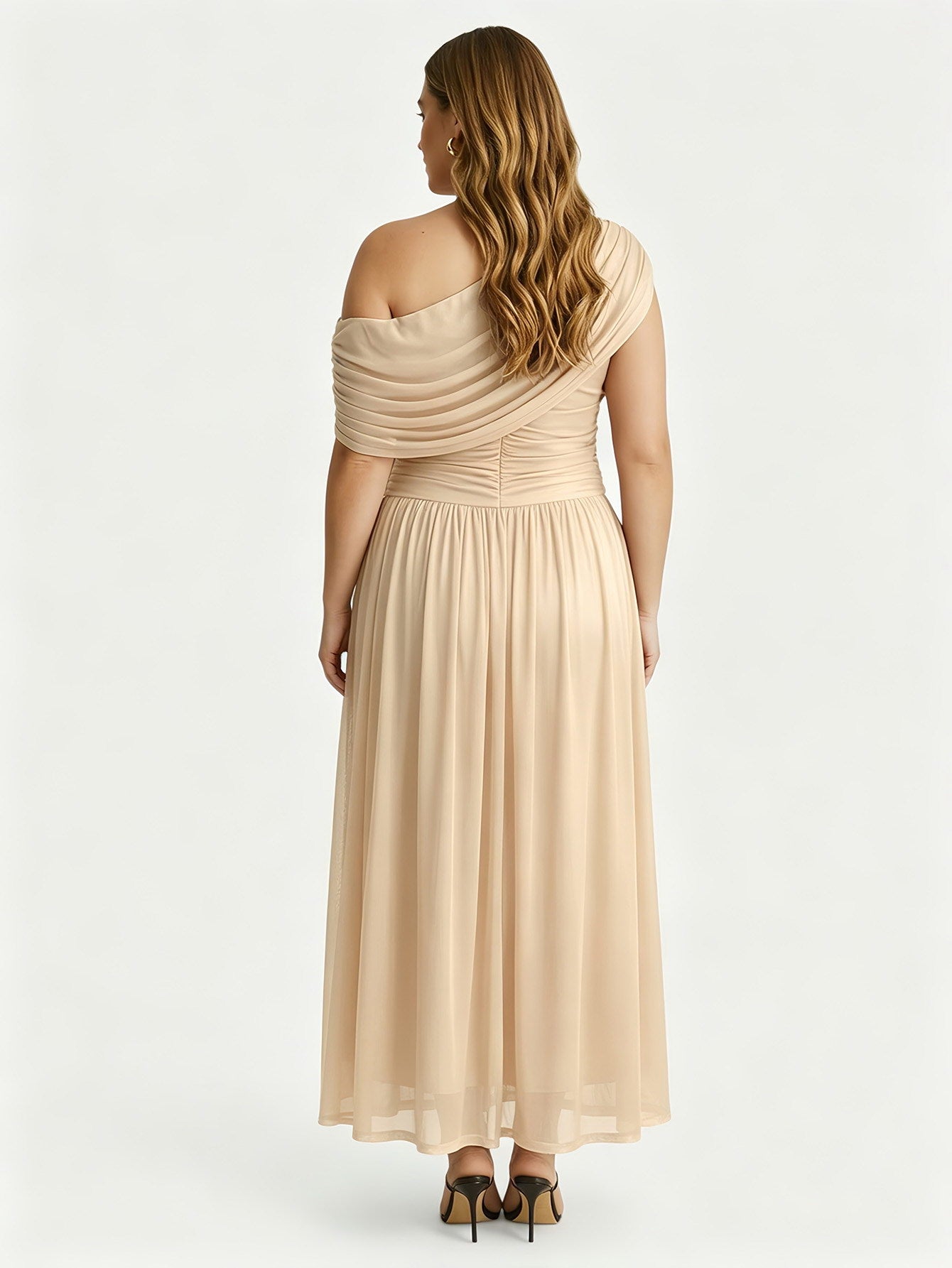
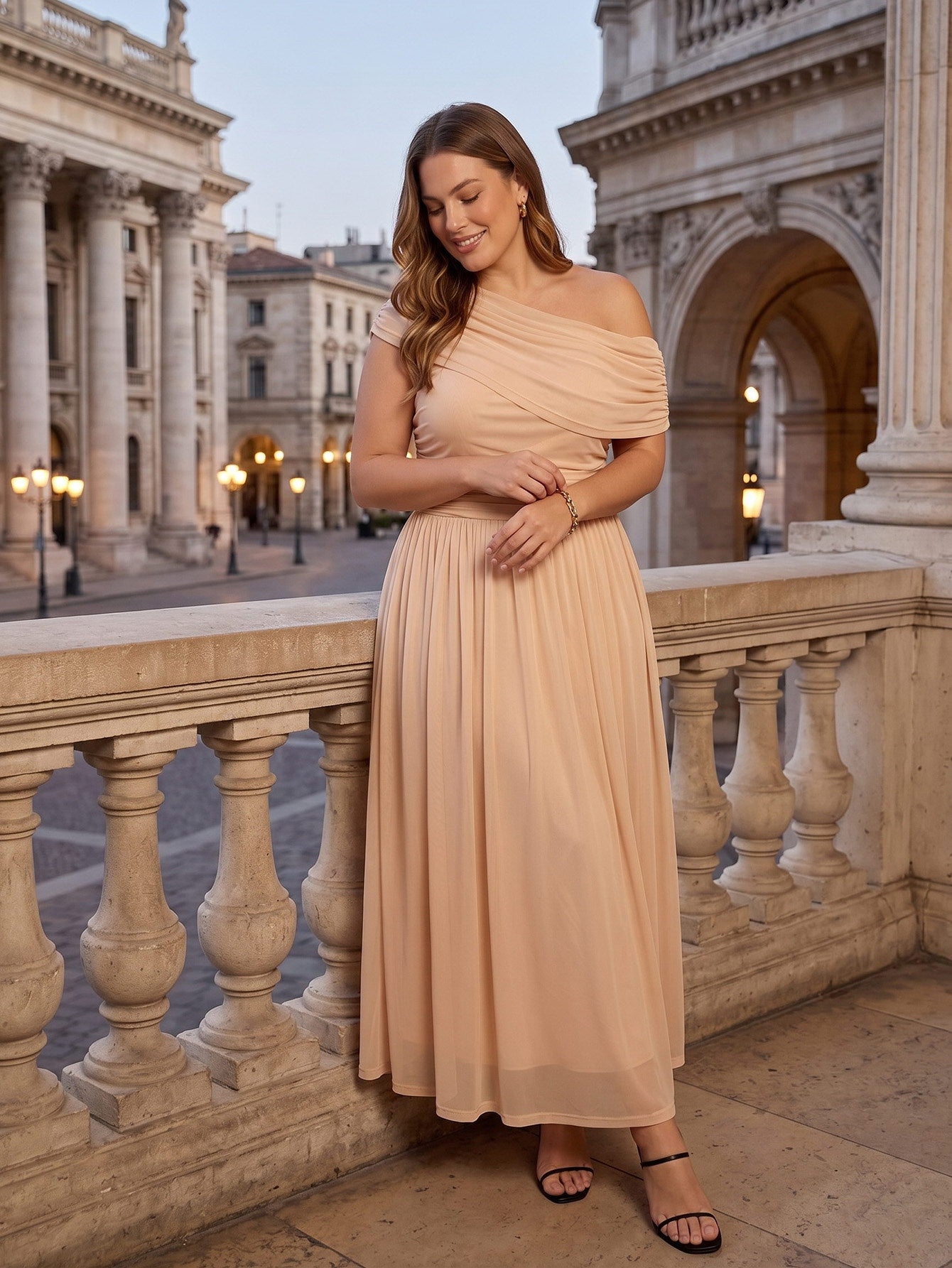
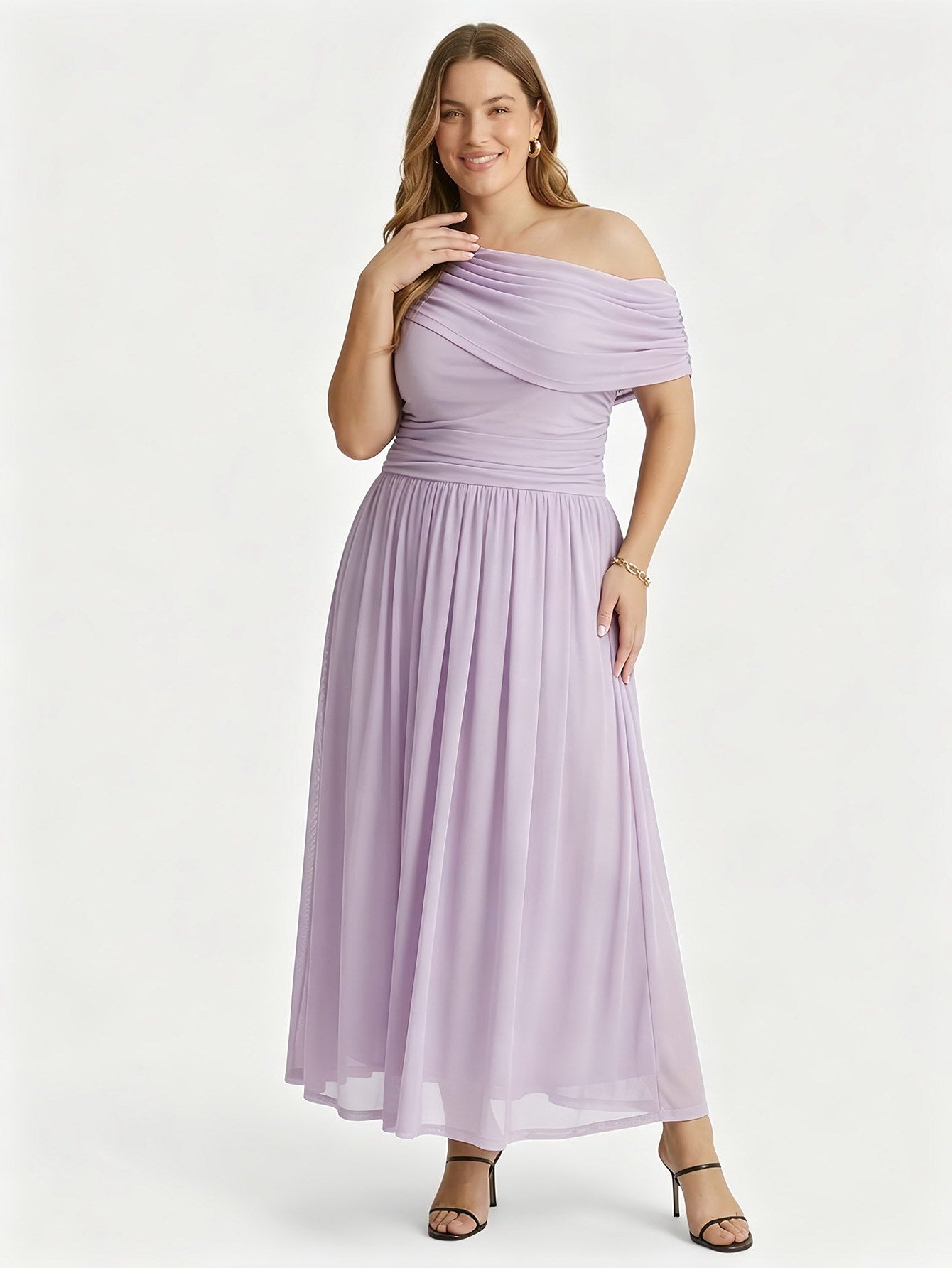
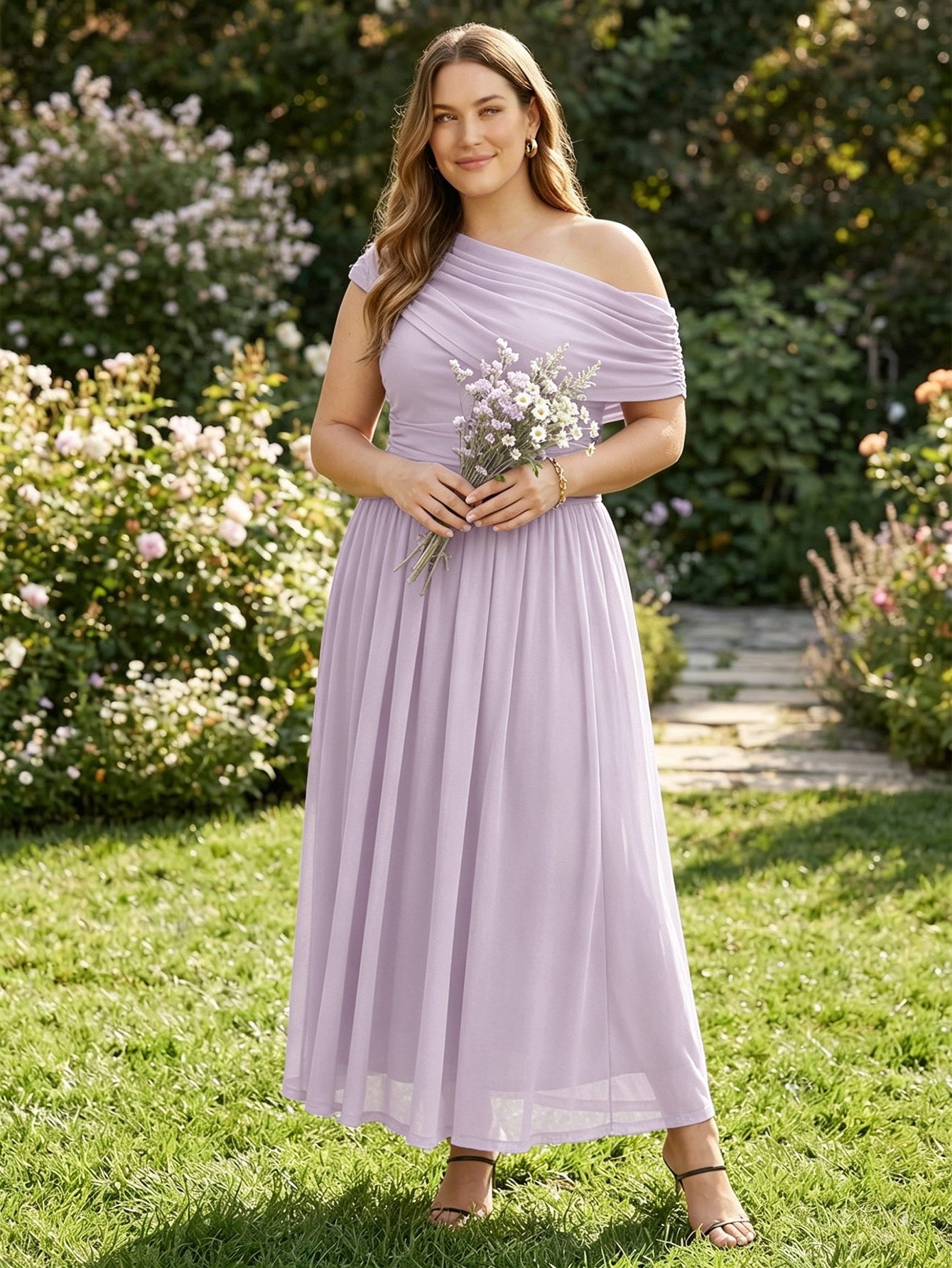
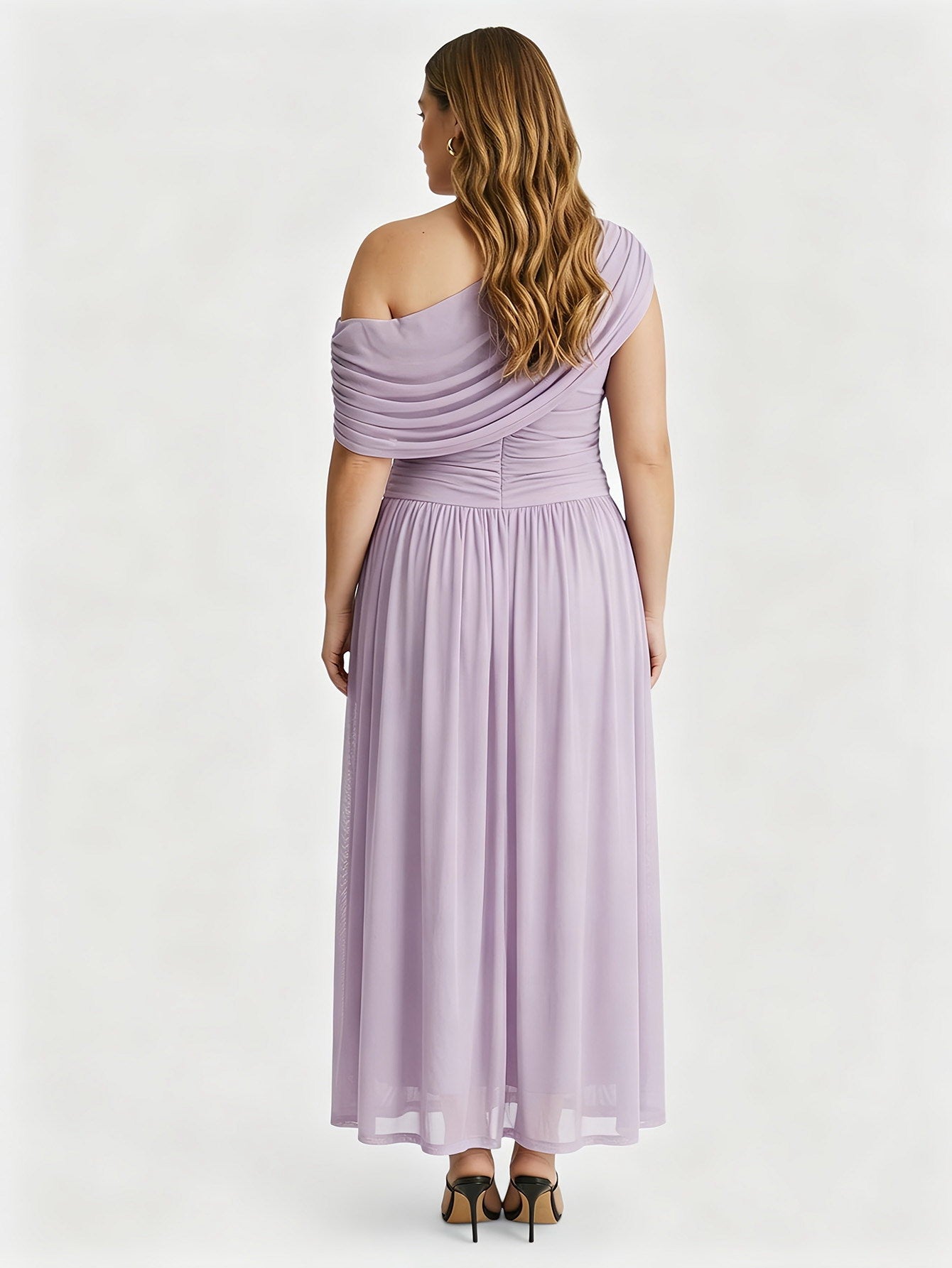
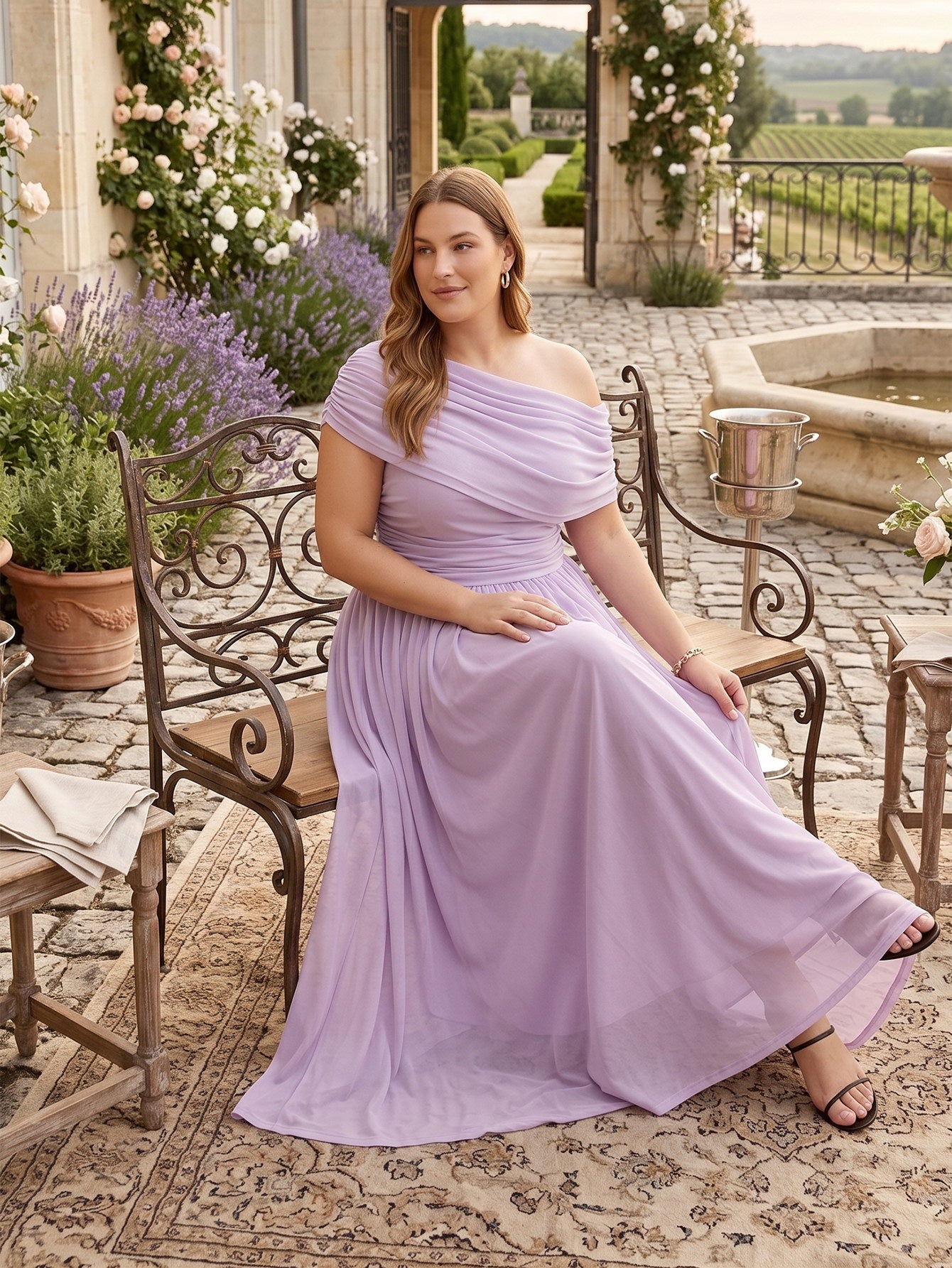
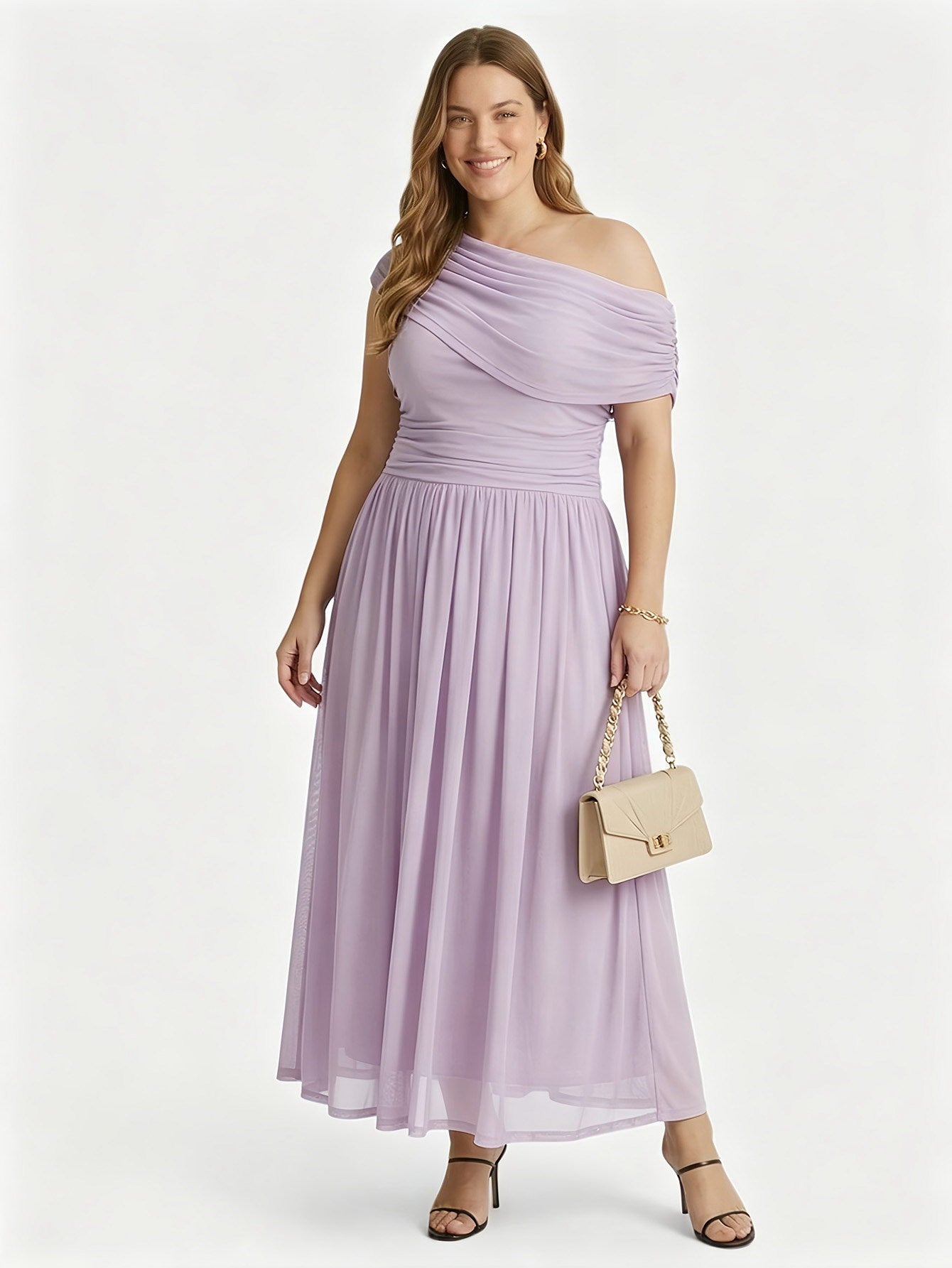
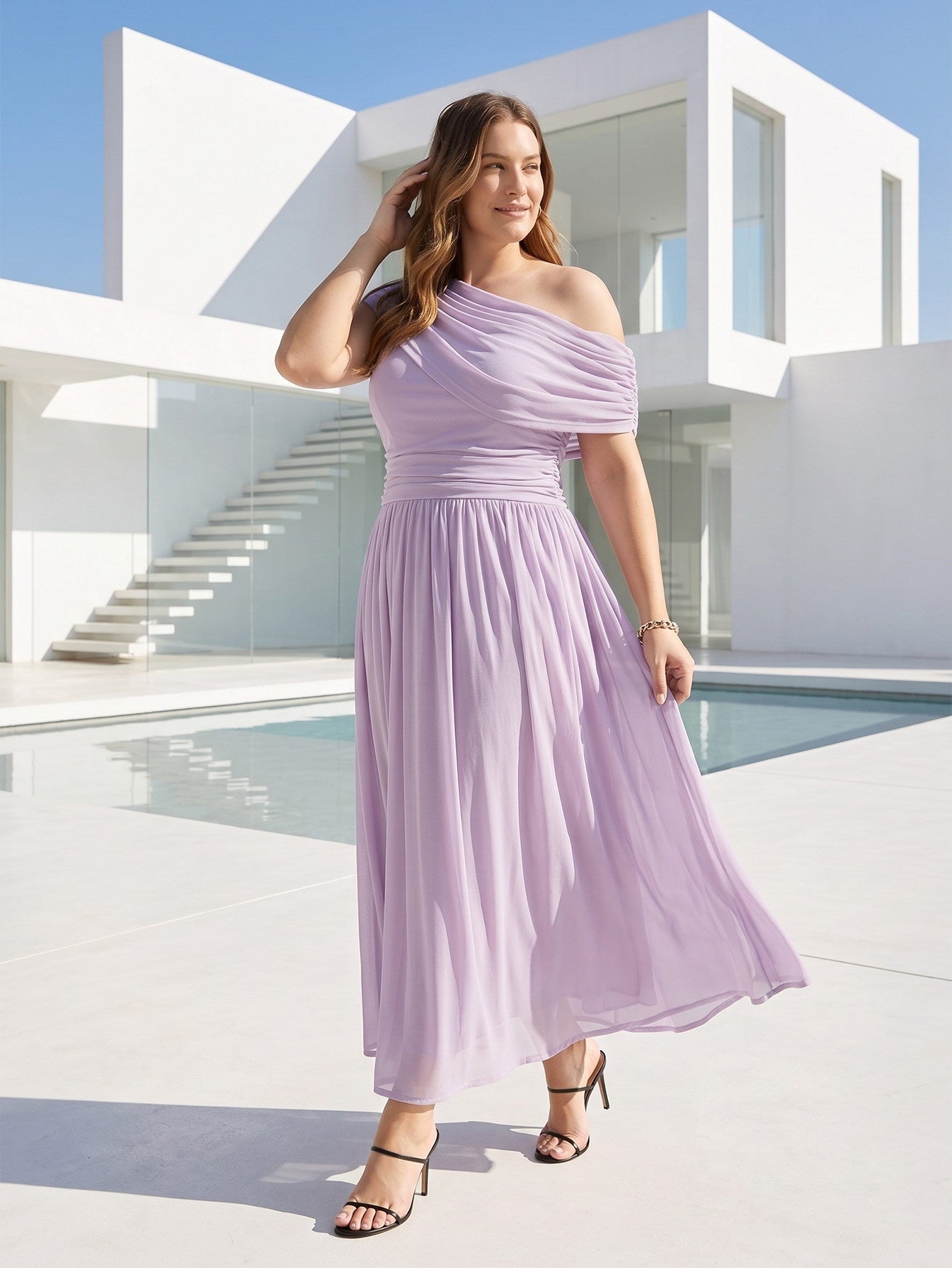
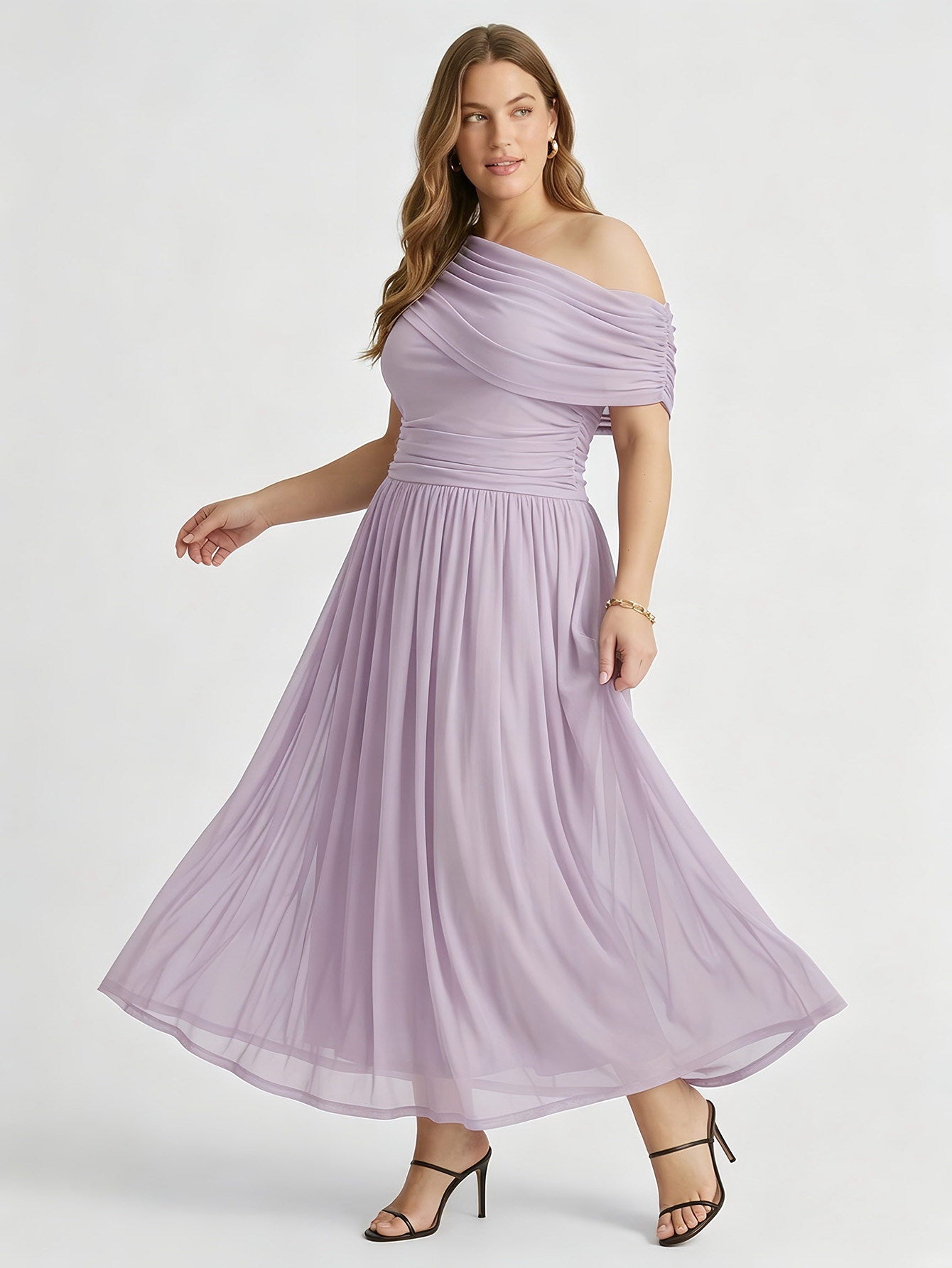
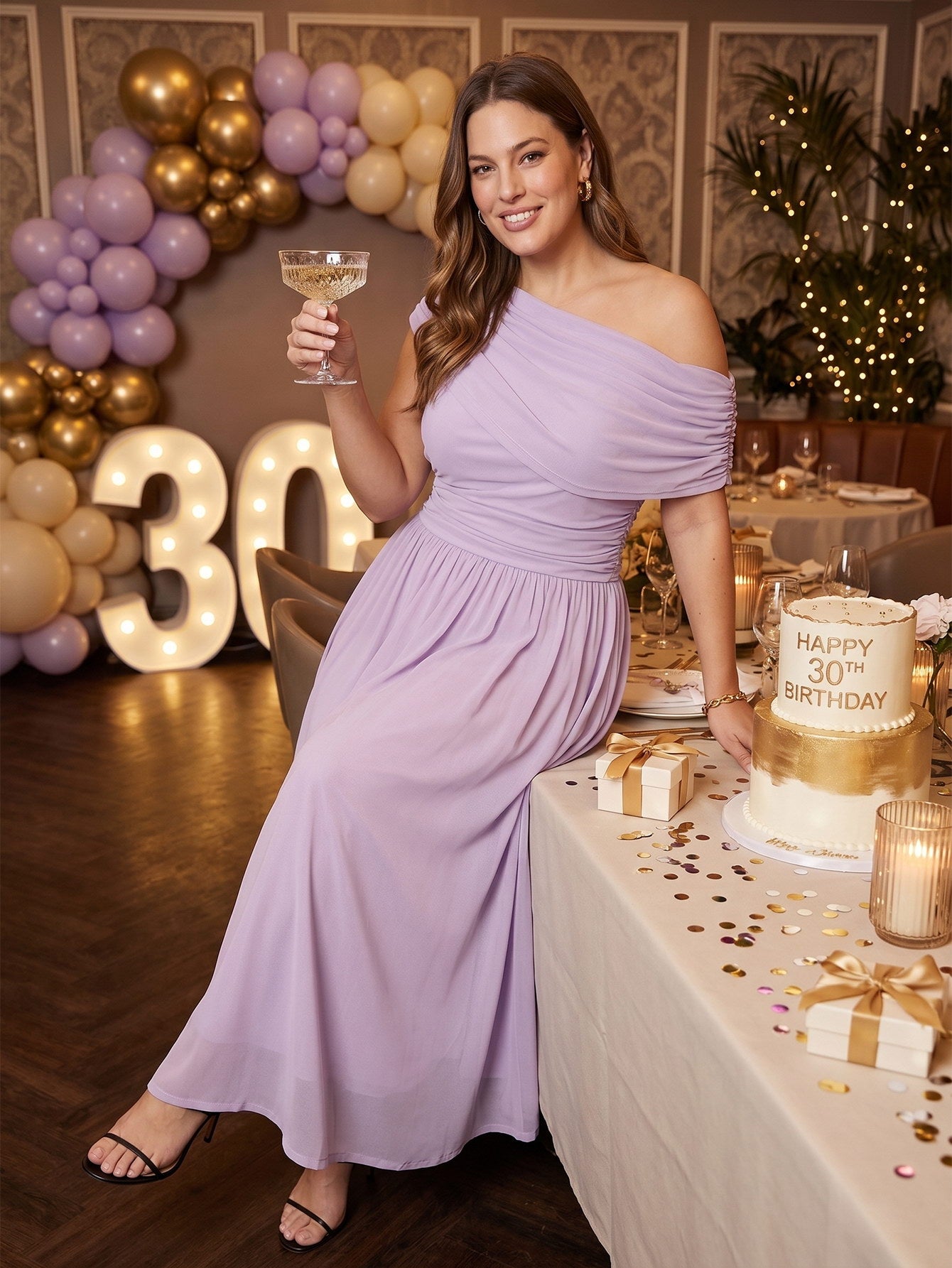
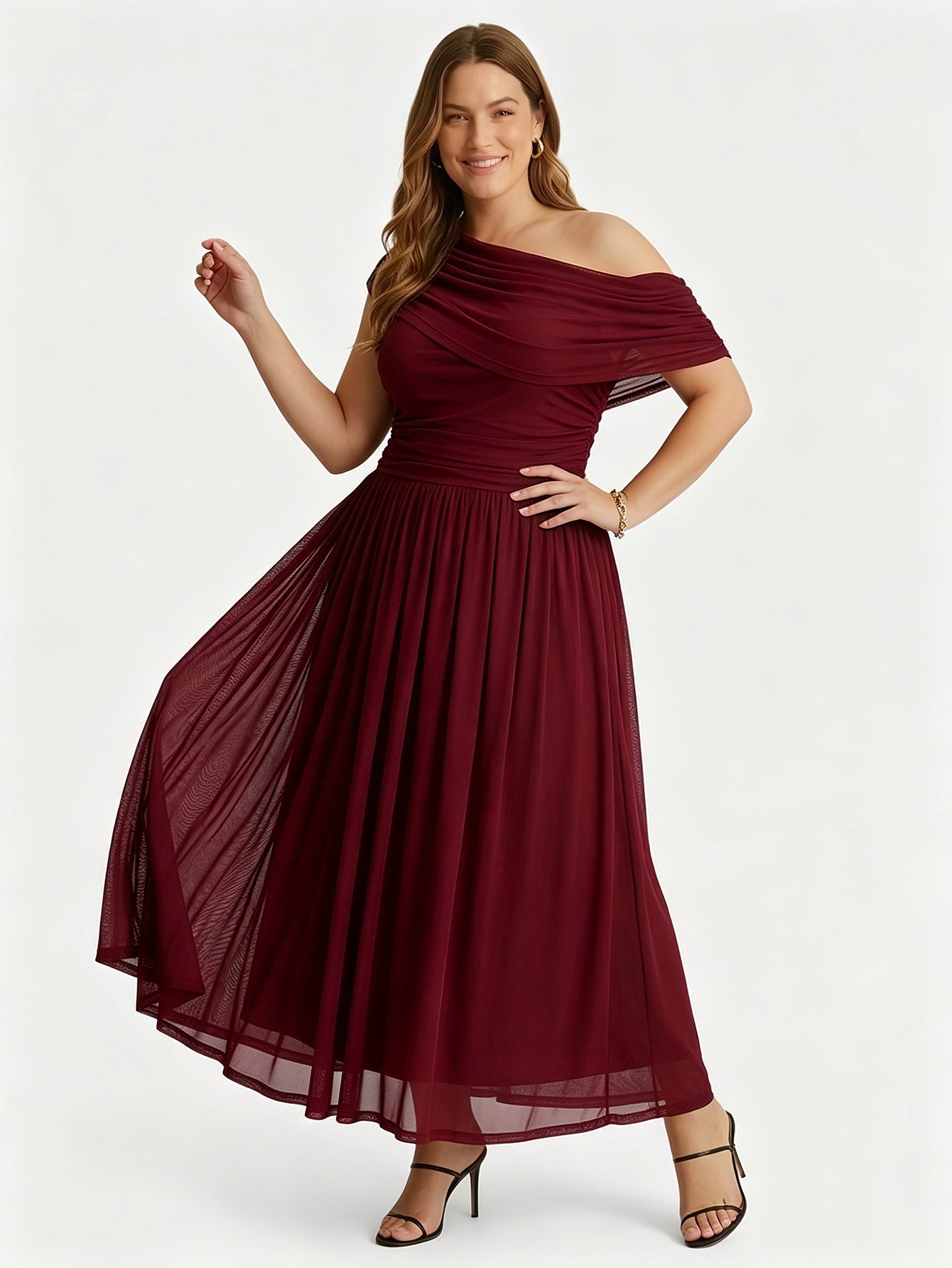
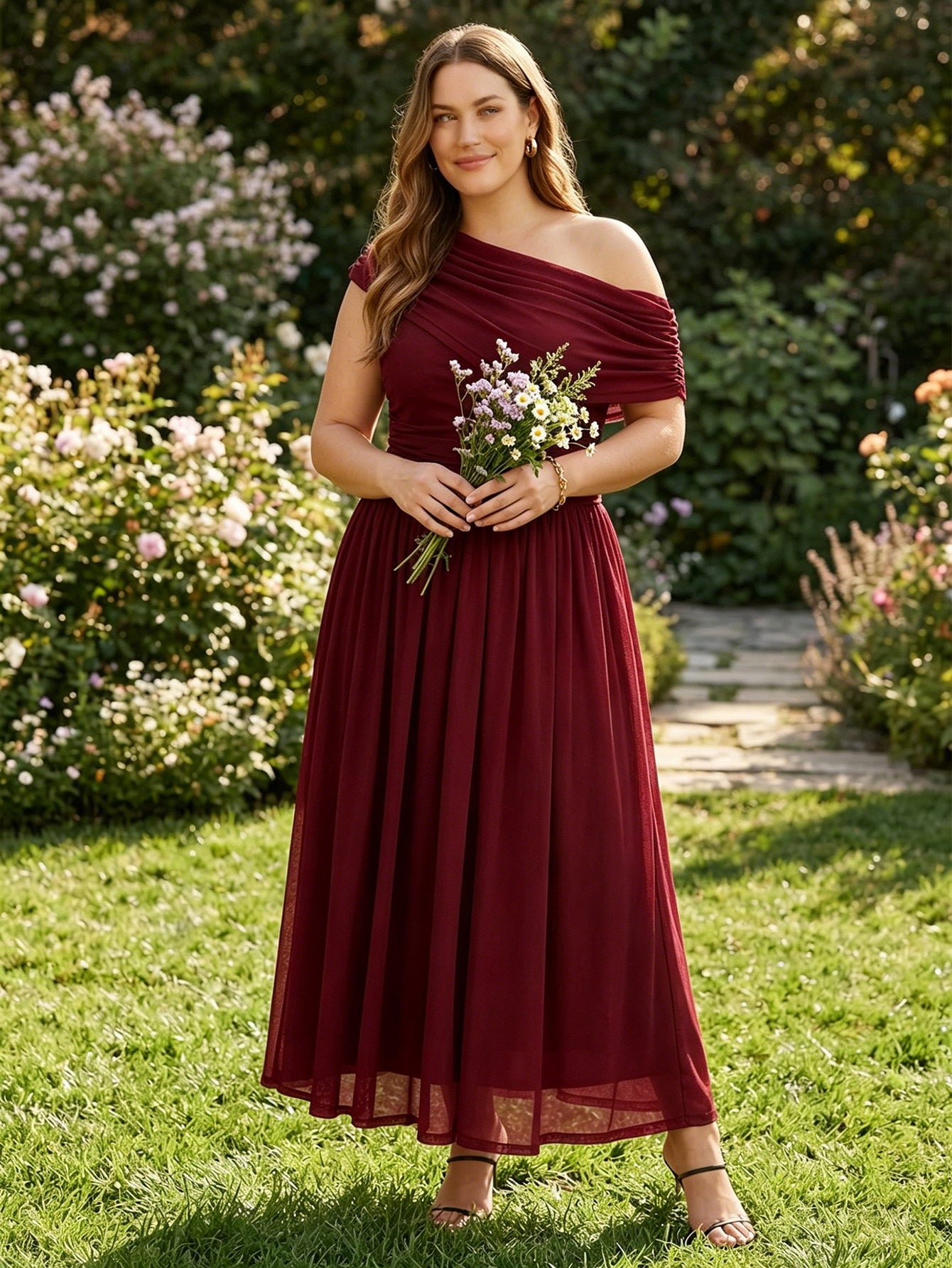
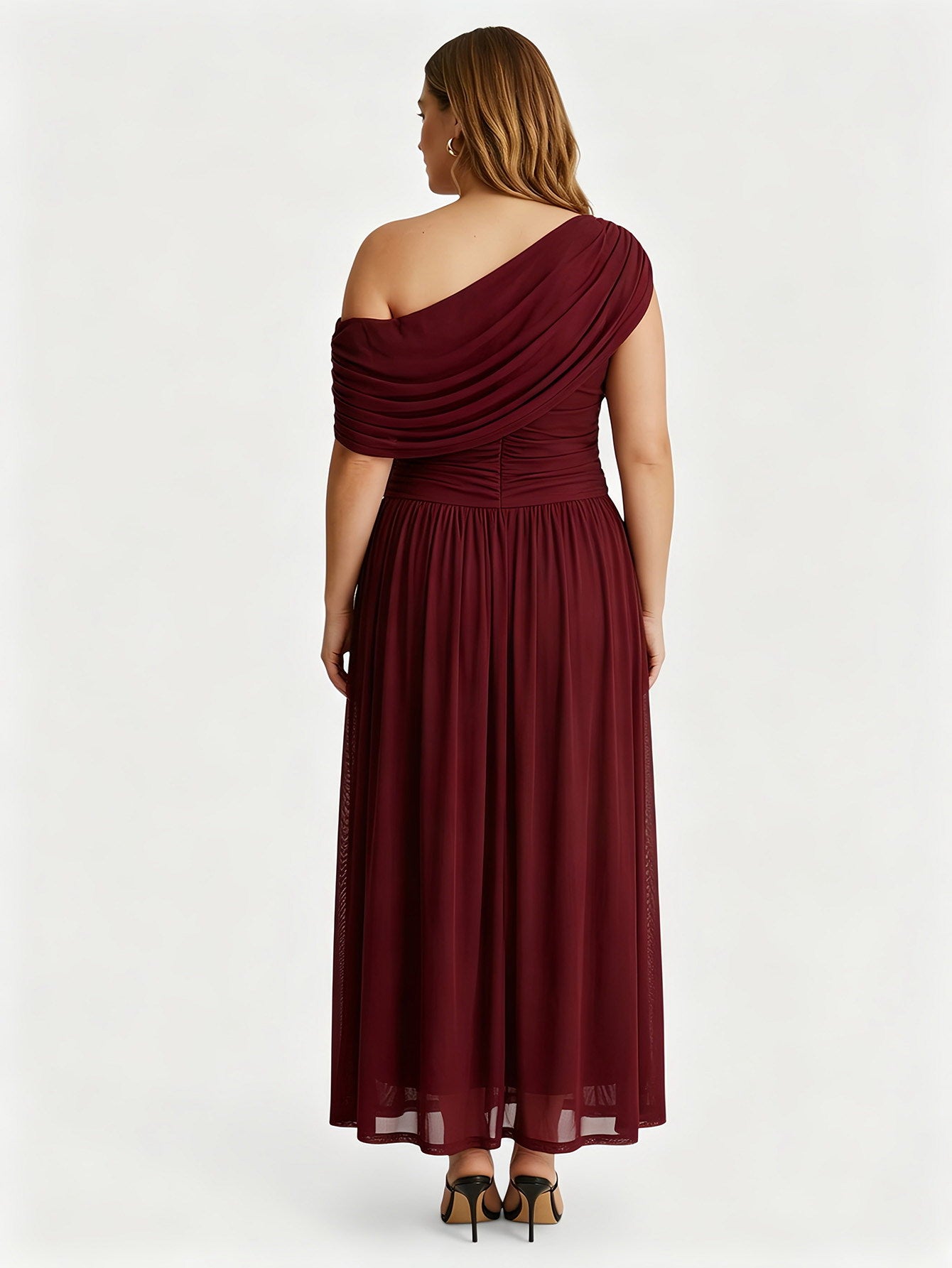
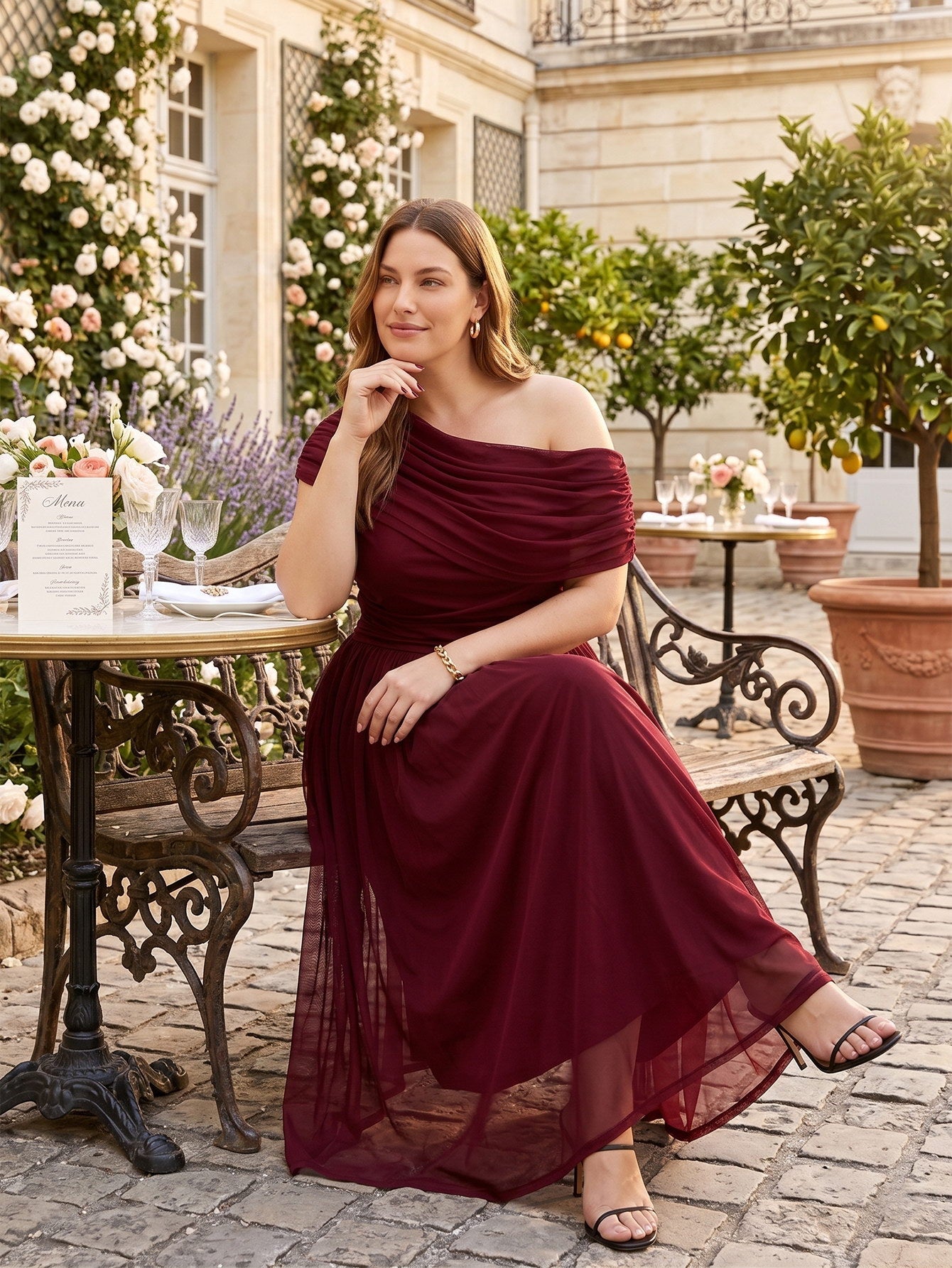
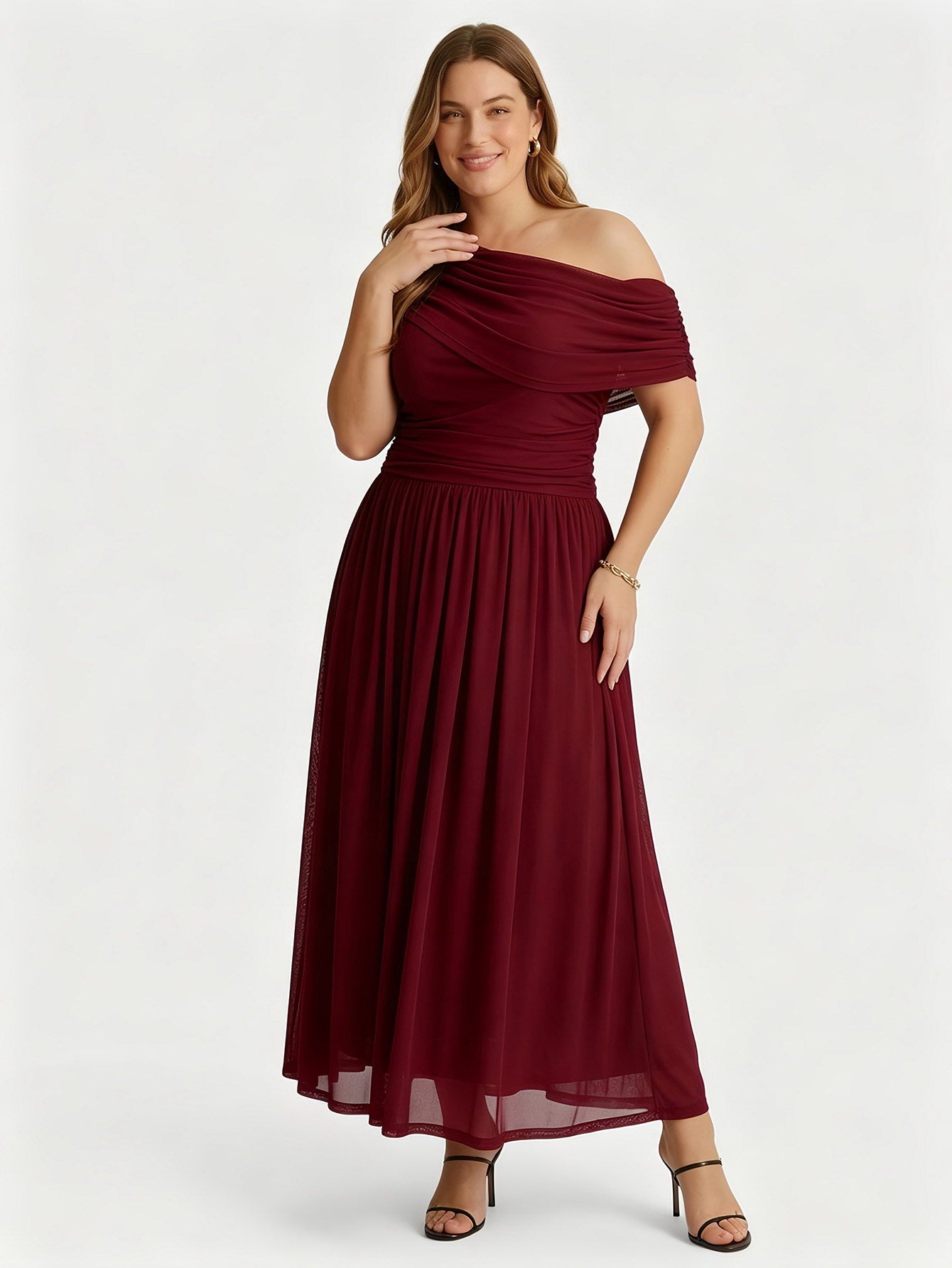
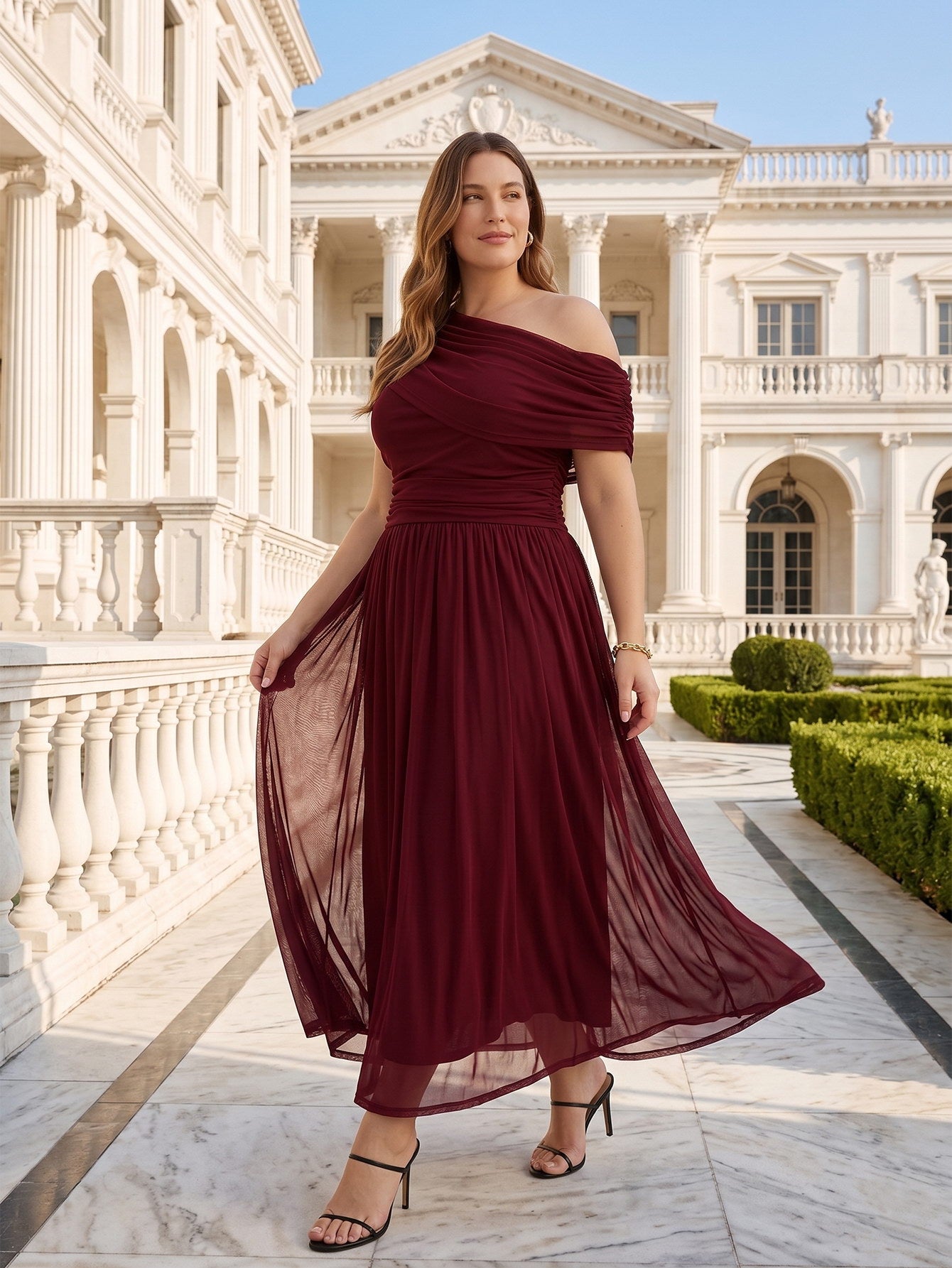
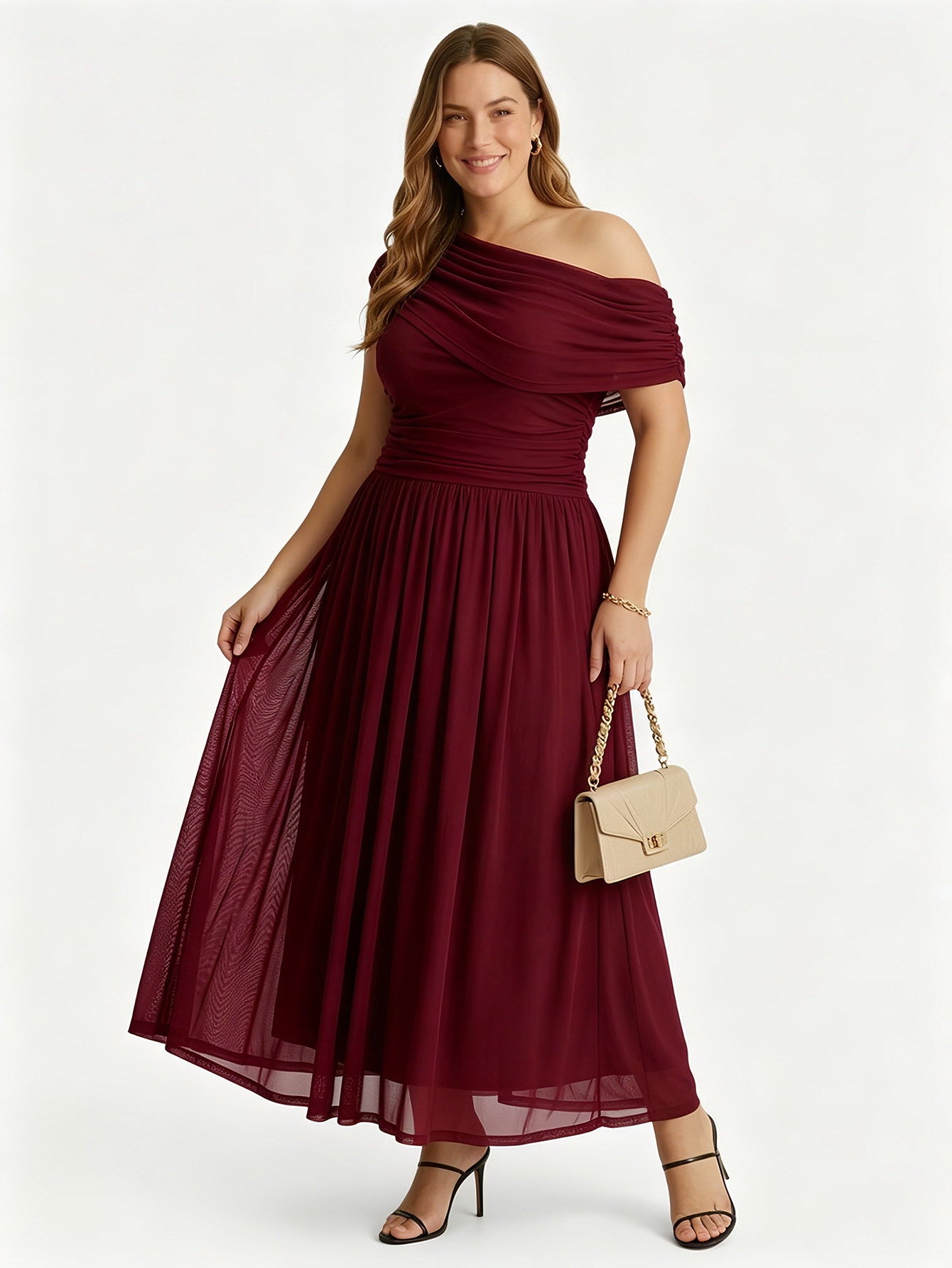
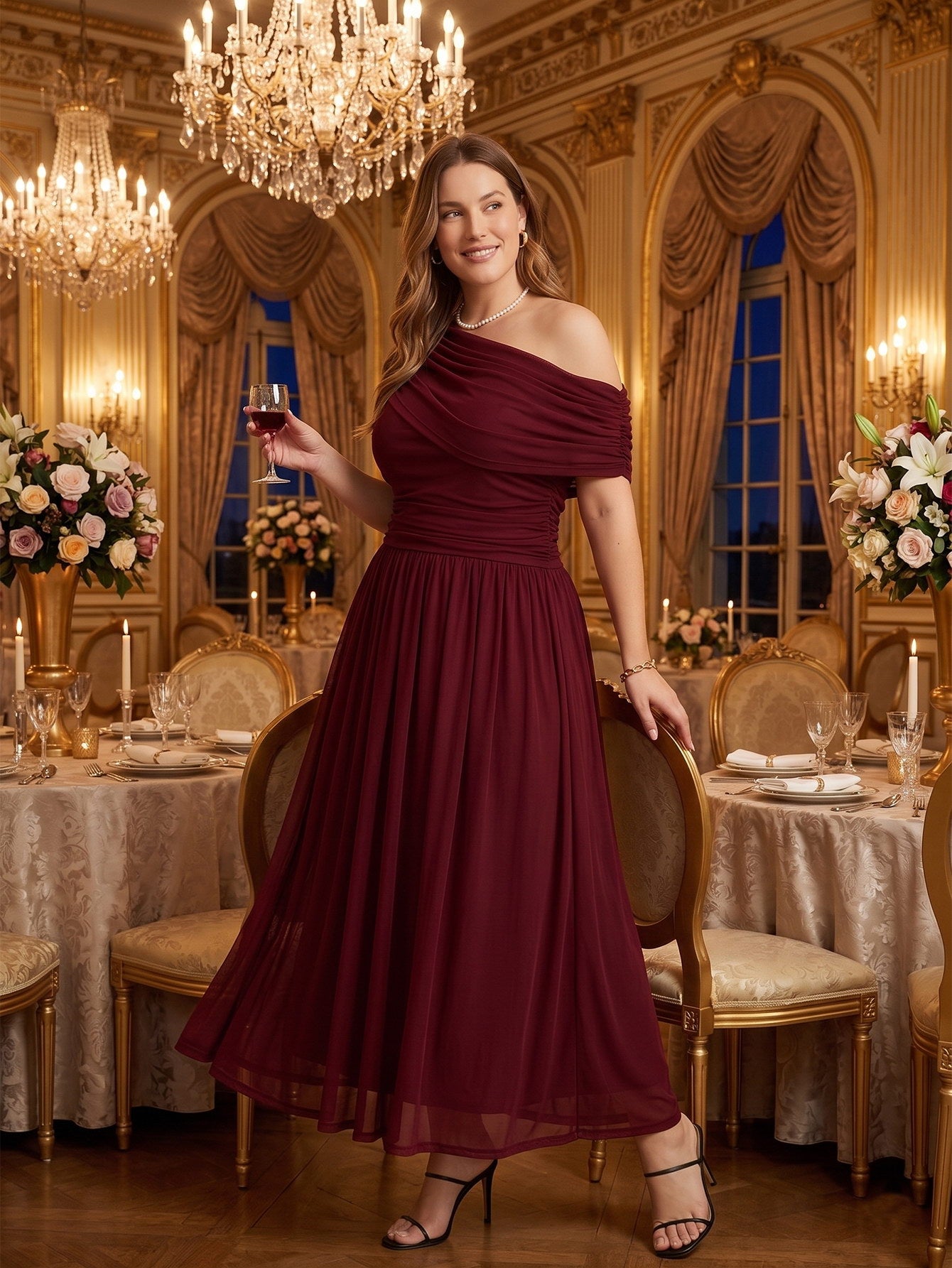
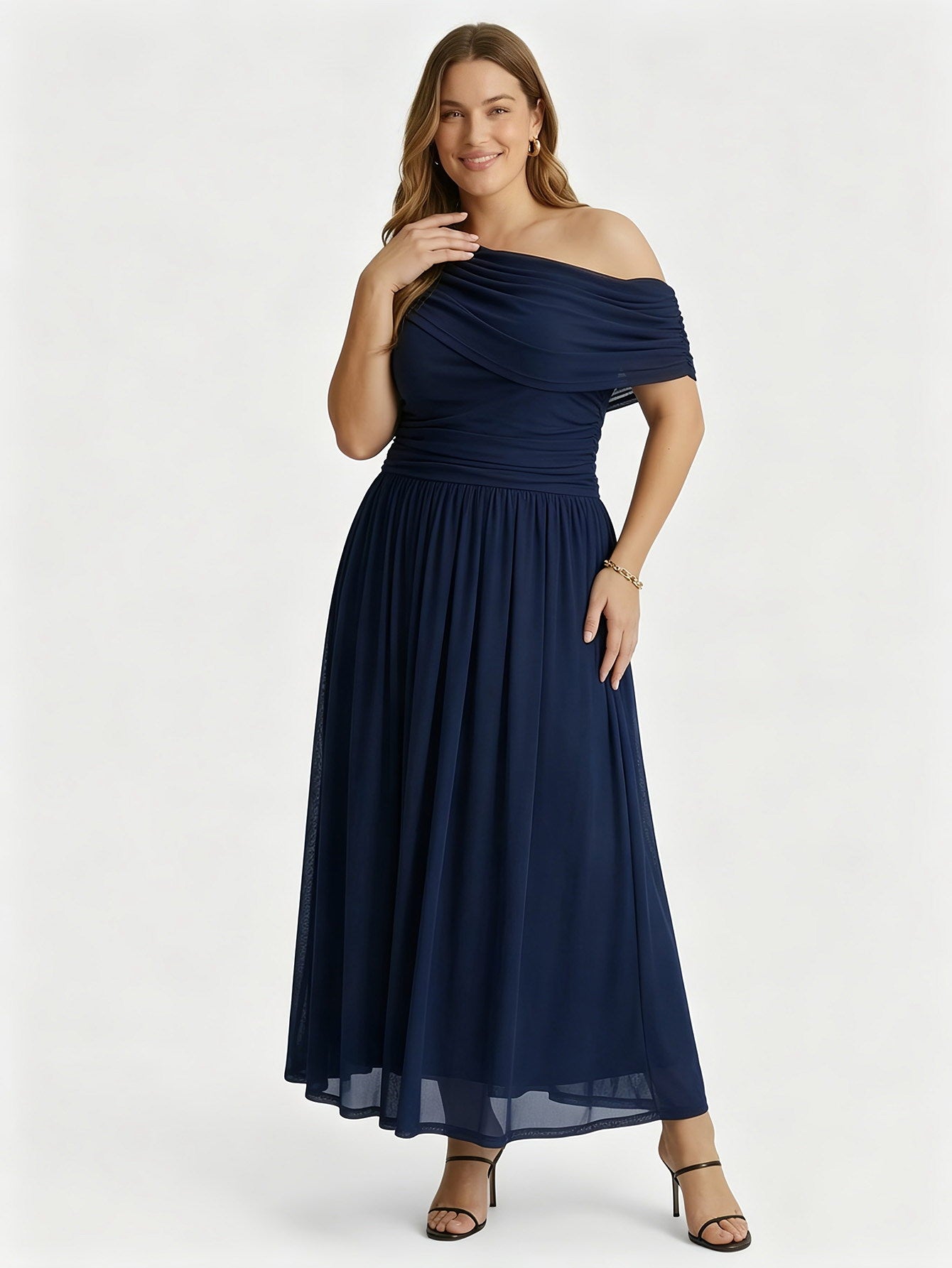
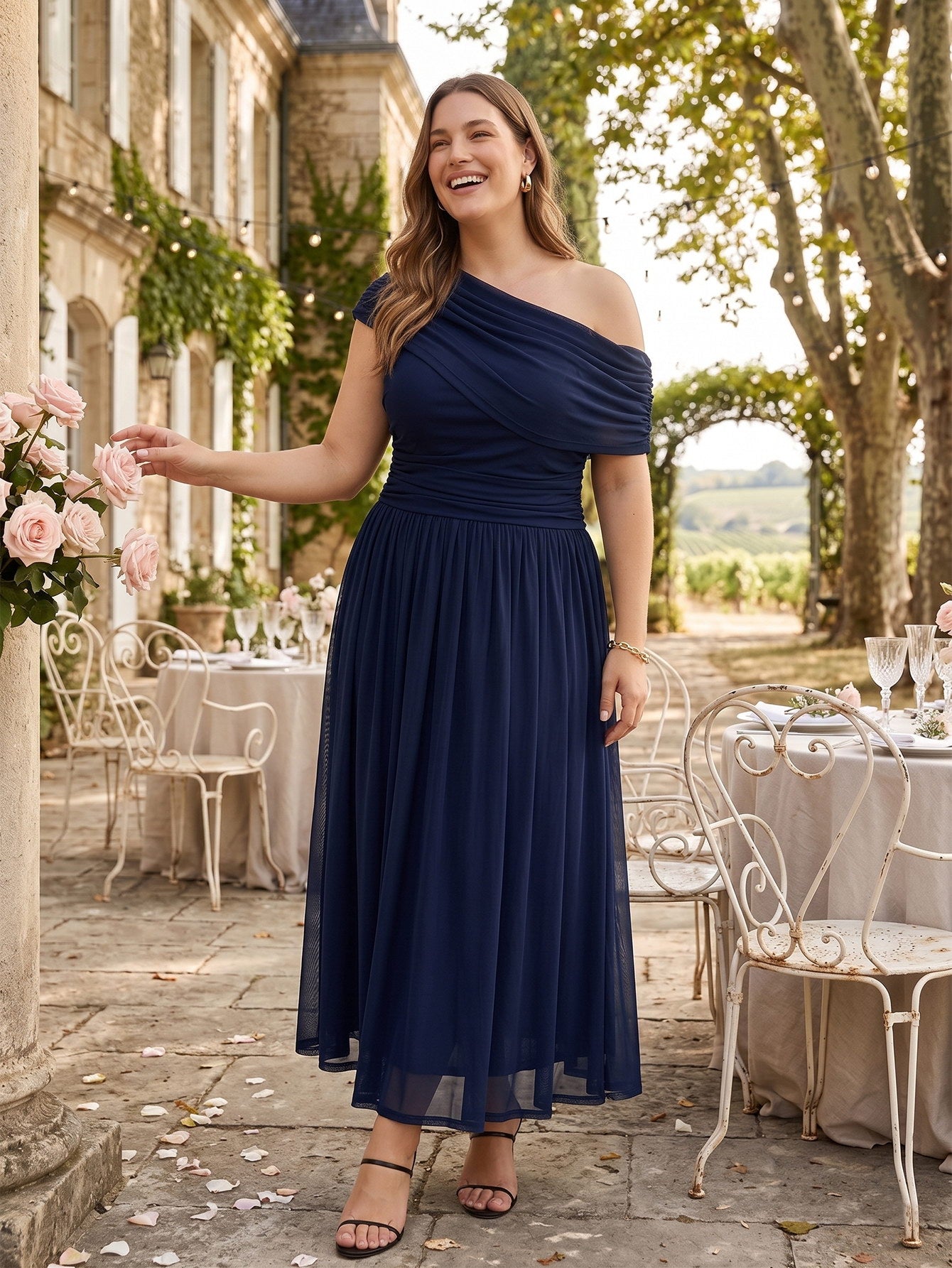
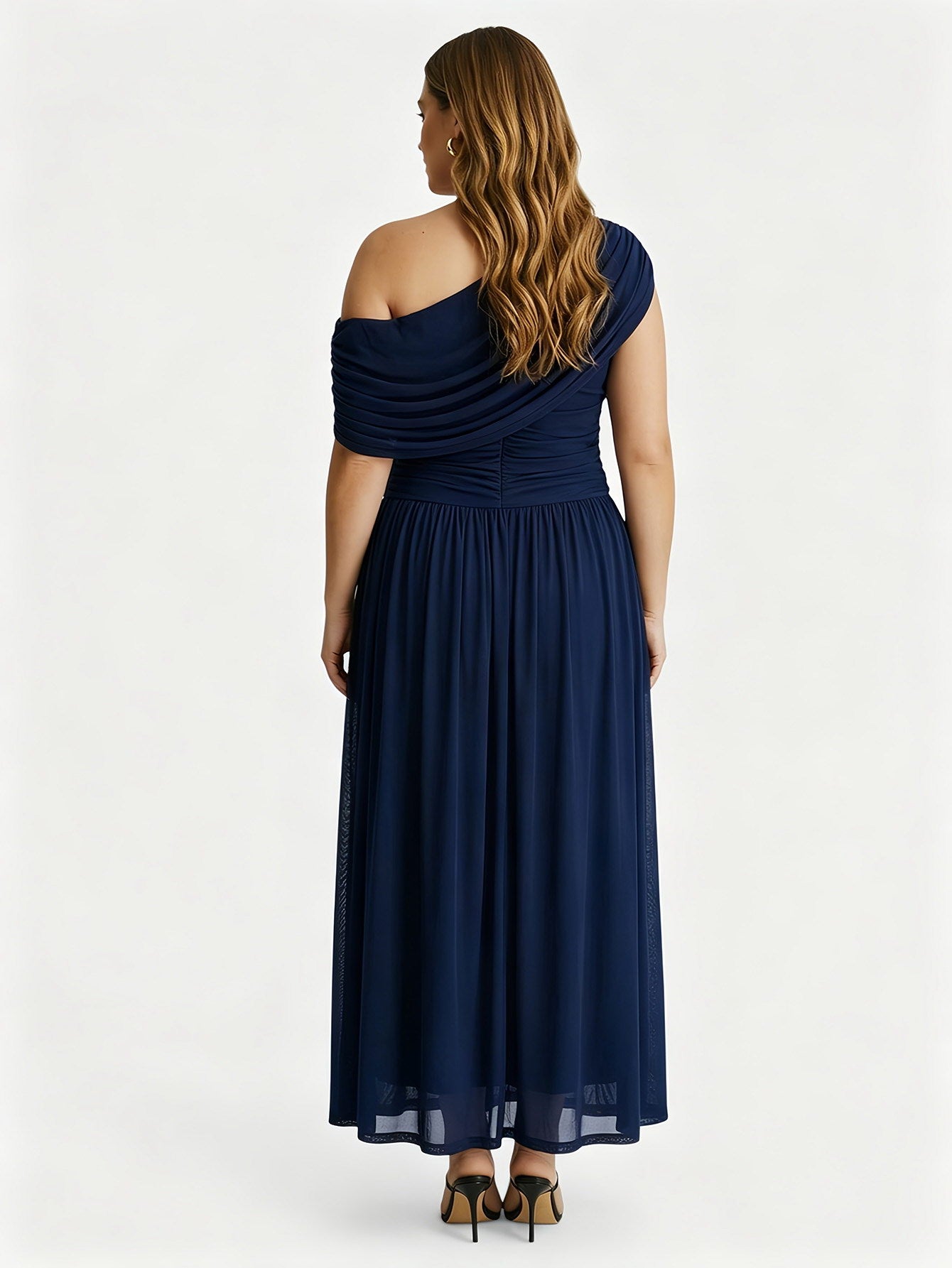
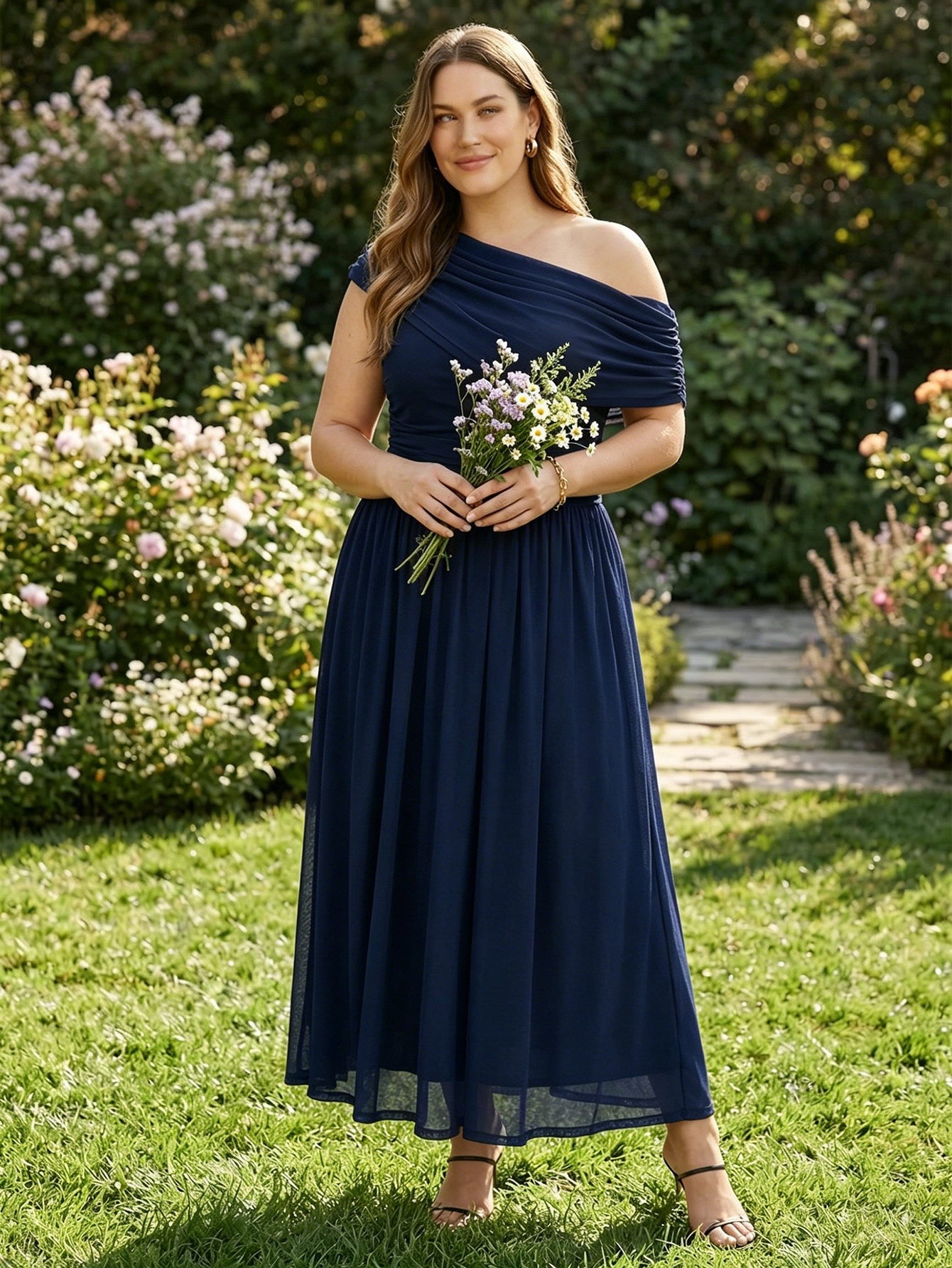
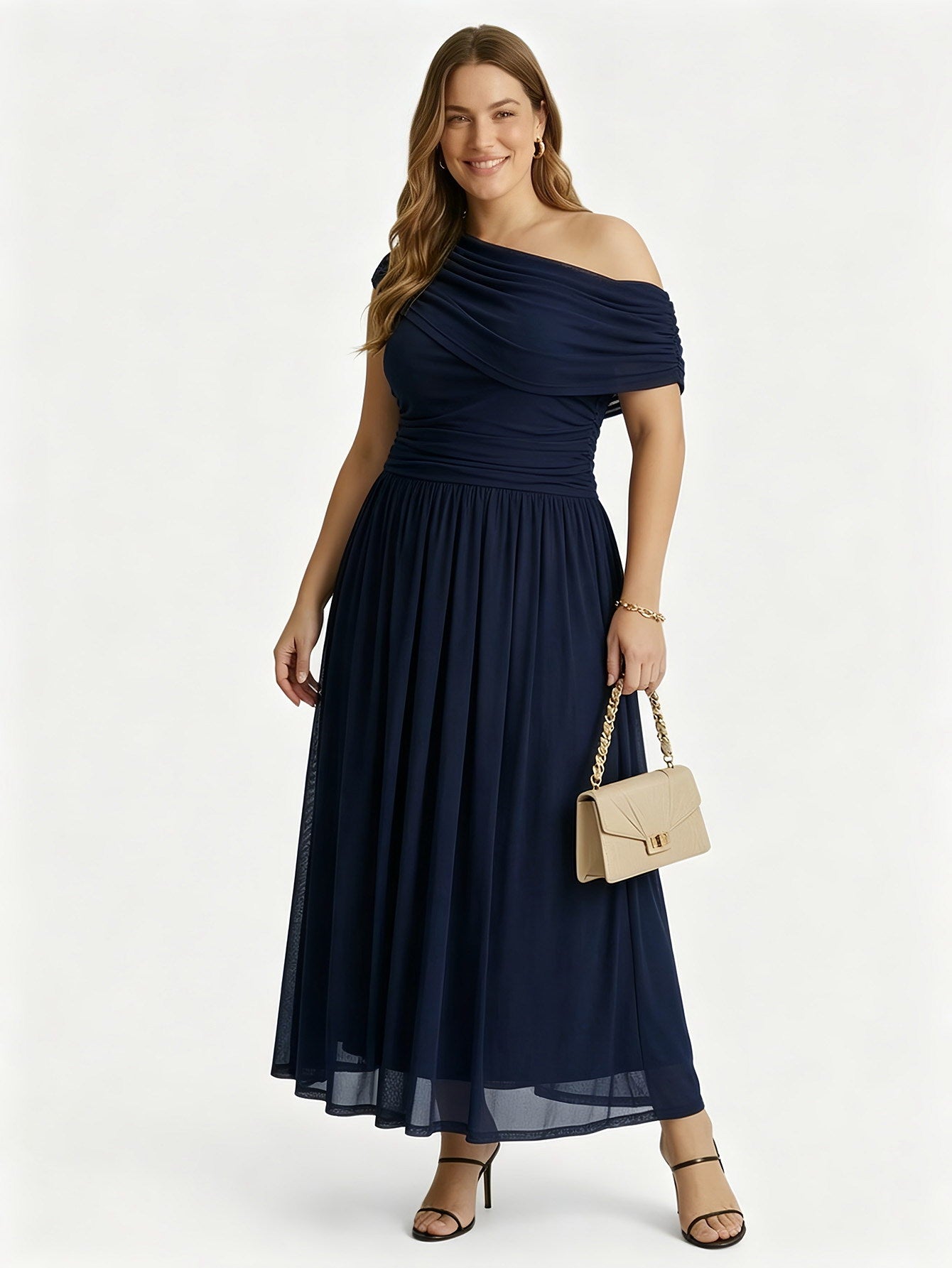
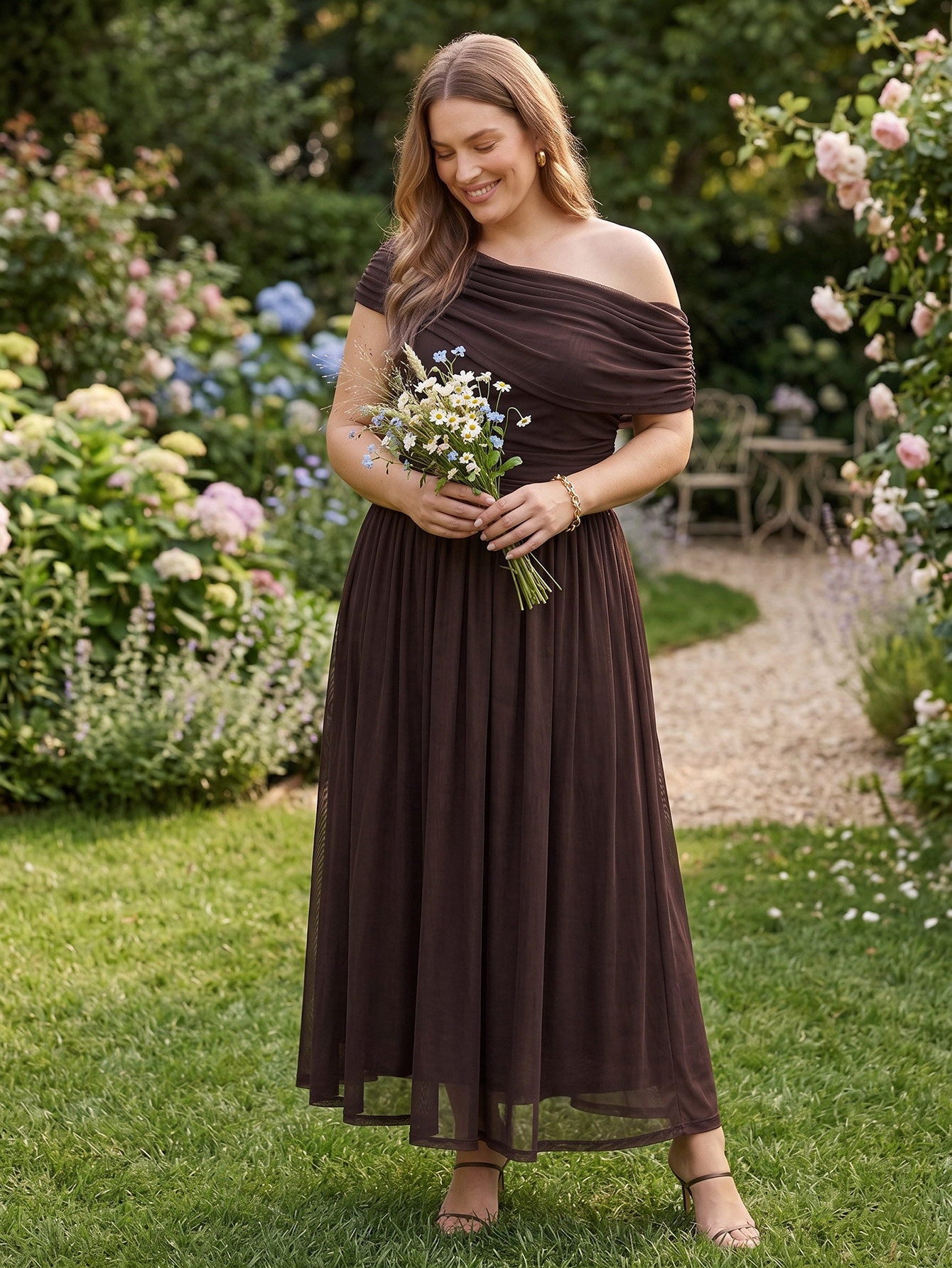
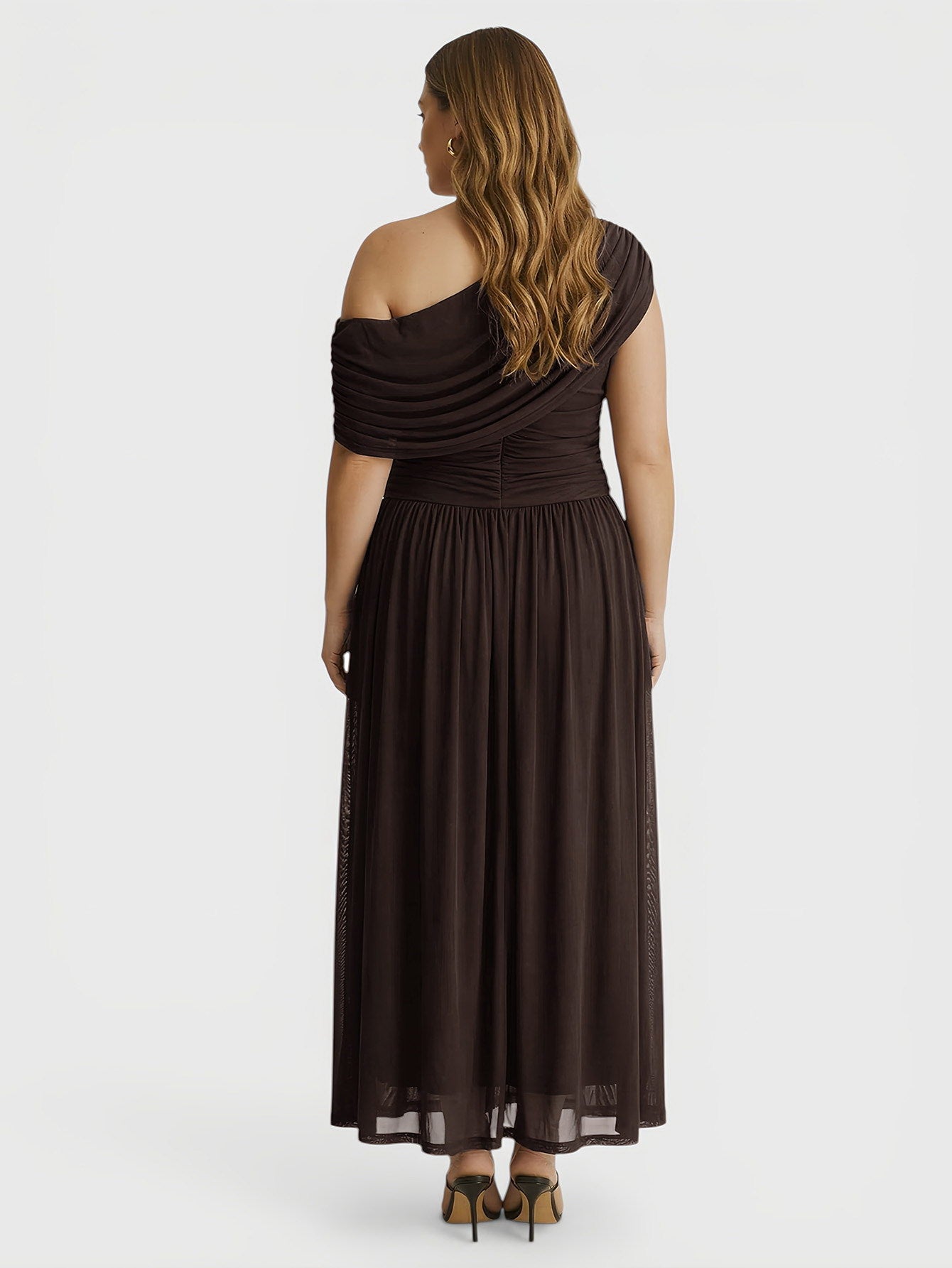
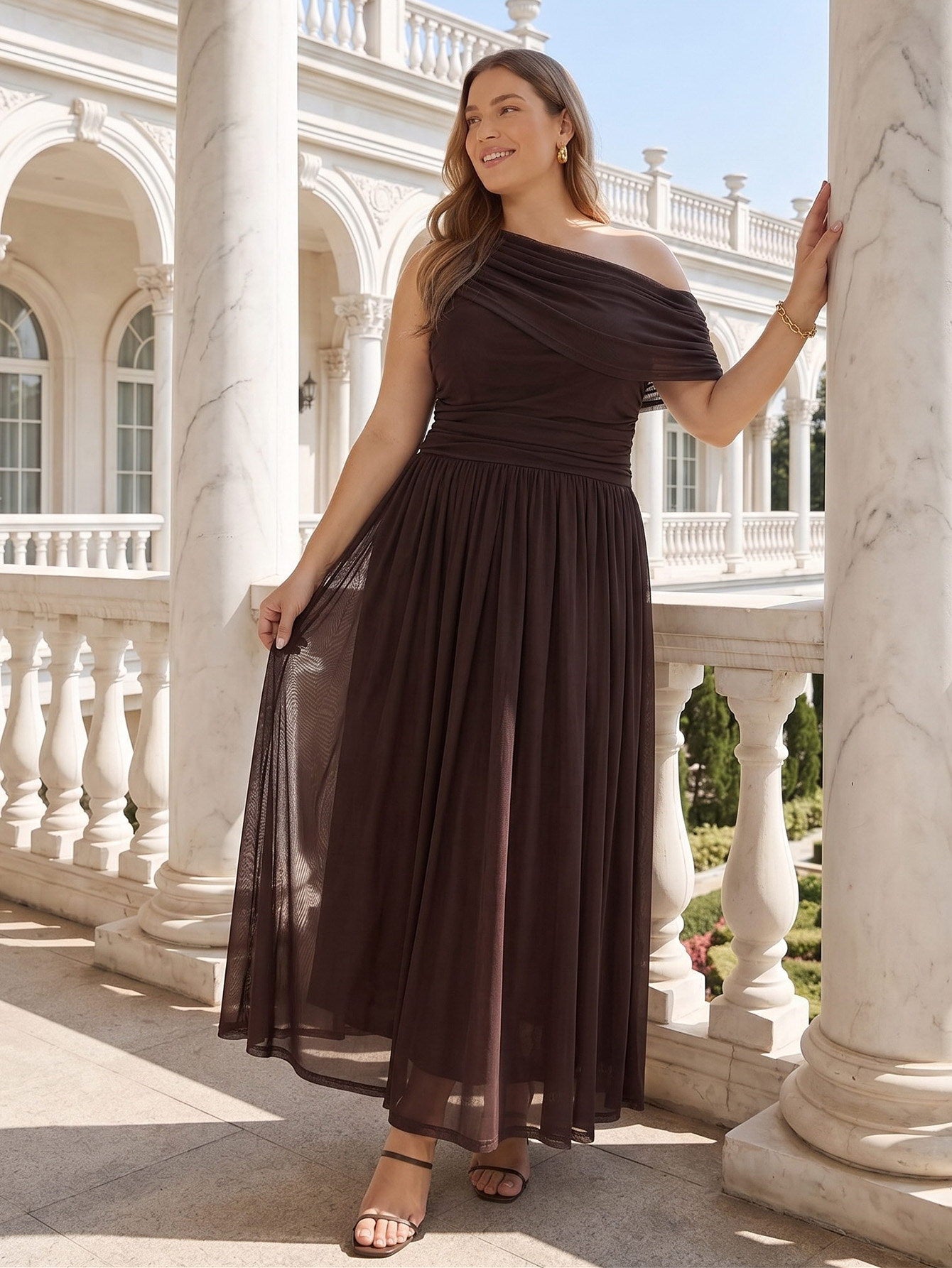
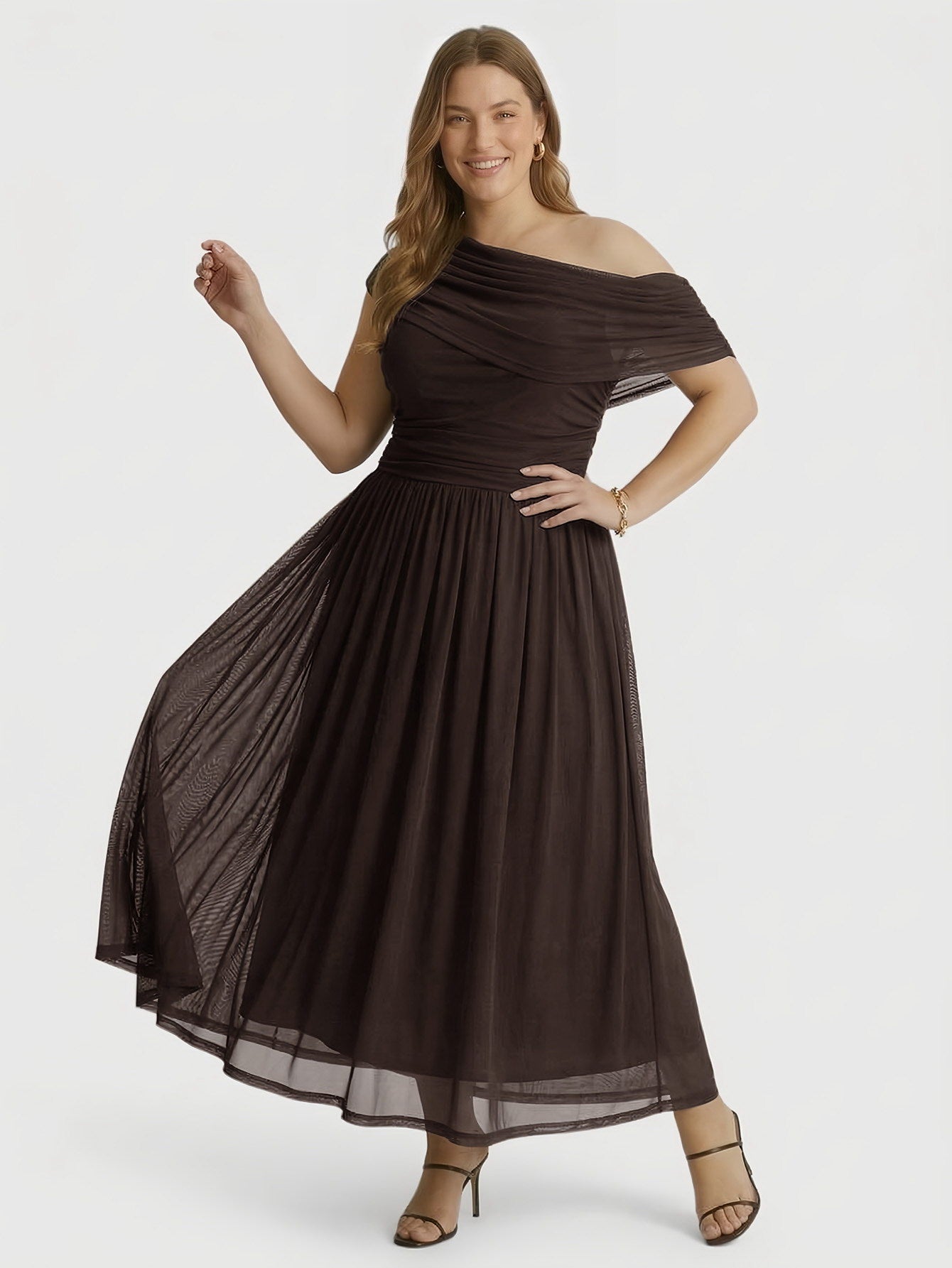
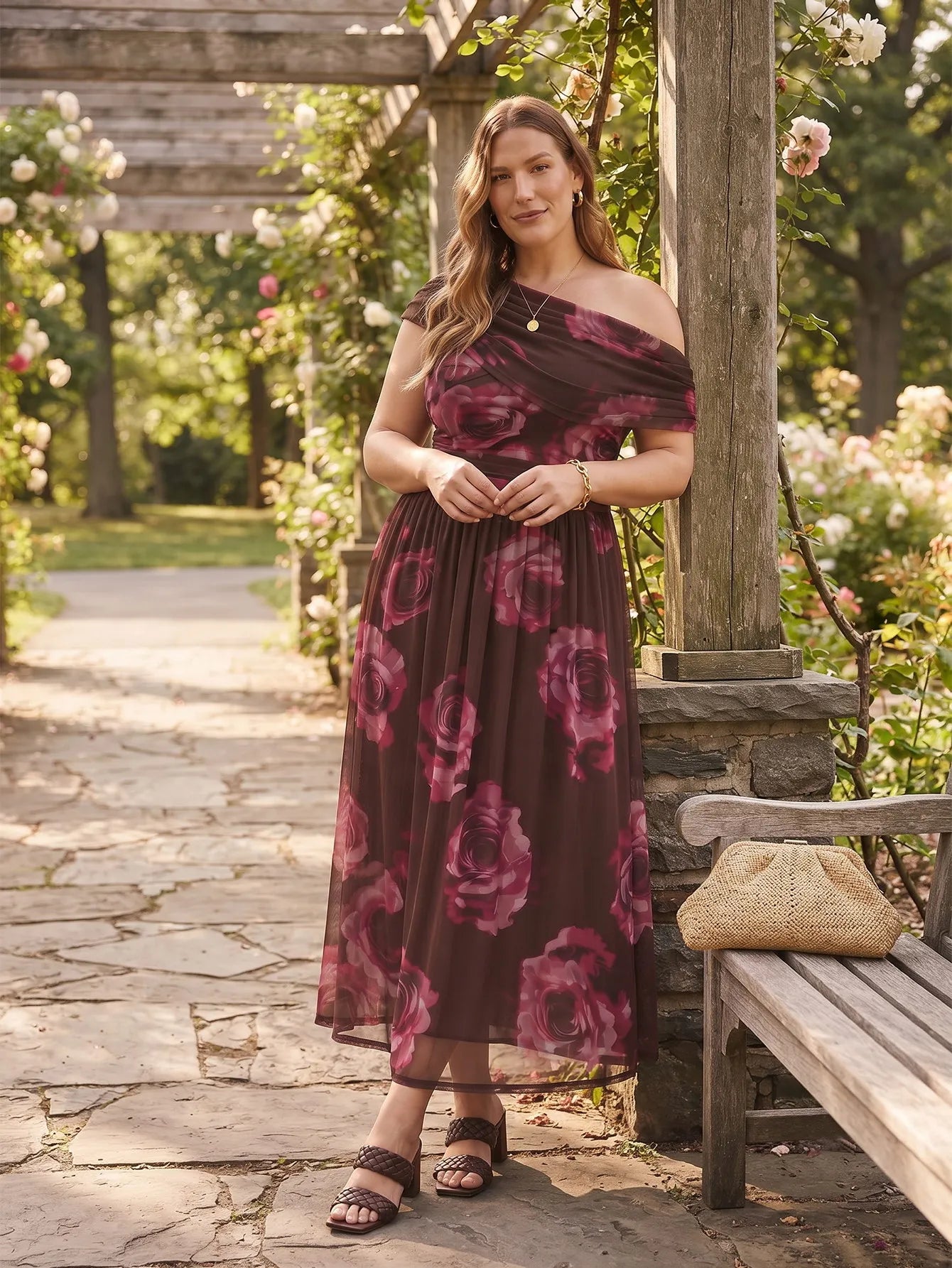
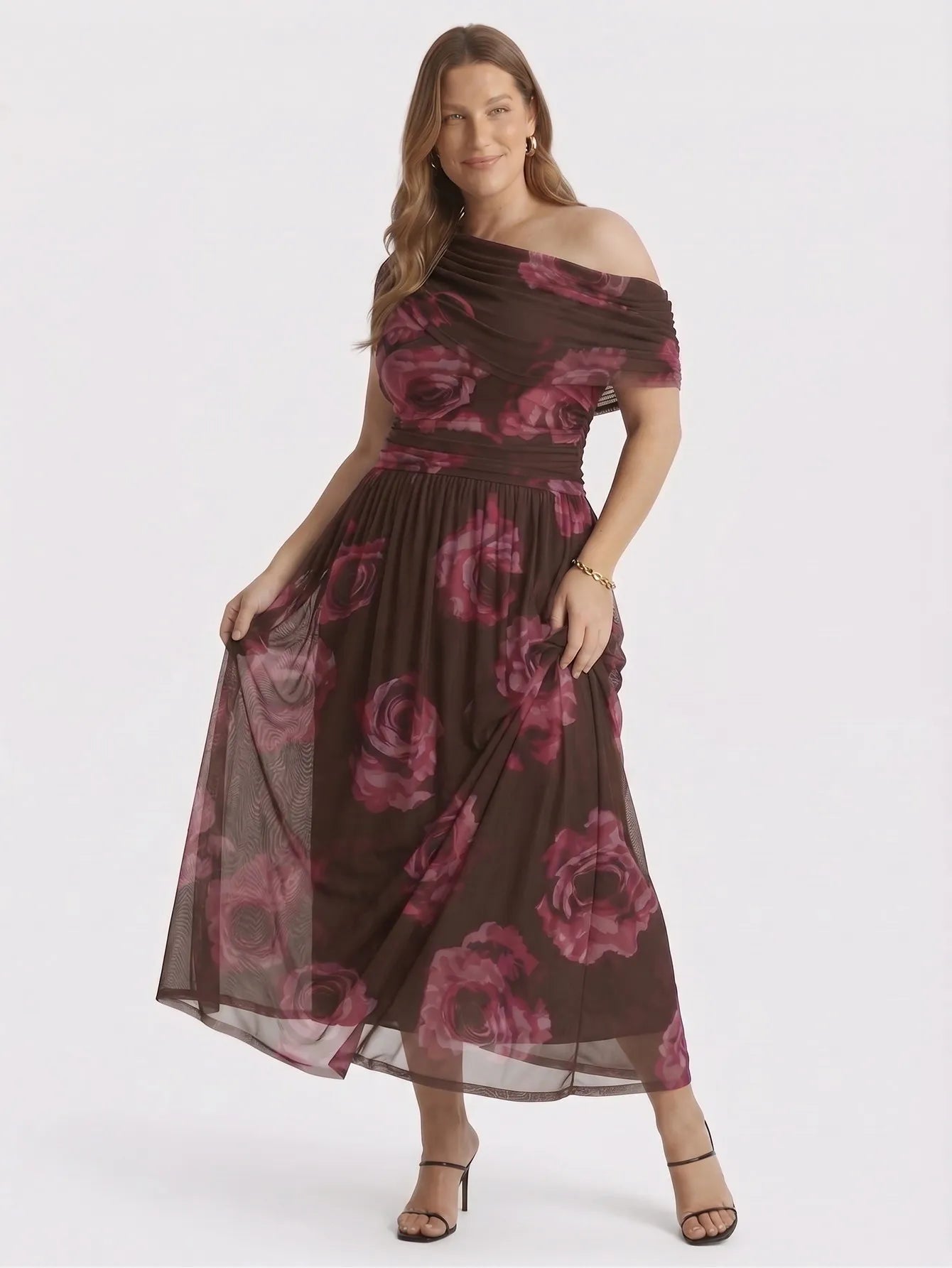
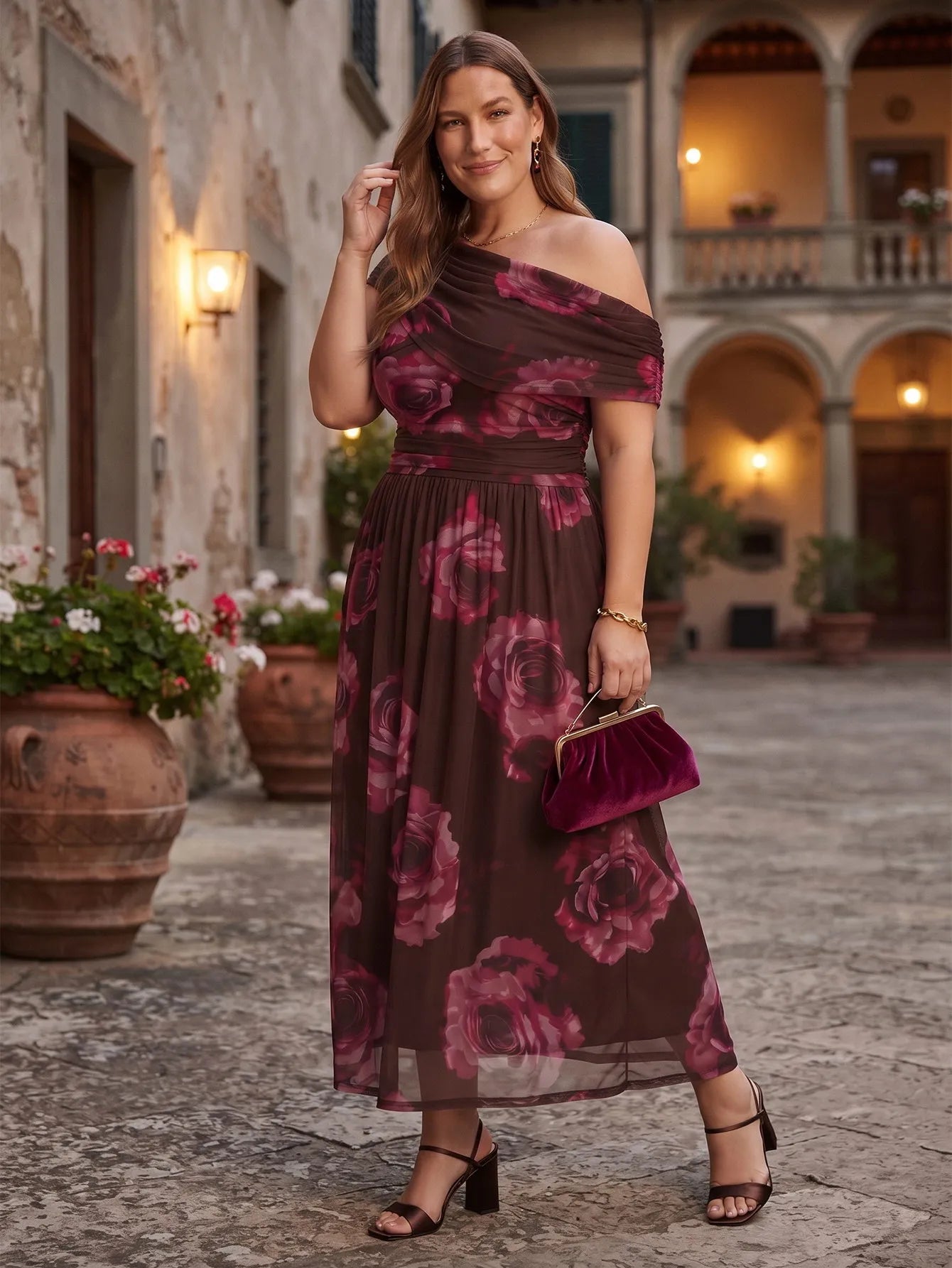

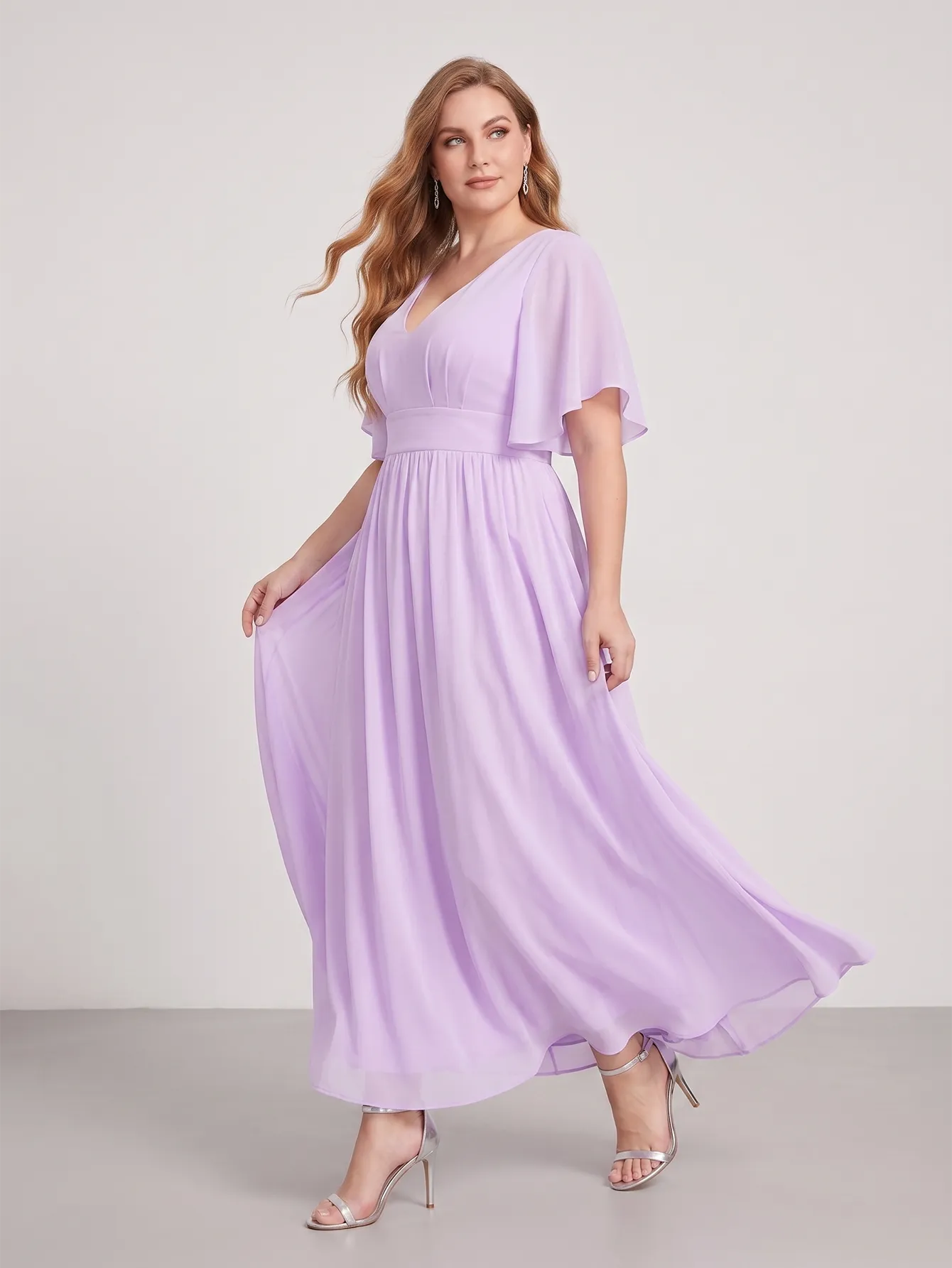
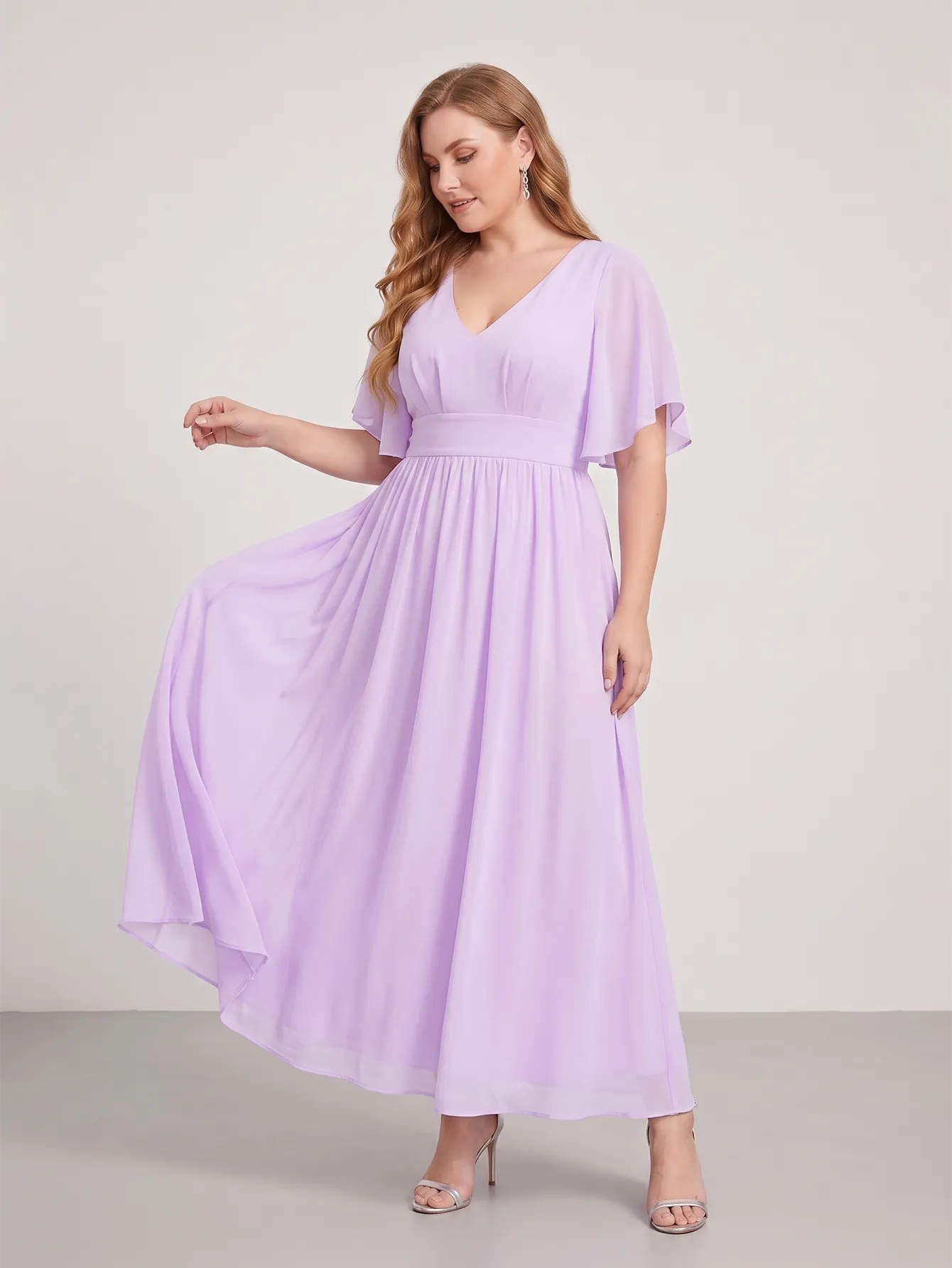
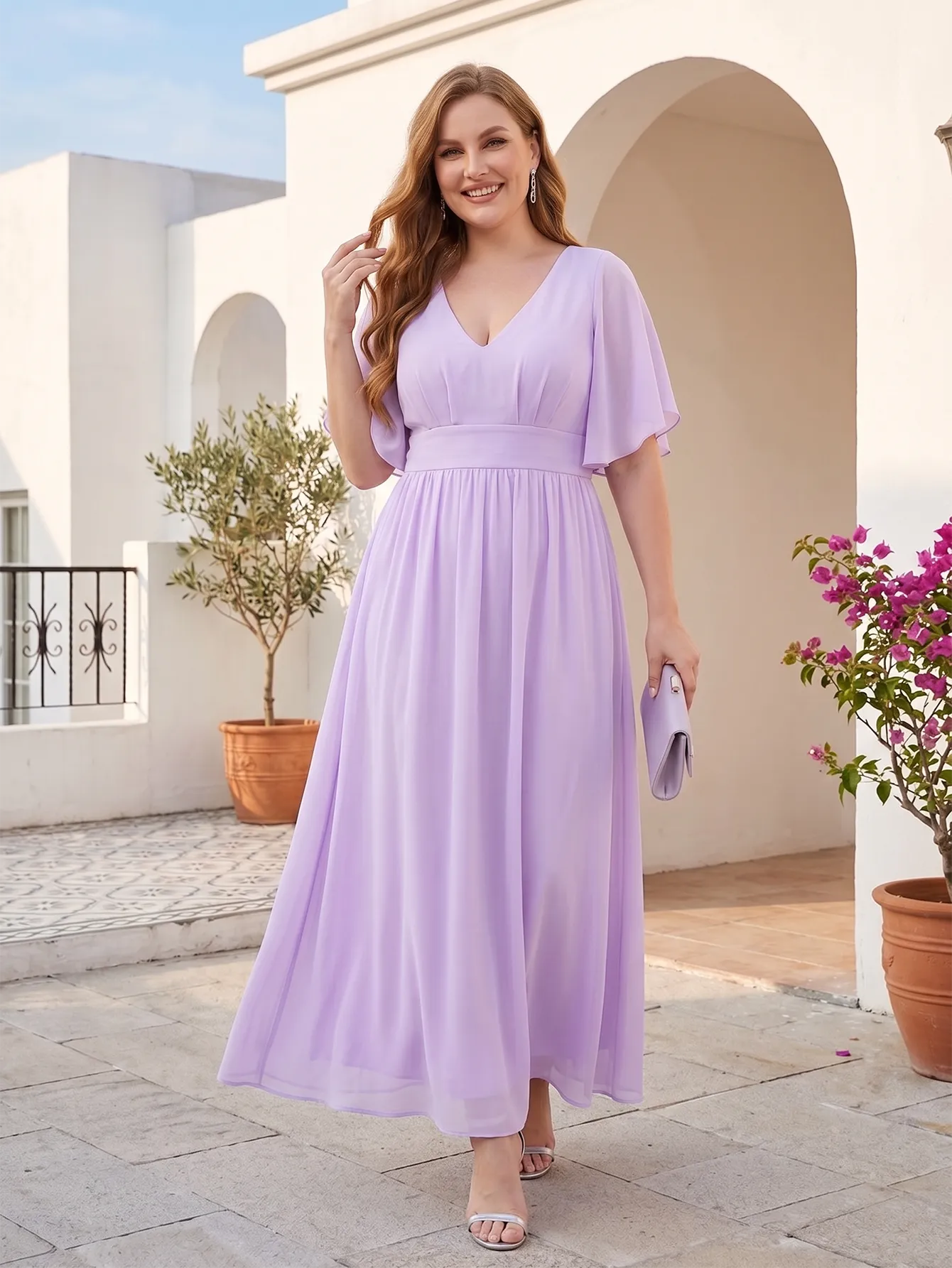
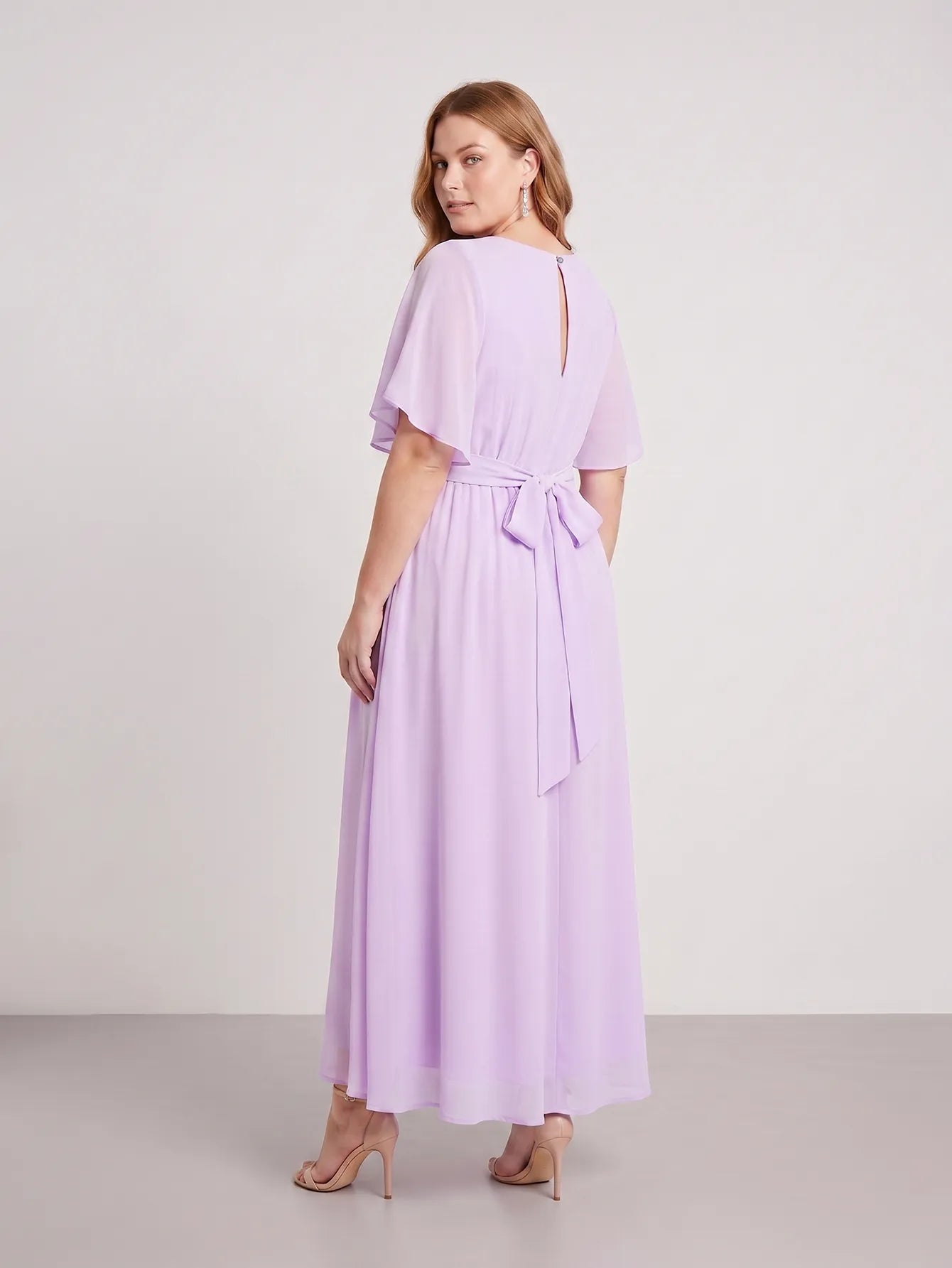
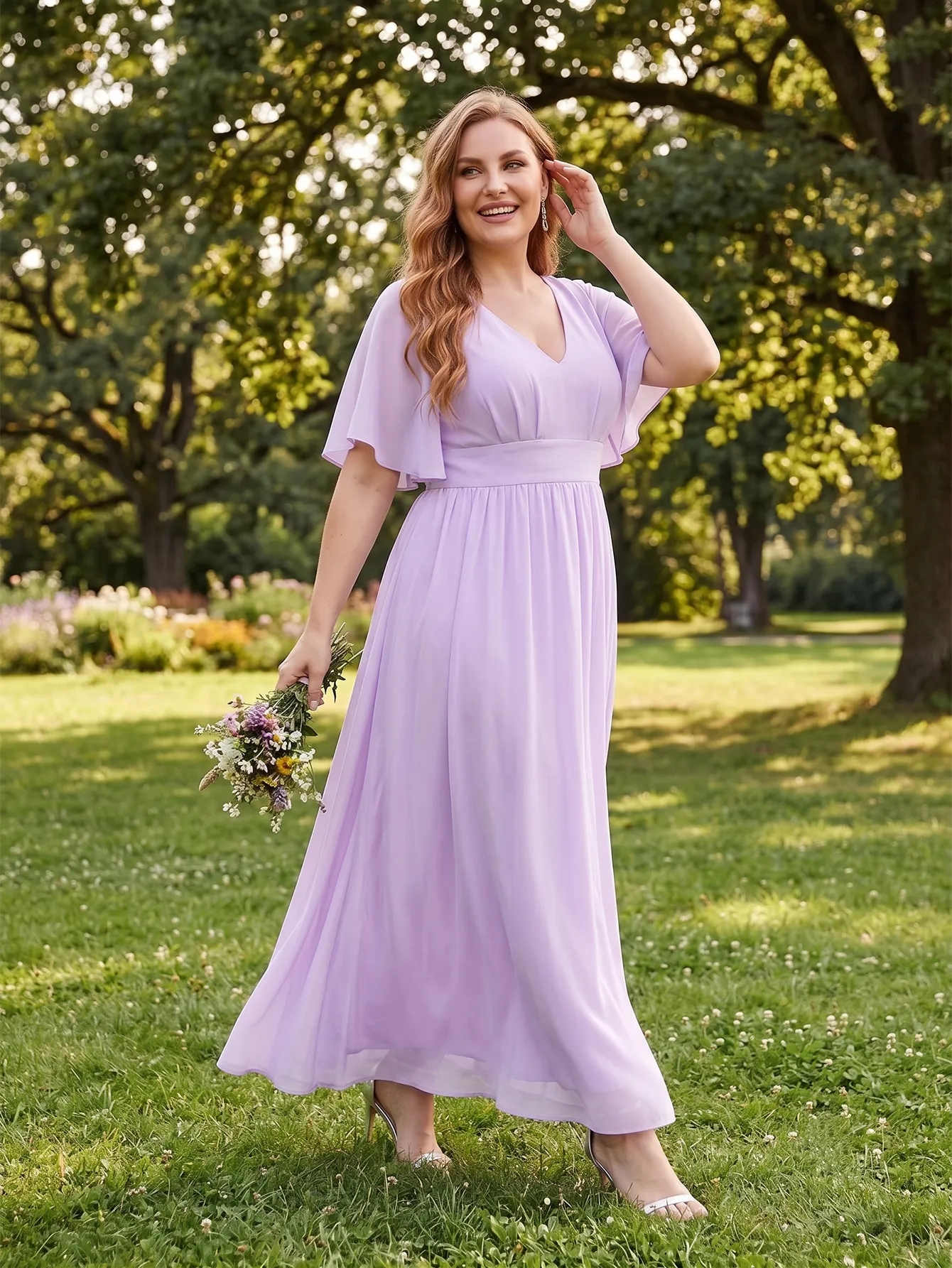

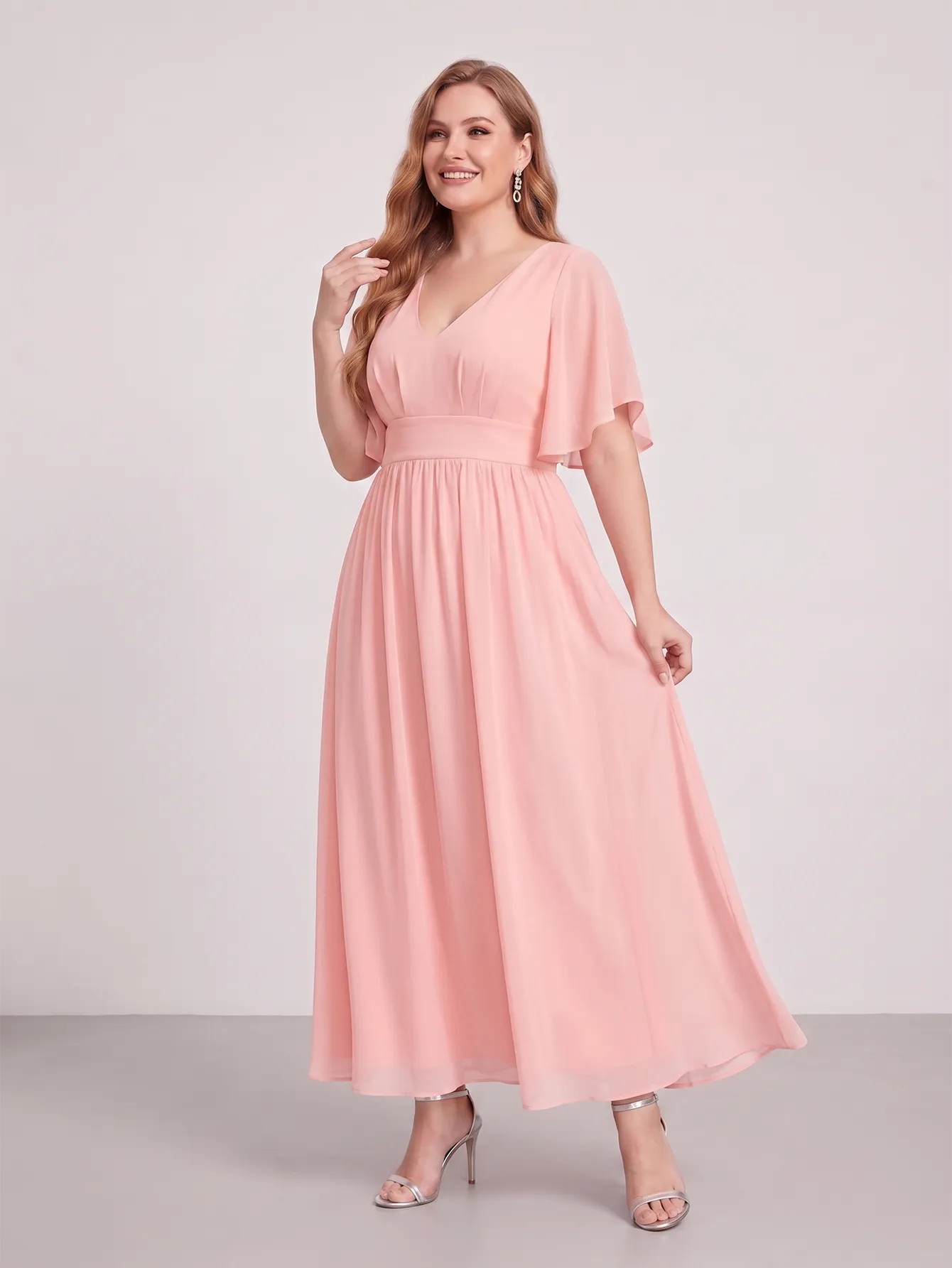

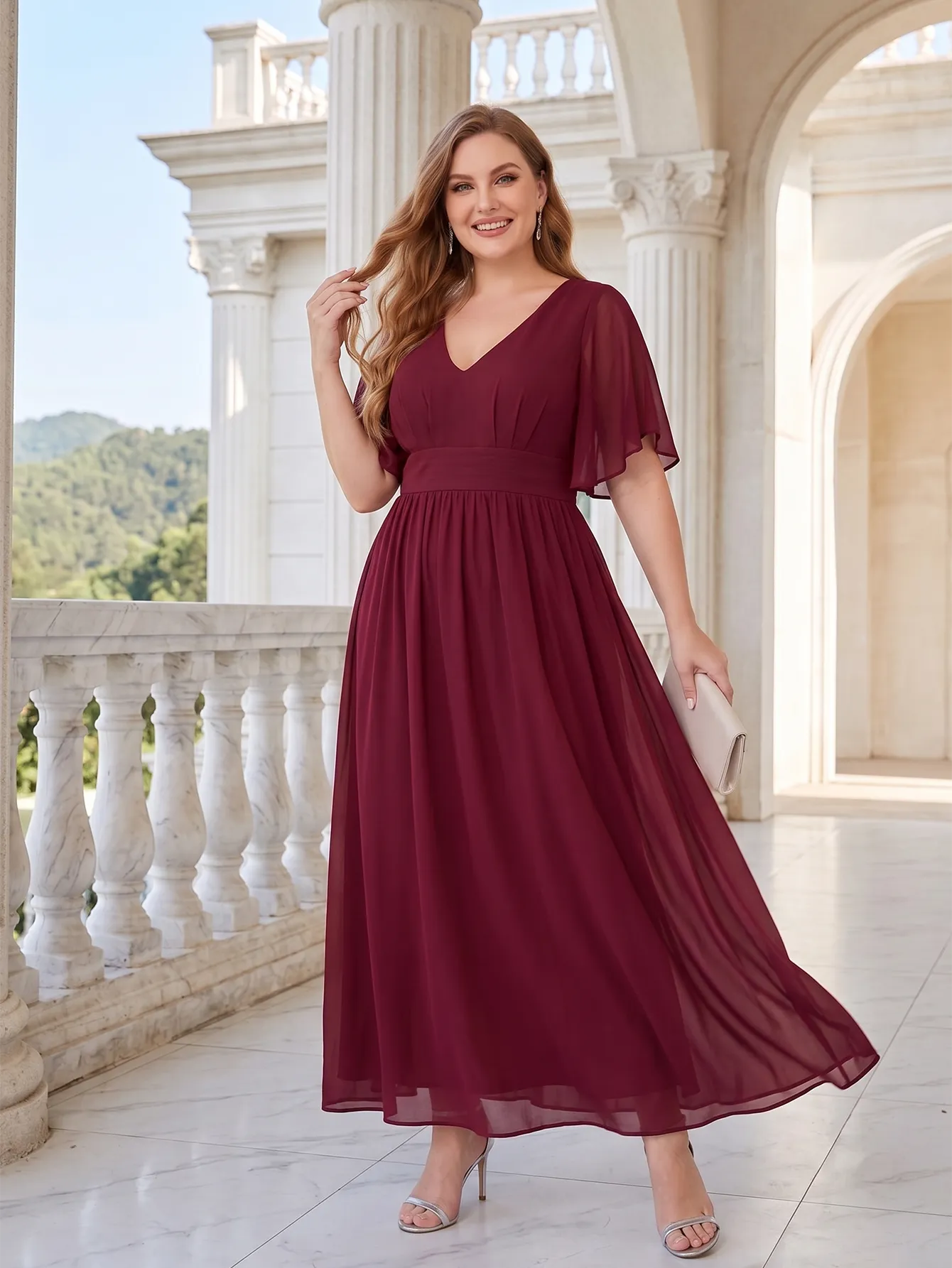
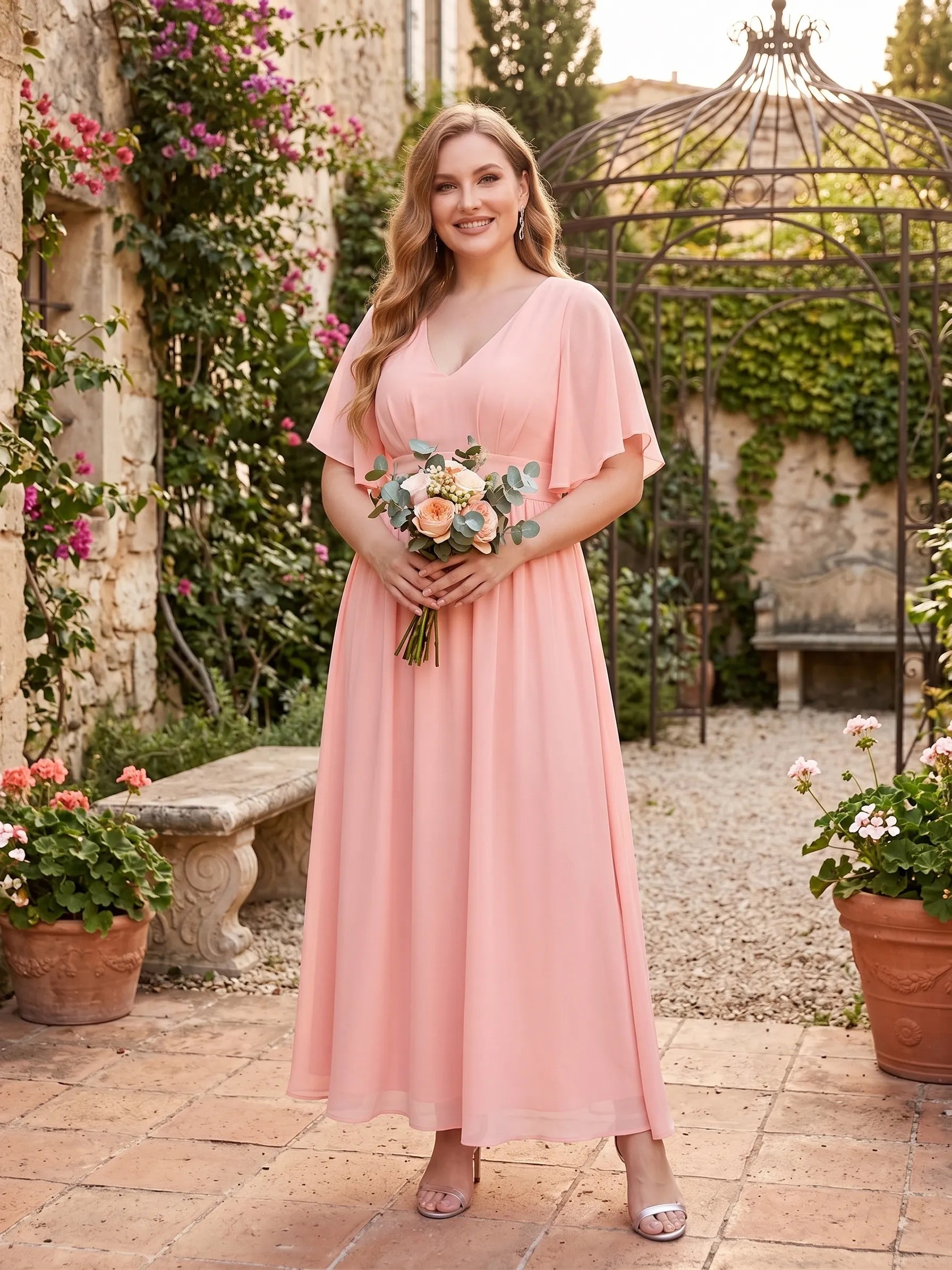

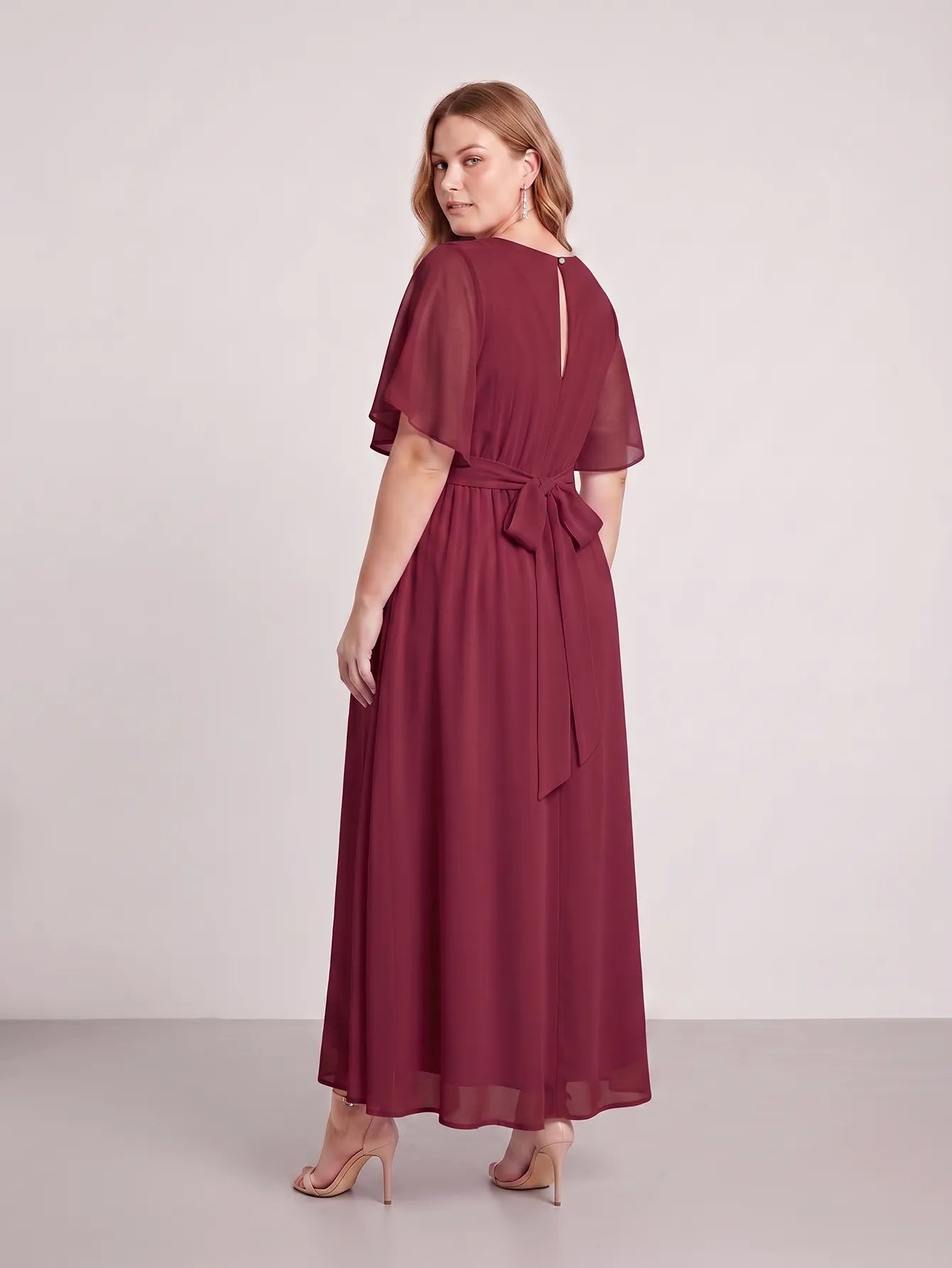
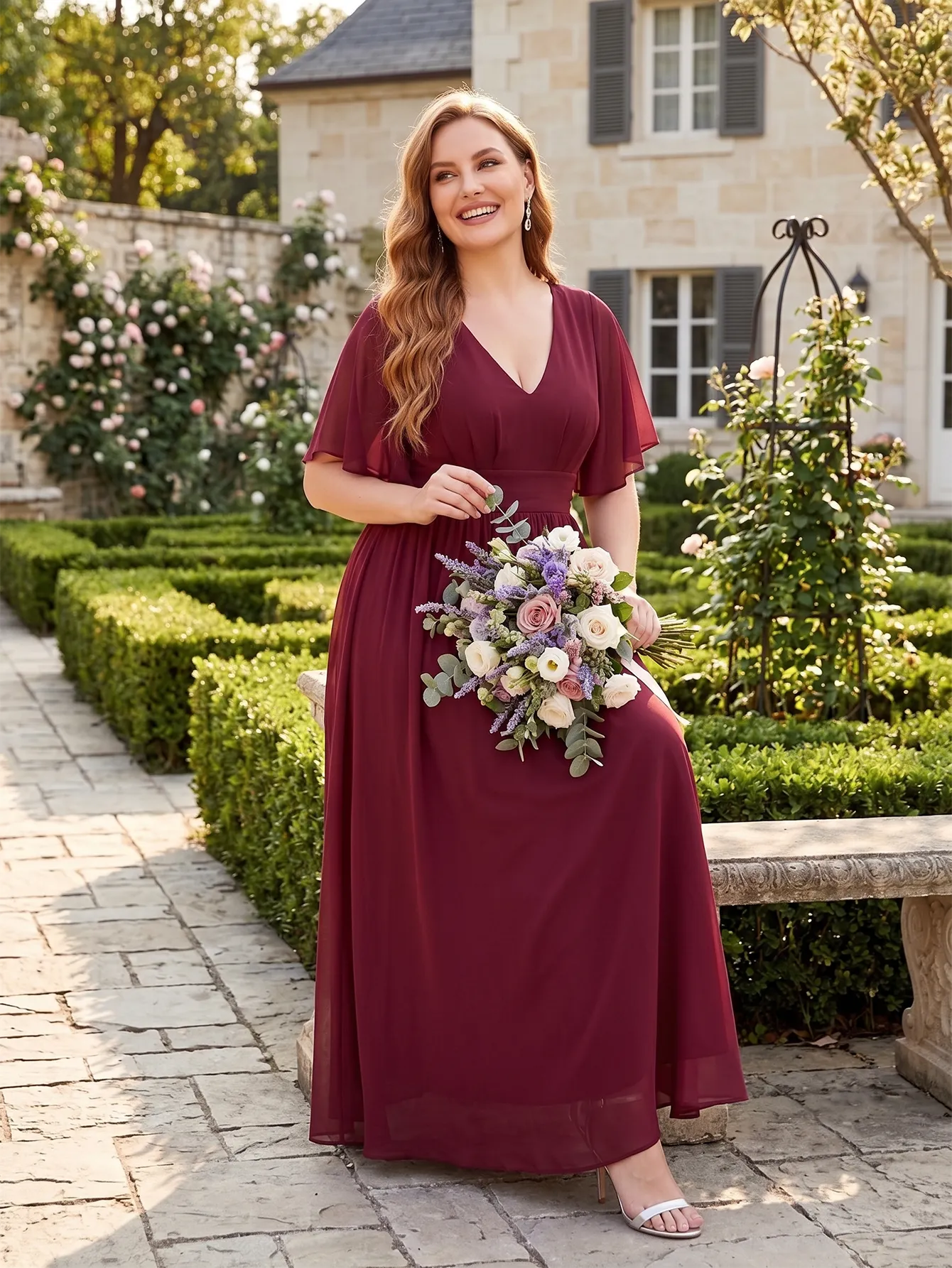
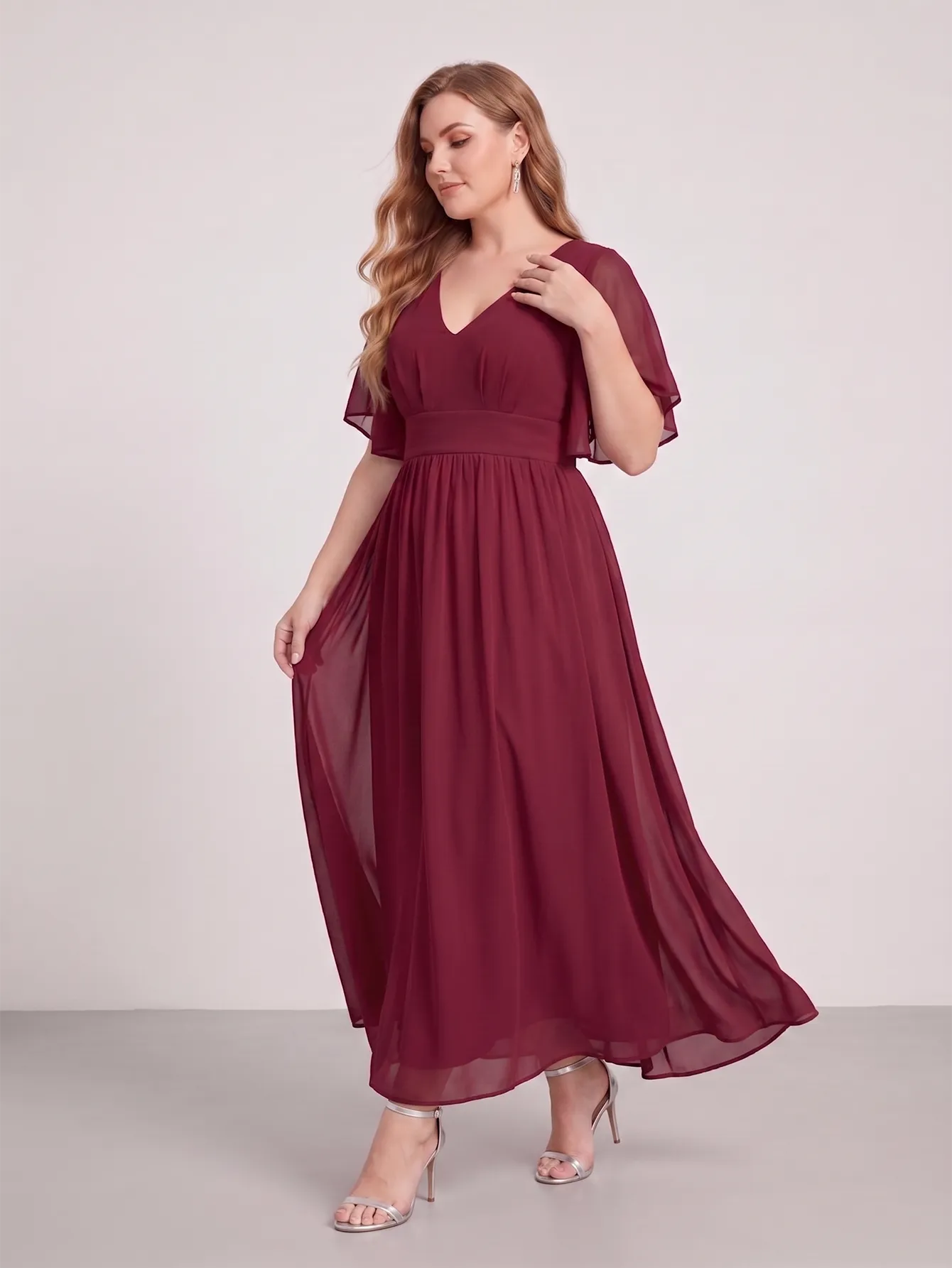
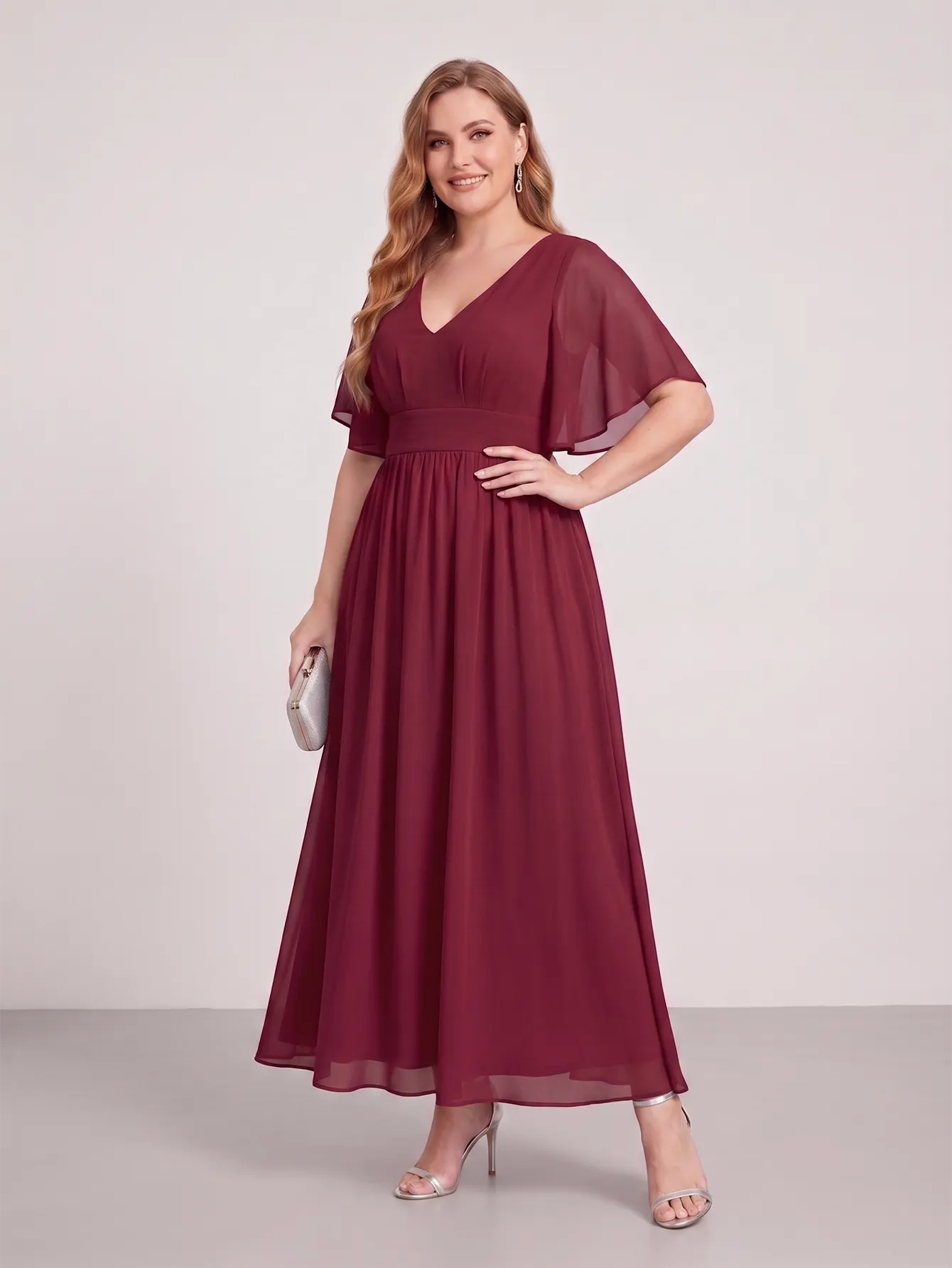
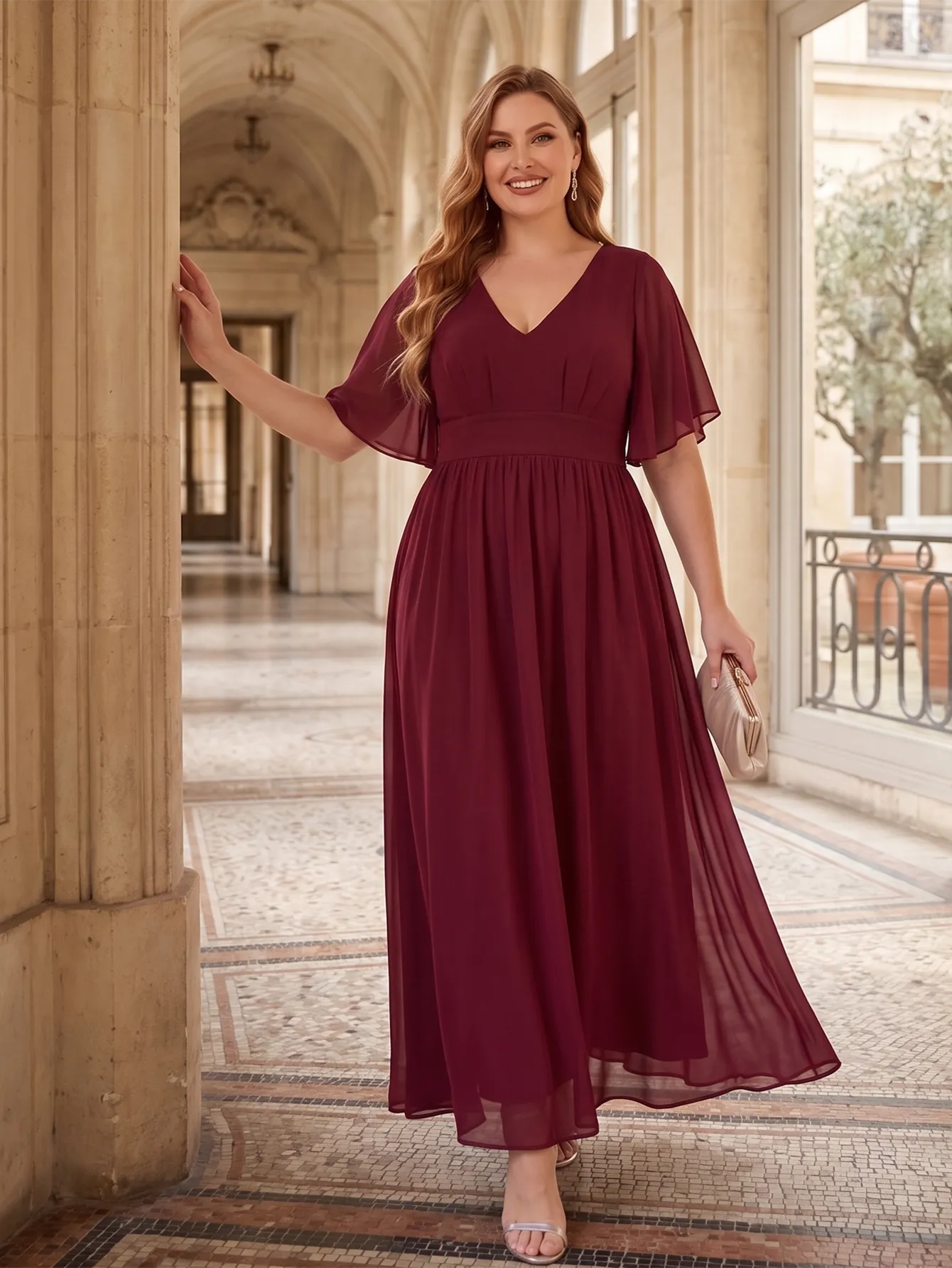
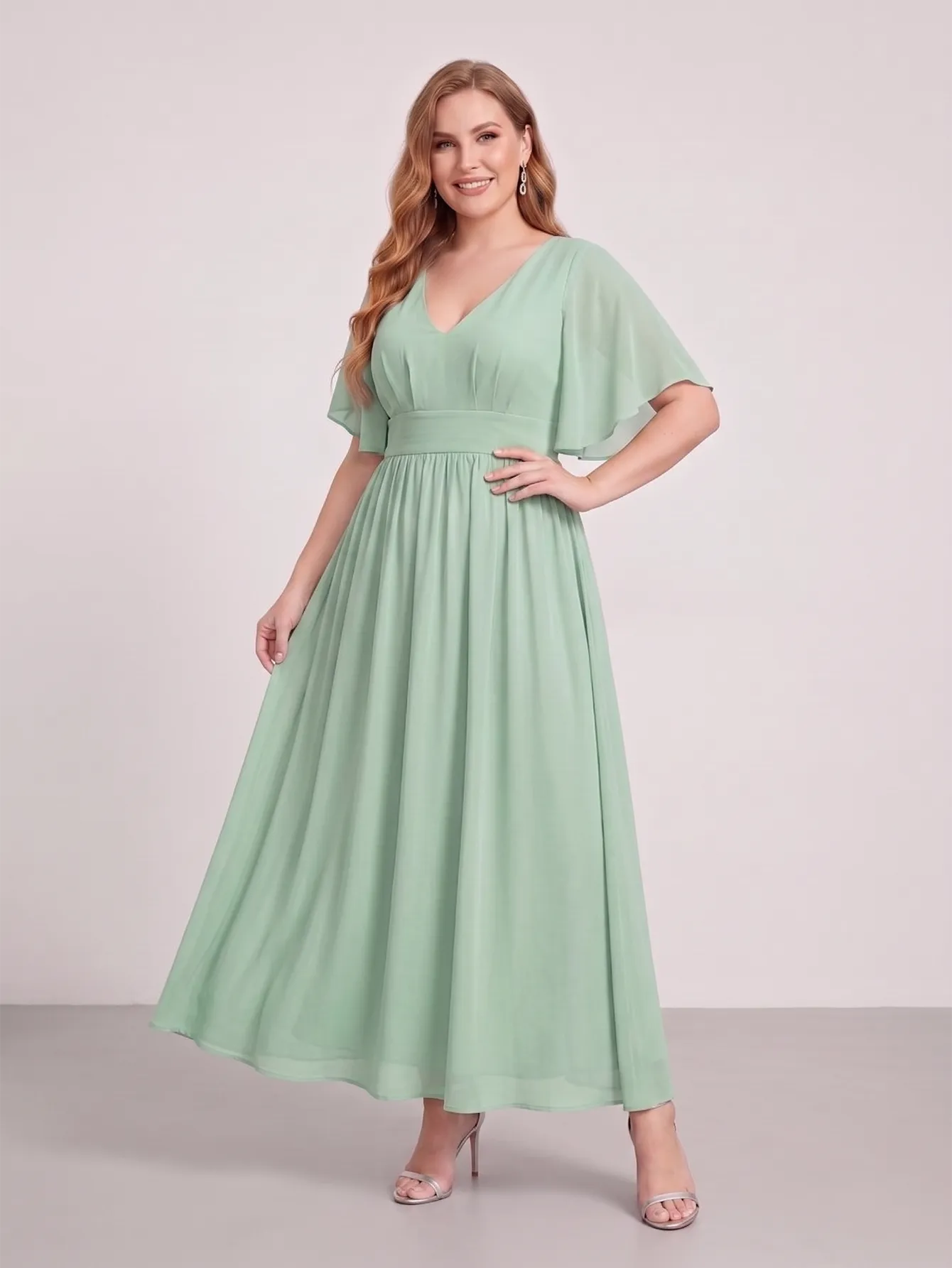
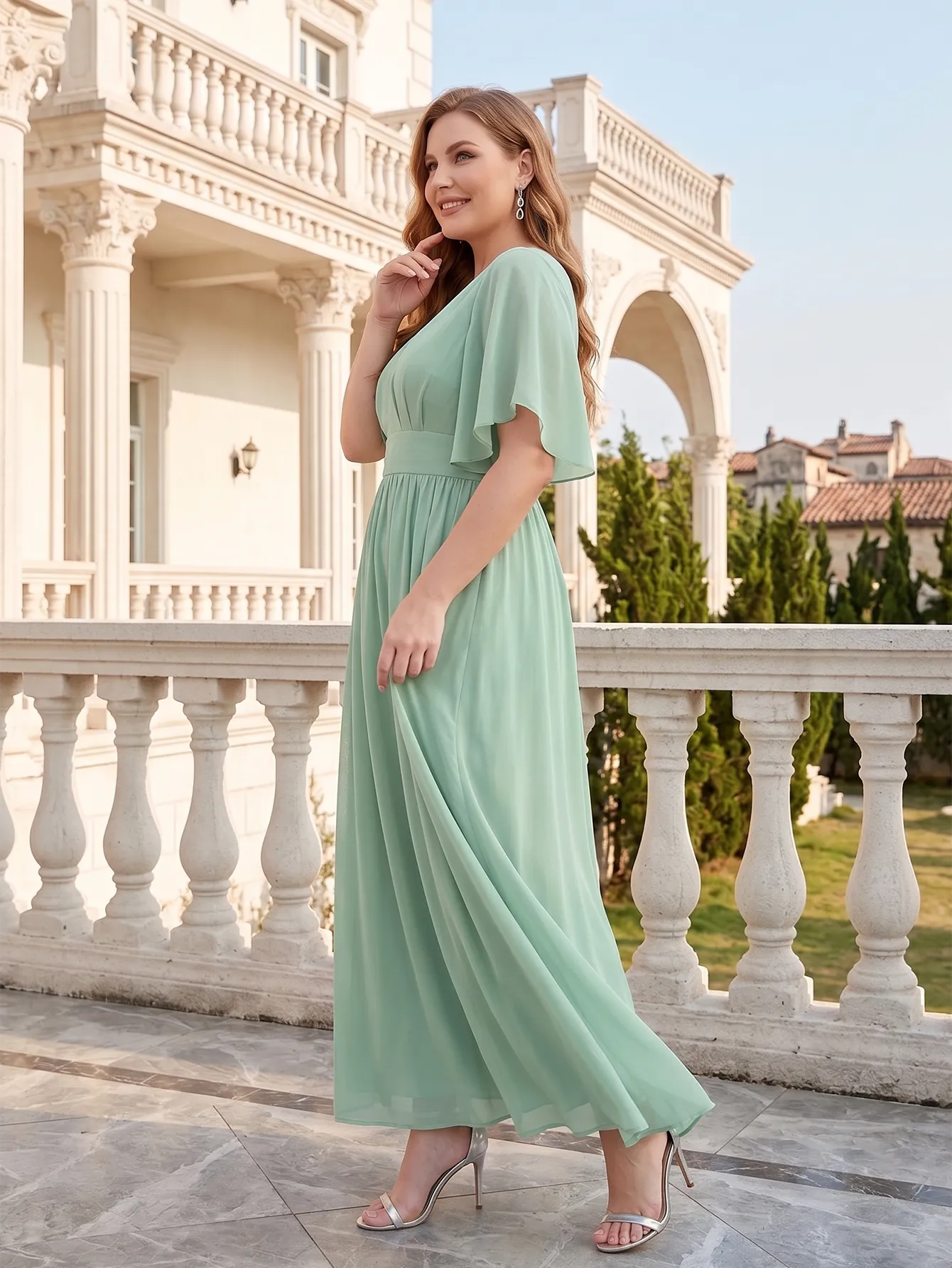
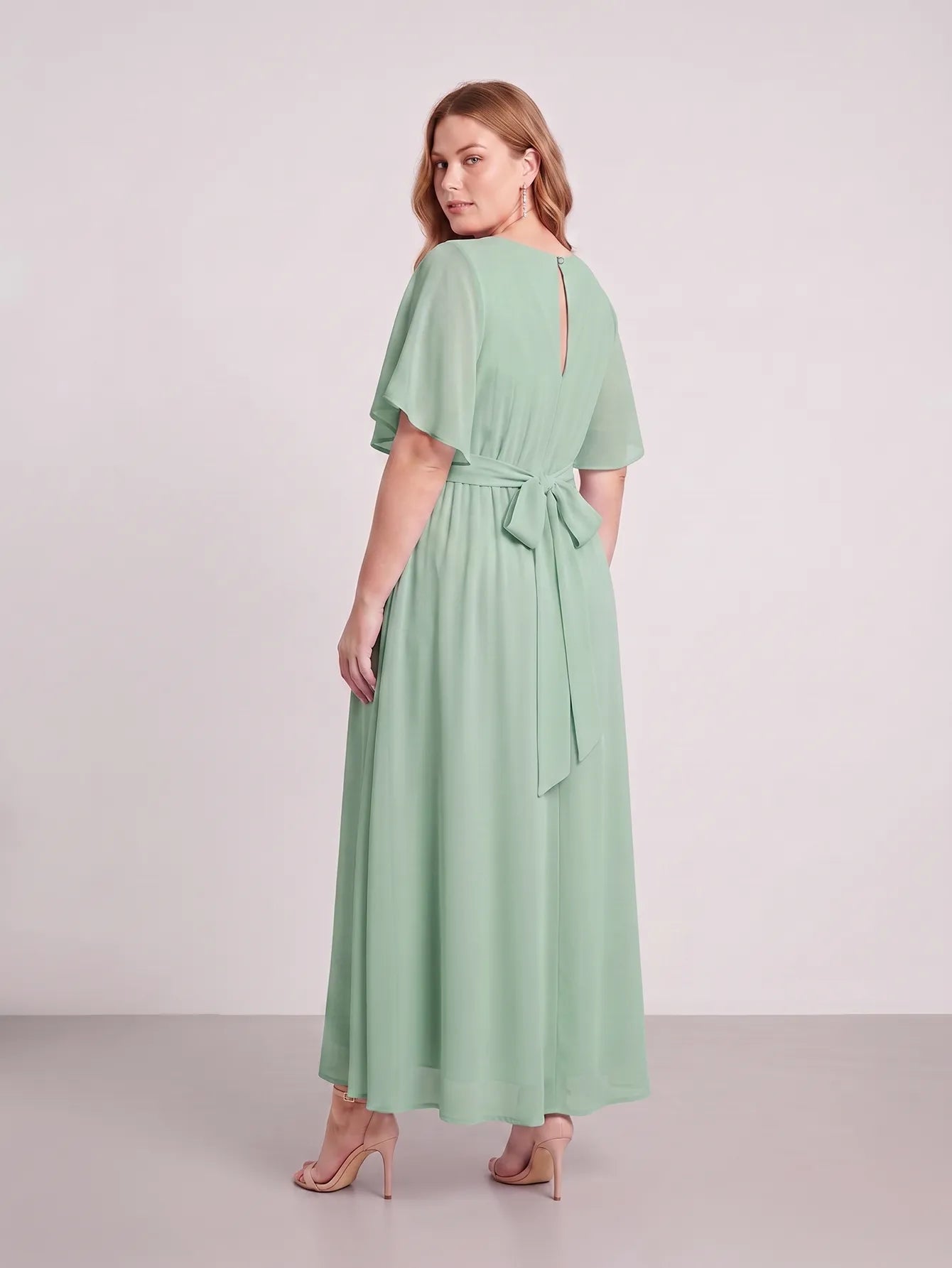
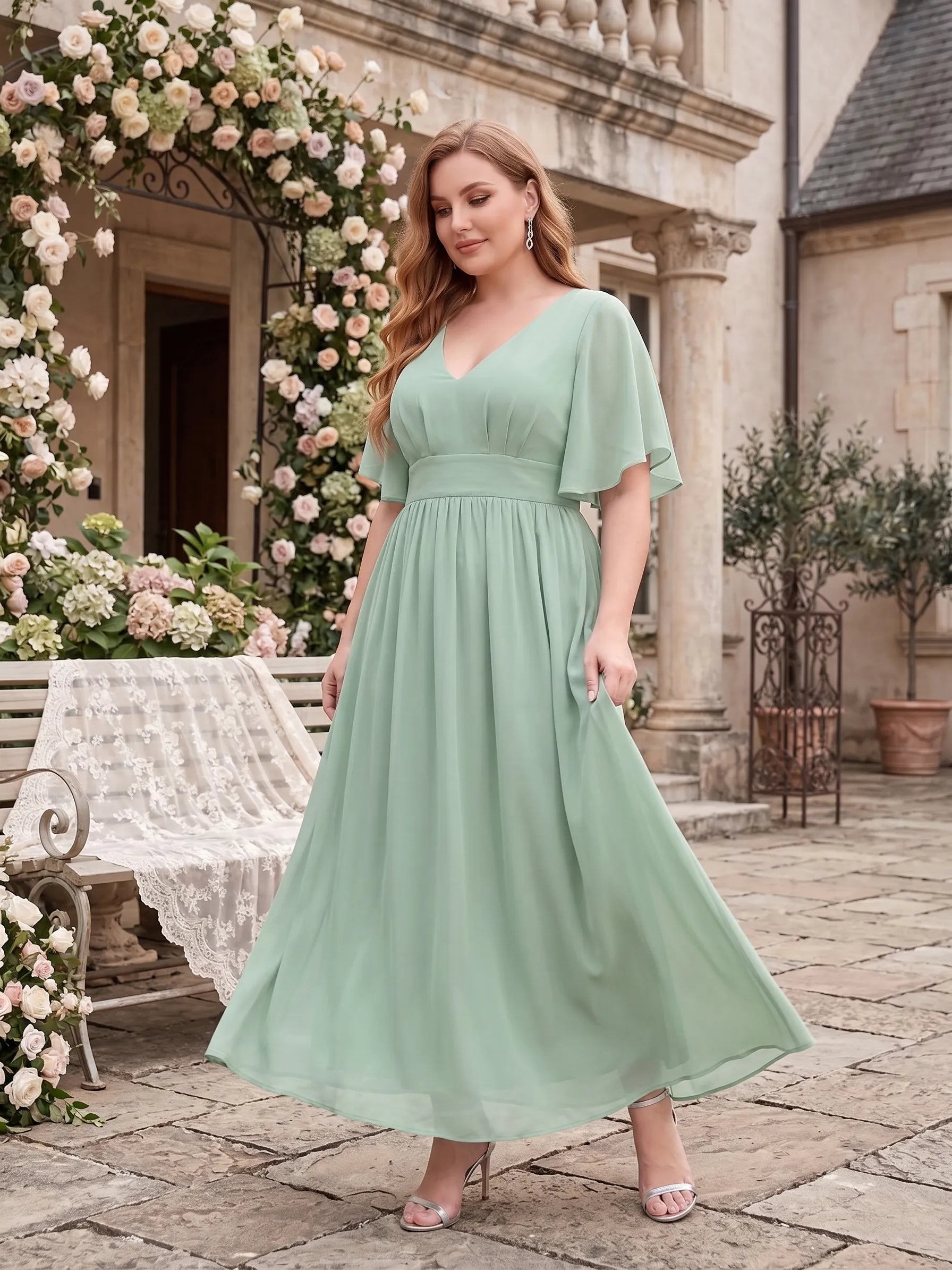

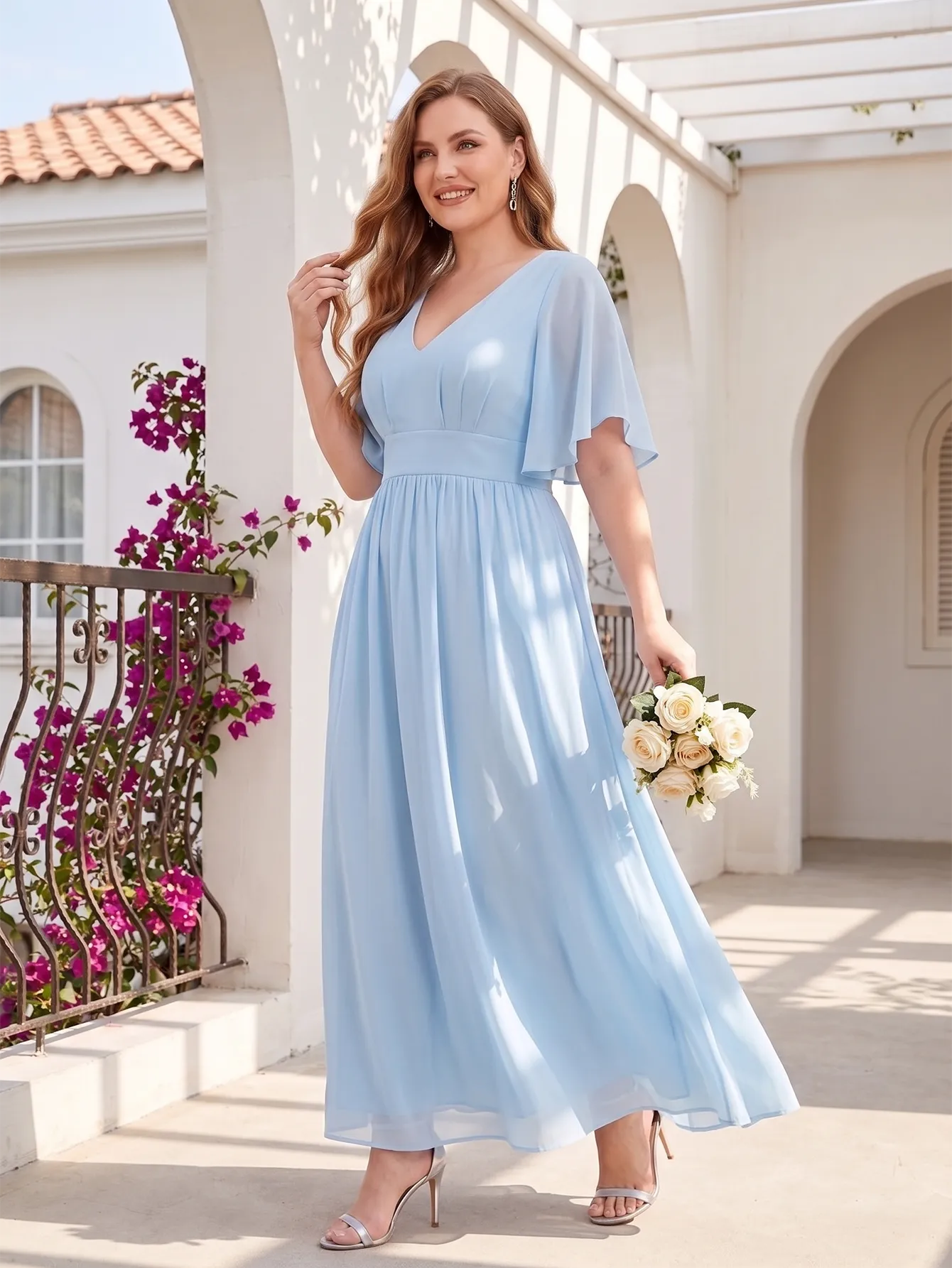
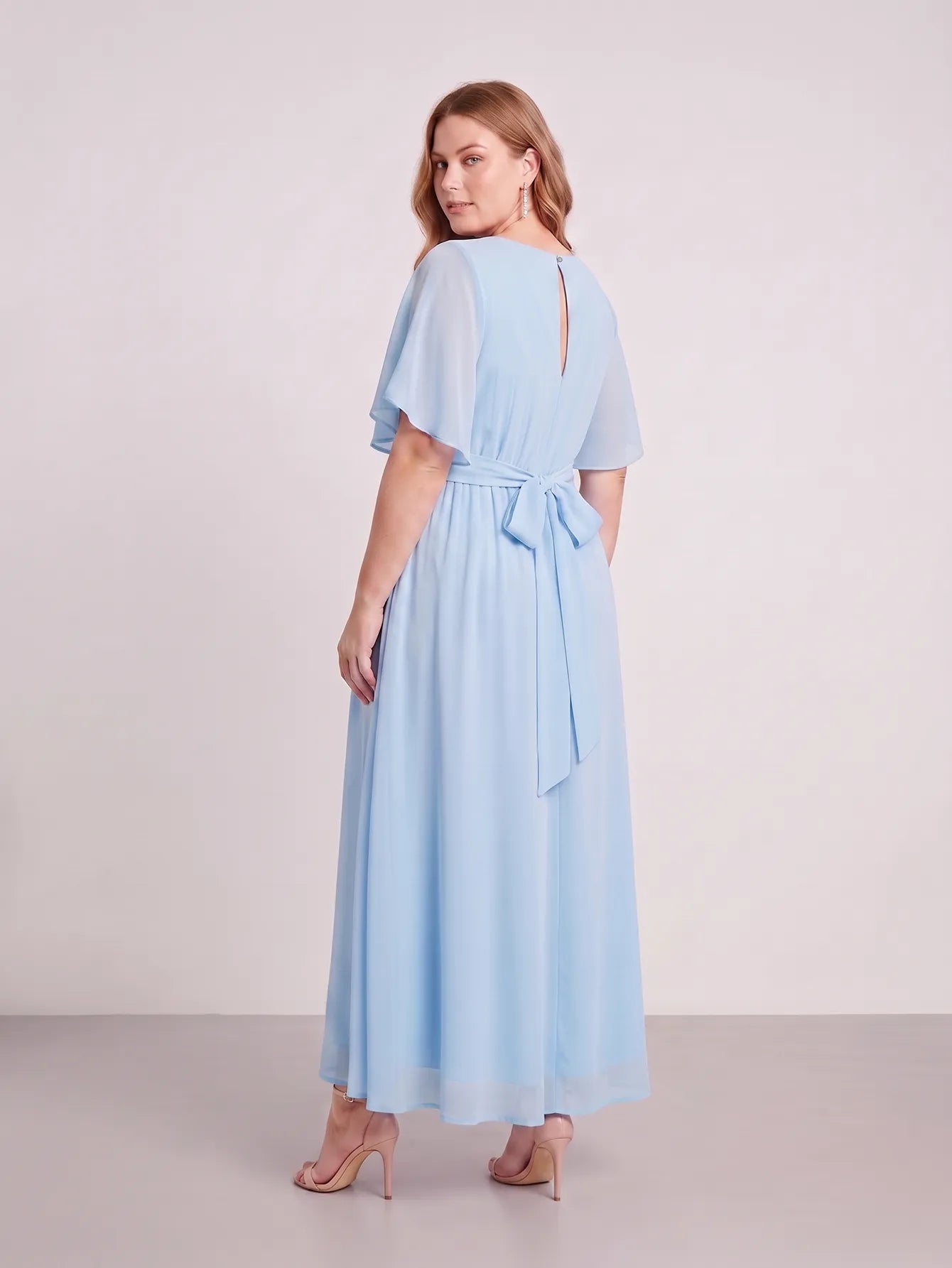

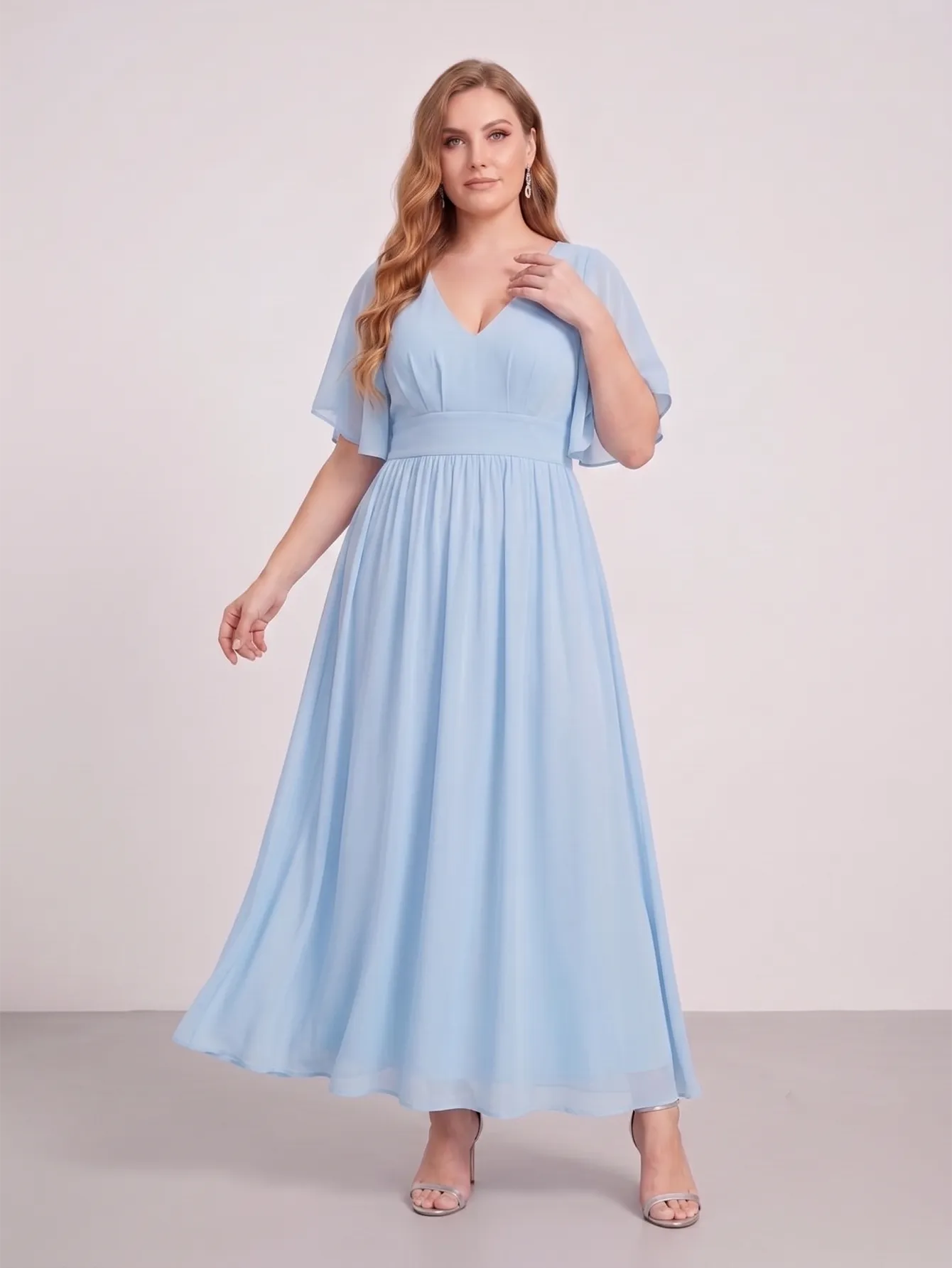
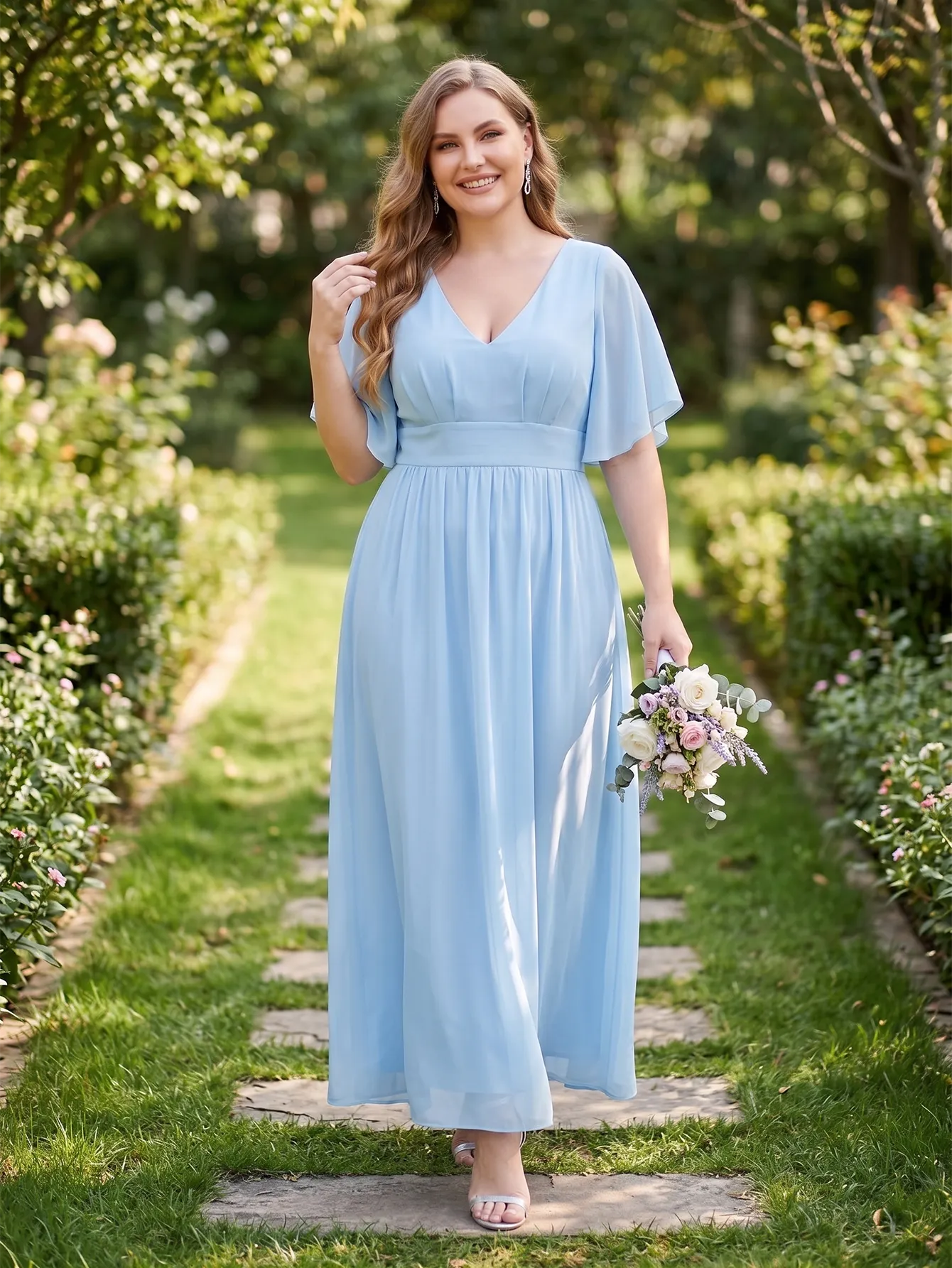
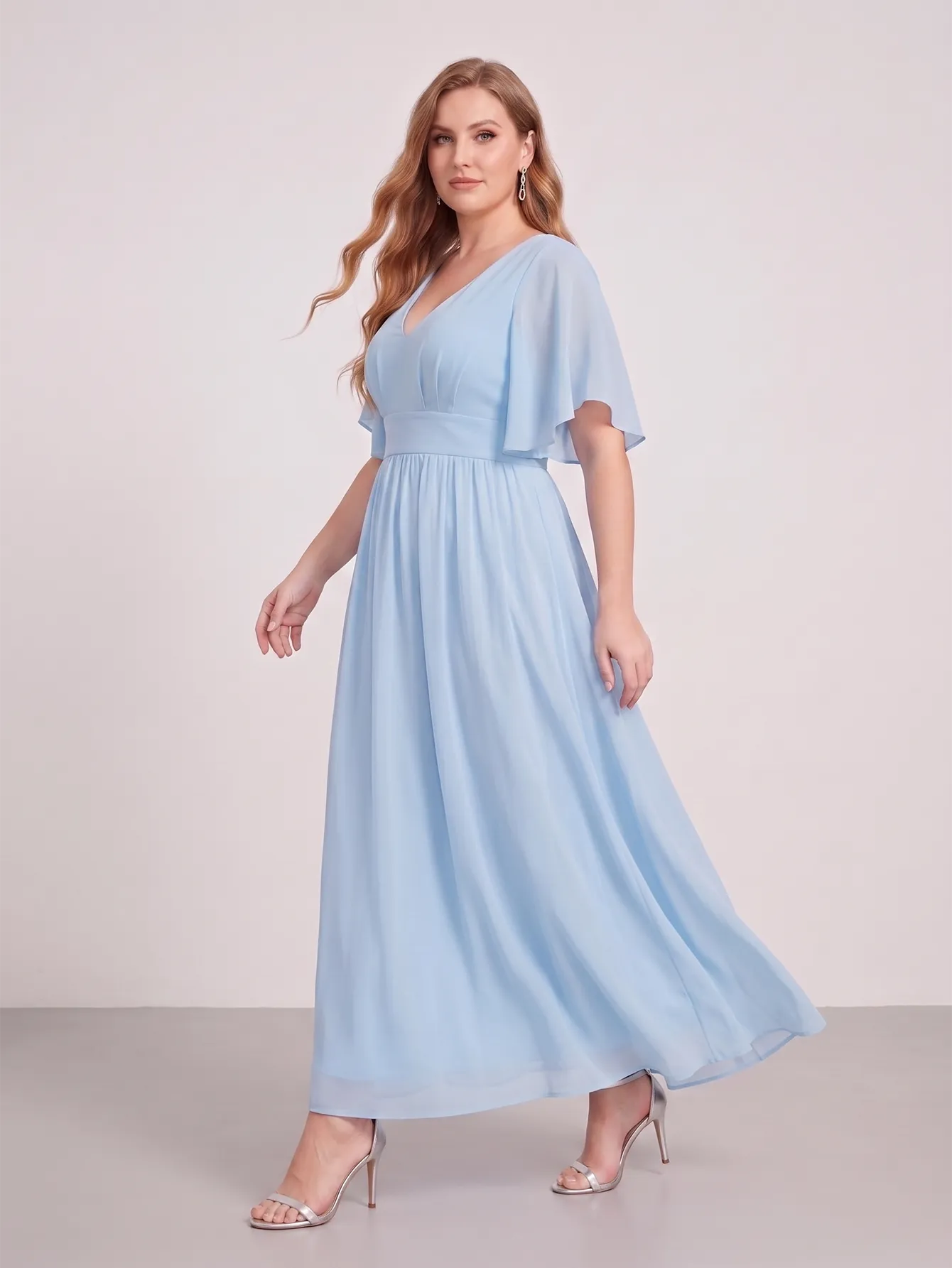
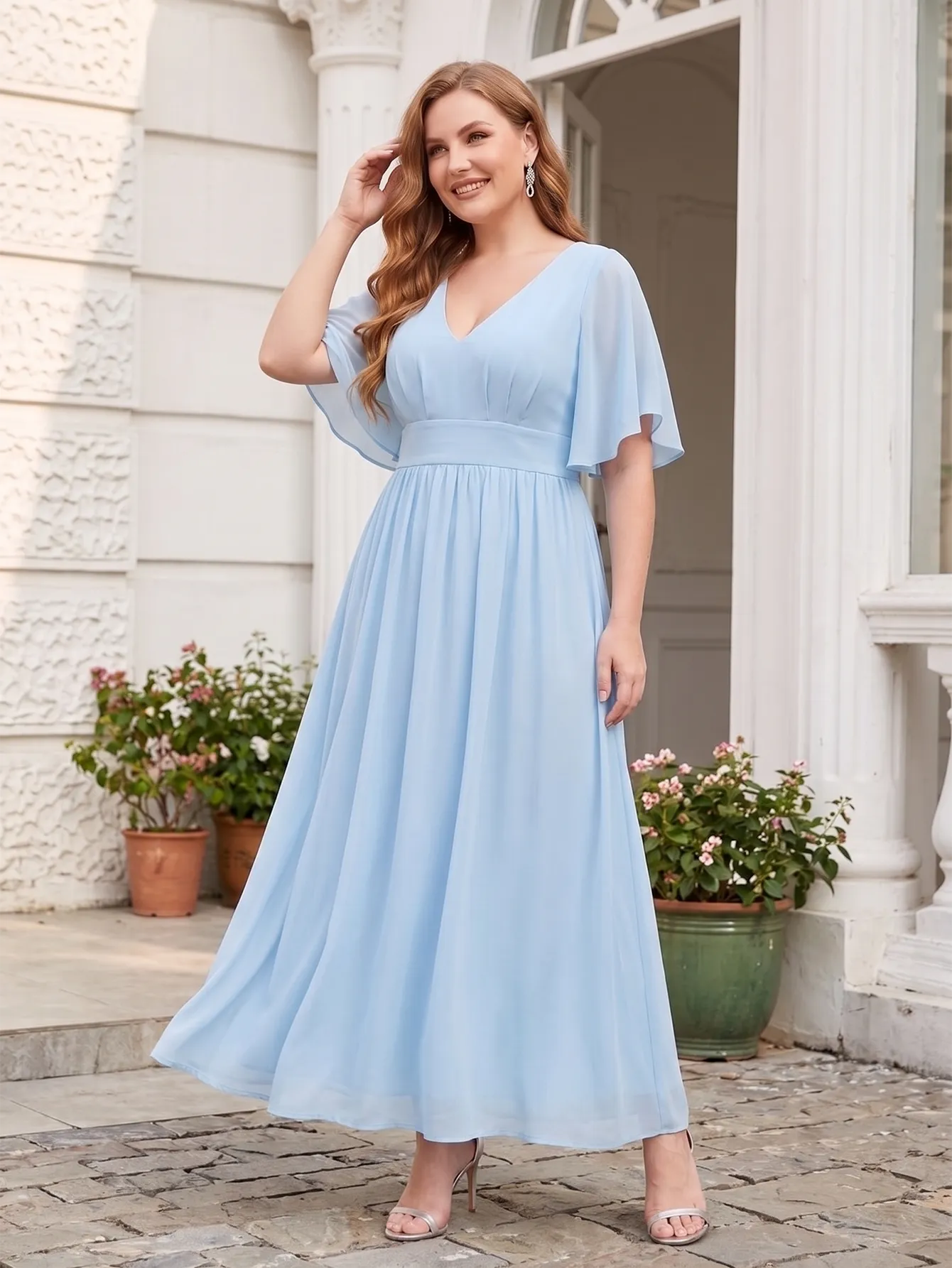
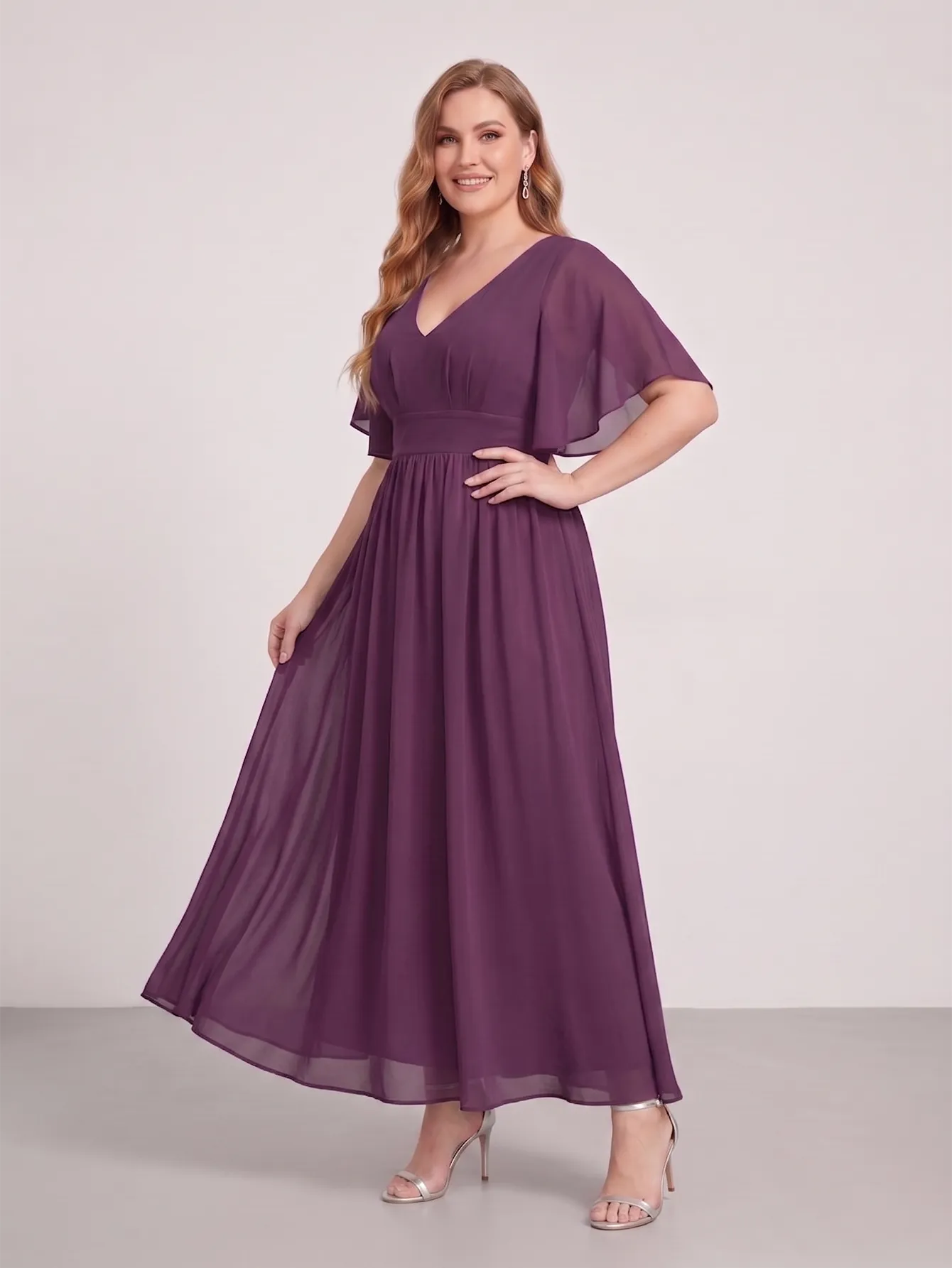
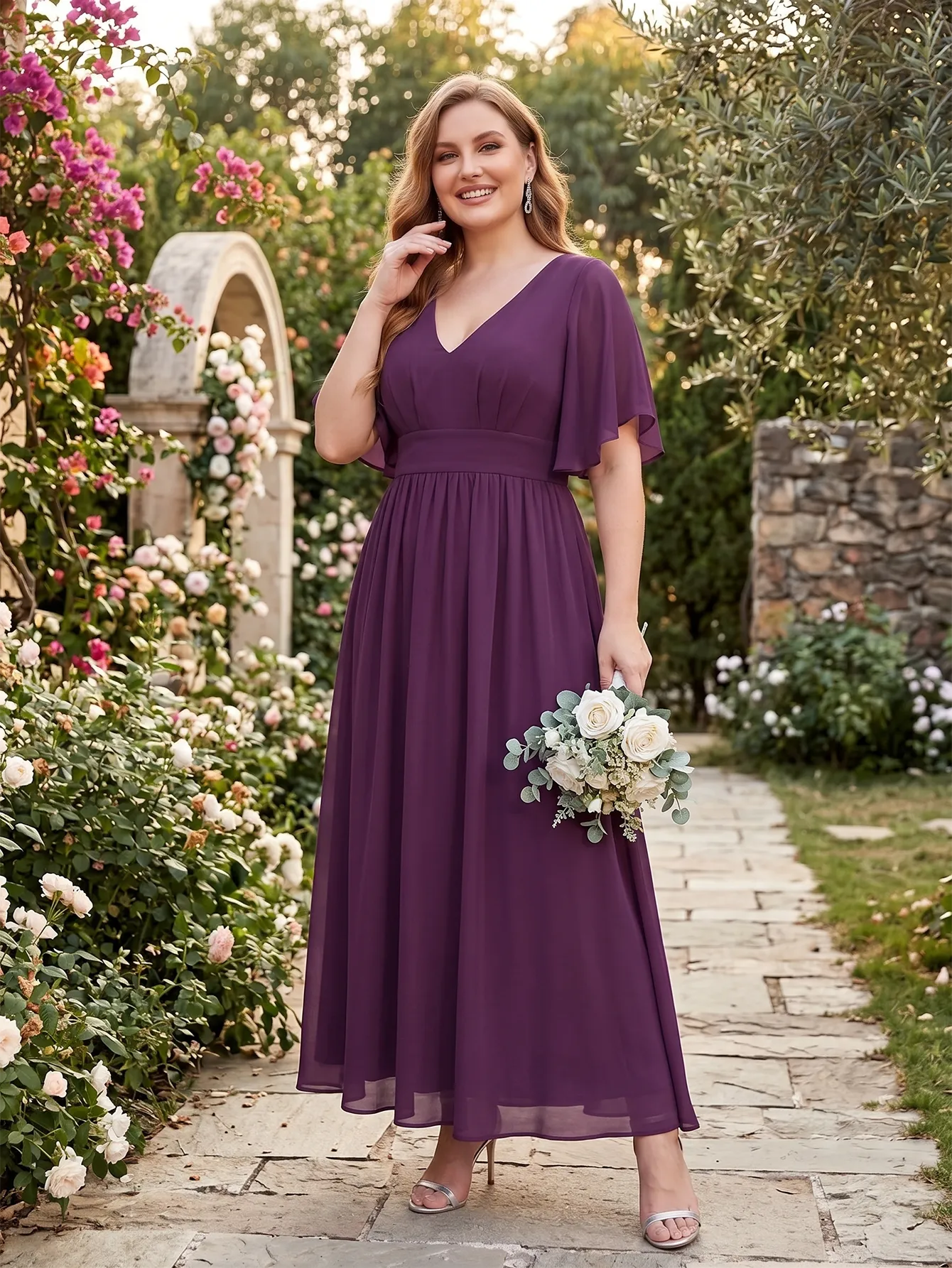
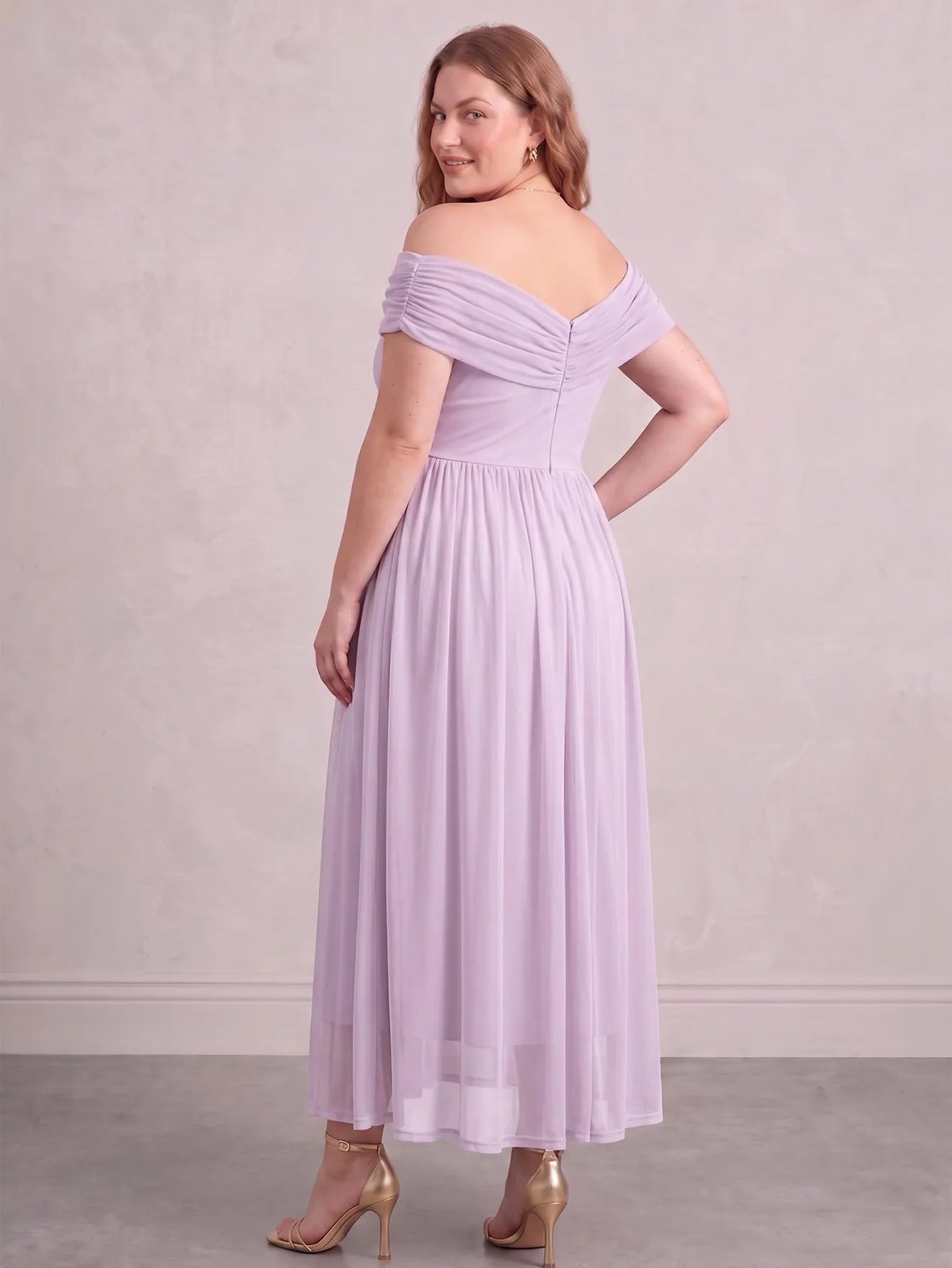
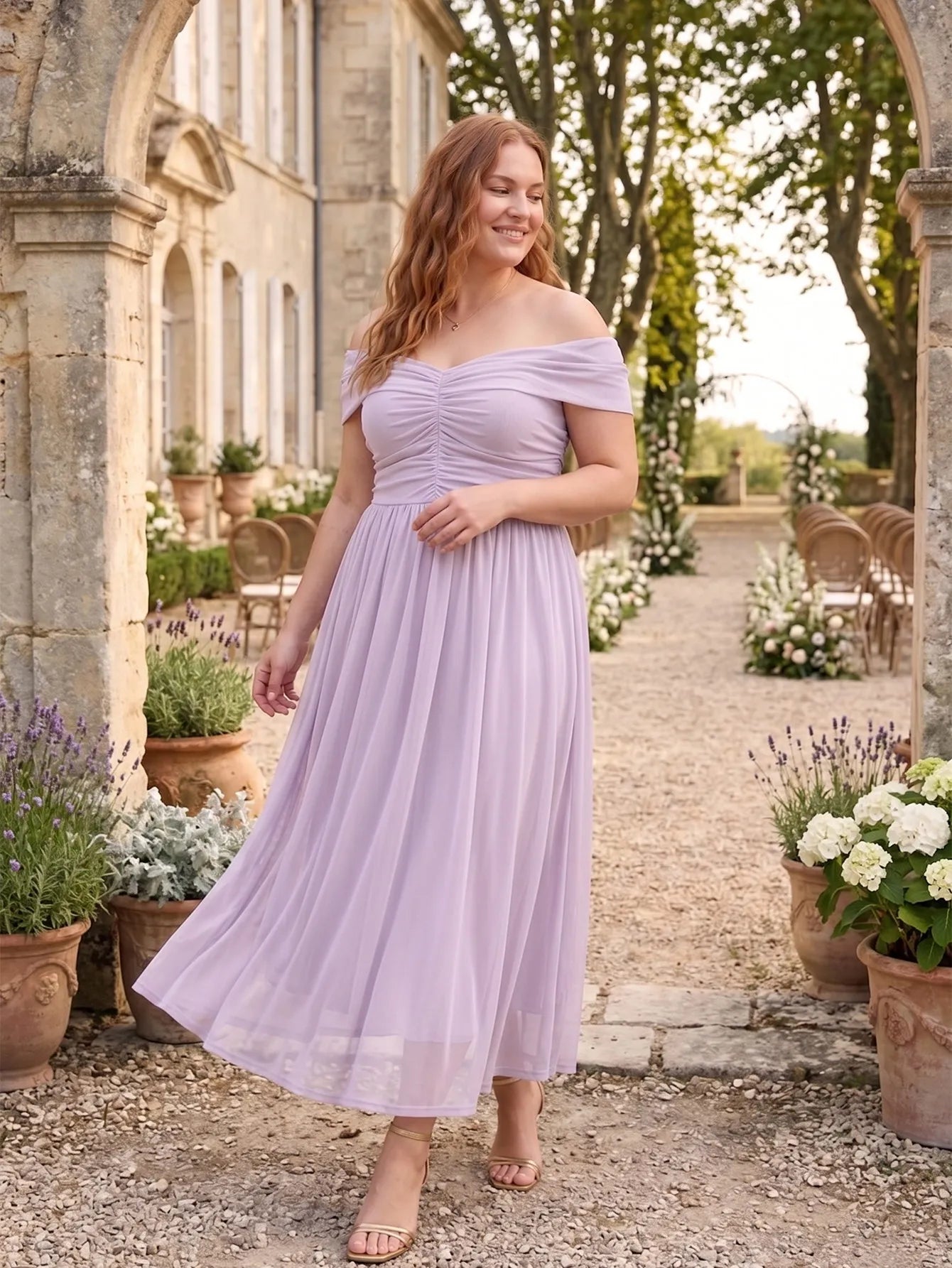
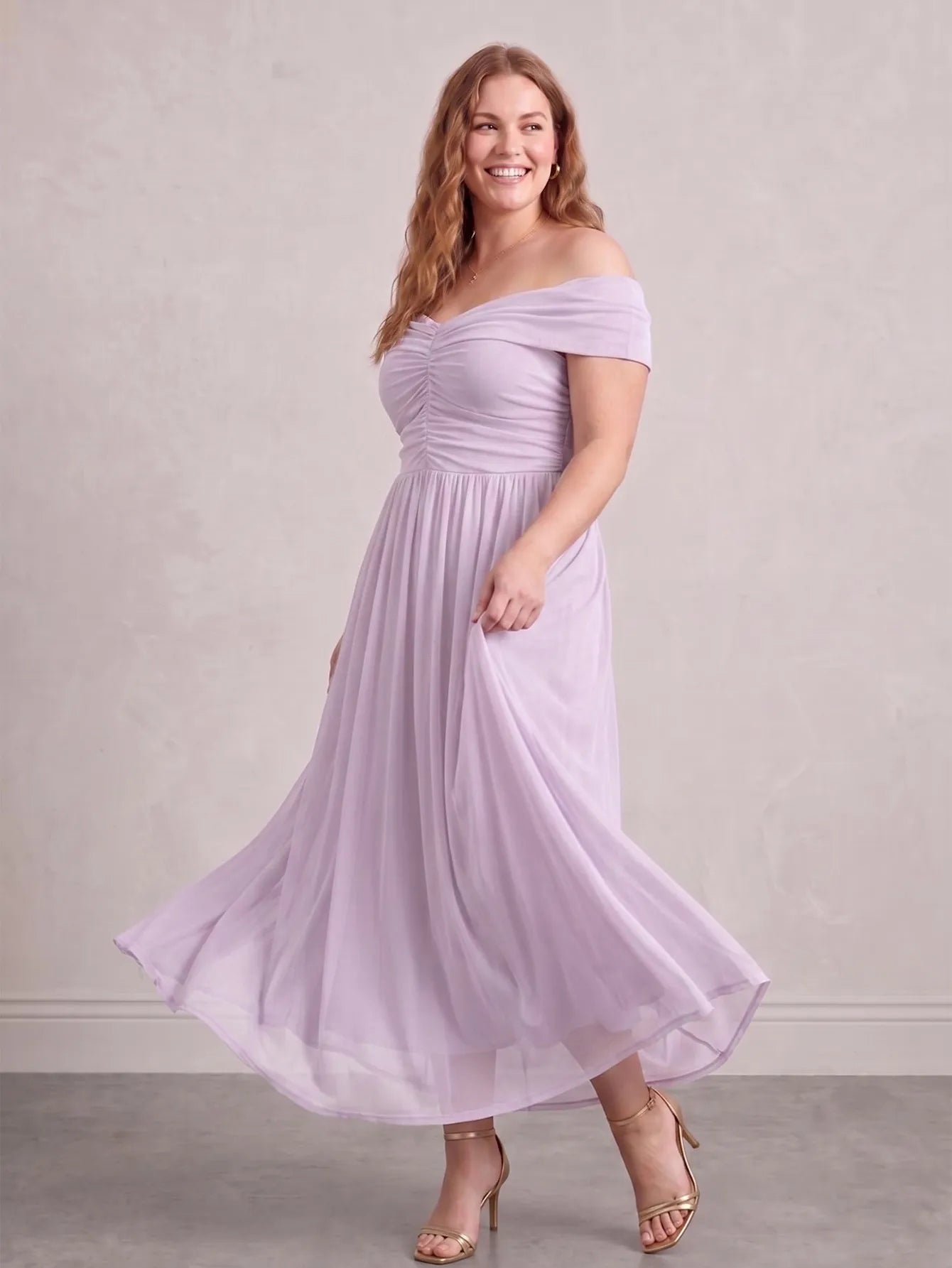
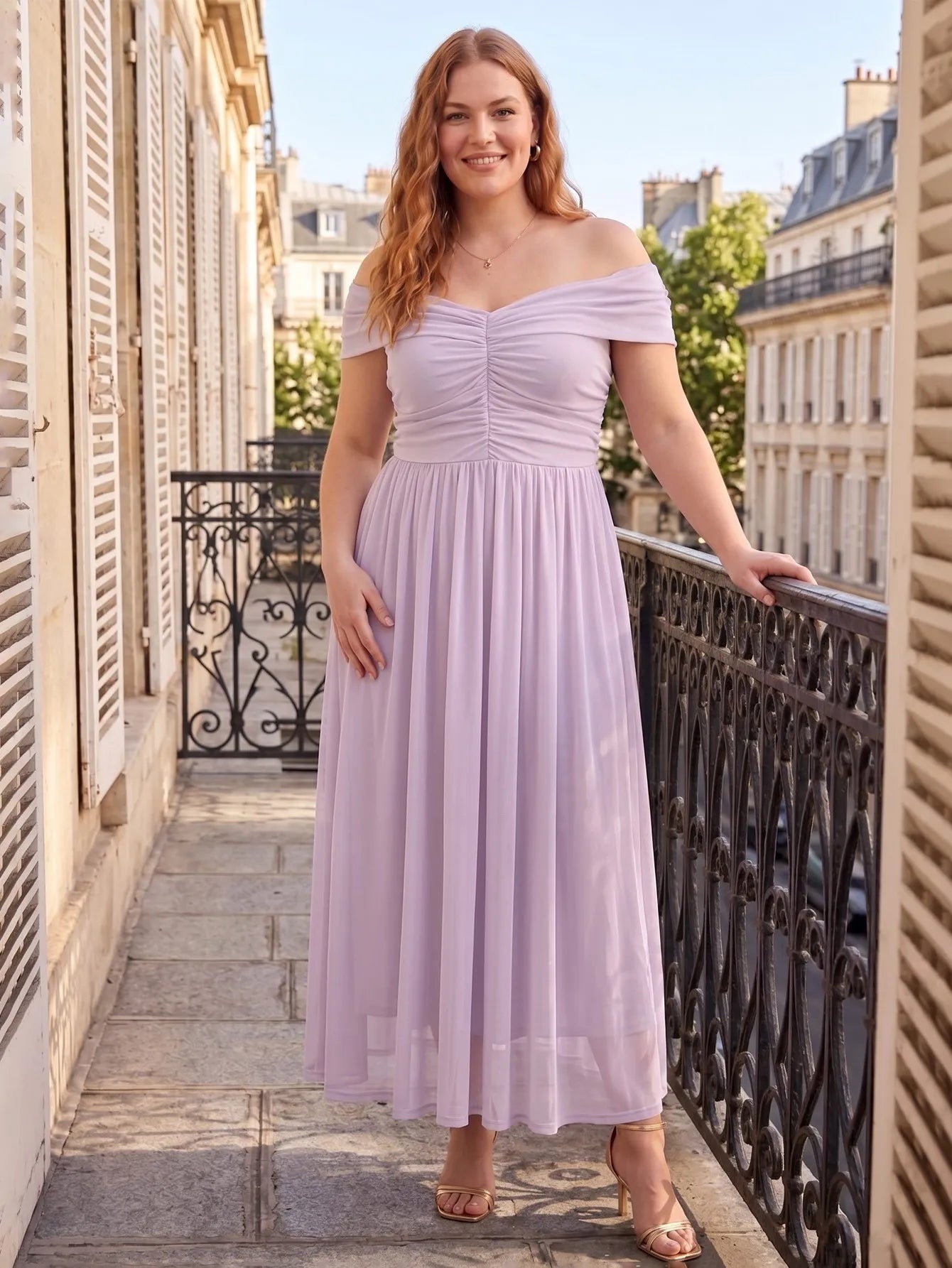
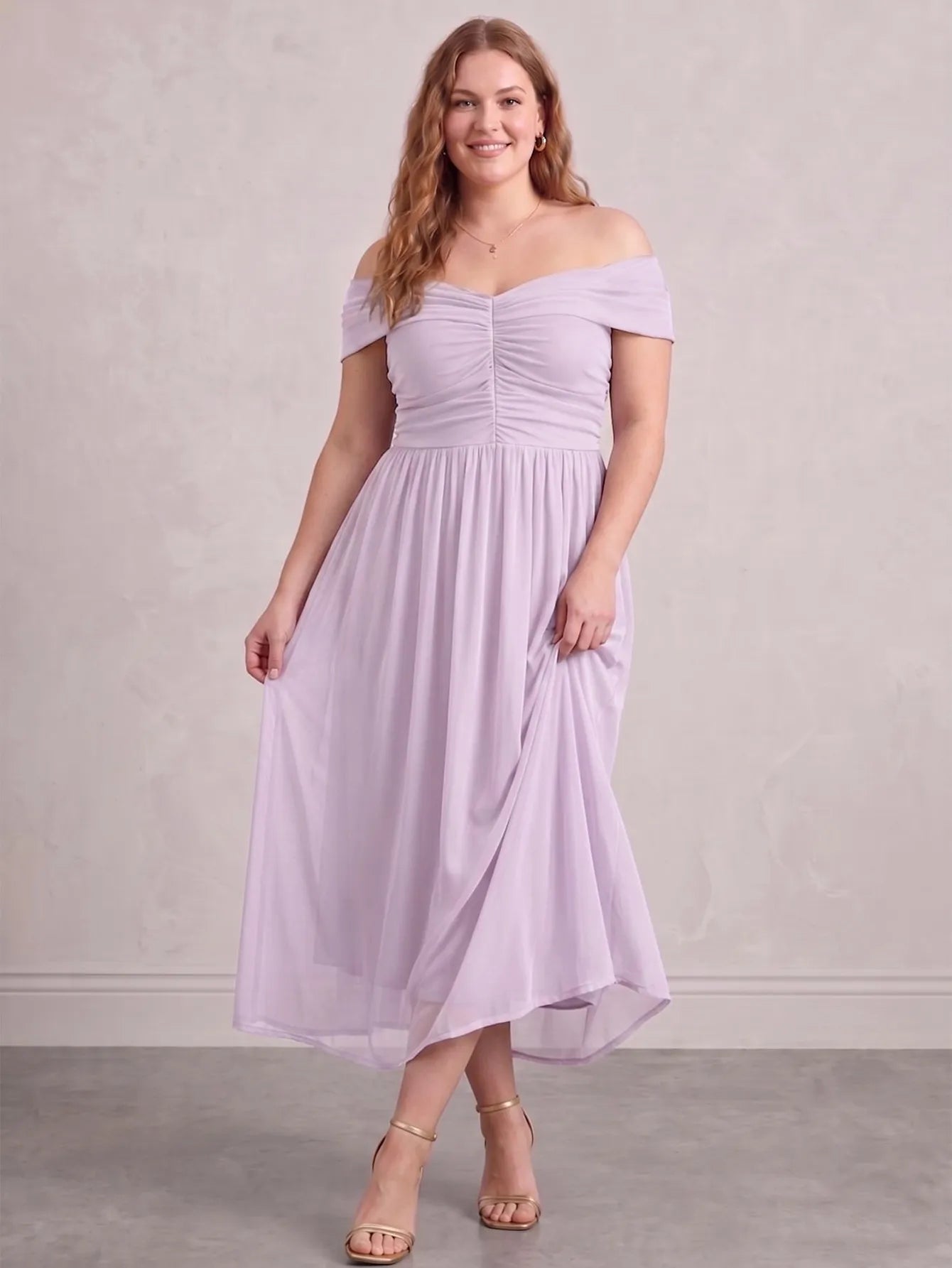
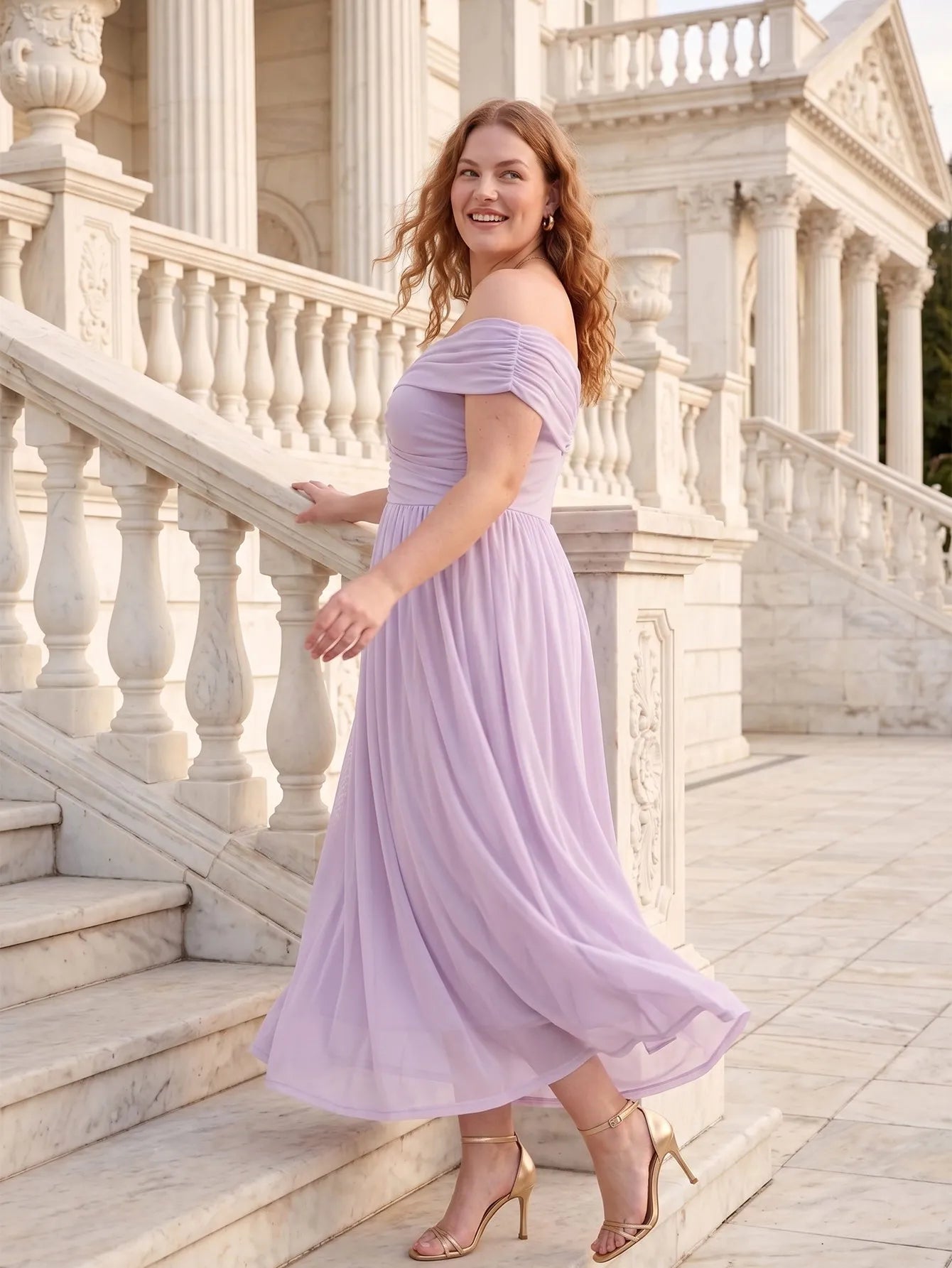
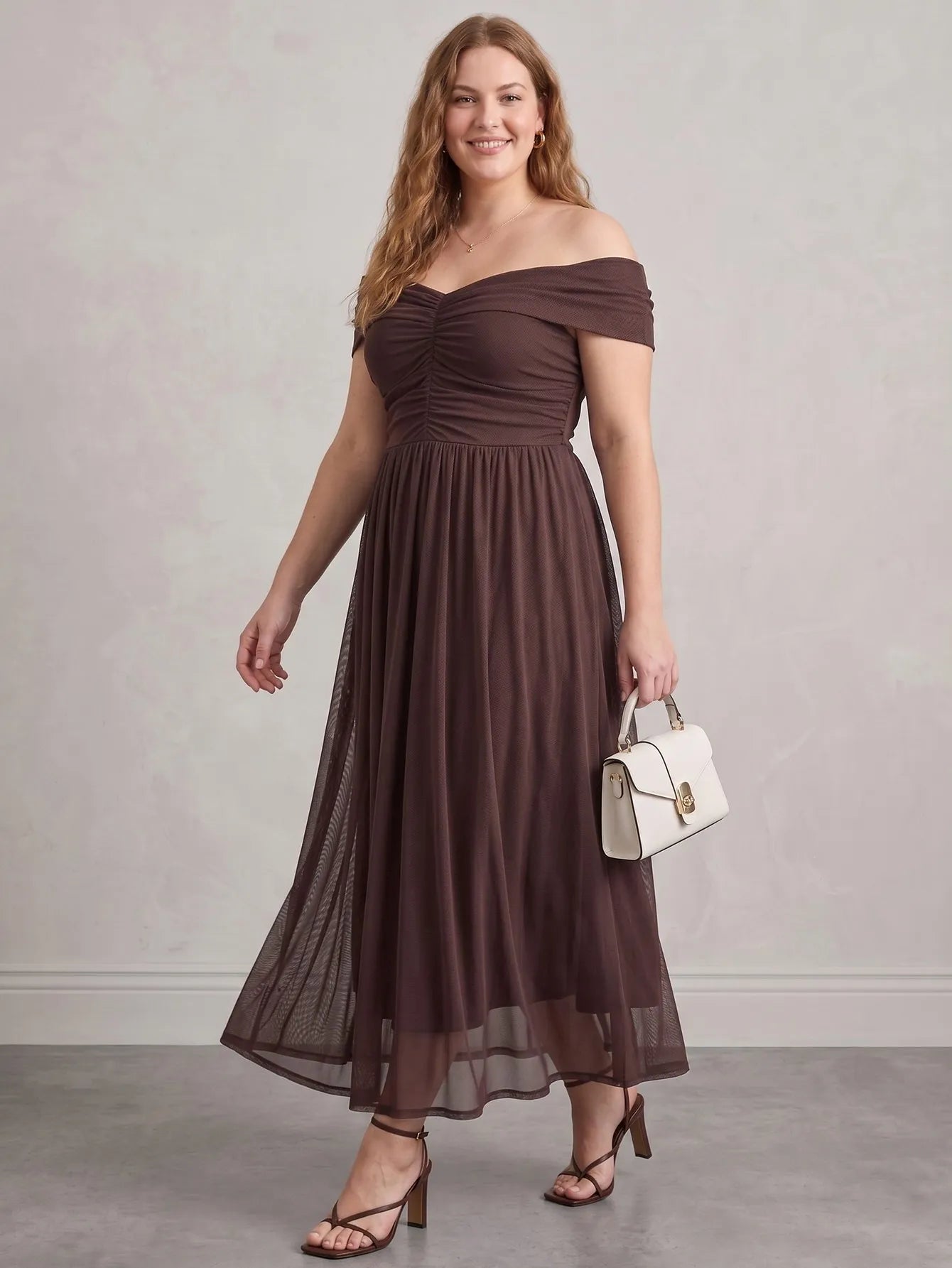
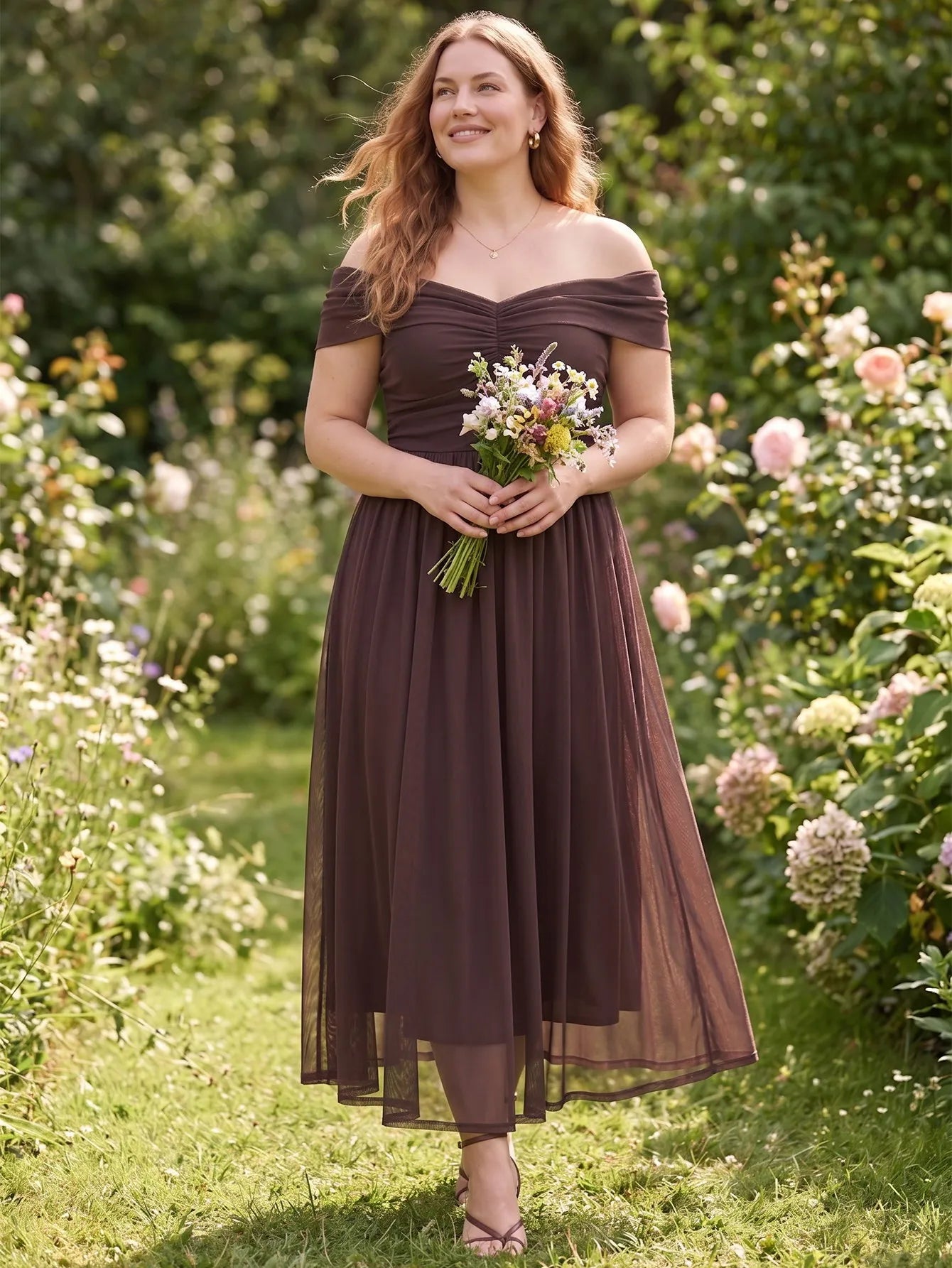
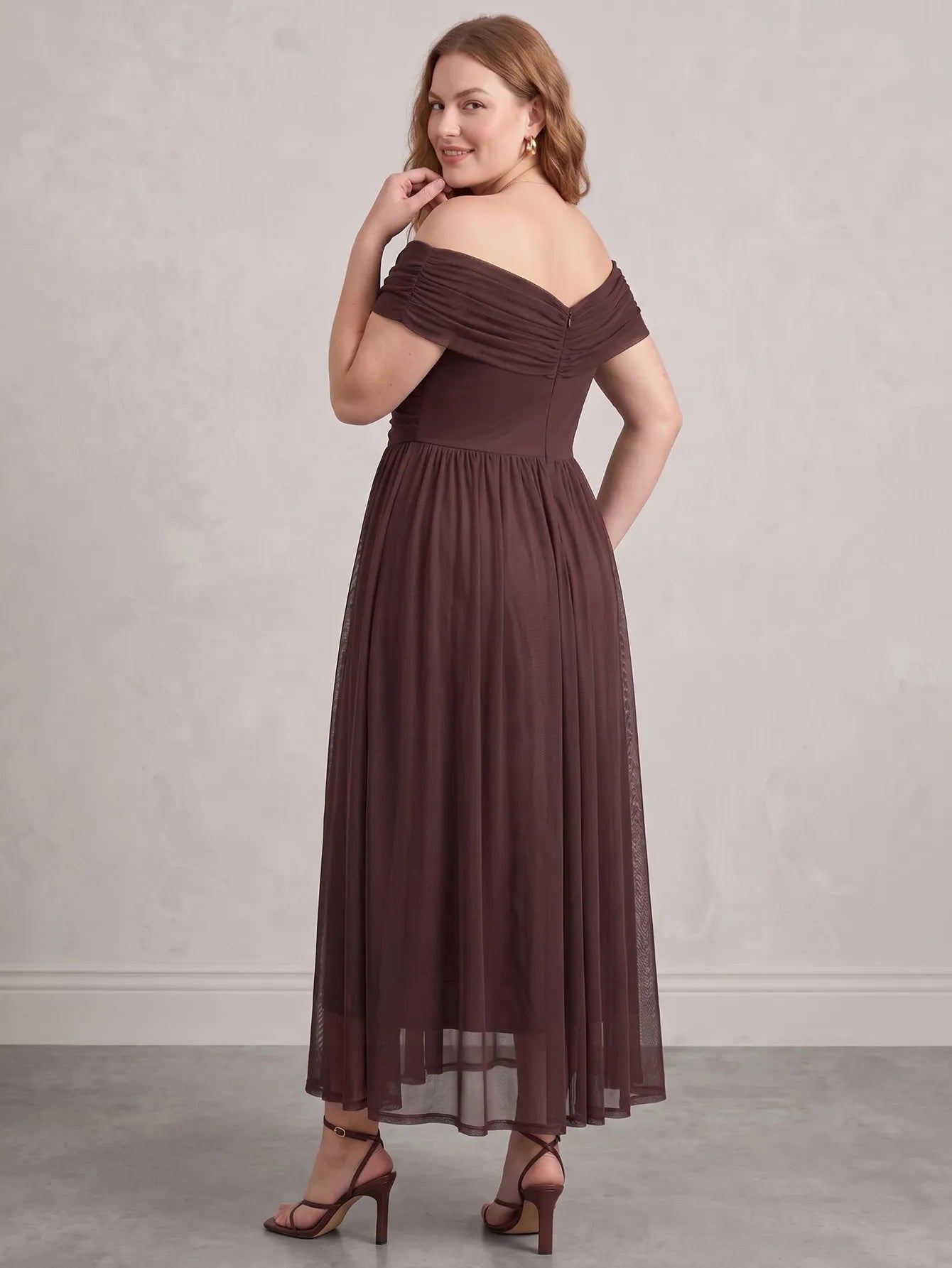
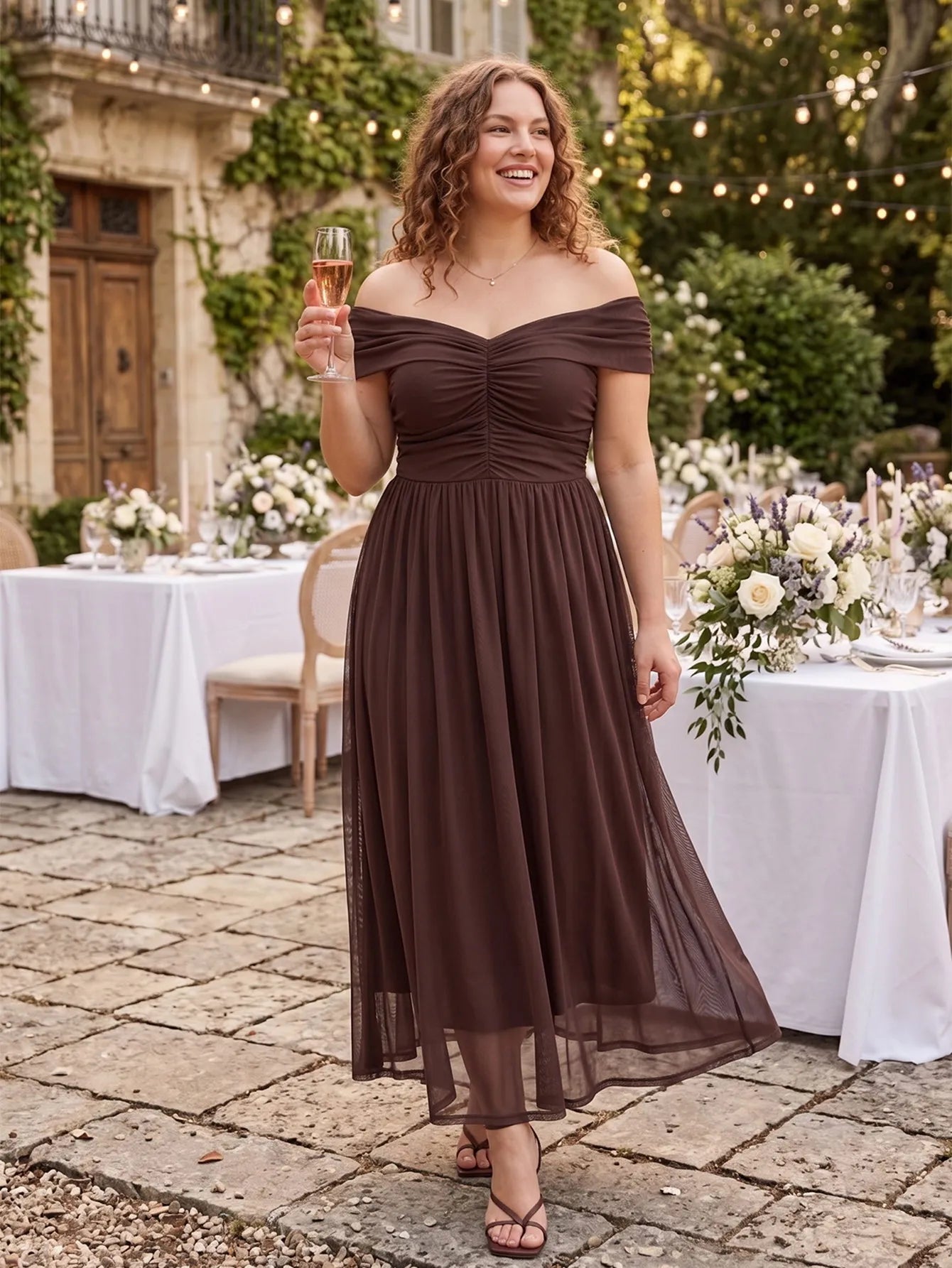
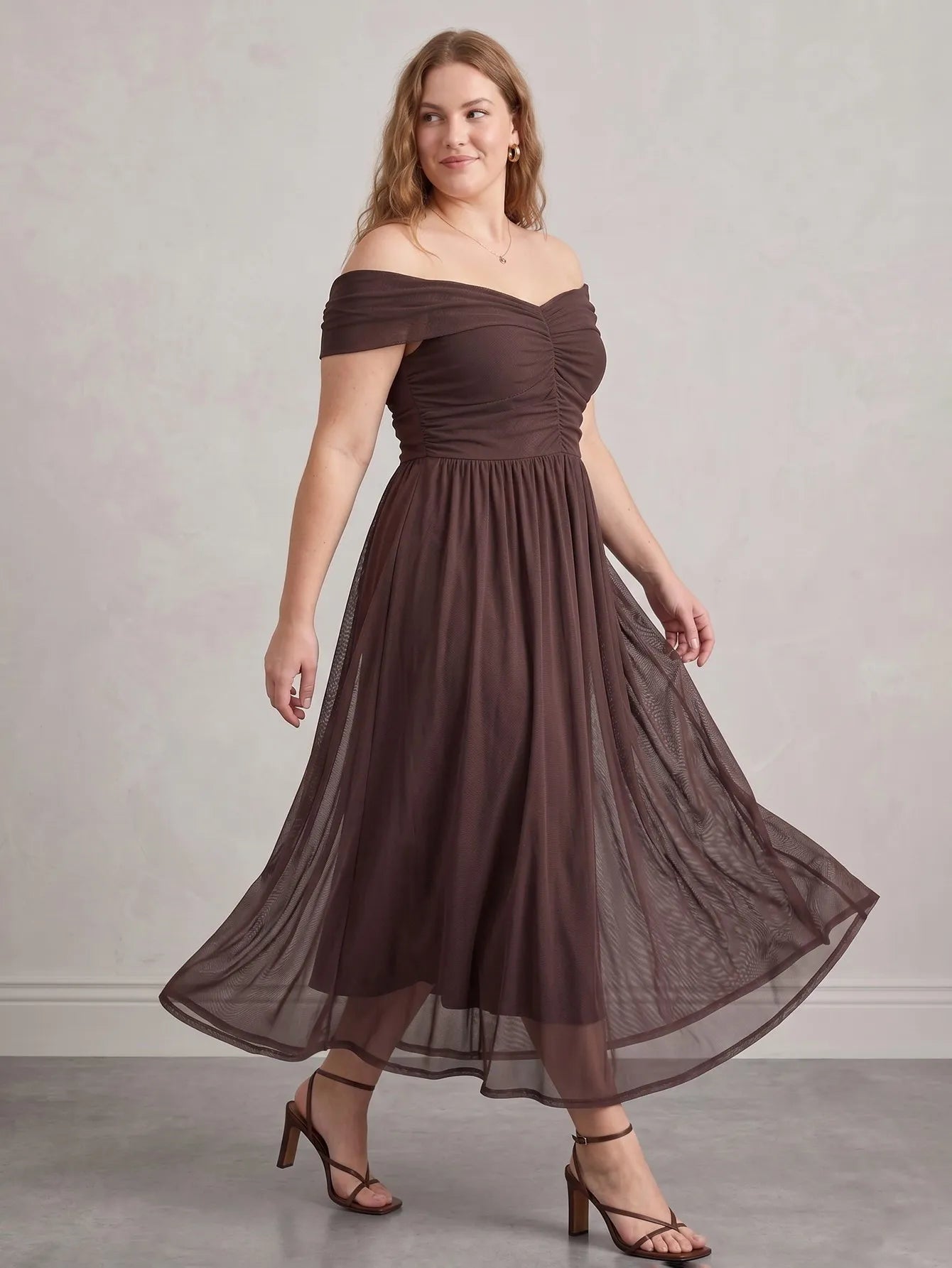
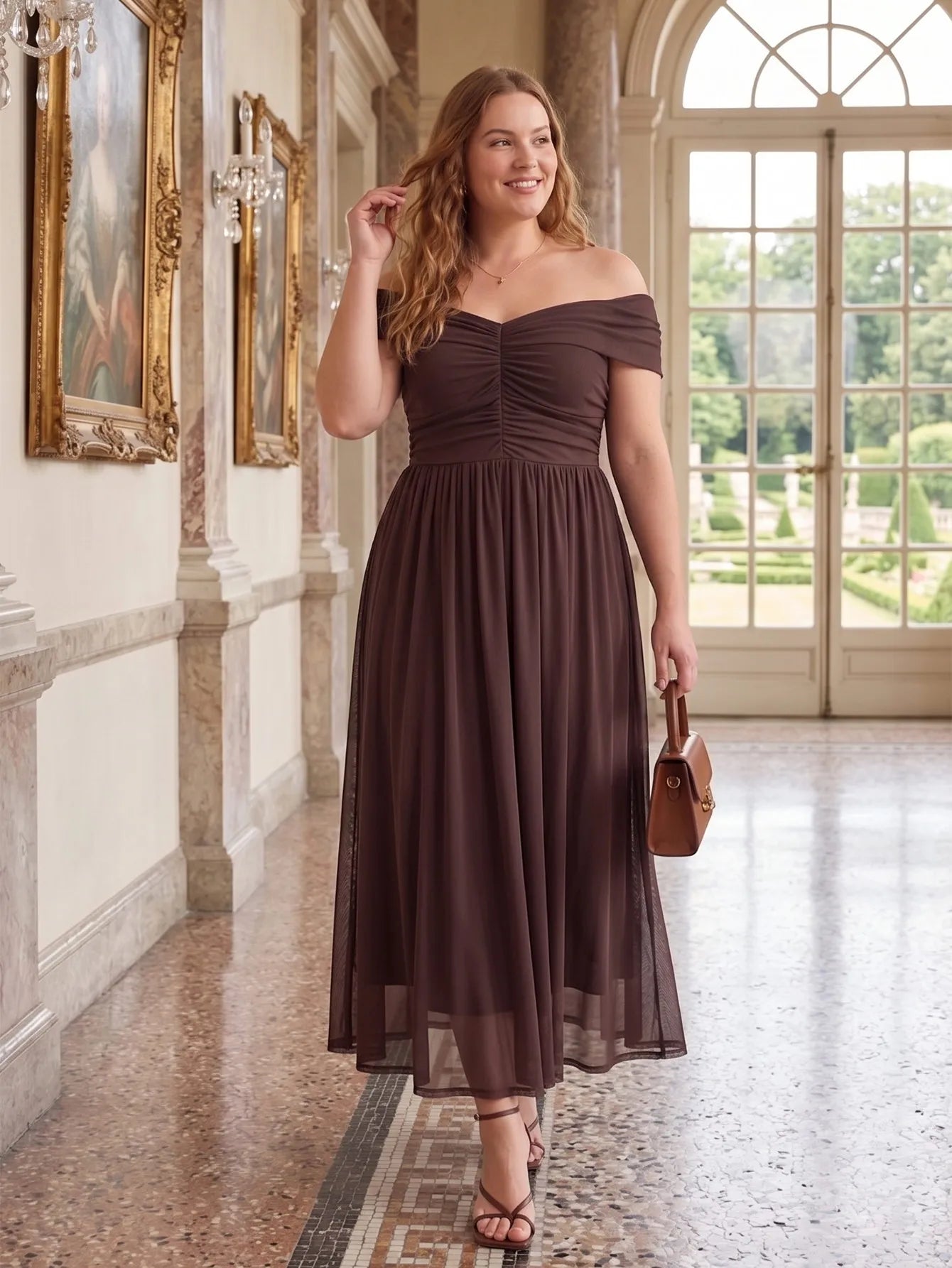
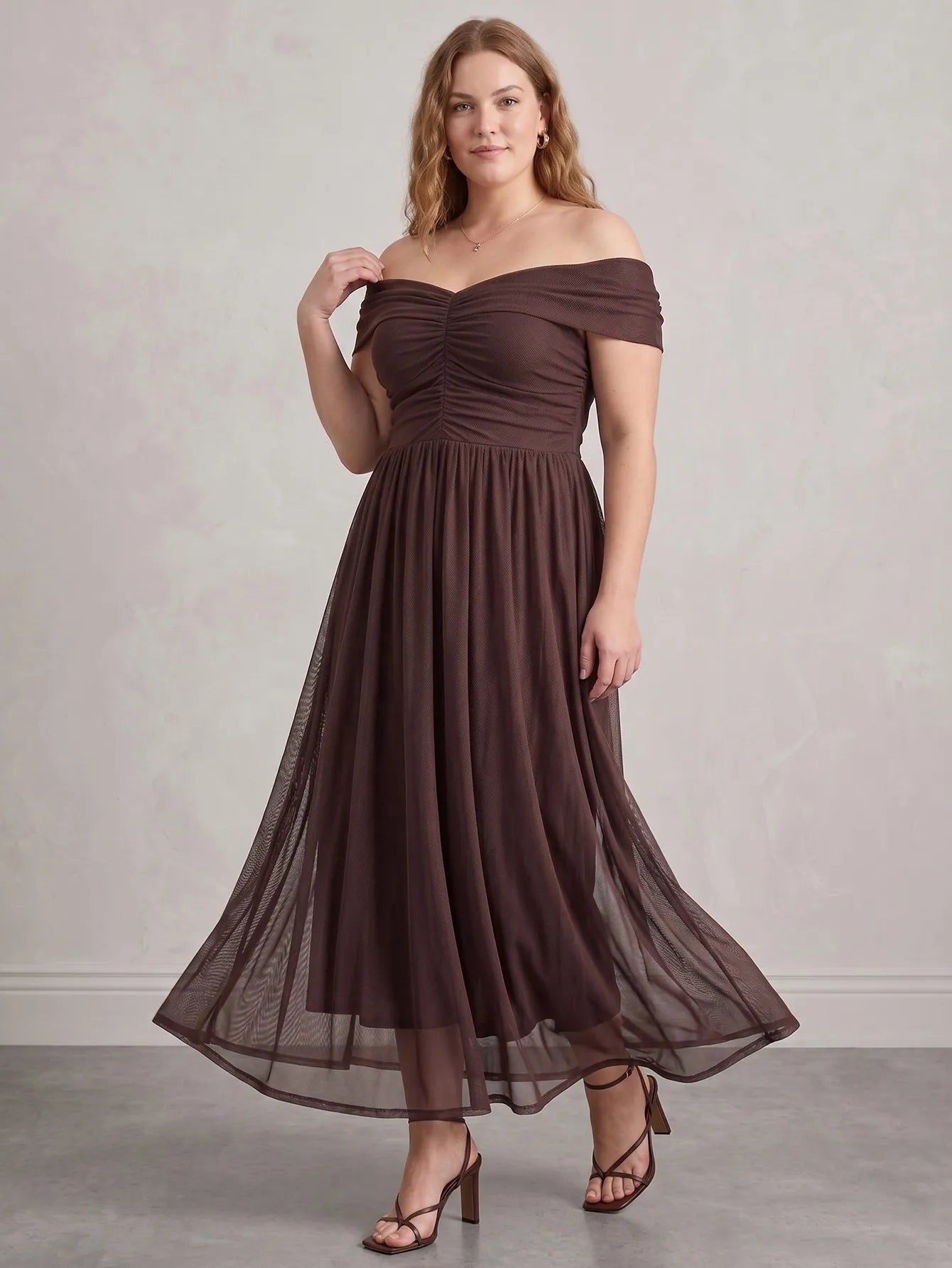
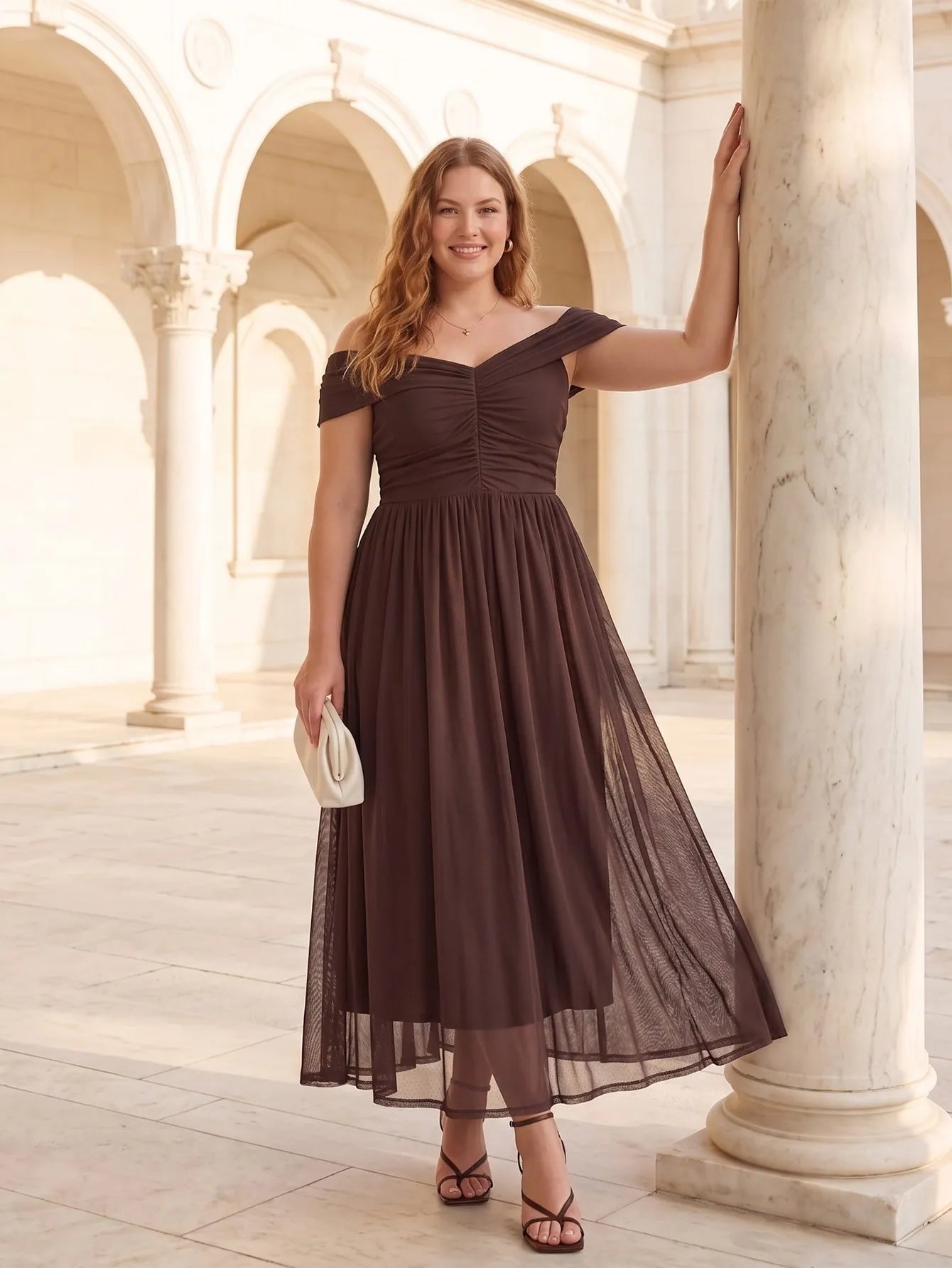
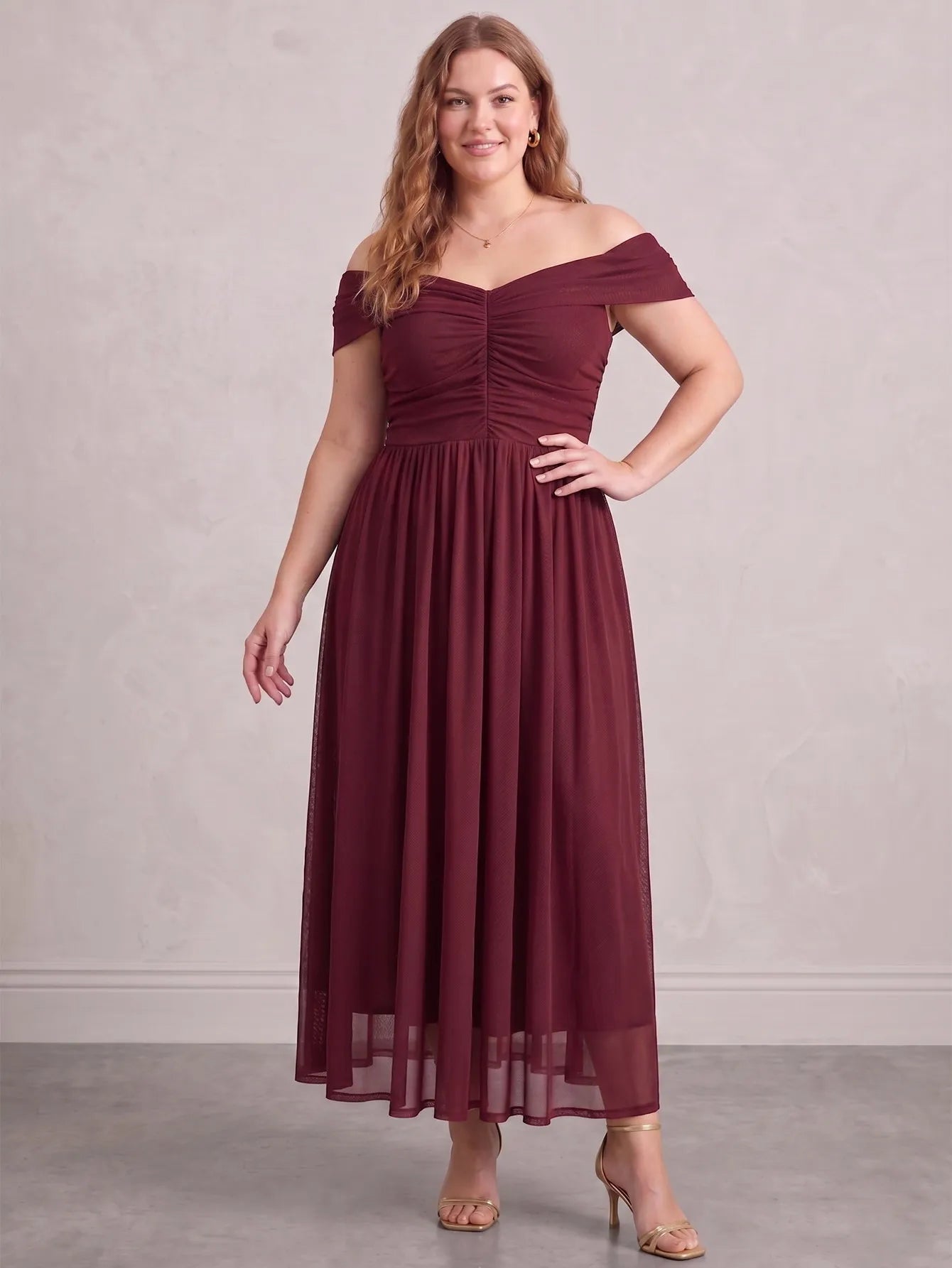
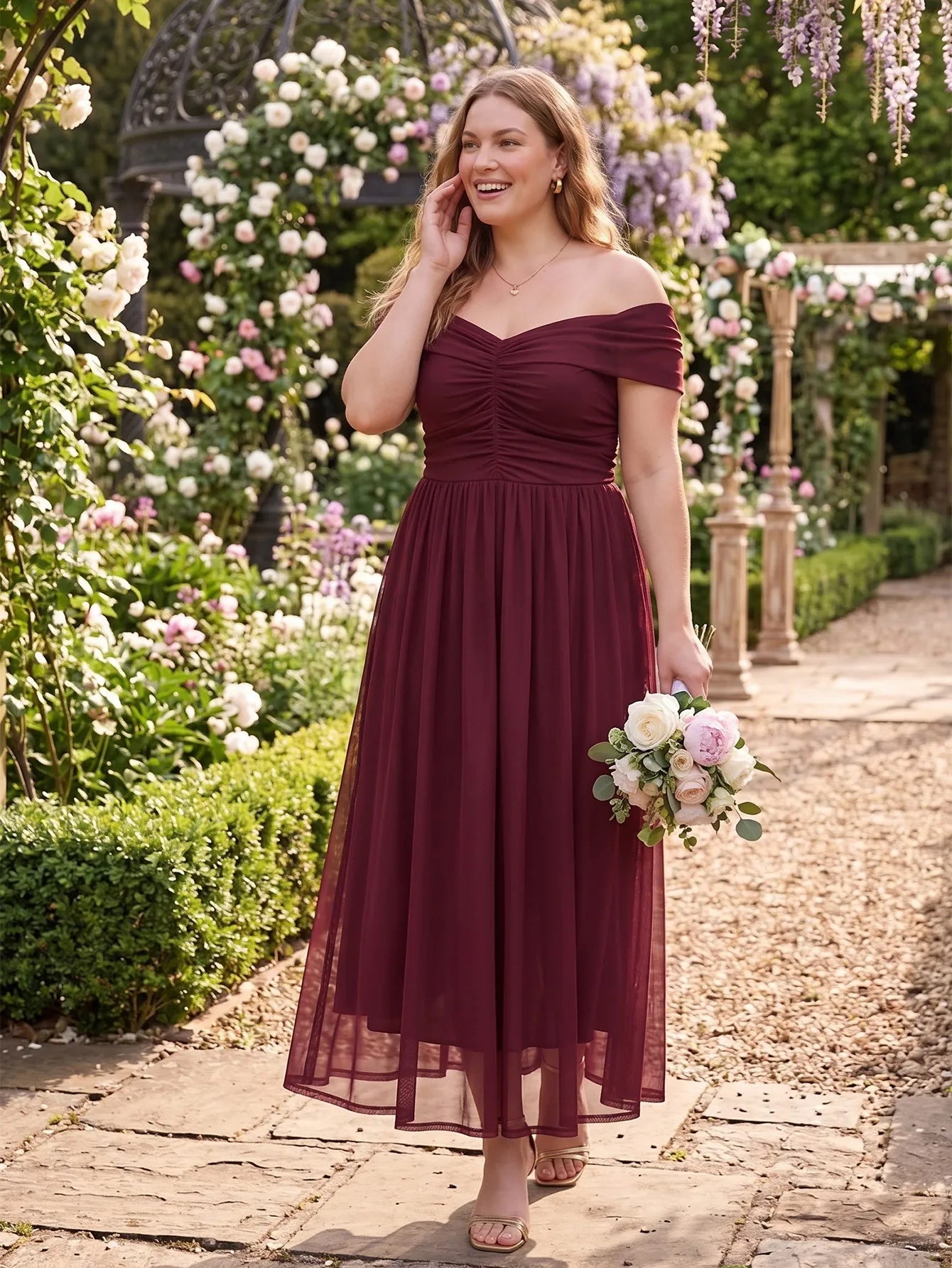
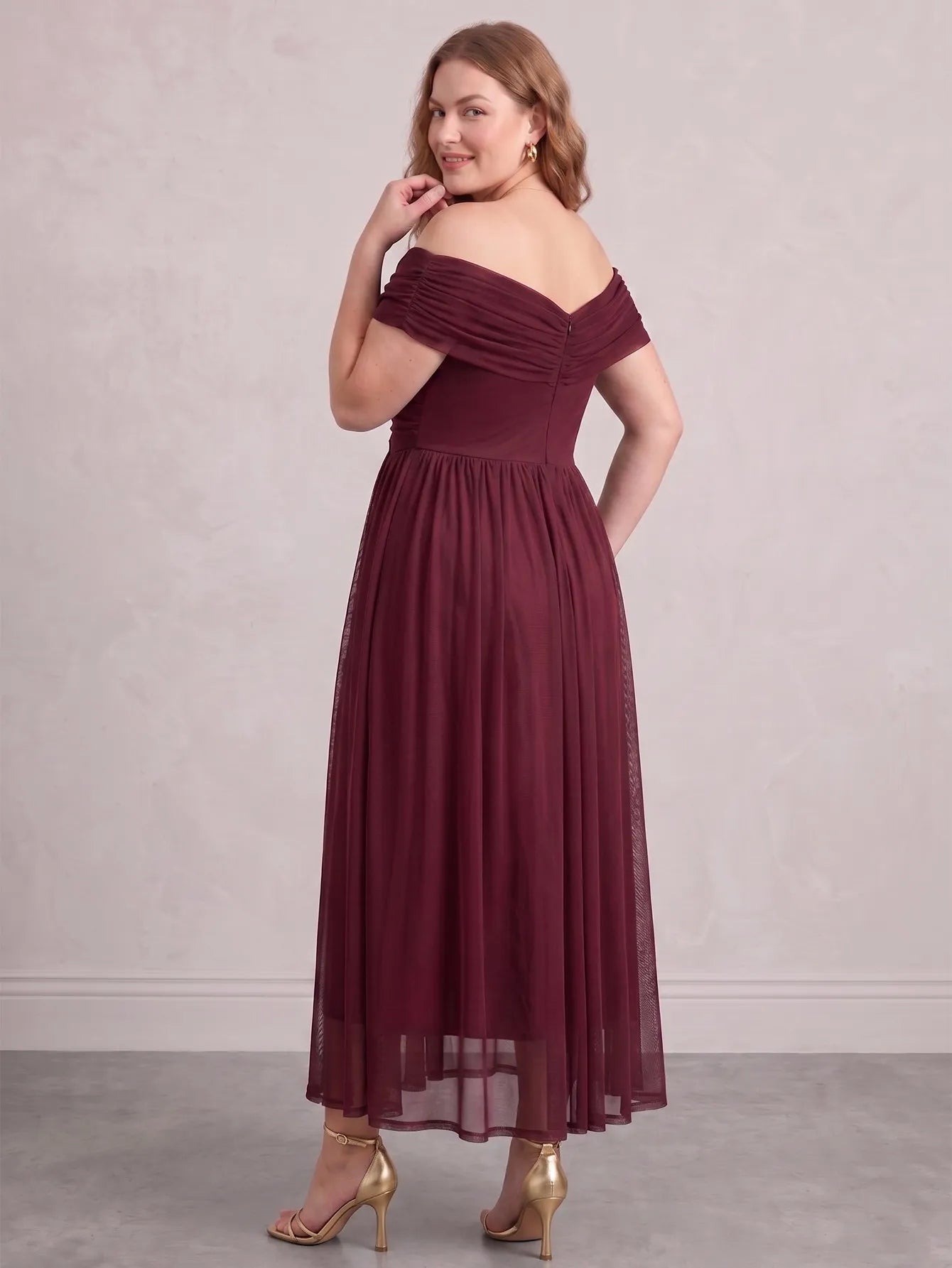
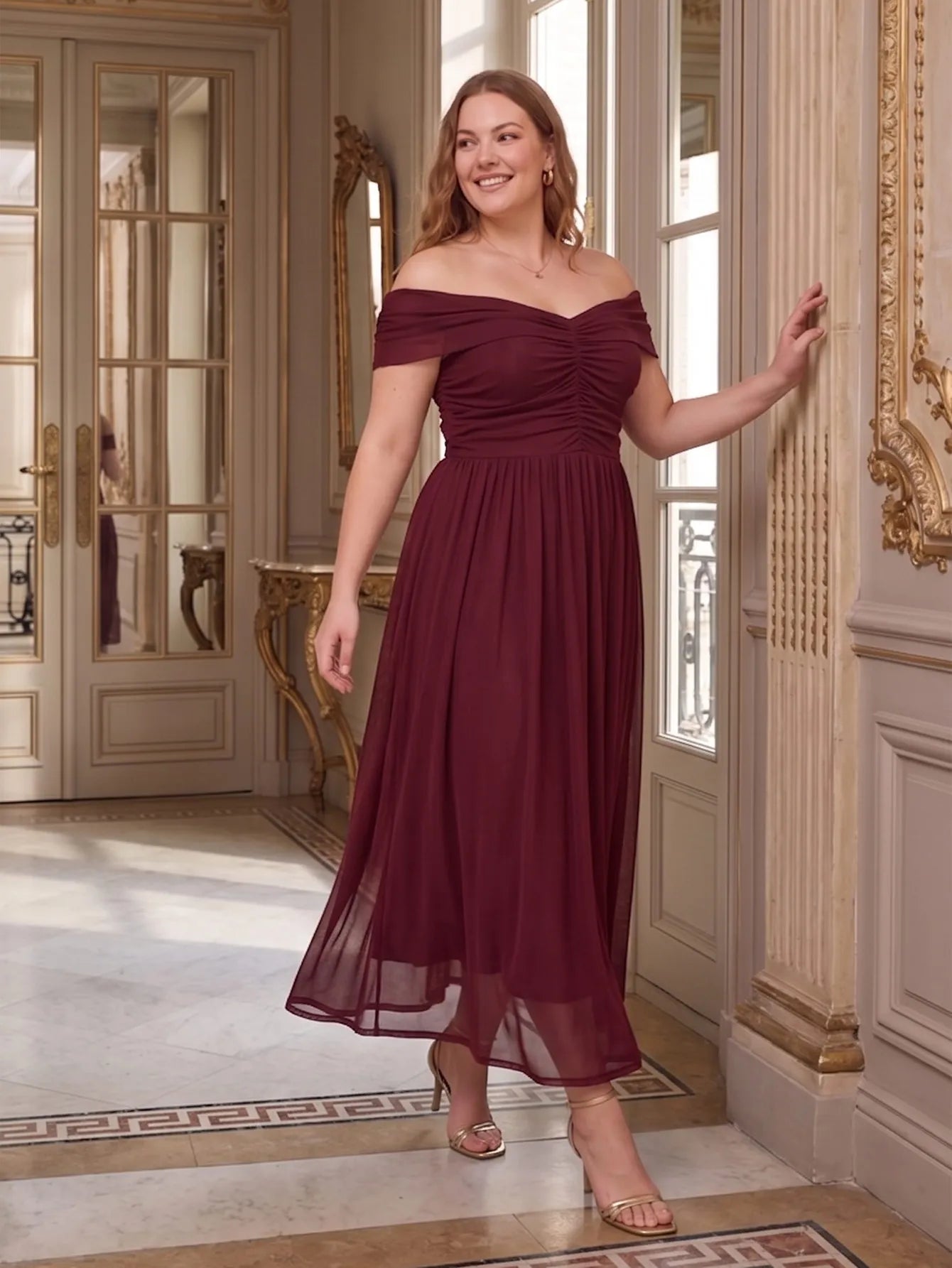
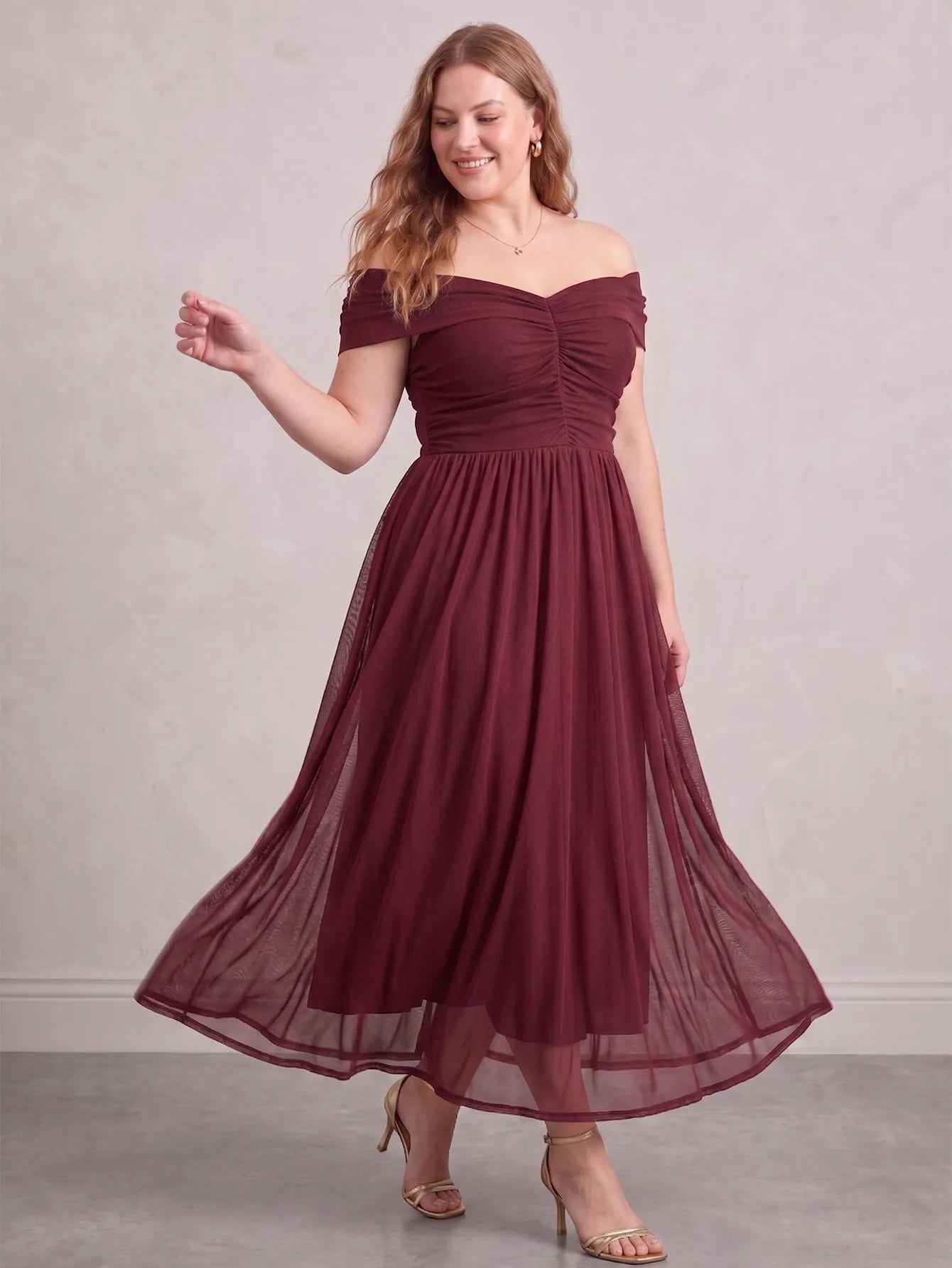
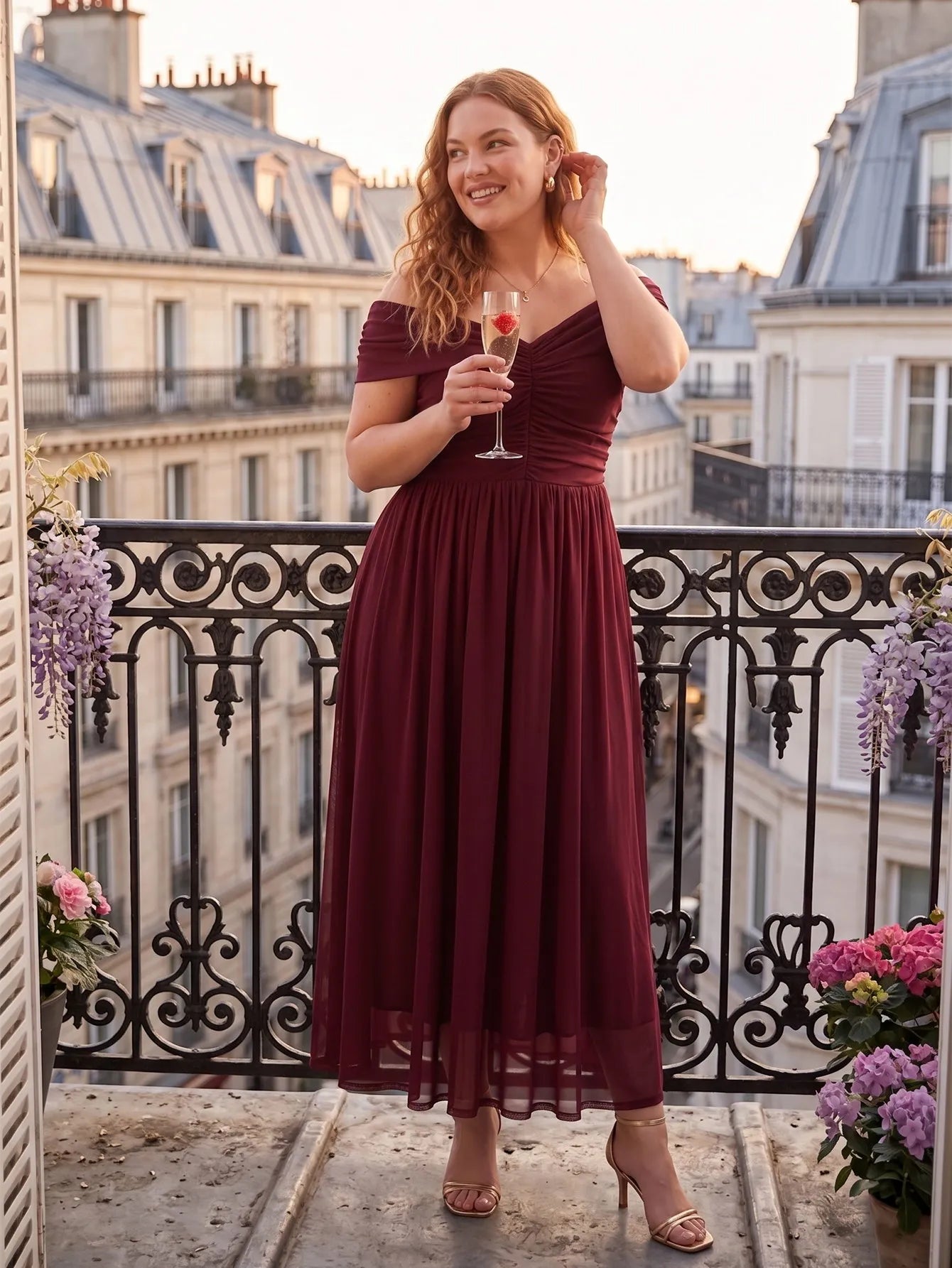
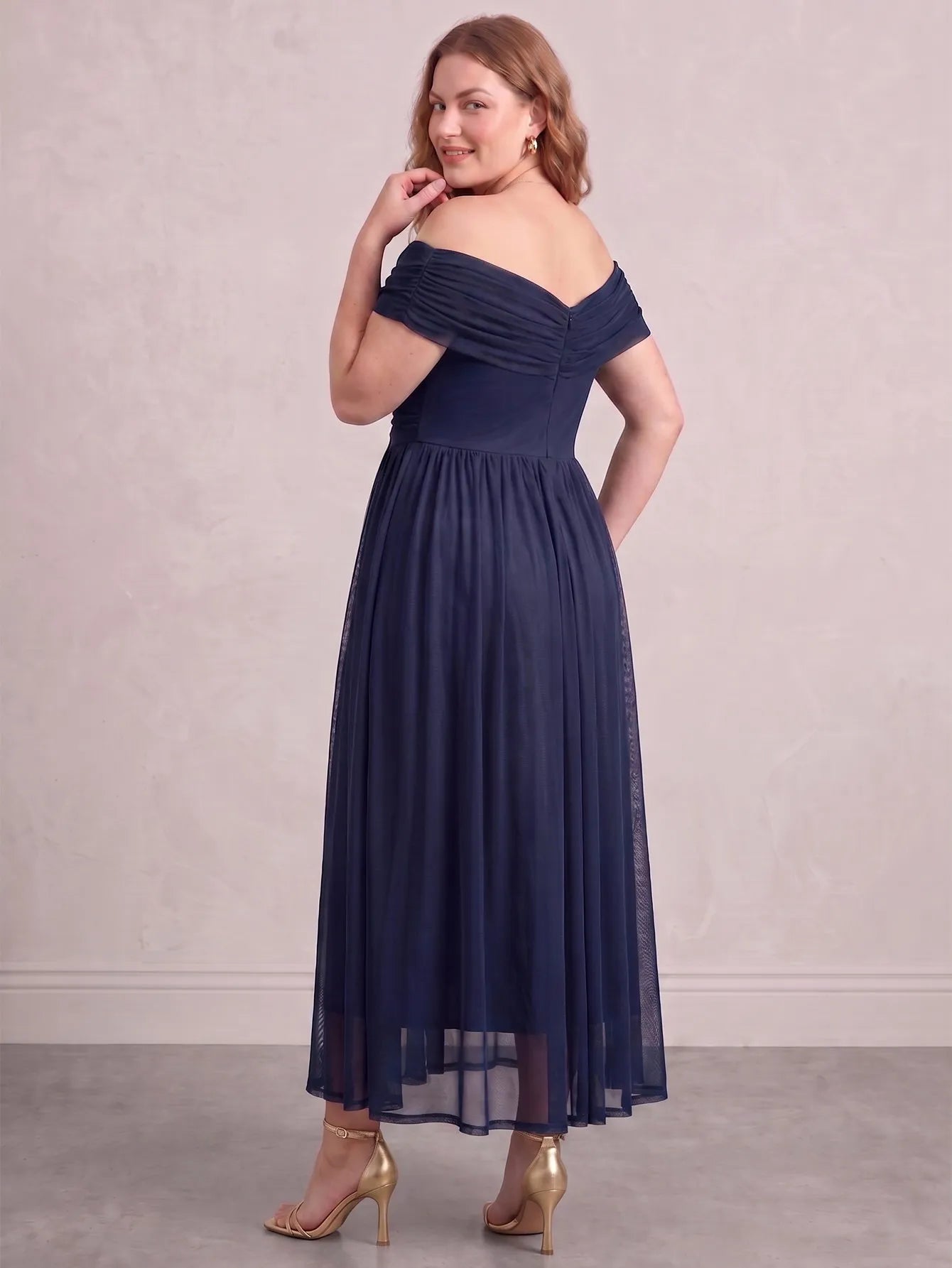
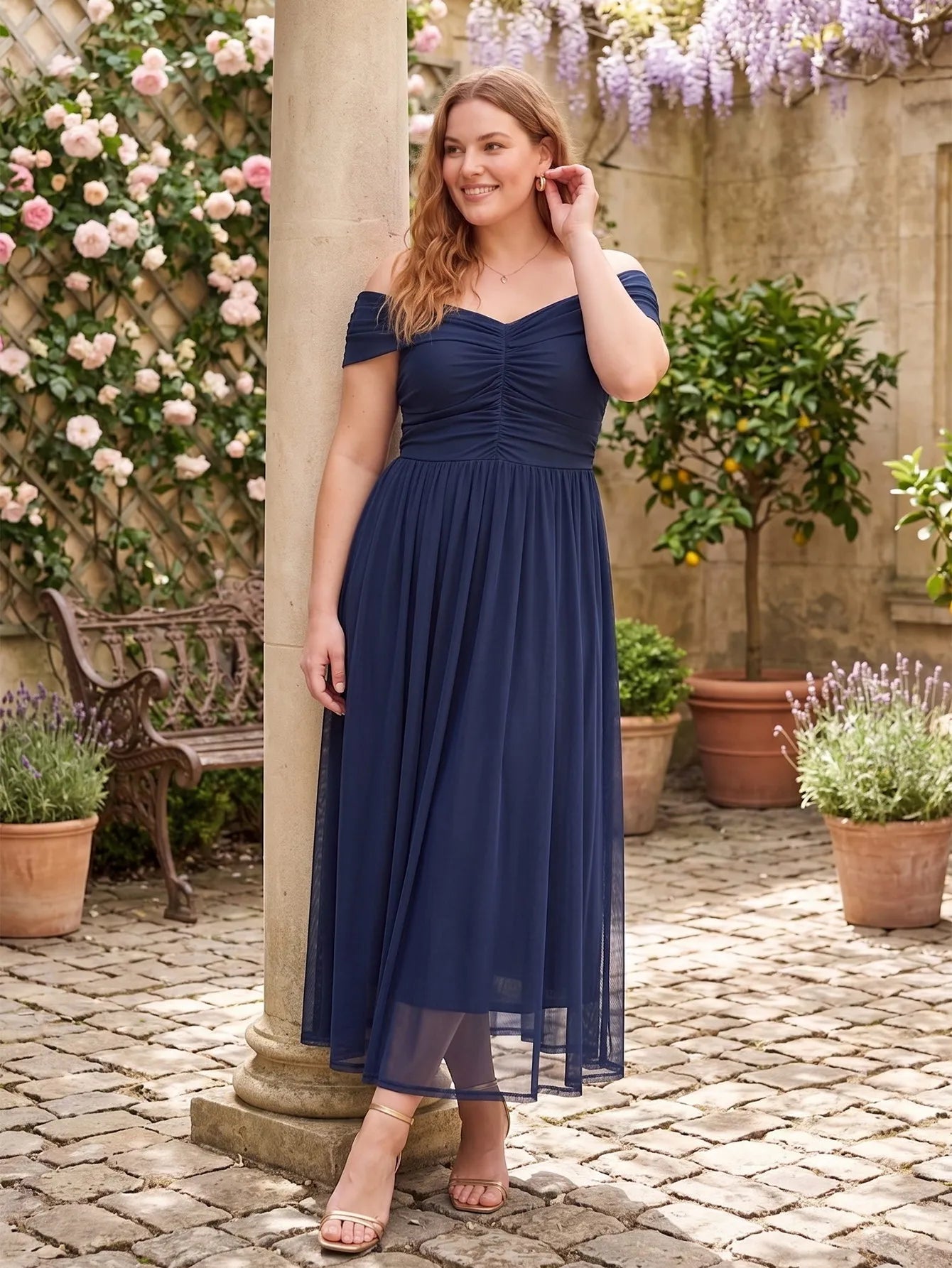
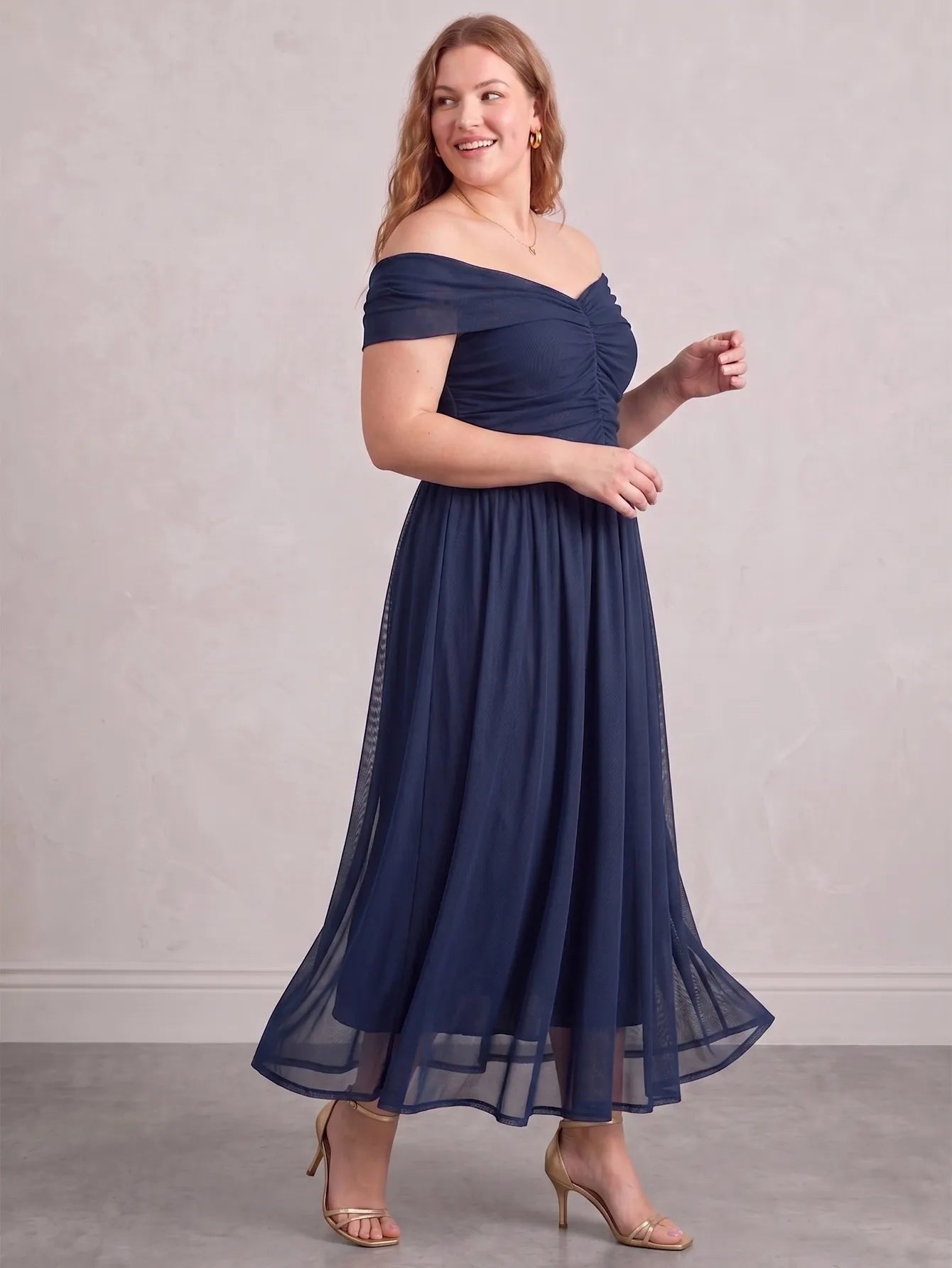
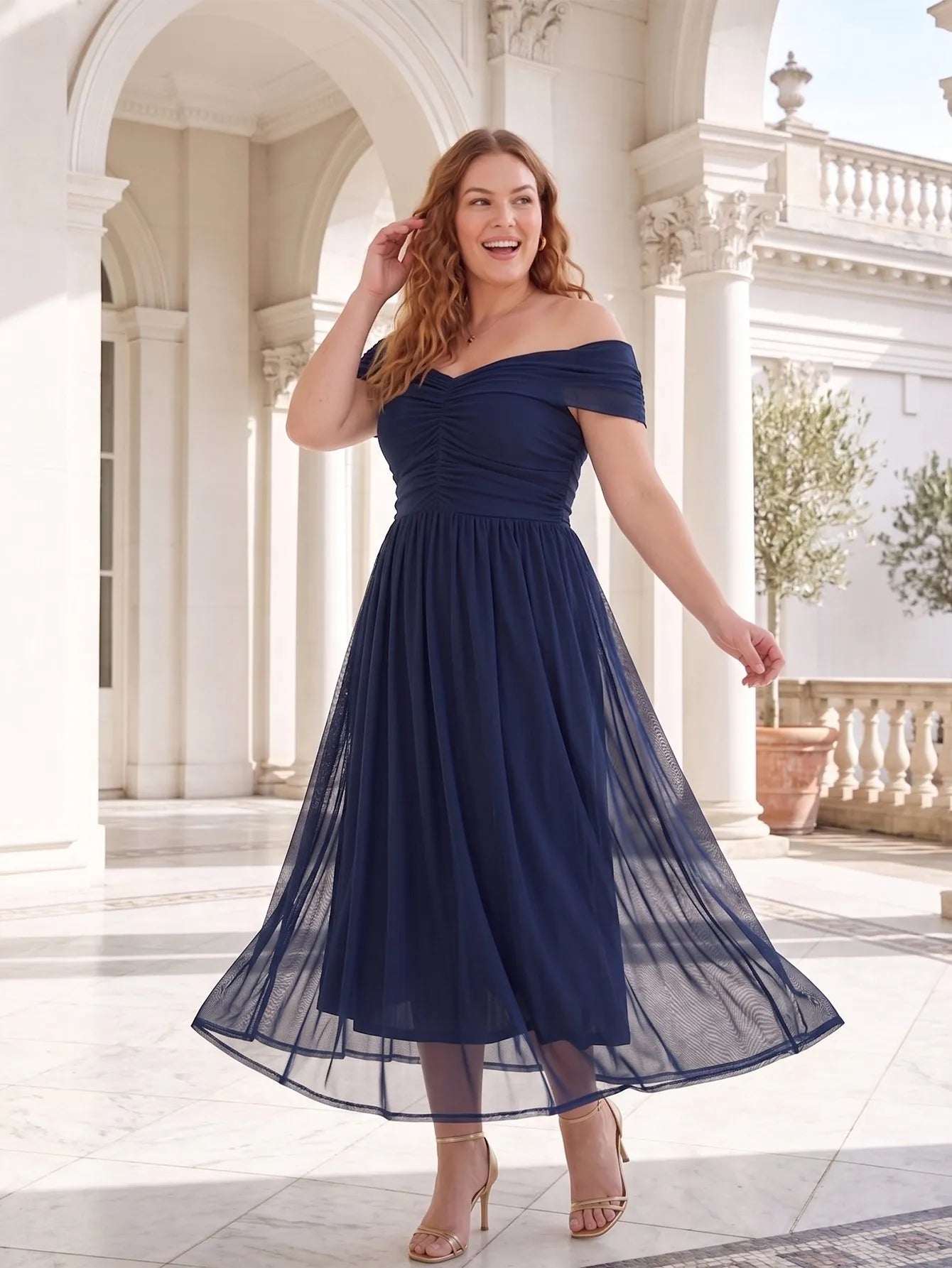
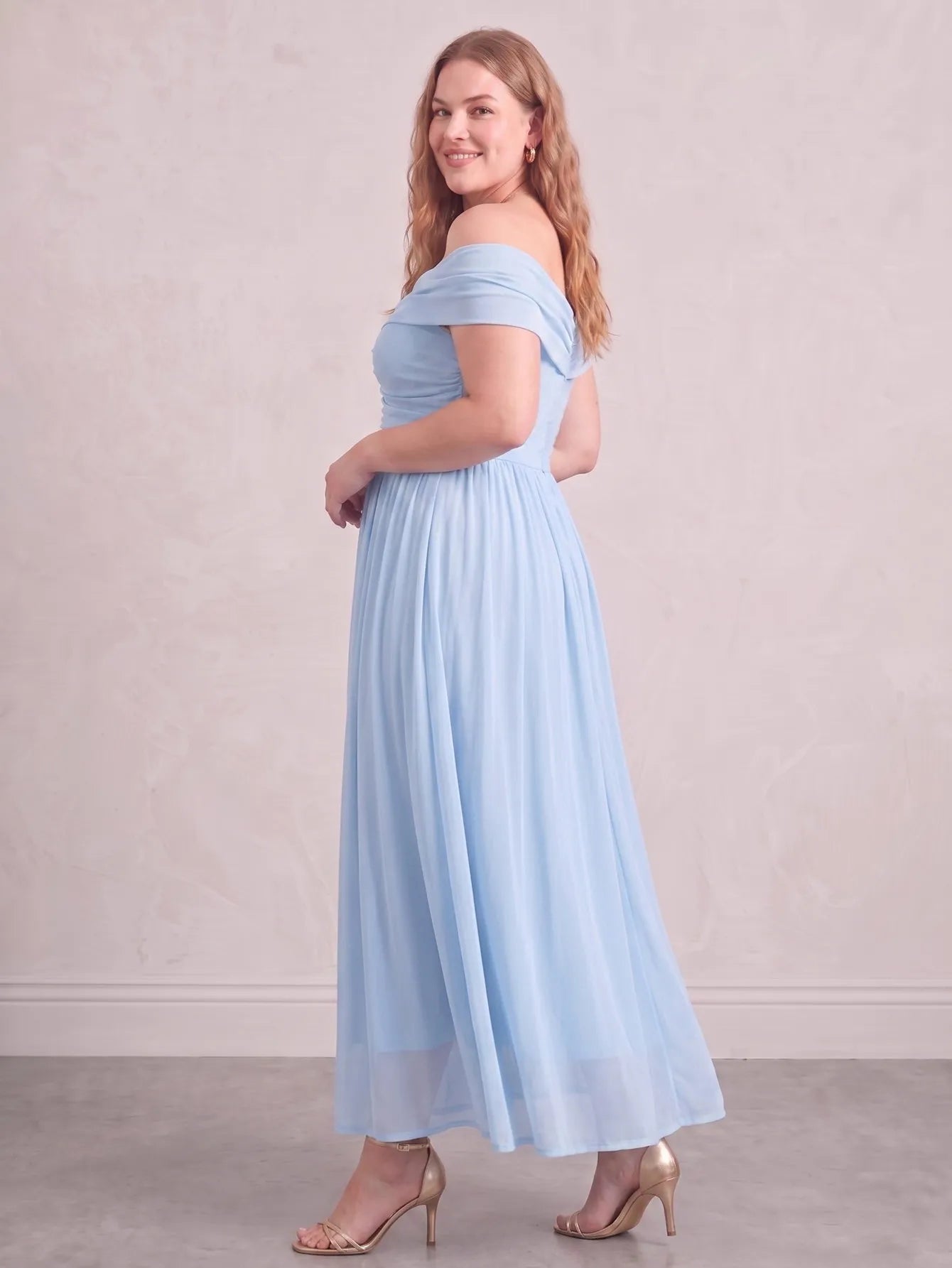
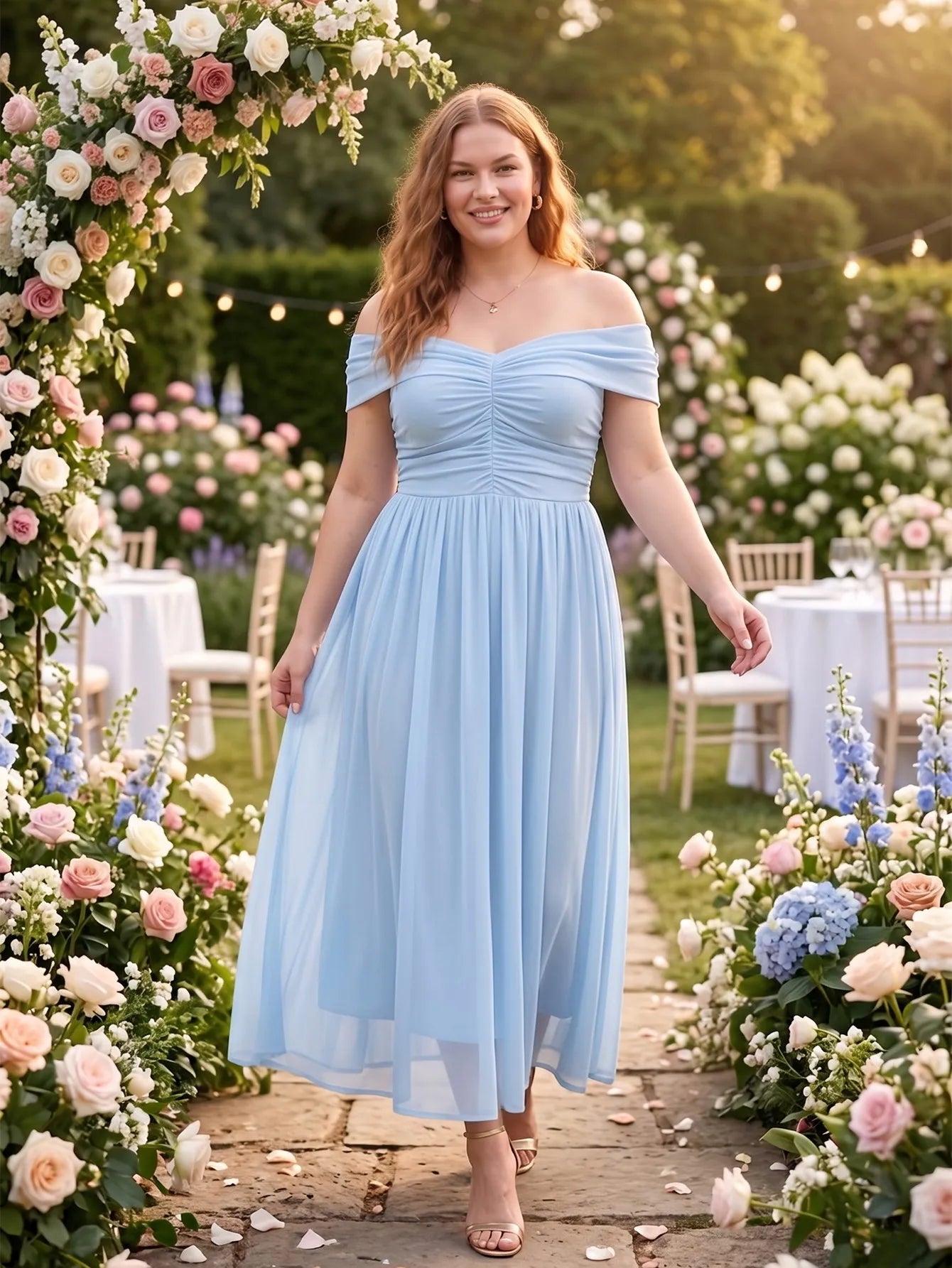
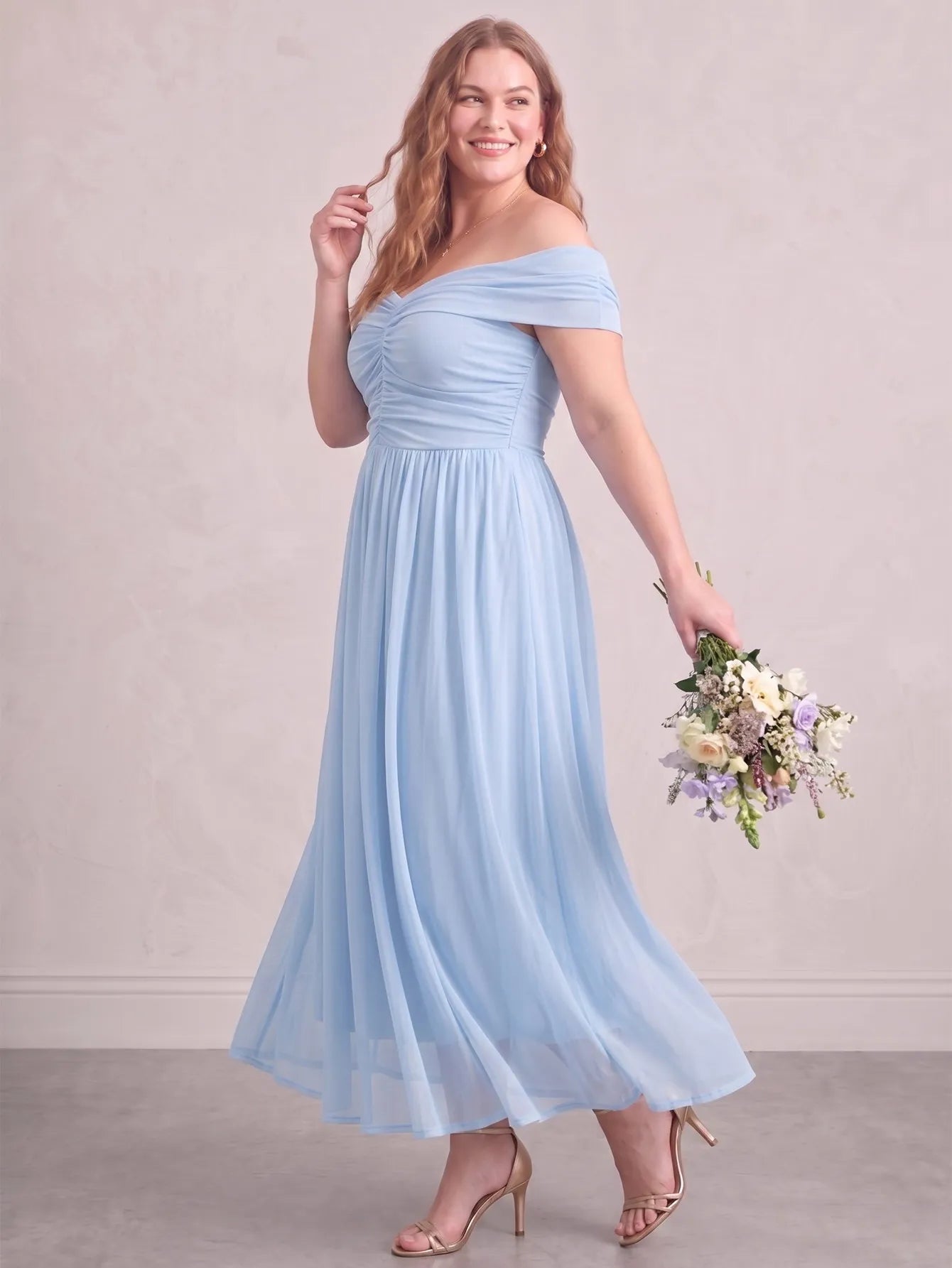
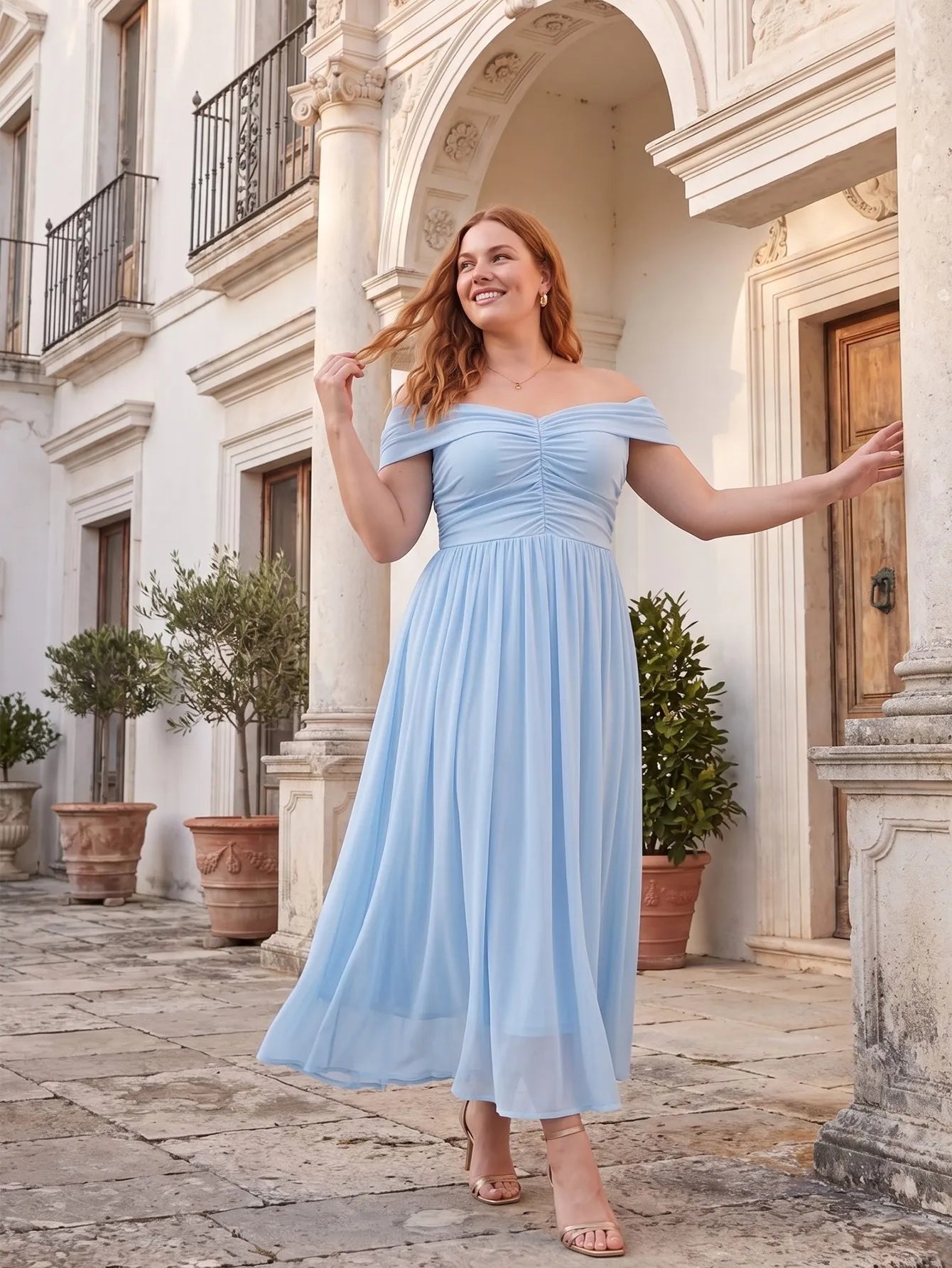










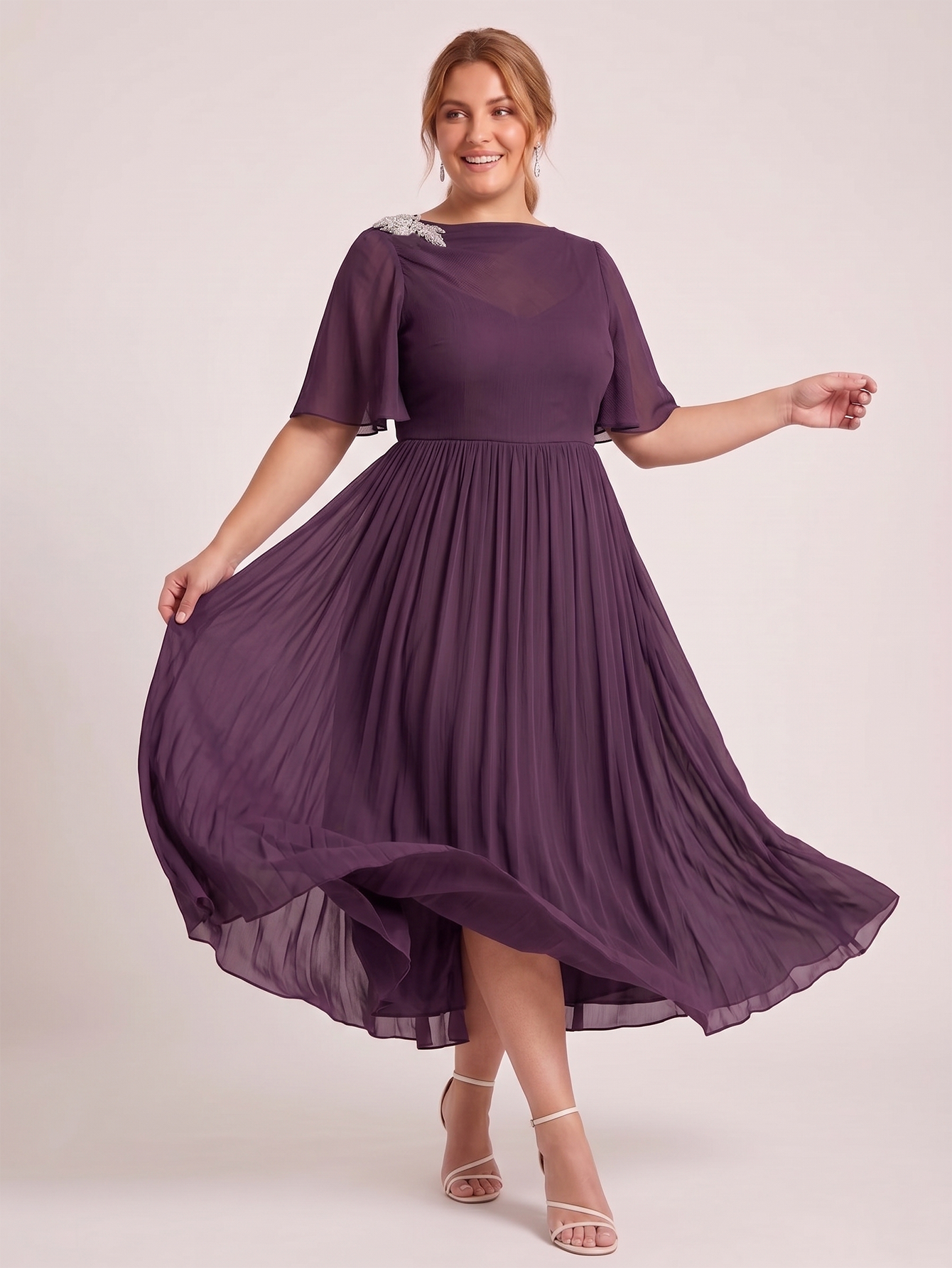
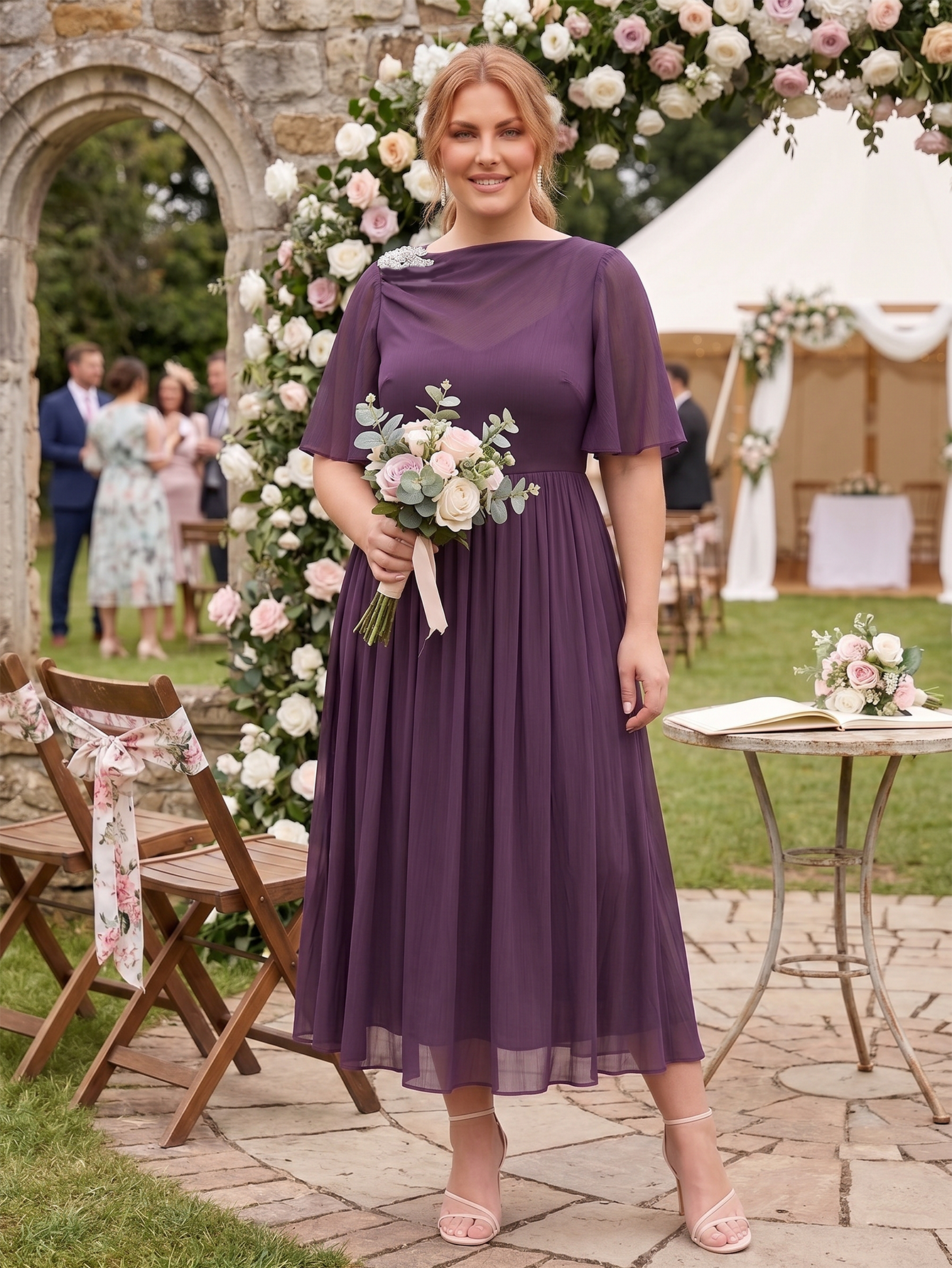
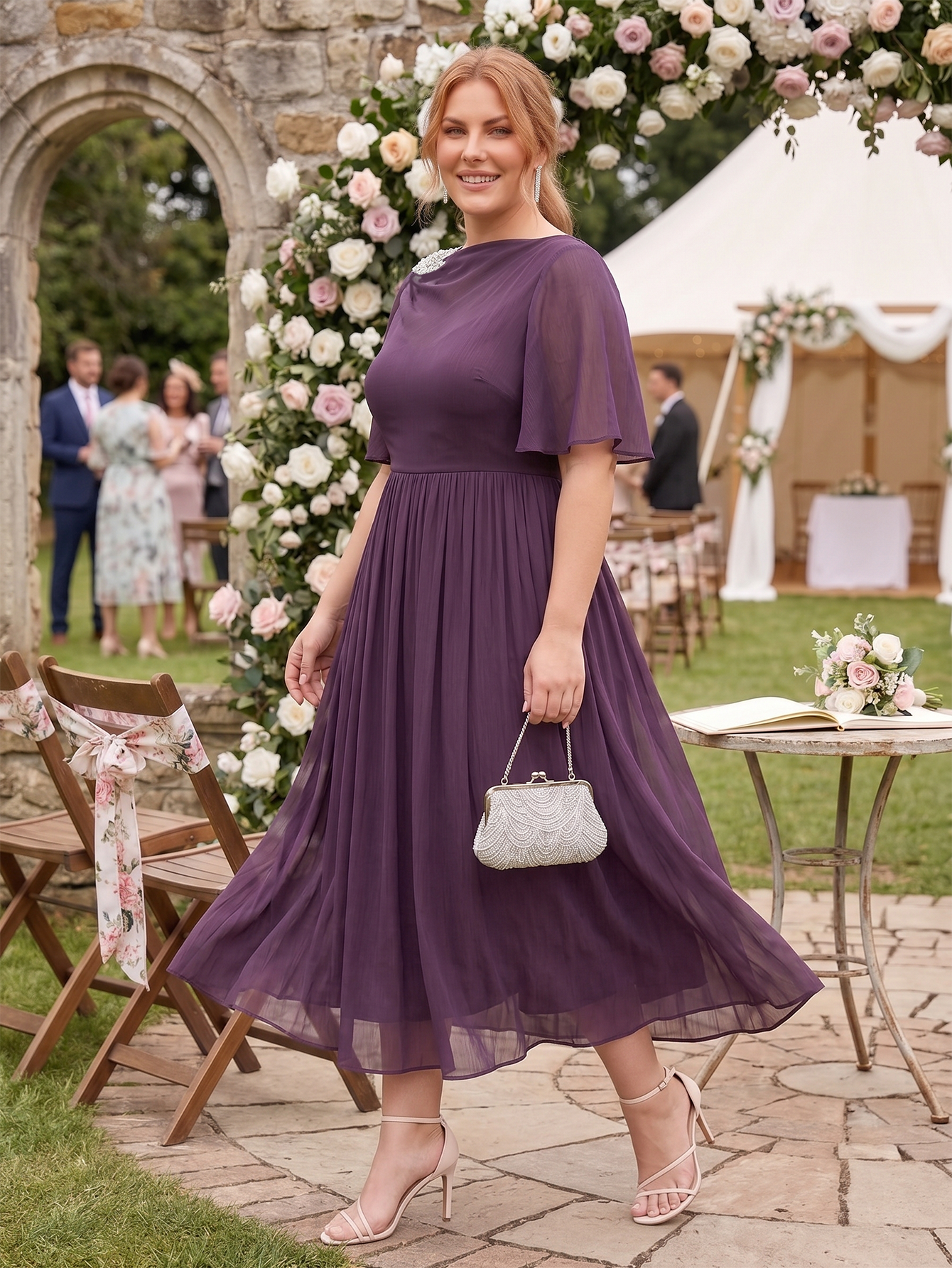
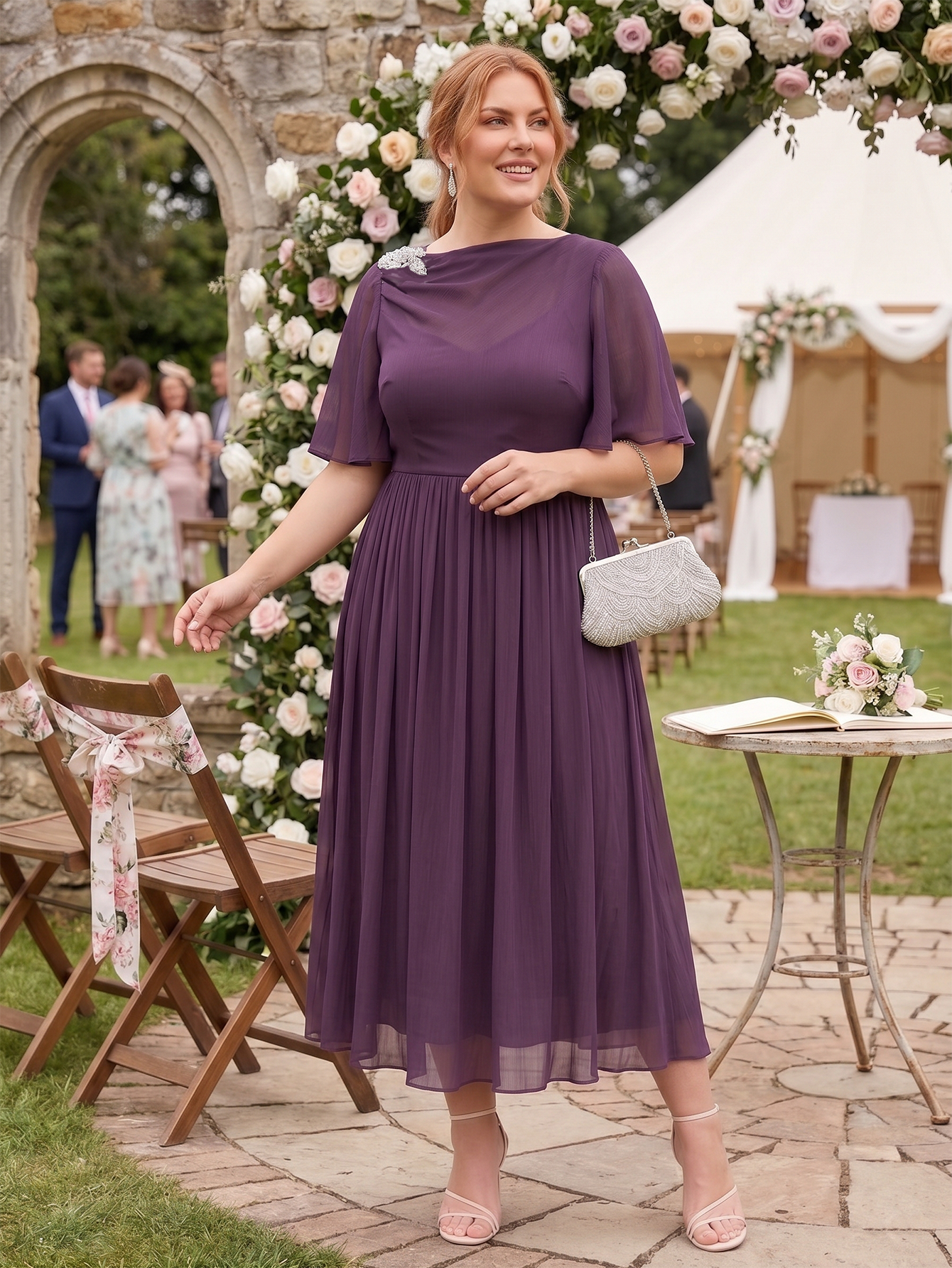
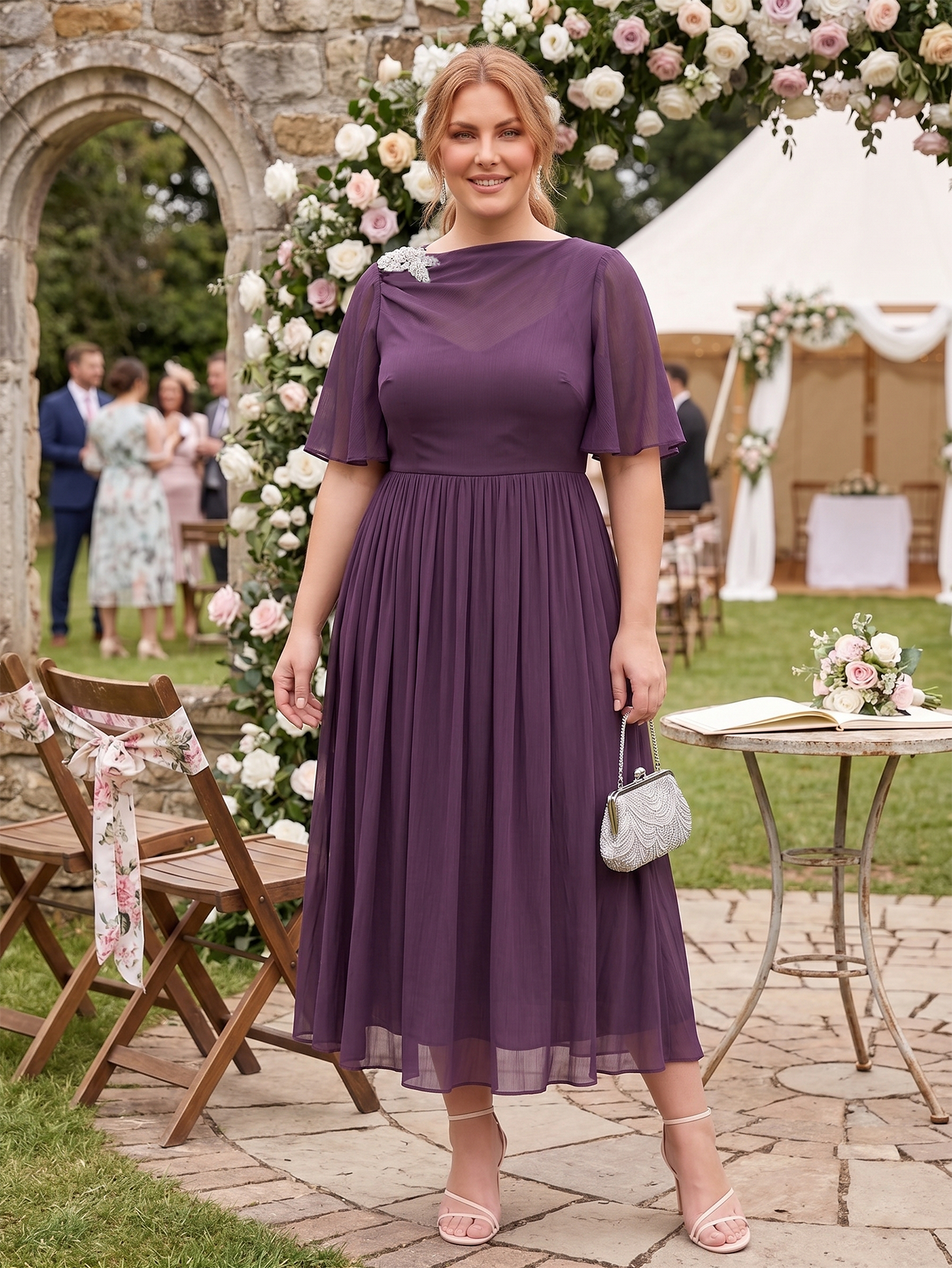
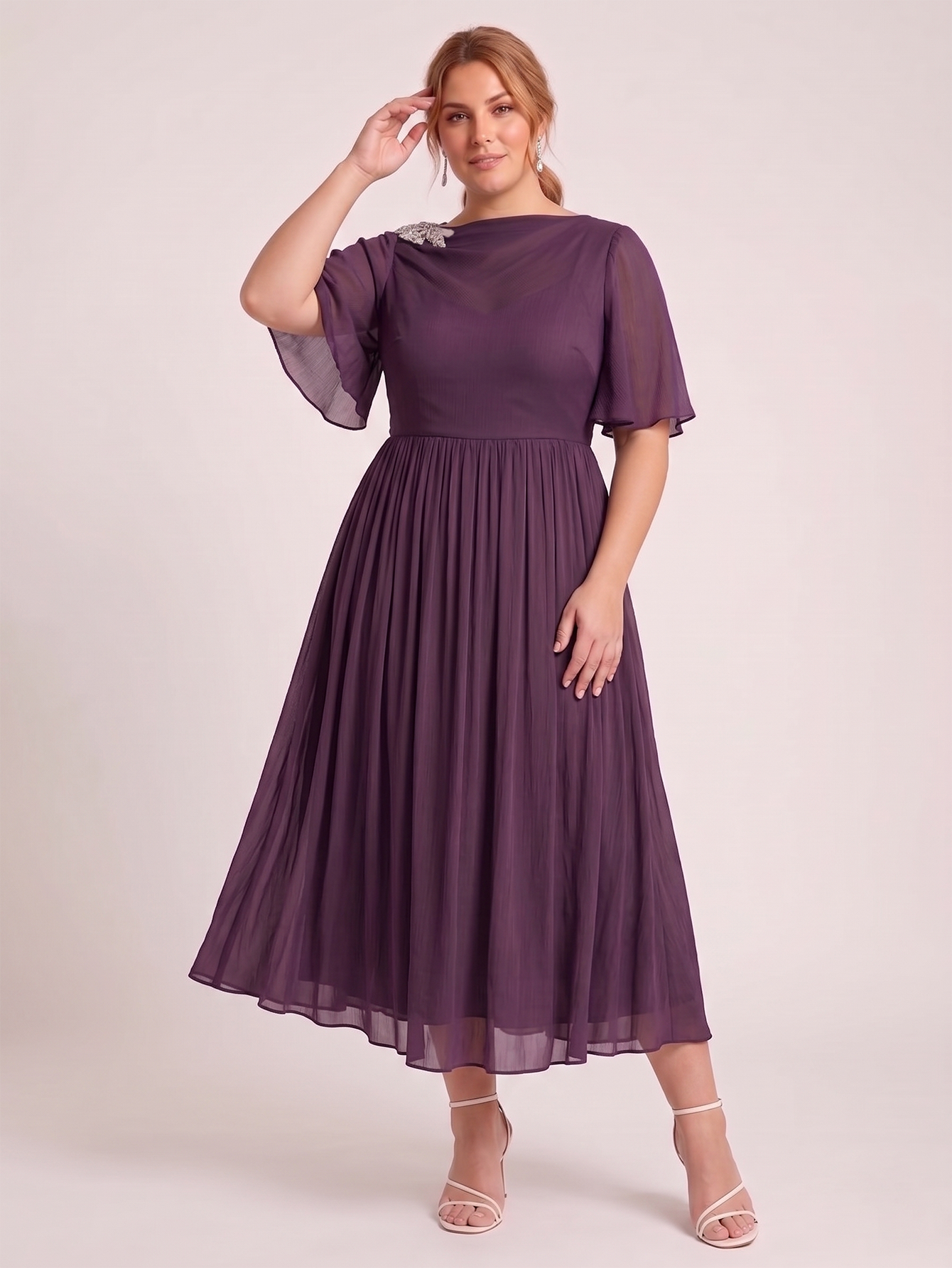
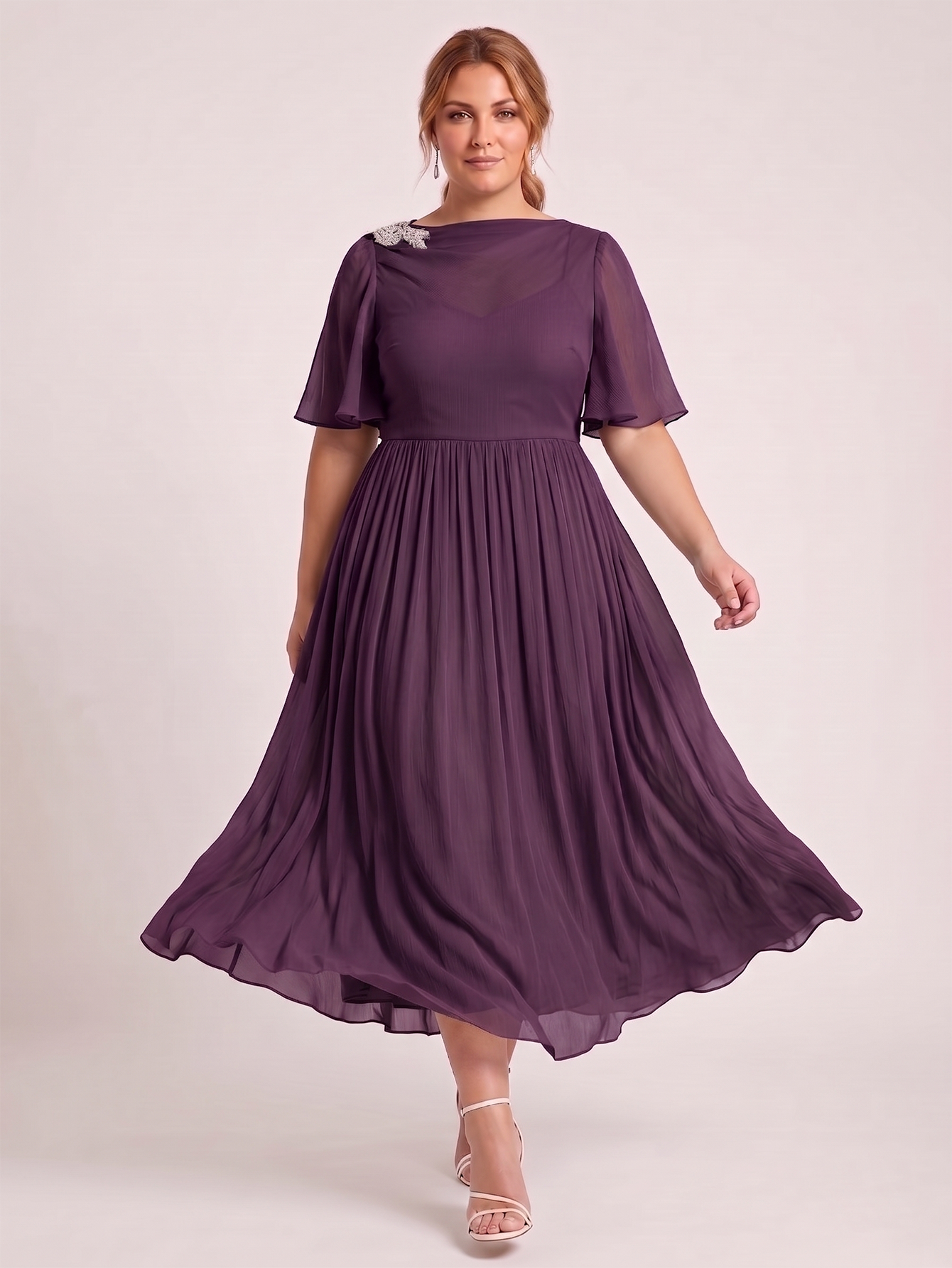
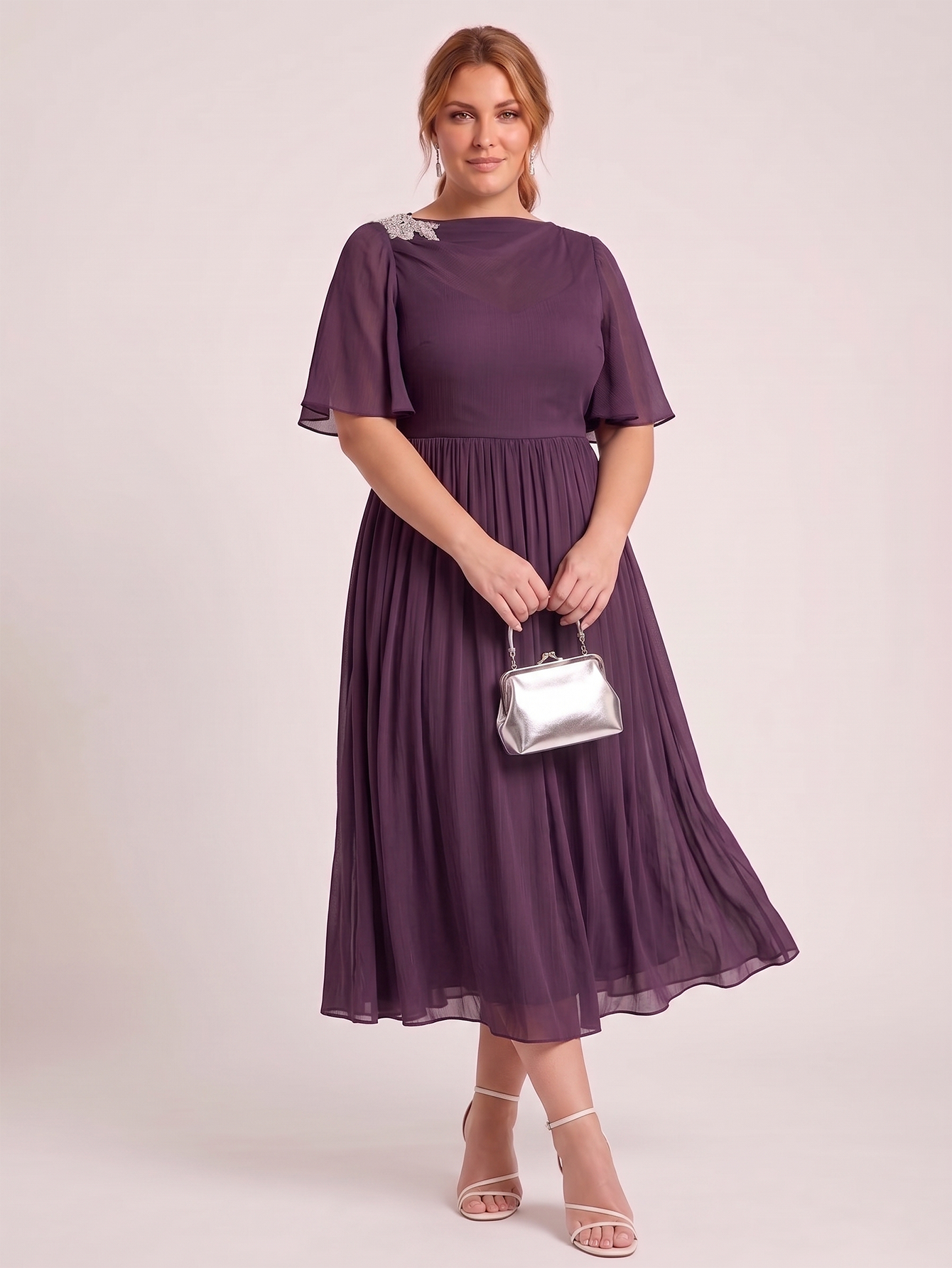
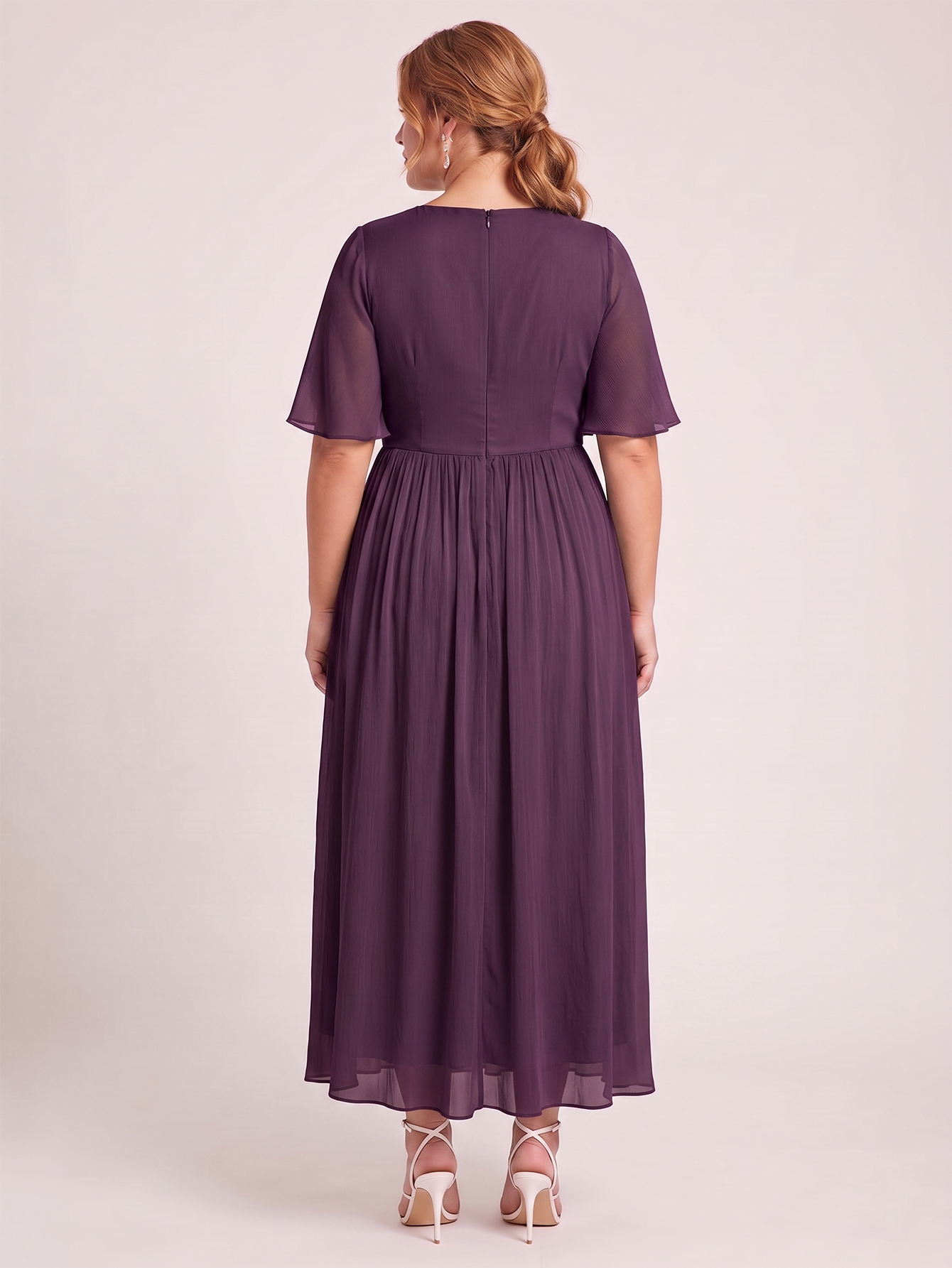
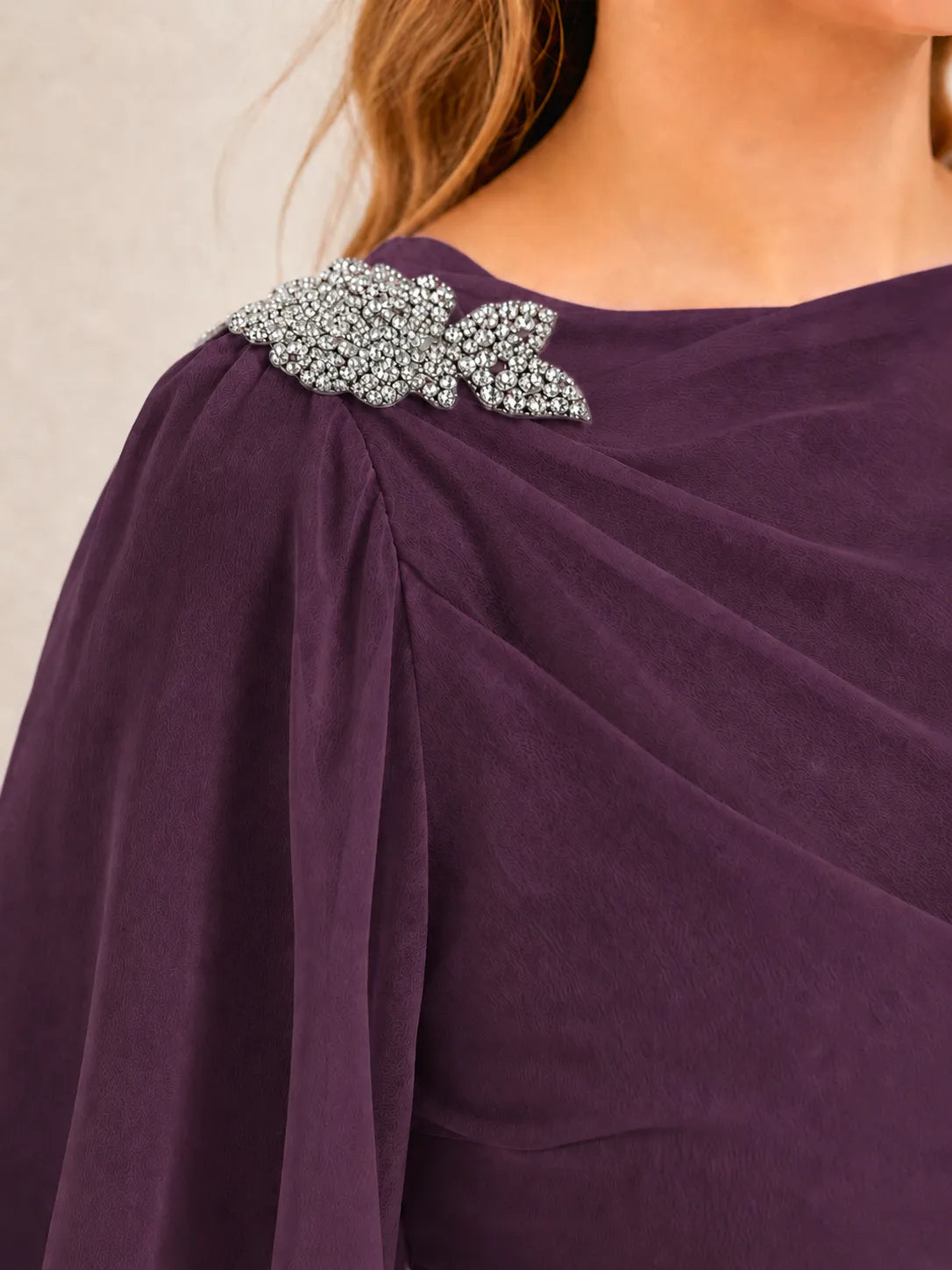
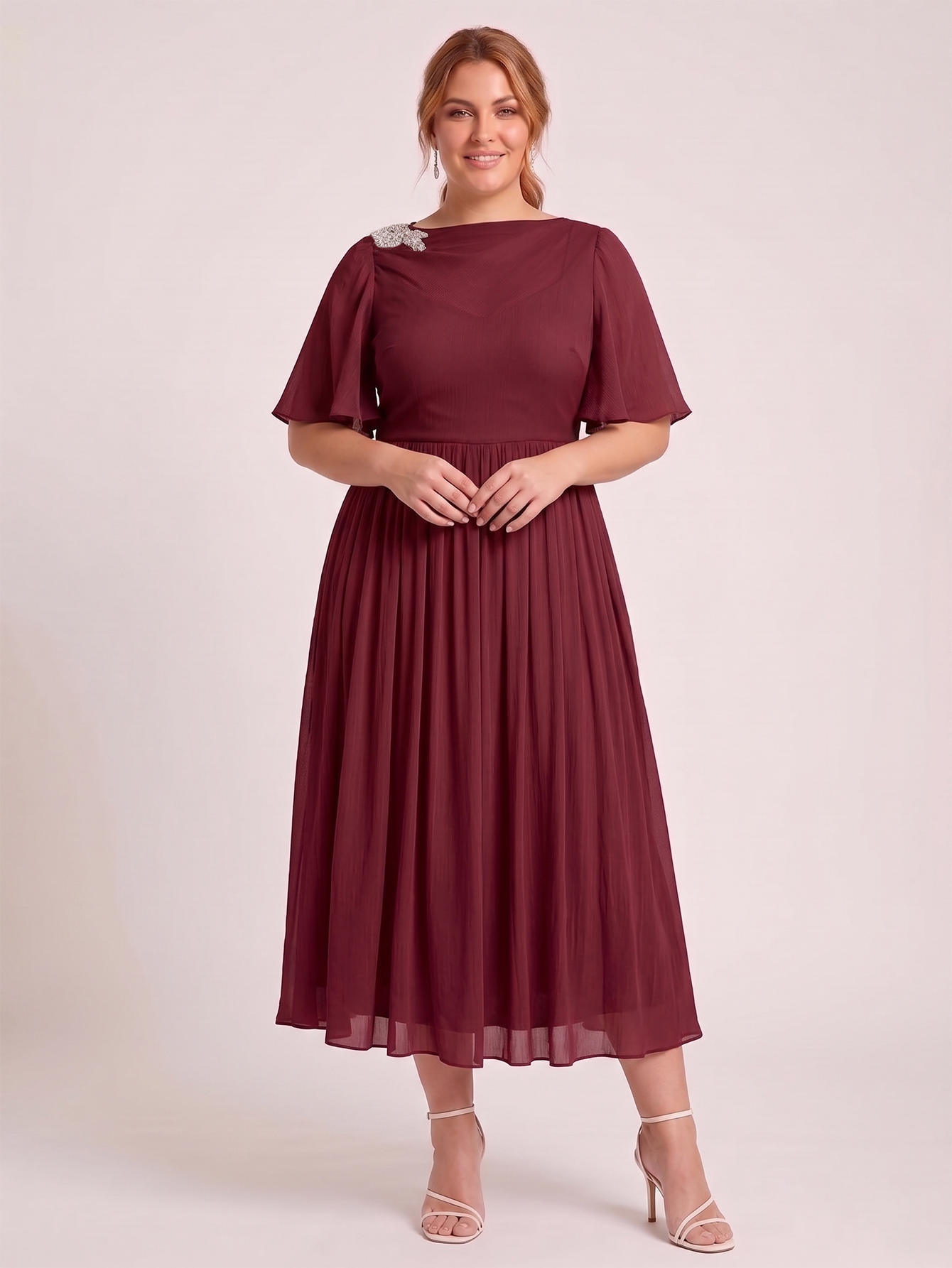
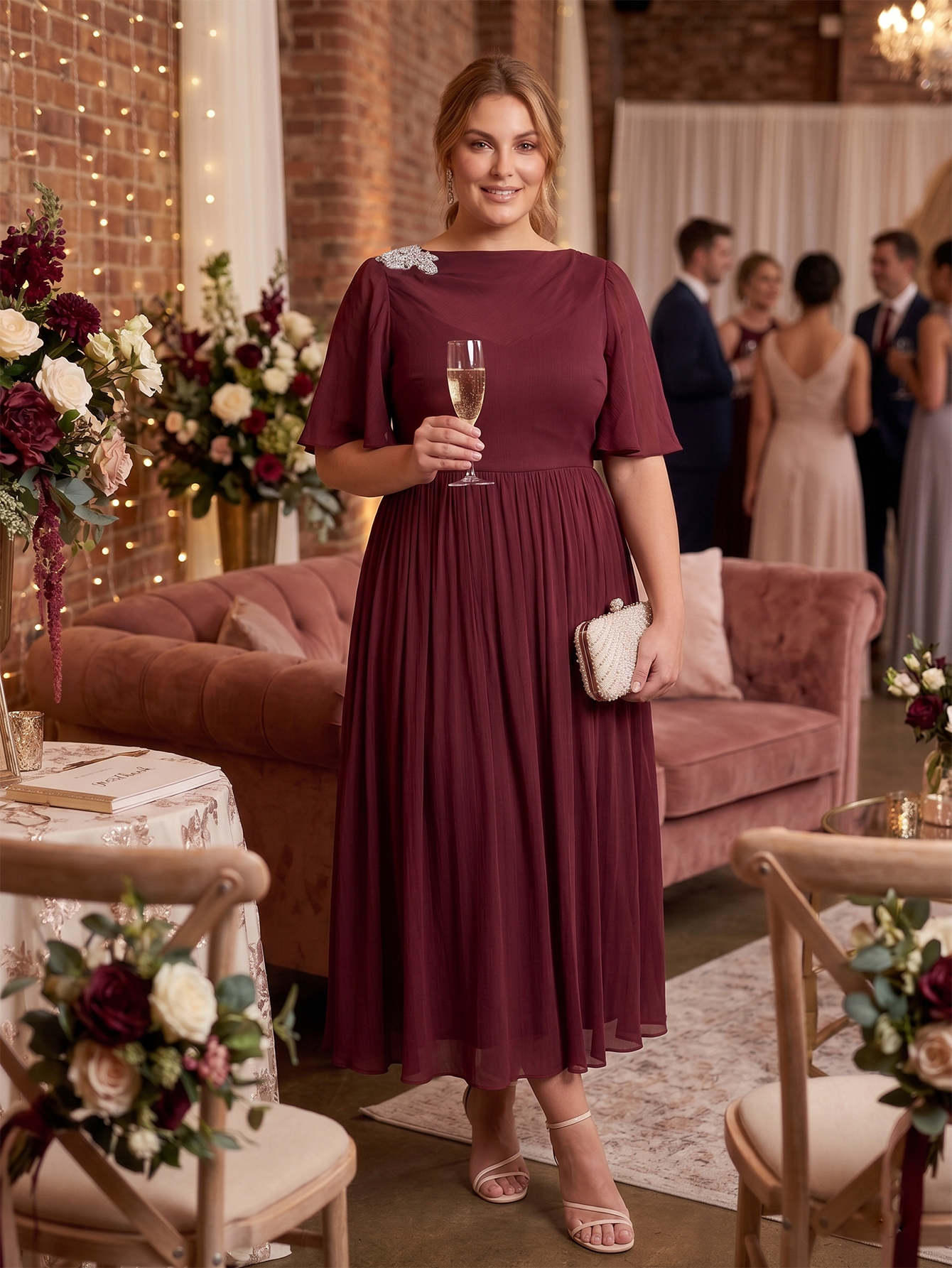
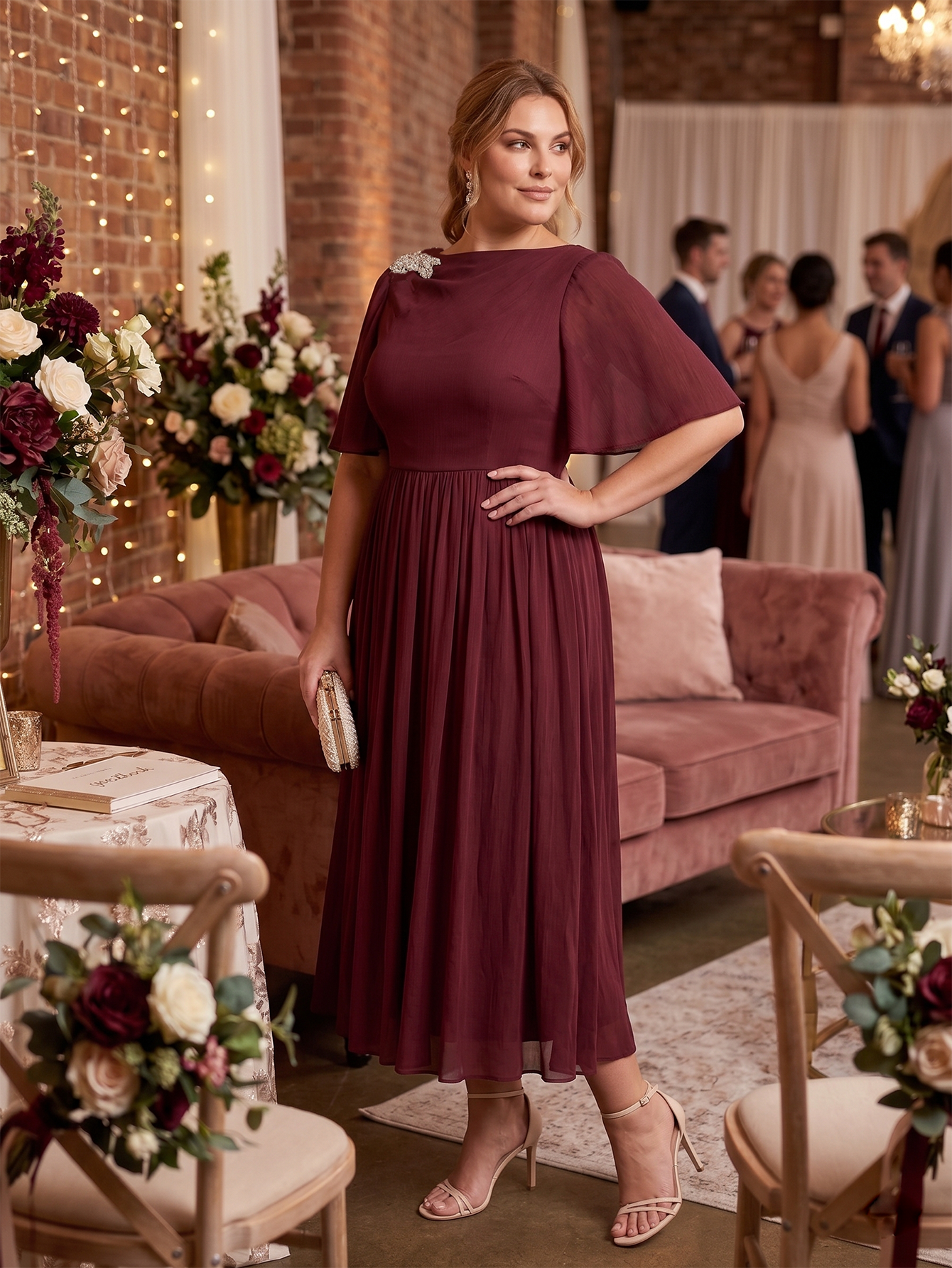
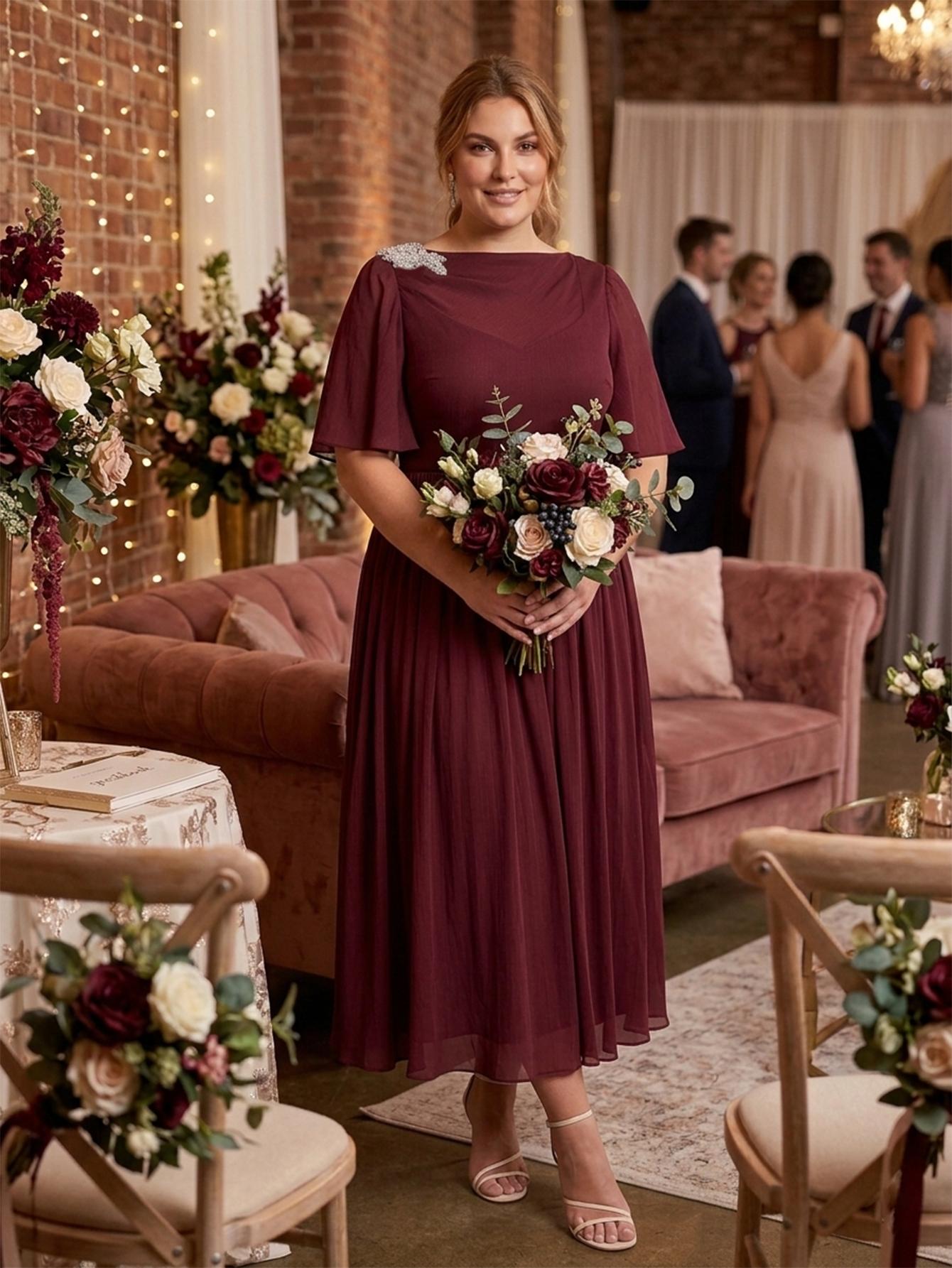
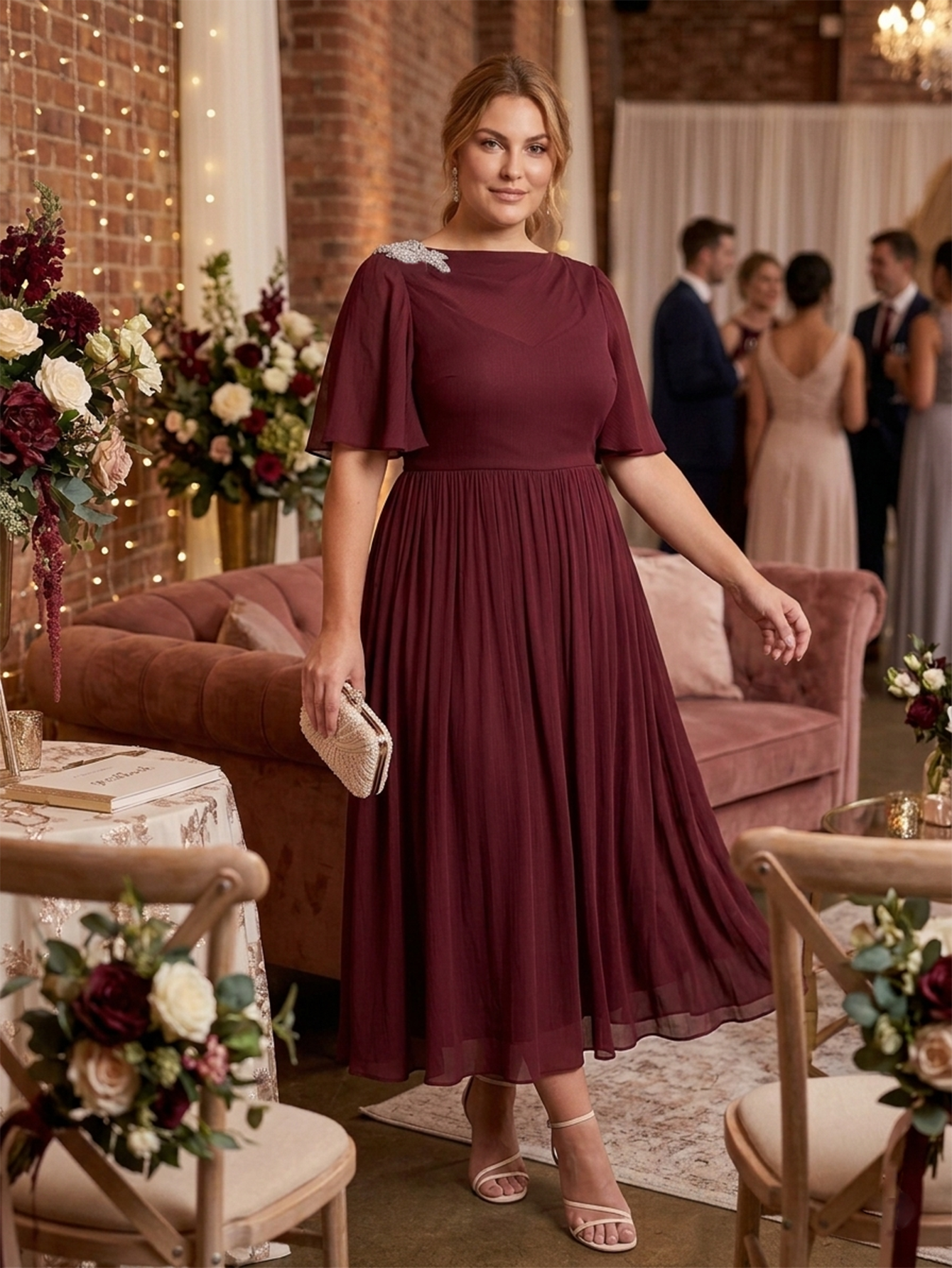
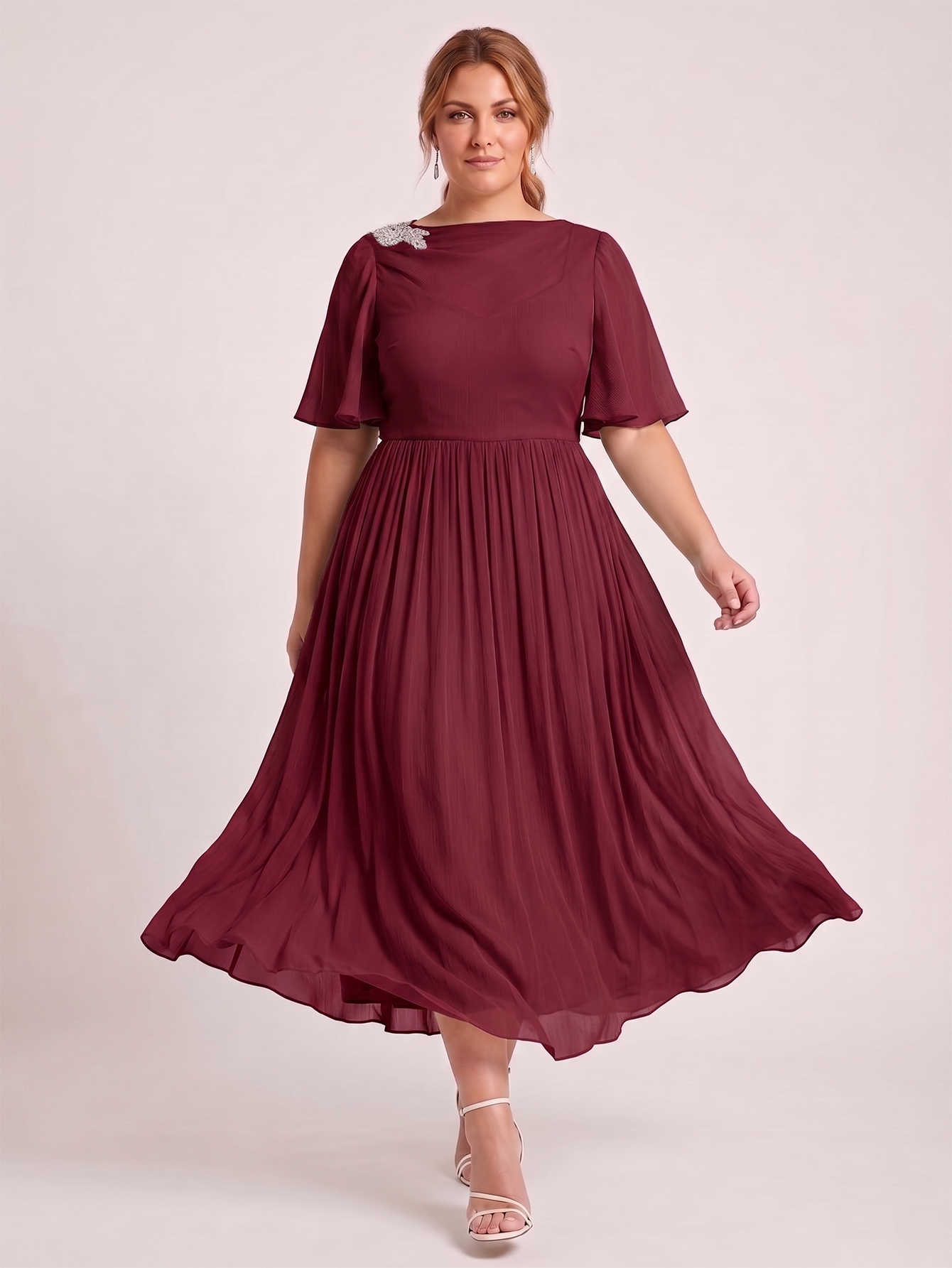
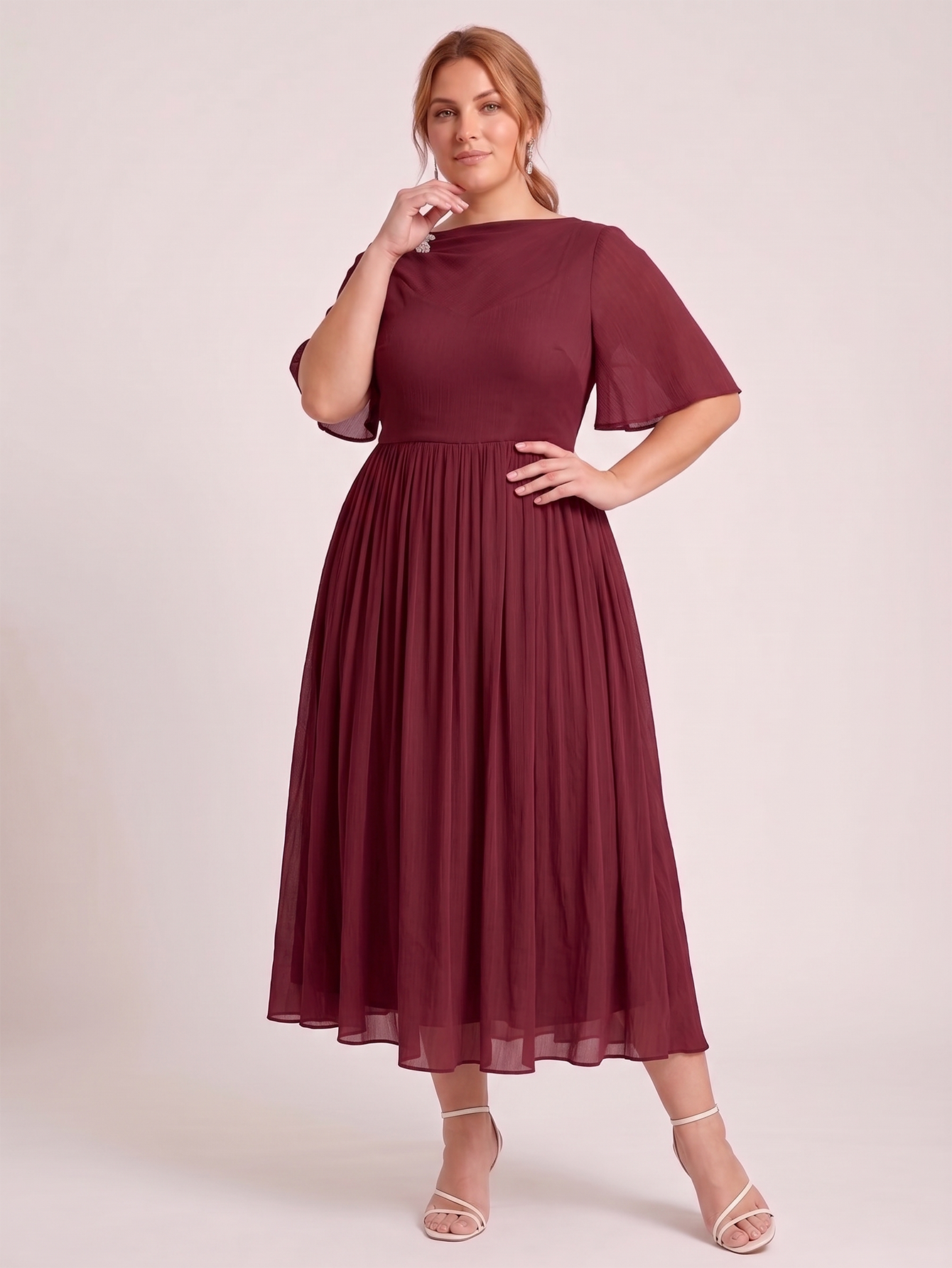
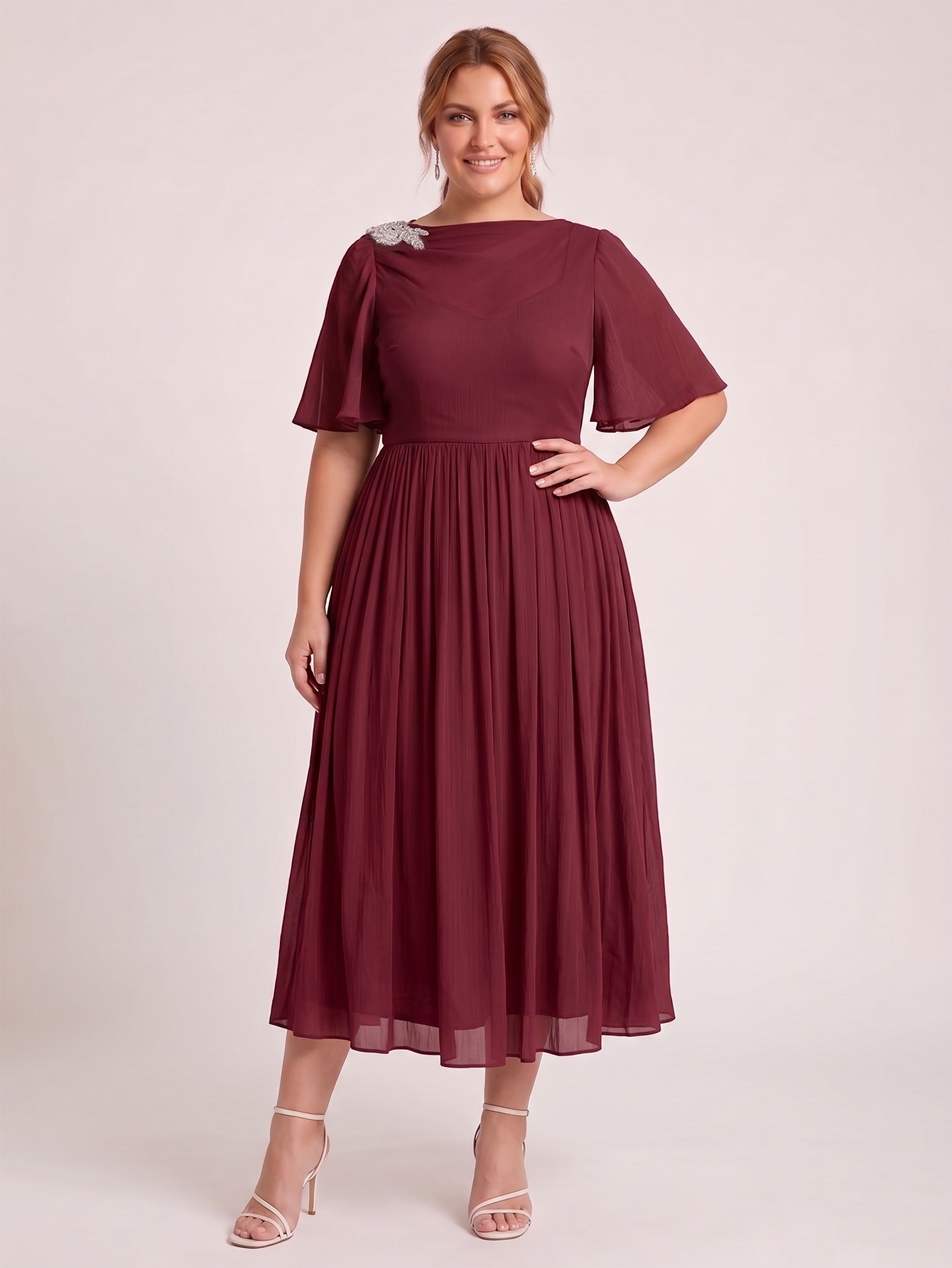
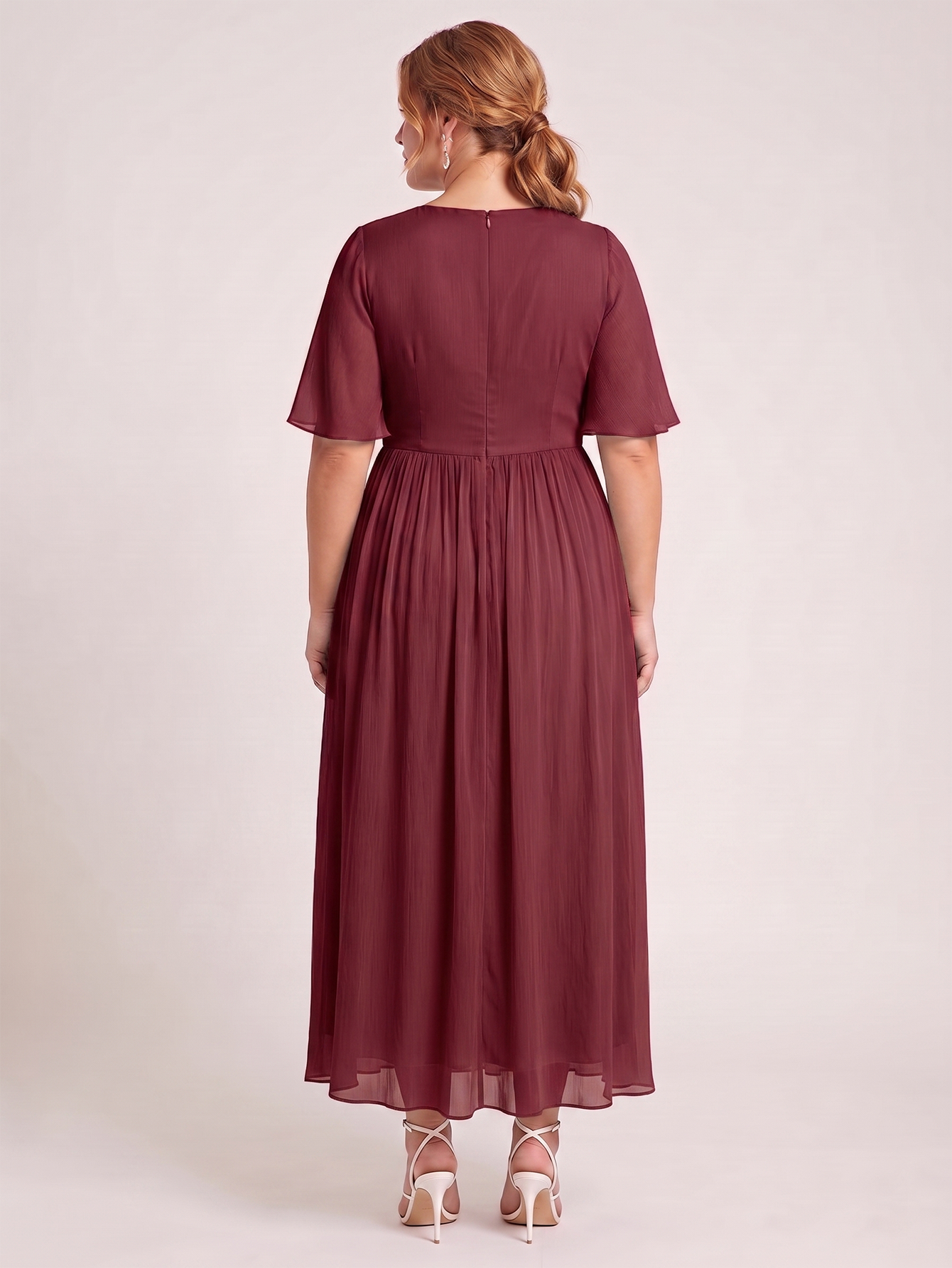
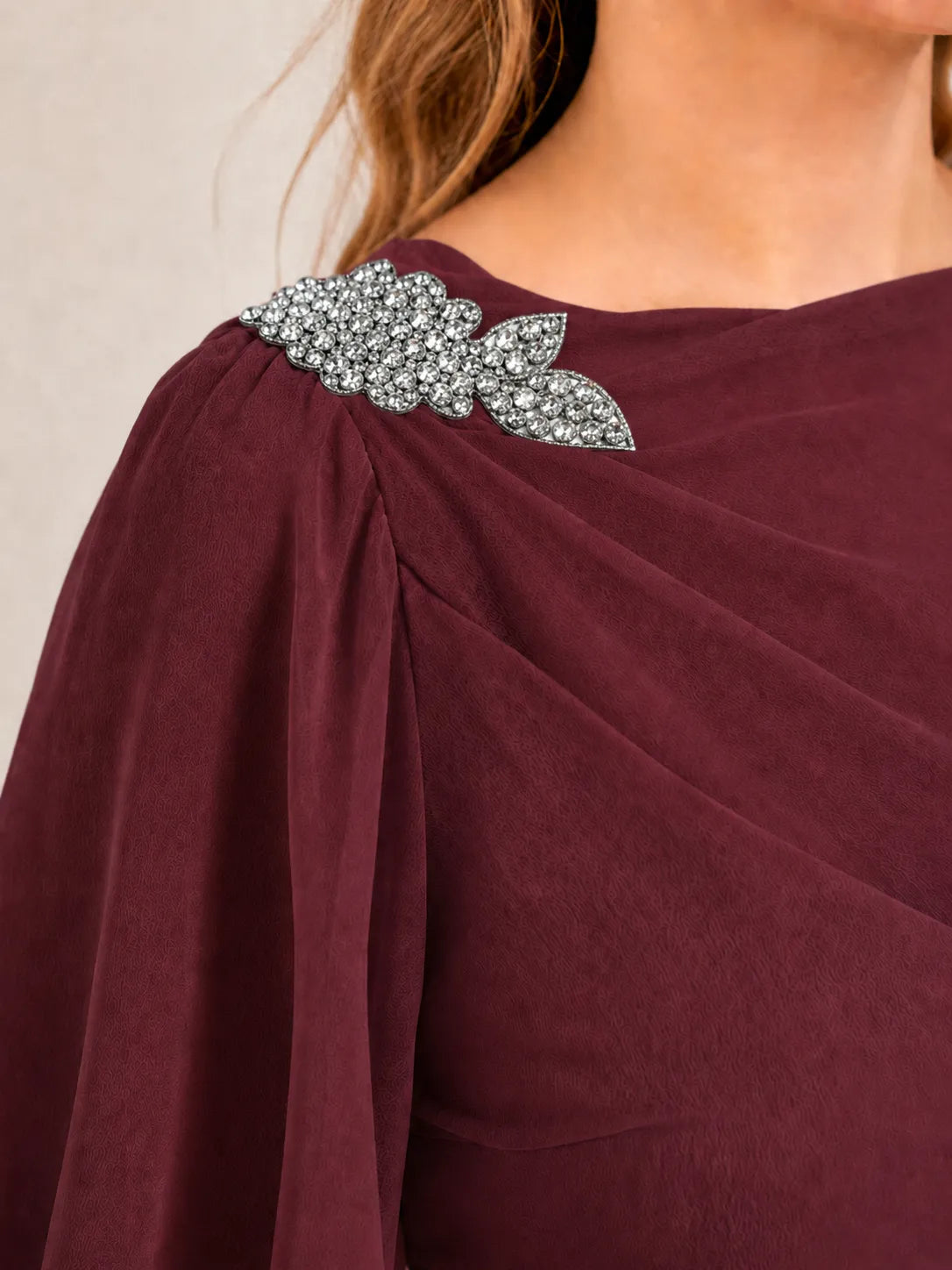


When you are choosing a dress for a wedding, party or formal event, color and silhouette usually get most of the attention.
But fabric can change the entire experience of wearing the dress.
A burgundy satin maxi and a burgundy chiffon maxi may technically be the same color and length, yet they can look completely different in photographs, move differently while you walk and feel very different after several hours of sitting, eating and dancing.
Mesh adds another set of possibilities through transparency, layering and stretch.
So which should you choose?
Satin, chiffon or mesh?
There is no universal winner.
The better choice depends on:
- The dress code
- The venue
- The season
- How much structure you want
- How much movement you prefer
- Whether you want shine or a matte finish
- How much transparency you are comfortable with
- The individual dress construction
For plus-size women, the decision also does not need to revolve around which fabric is supposedly the most “slimming.”
Fabric should help the dress work for your event and your comfort—not make your body follow a rule.
Here is how satin, chiffon and mesh actually compare.
Satin vs Chiffon vs Mesh at a Glance
| Feature | Satin | Chiffon | Mesh |
|---|---|---|---|
| Visual finish | Smooth, often lustrous | Soft, usually matte | Textured, sheer or layered |
| Movement | Fluid to structured depending on weight | Light and flowing | Soft and flexible depending on construction |
| Transparency | Usually opaque, depending on fabric | Often semi-sheer without lining | Frequently sheer |
| Lining | Depends on garment | Often important | Usually very important |
| Stretch | Varies | Usually limited unless blended | Can range from low to high |
| Formality | Excellent for evening/formal looks | Versatile from daytime to formal | Excellent for layered occasion looks |
| Photography | Reflects light strongly | Soft, diffused appearance | Creates depth through layers |
| Best known for | Polish and shine | Movement and softness | Texture and transparency |
This table is only a starting point.
The individual garment matters more than the fabric label alone.
1. Satin: Polished, Smooth and Light-Reflective
Satin is often associated with eveningwear because of its smooth surface and distinctive sheen.
Technically, “satin” describes a type of weave rather than one specific fibre, so a satin dress may be made from polyester or other materials.
That means two satin dresses can behave quite differently.
Still, there are some common characteristics.
What Satin Looks Like
Satin reflects light more strongly than chiffon or most mesh.
That makes colors appear richer and more dimensional.
For example:
- Burgundy can appear deep wine in shadow and brighter red where light hits.
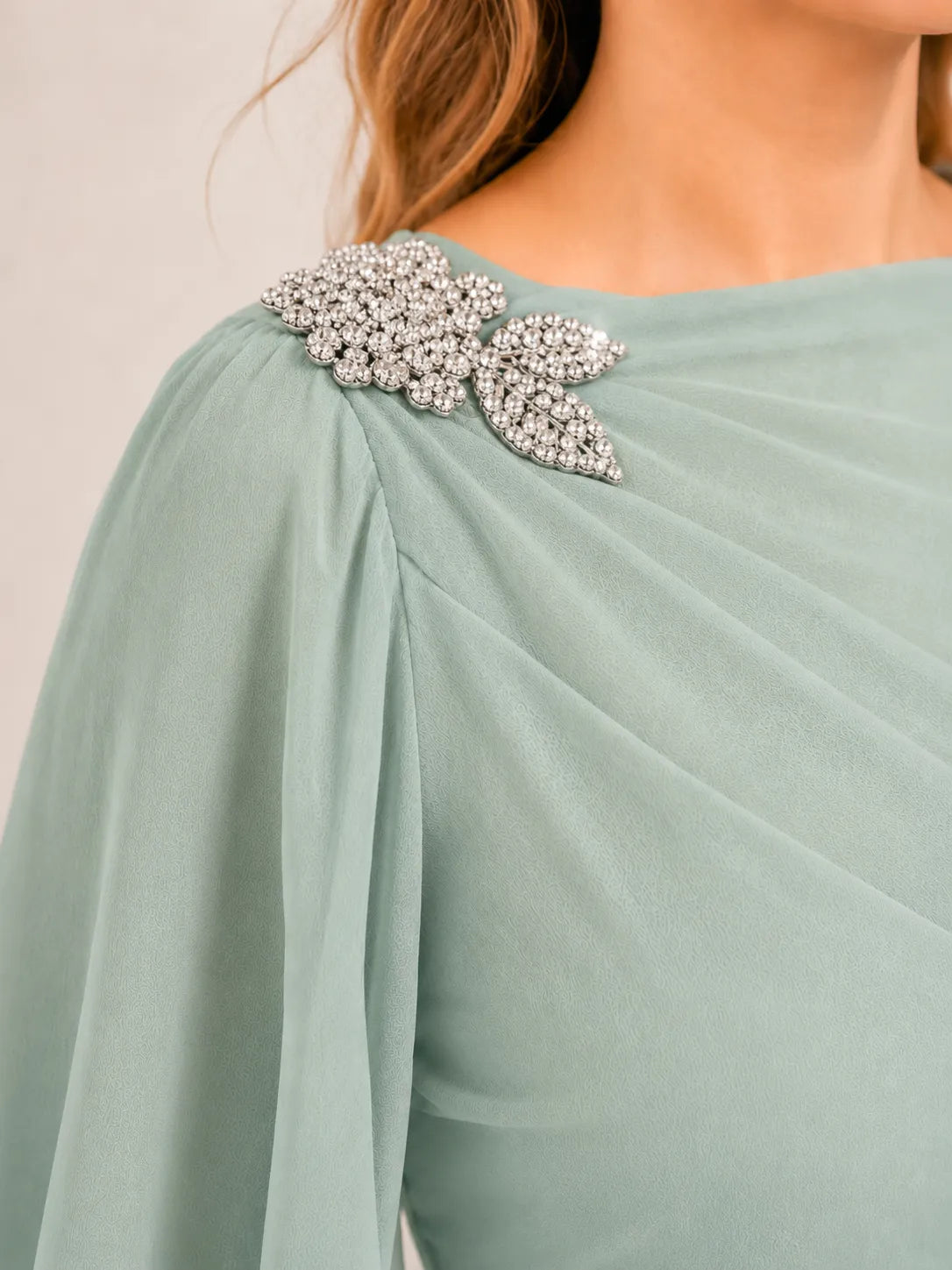
- Sage green can look softer or slightly silvery depending on the lighting.
- Black satin often shows more surface detail than matte black fabric.
This makes satin particularly effective for evening photographs, candlelight and indoor receptions.
How Satin Moves
The movement depends heavily on fabric weight.
A lighter satin may flow easily.
A heavier satin may create more defined folds and structure.
Do not assume every satin dress will fall the same way.
Look at product videos or photographs that show the skirt while the model is walking.
Satin May Show More Surface Detail
Because satin reflects light, folds, seams and tension can sometimes become more visible.
That is not automatically a problem.
It simply means fit matters.
Check whether:
- The fabric pulls across the bust
- Horizontal tension lines appear at the hips
- The waist seam sits correctly
- The skirt falls freely
- The fabric remains comfortable while sitting
A satin dress that fits properly can look polished without needing to be extremely fitted.
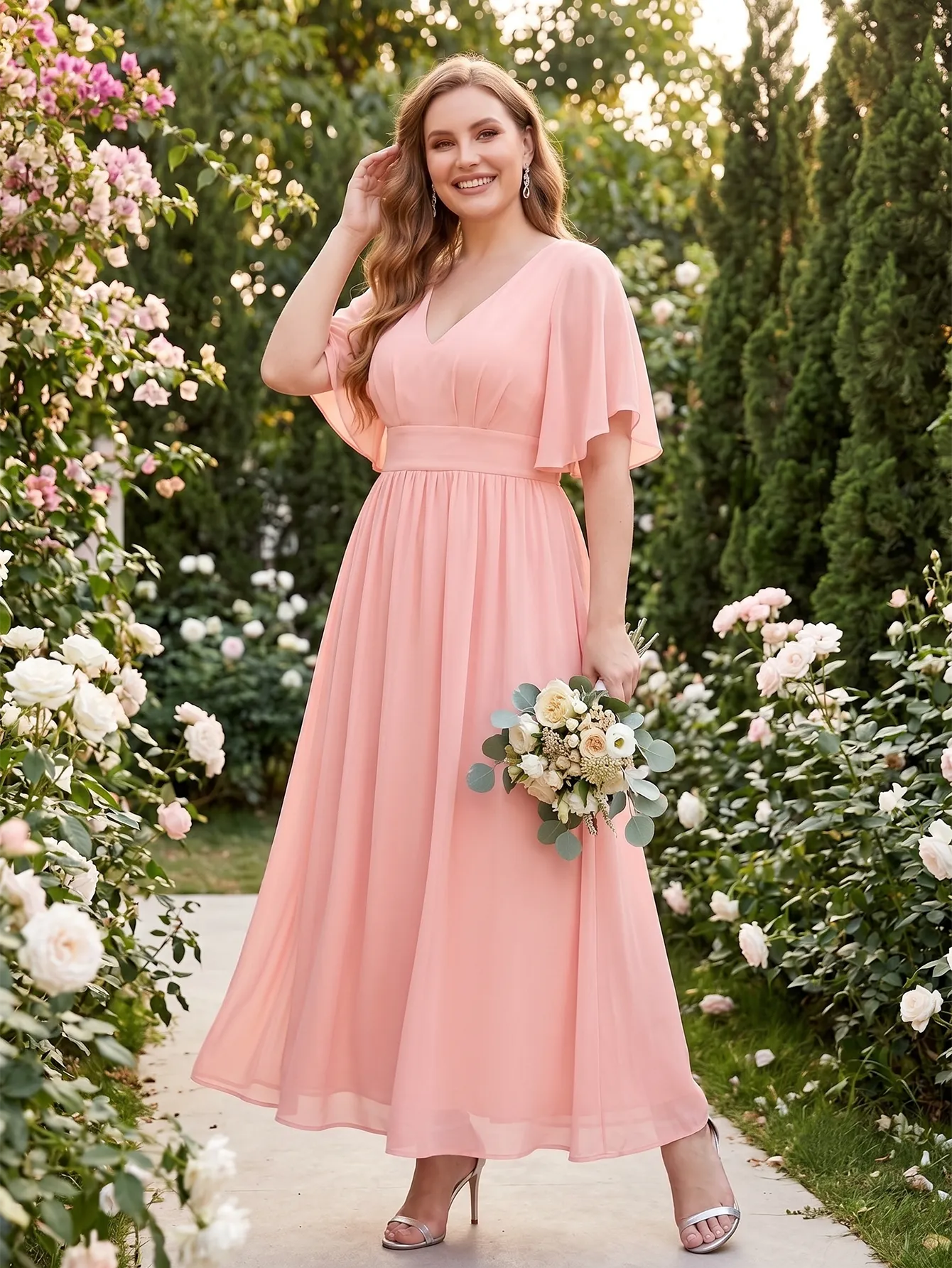
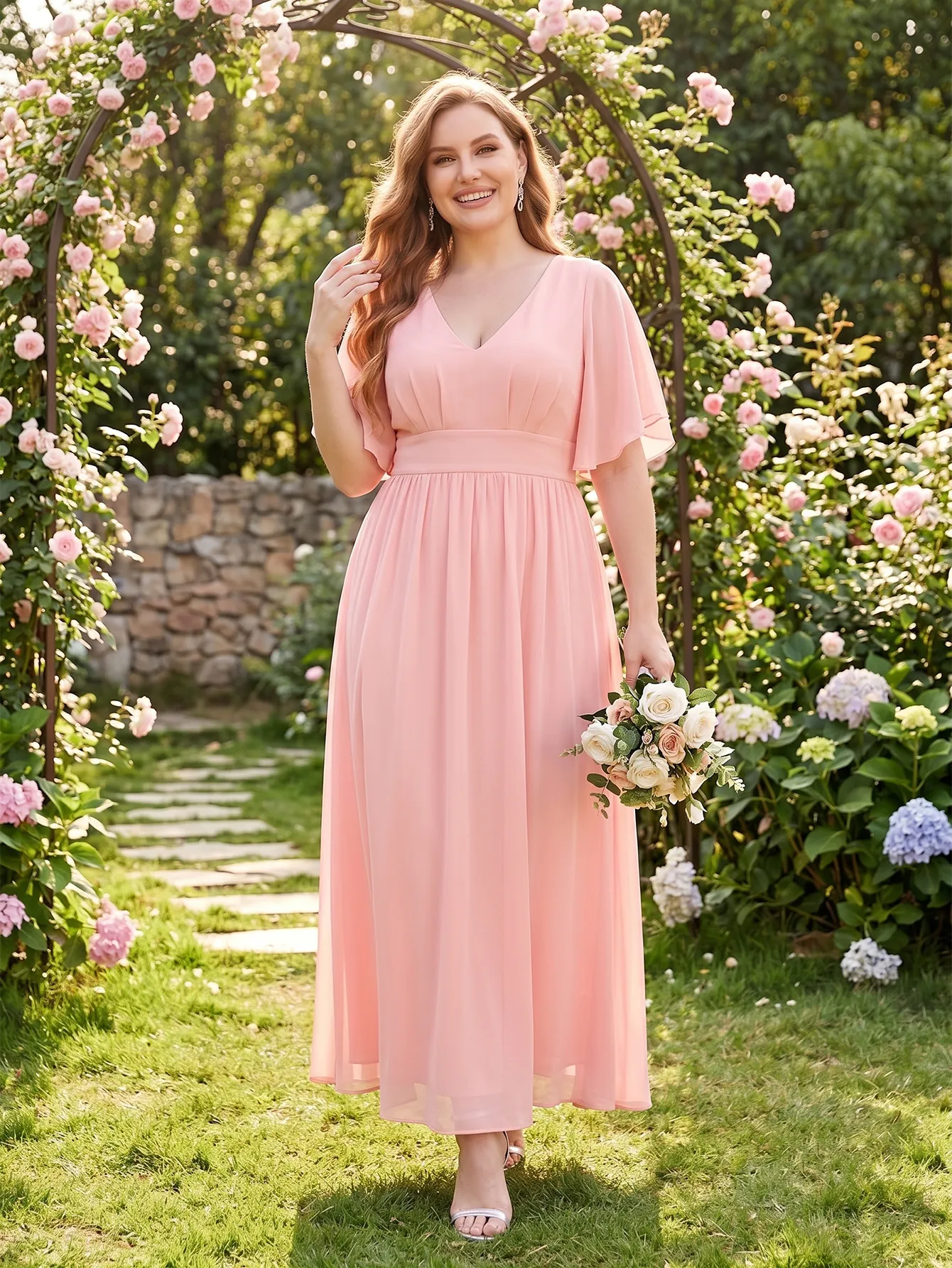
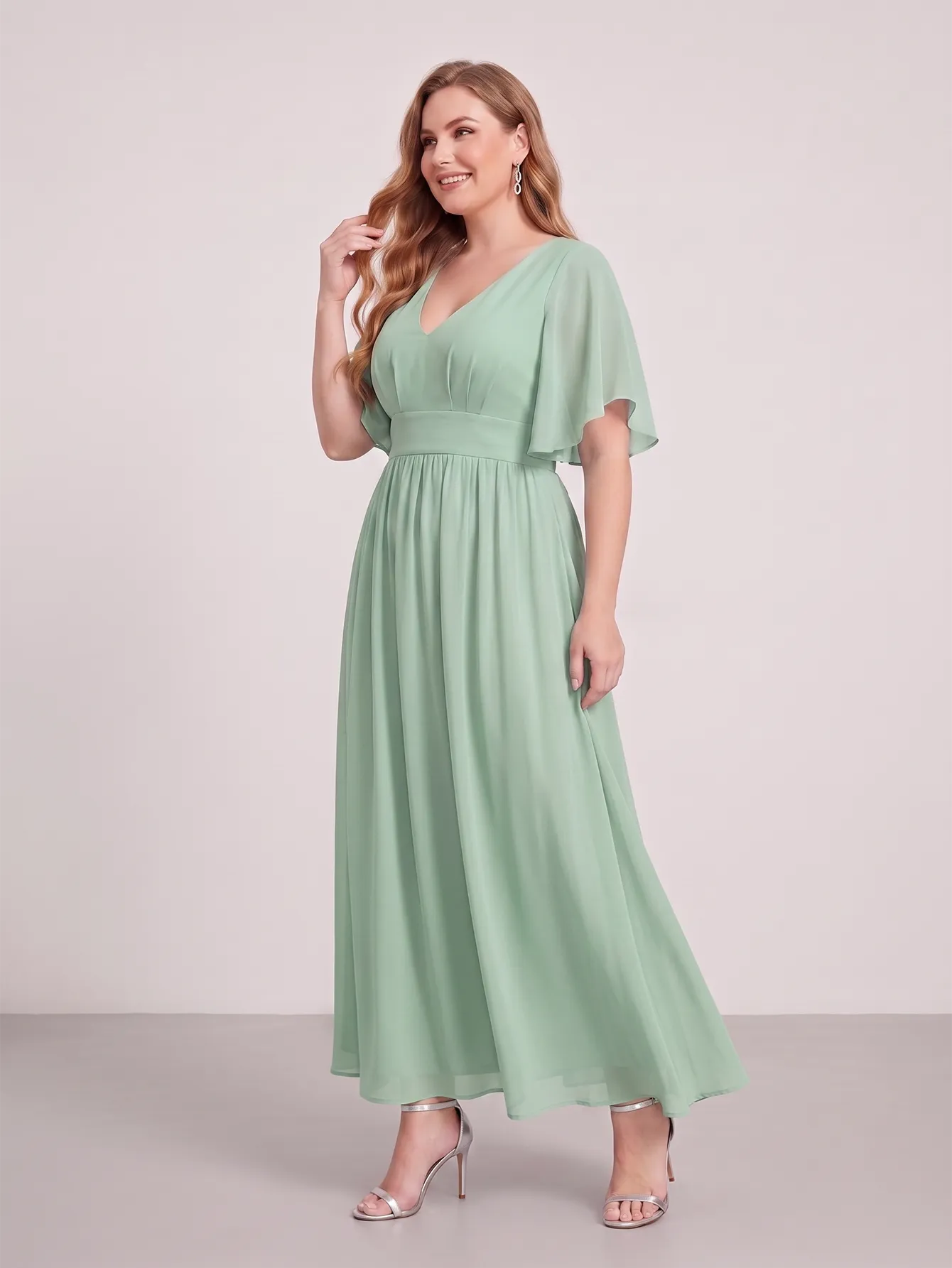
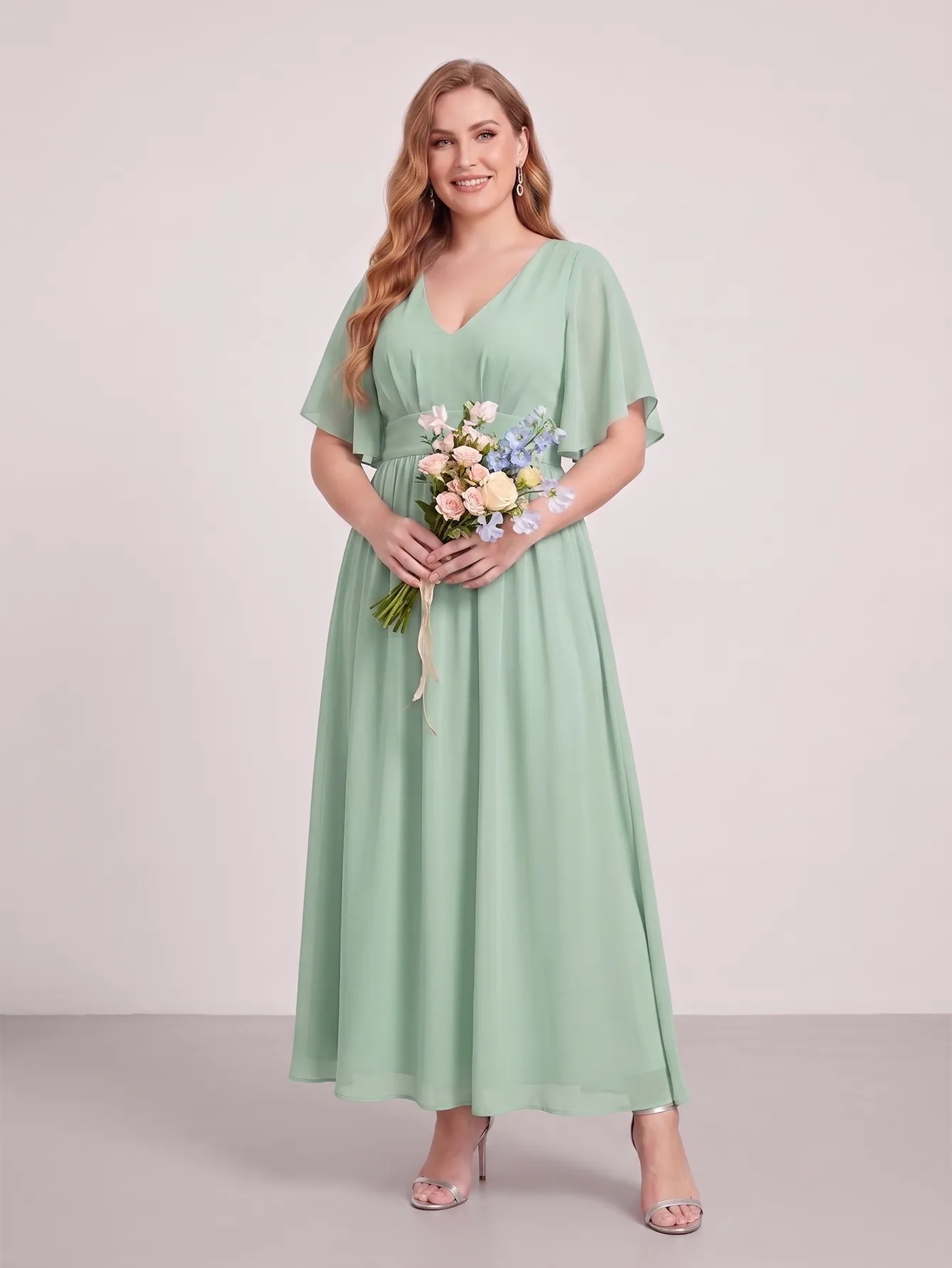
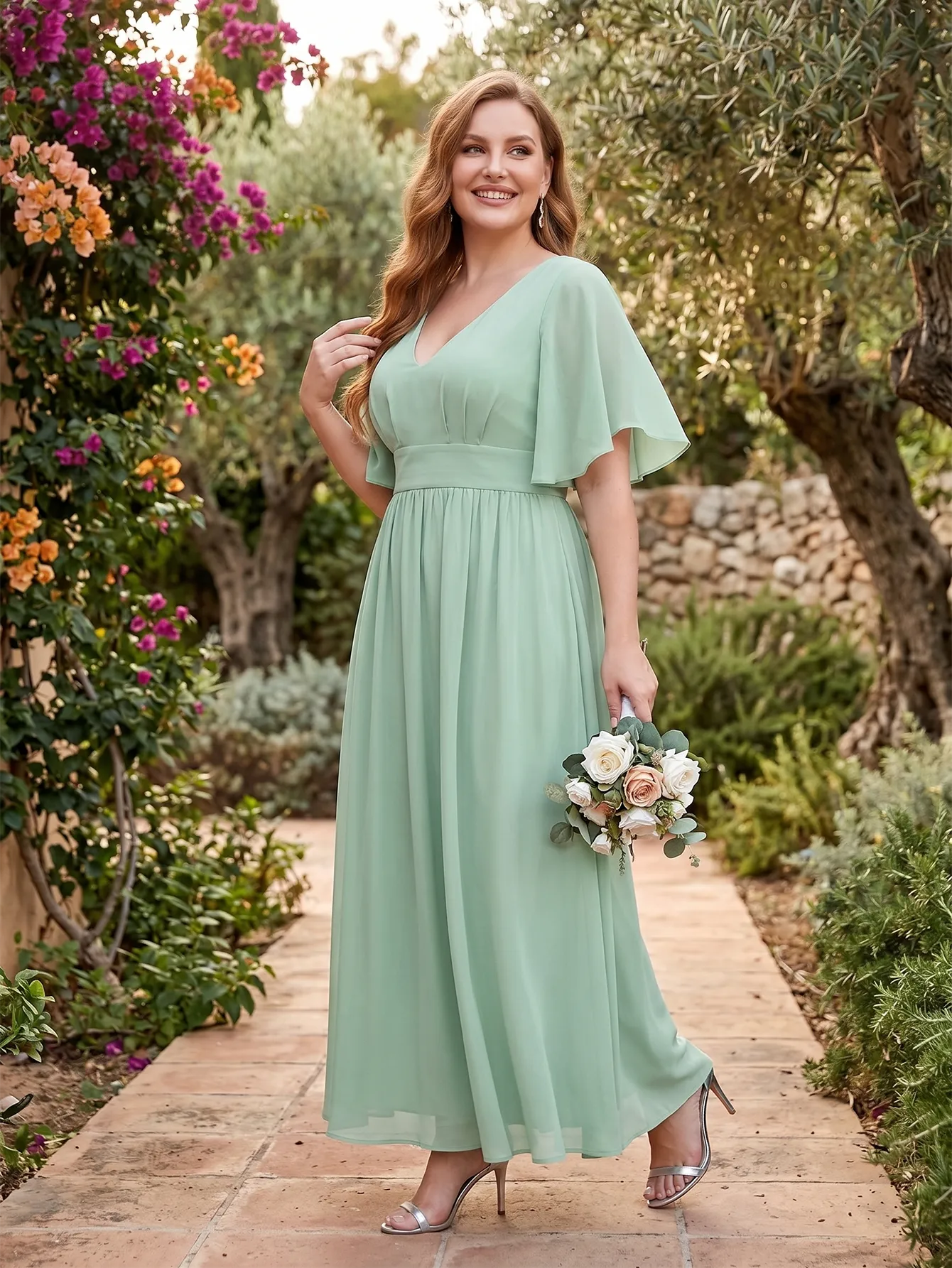
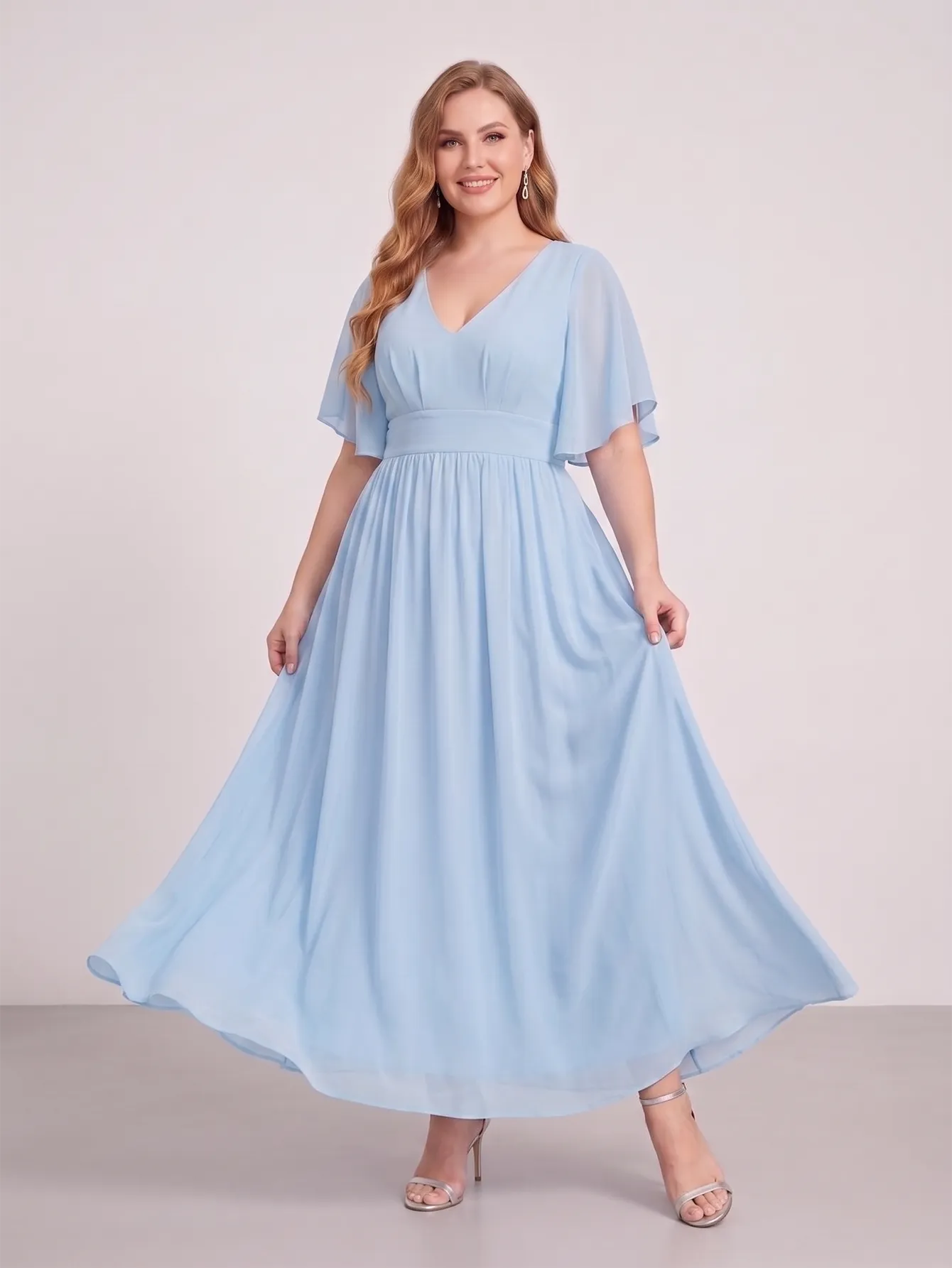
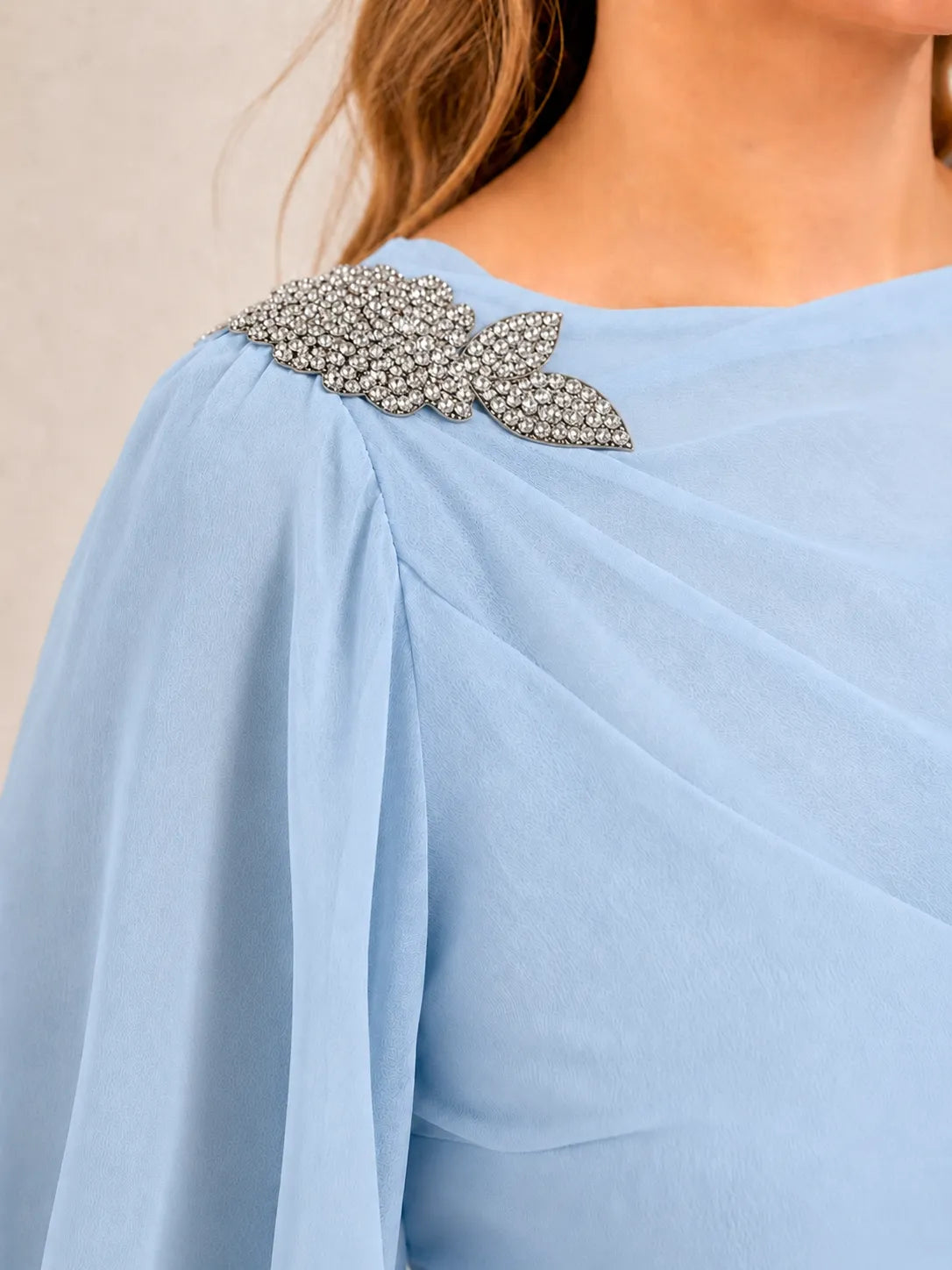
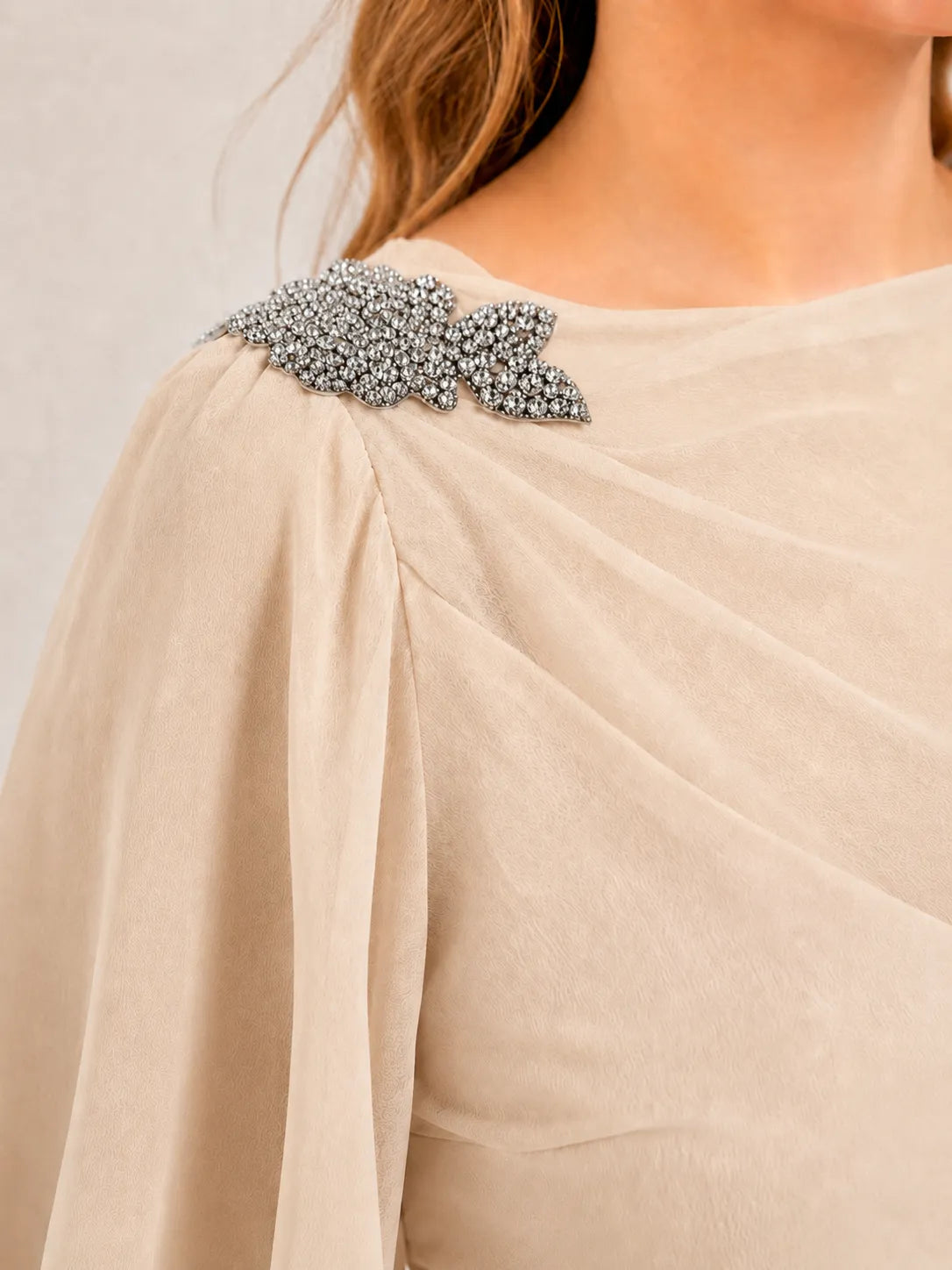
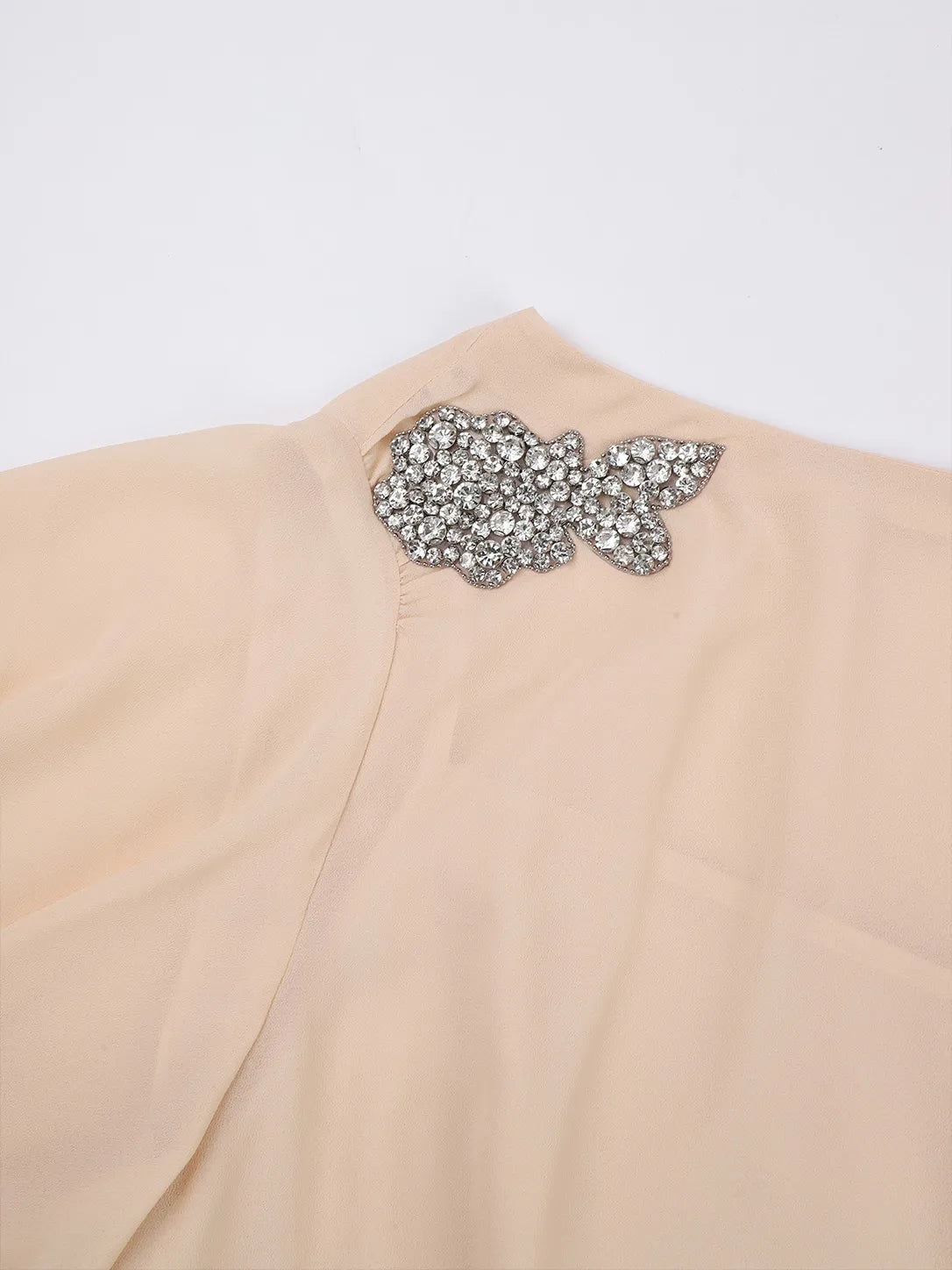
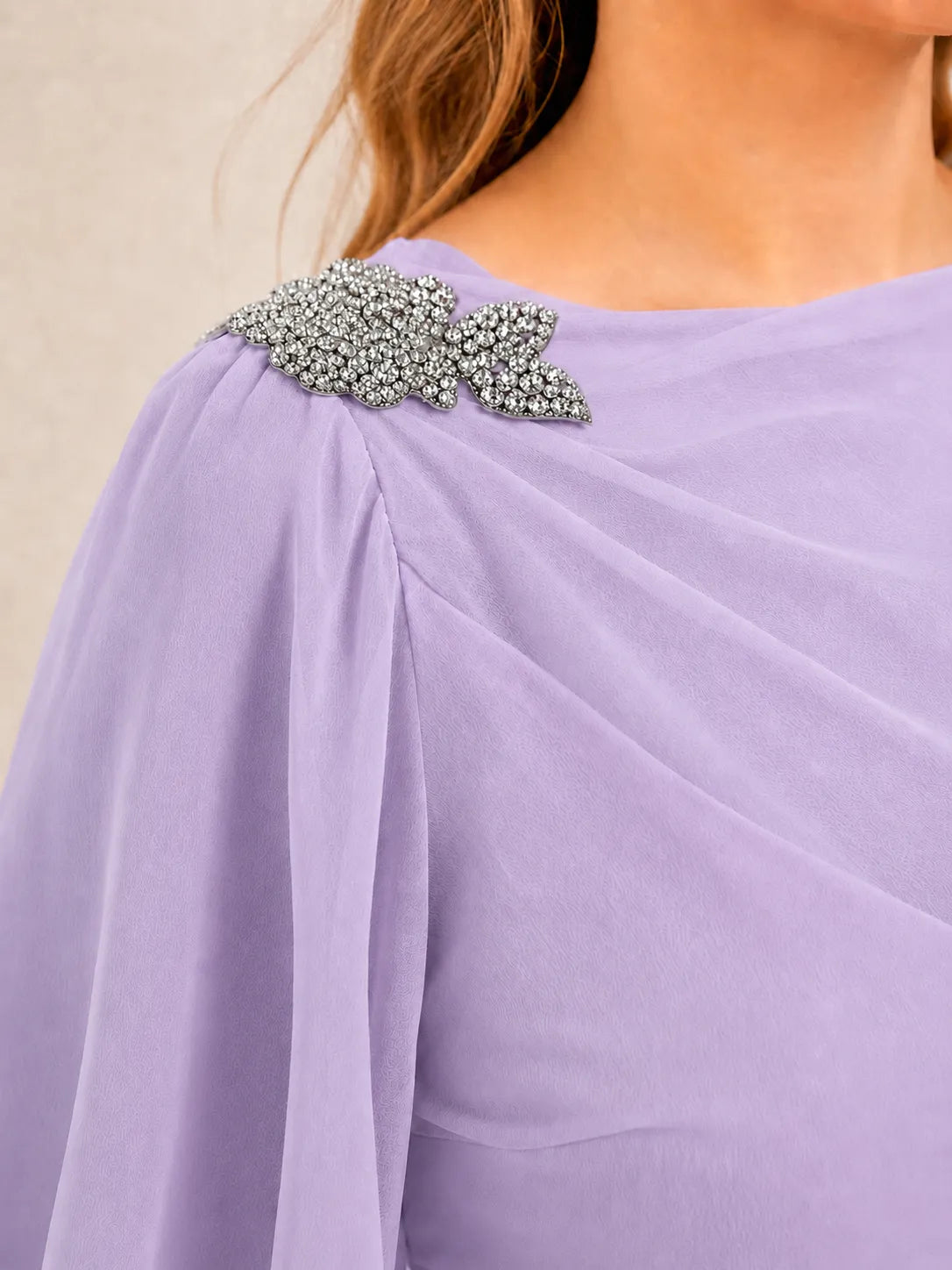
2. Chiffon: Light, Soft and Designed for Movement
Chiffon creates a very different effect.
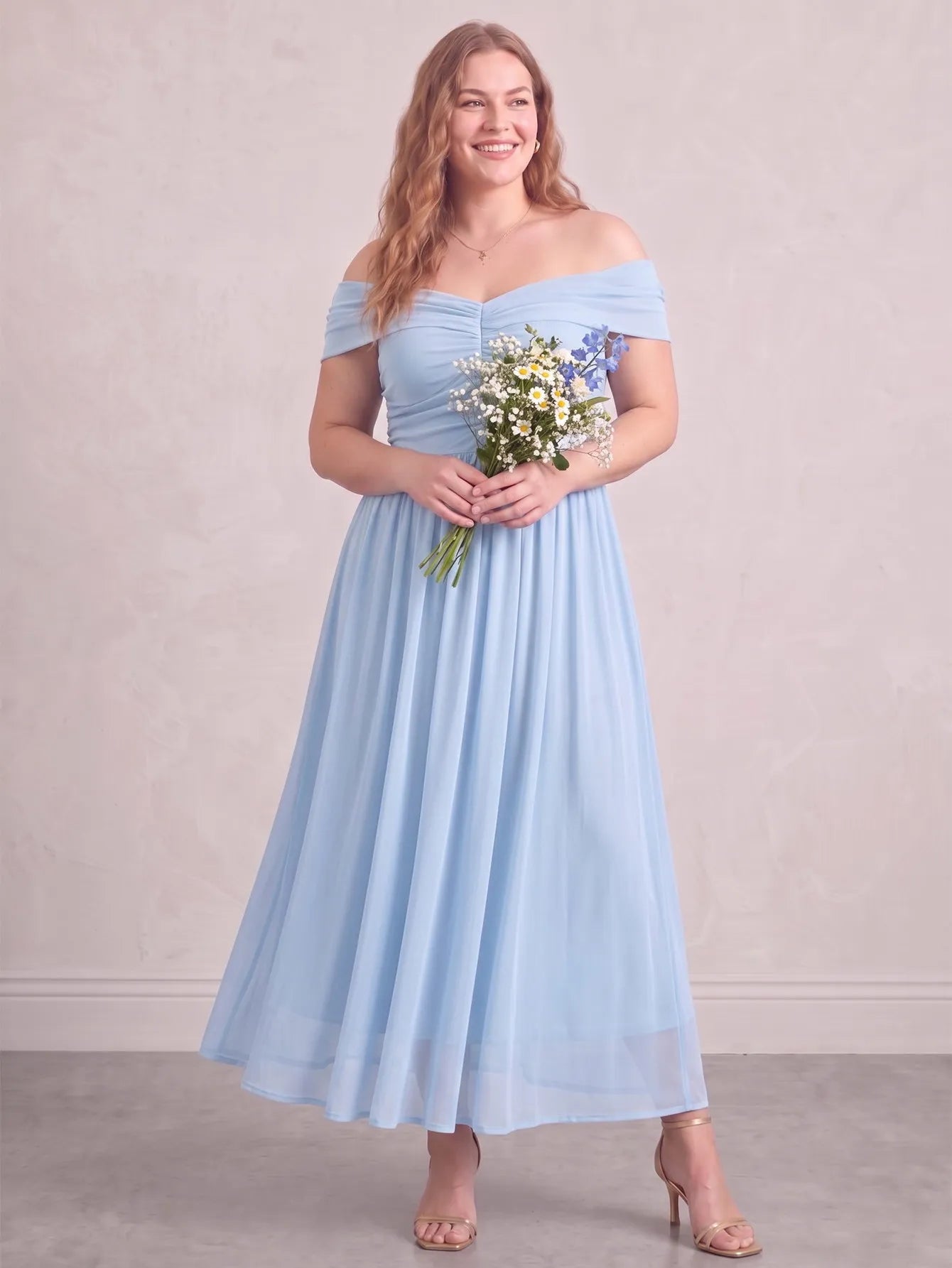
It is usually lightweight, slightly transparent and more matte than satin.
It is often used in layers or combined with an opaque lining.
The result is a softer appearance with more movement.
What Chiffon Looks Like
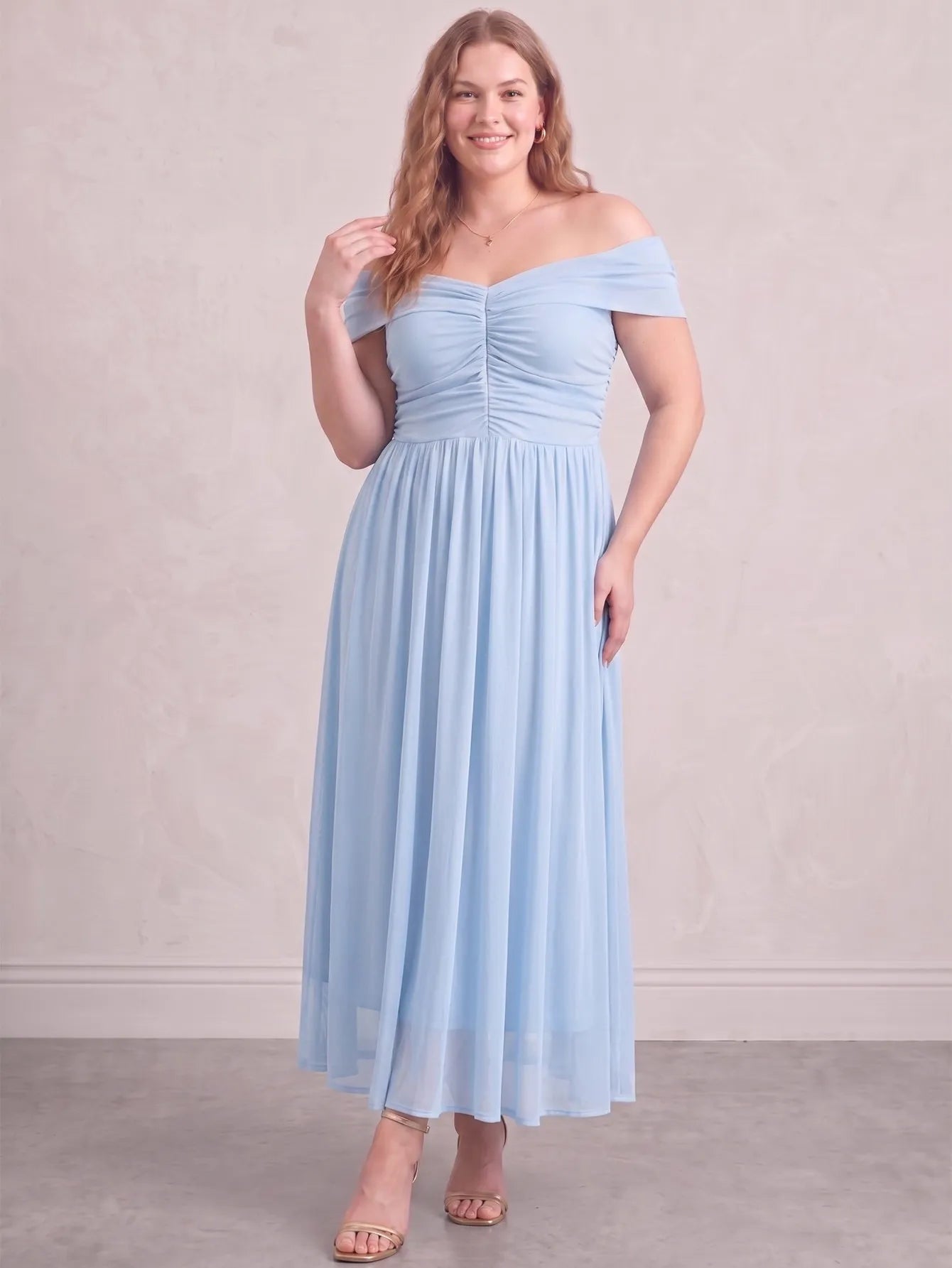
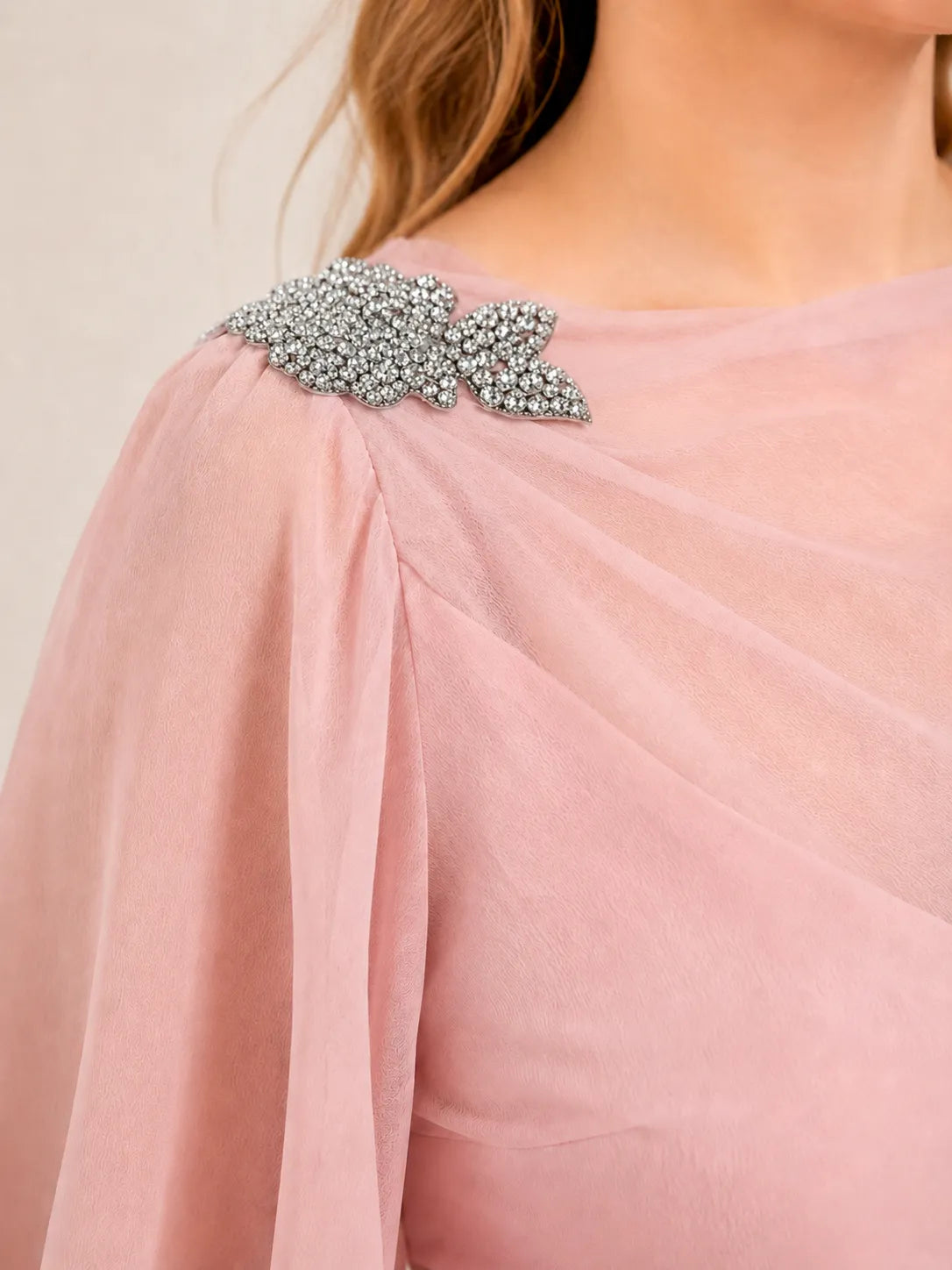
Chiffon tends to diffuse color.
That means a deep color such as burgundy or plum can feel softer in chiffon than it would in satin.
Lighter colors such as:
- Sage green
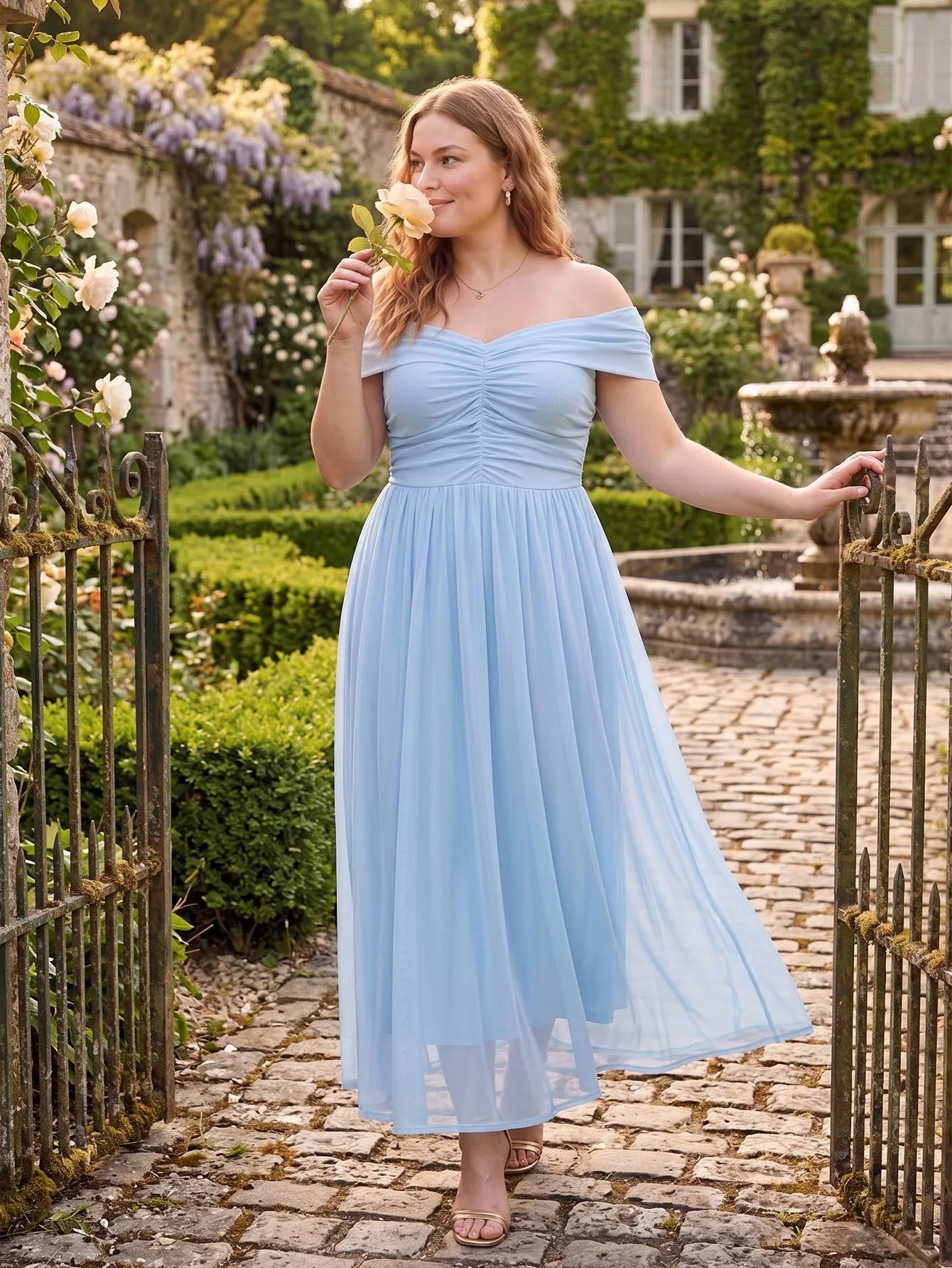
- Sky blue
- Lilac
- Pink
- Beige
can feel especially airy.
This is one reason chiffon appears so often in wedding guest and occasion dresses.
How Chiffon Moves
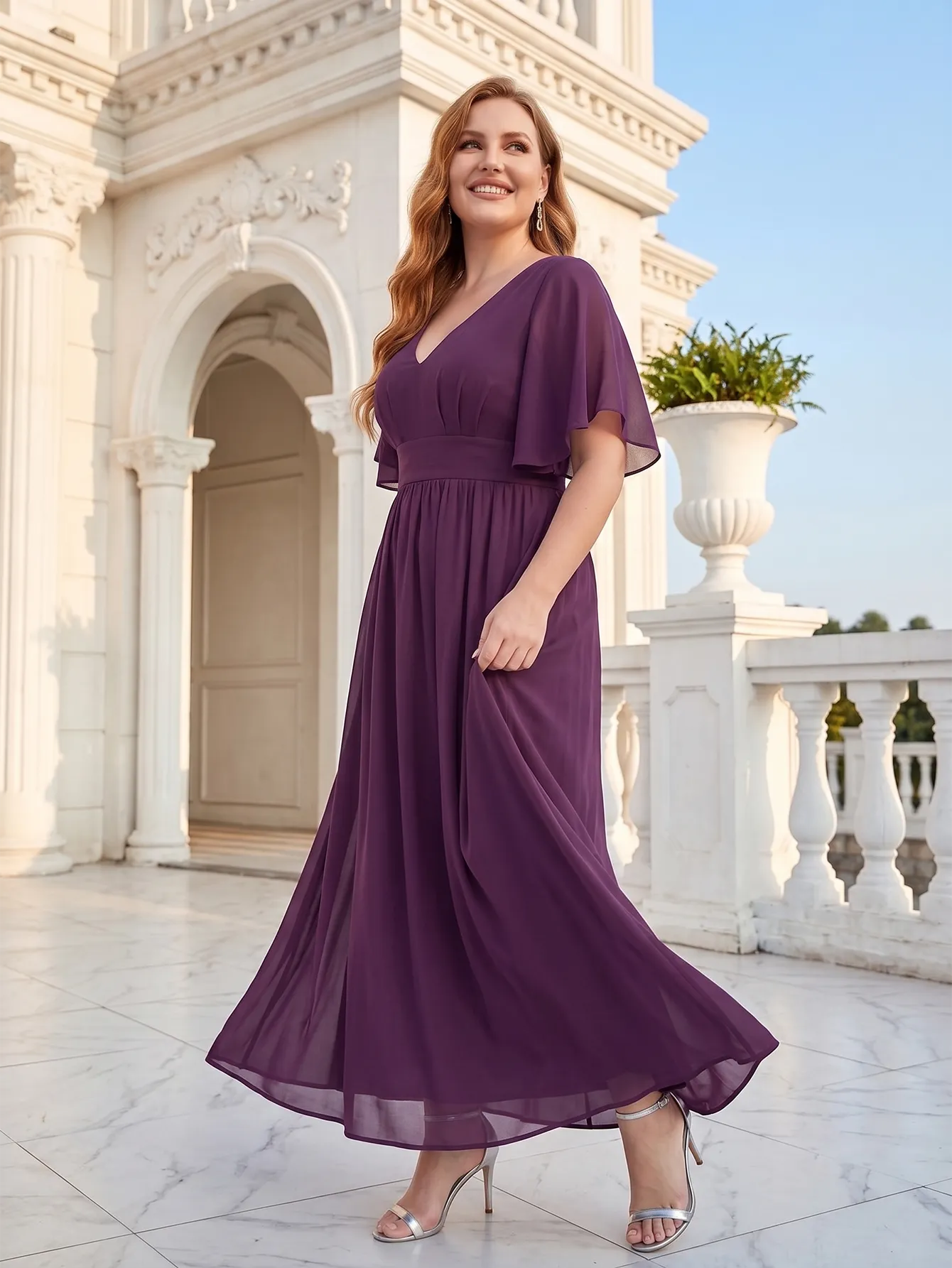
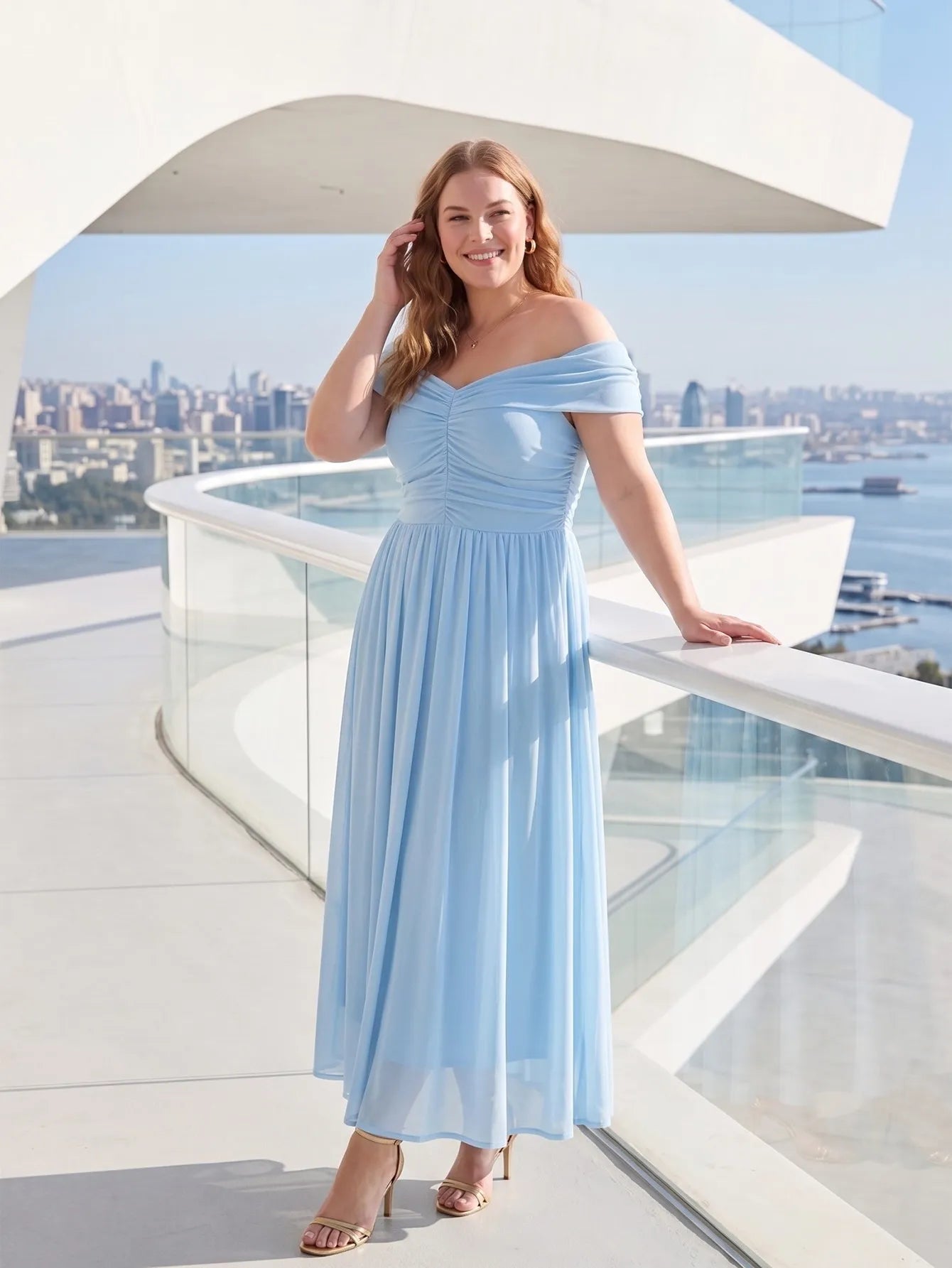
Movement is one of chiffon’s strongest characteristics.
A flowing skirt, flutter sleeve or ruffle can move easily when you walk.
That can make chiffon particularly attractive for:
- Garden weddings
- Destination weddings
- Spring and summer celebrations
- Dancing
- Dresses with A-line silhouettes
- Romantic occasion styling
But lightweight movement also means you should check what happens outdoors.
Very light outer layers can respond strongly to wind.
Chiffon Usually Needs Thoughtful Lining
Because chiffon can be semi-sheer, many chiffon dresses use an opaque lining through the body or skirt.
Check:
- Where the lining ends
- Whether the lining moves independently
- Whether the outer chiffon catches on the lining
- Whether the lining remains comfortable when sitting
Do not judge coverage from the outer layer alone.
3. Mesh: Layered, Textured and Often More Flexible
Mesh occupies a different space.
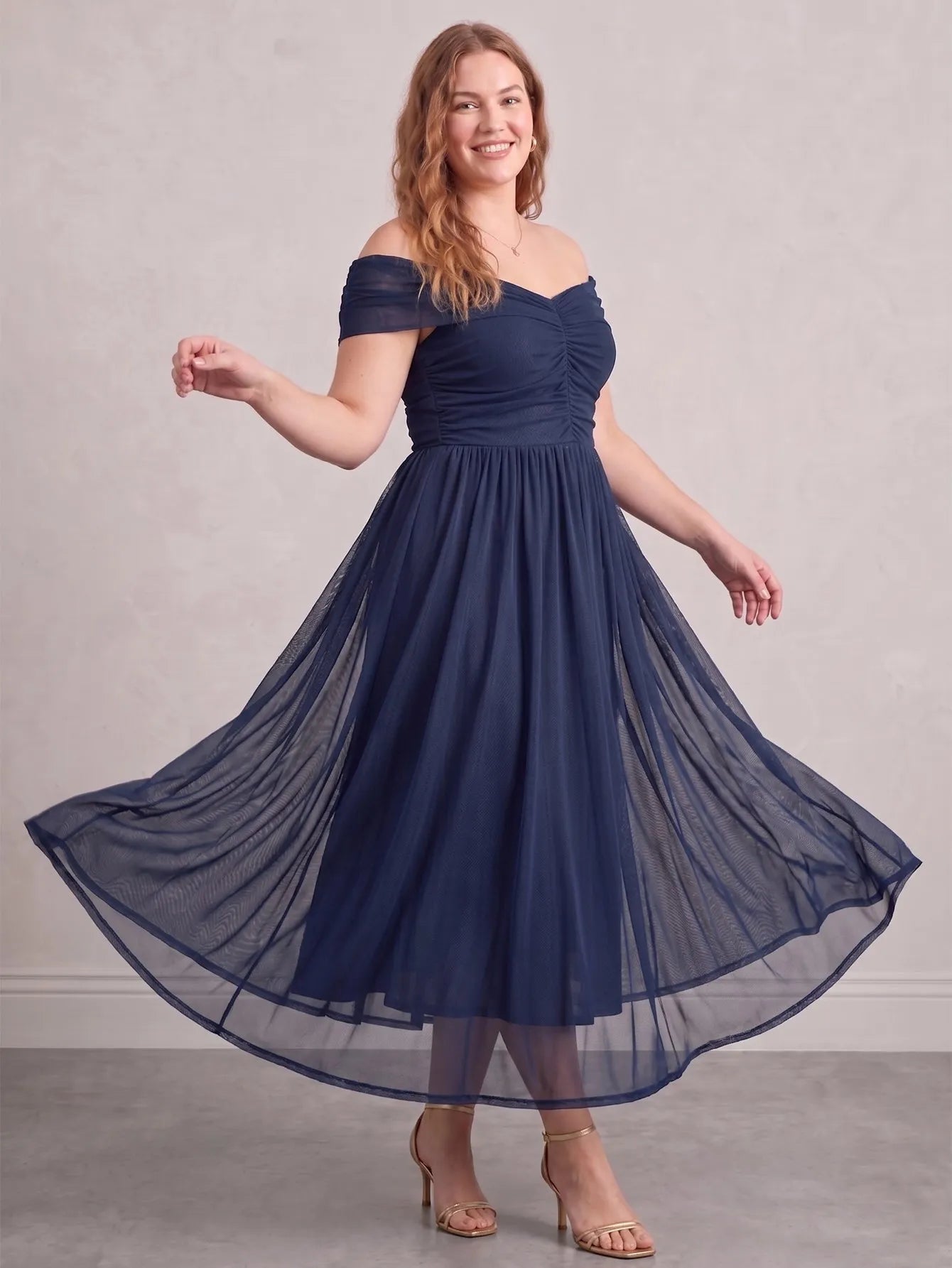
Rather than creating shine like satin or airy softness like chiffon, mesh often creates visual depth through transparency and layering.
It can be used in:
- Sleeves
- Necklines
- Full overlays
- Layered skirts
- Ruched sections
- Fitted dresses
- Formal maxi dresses
What Mesh Looks Like
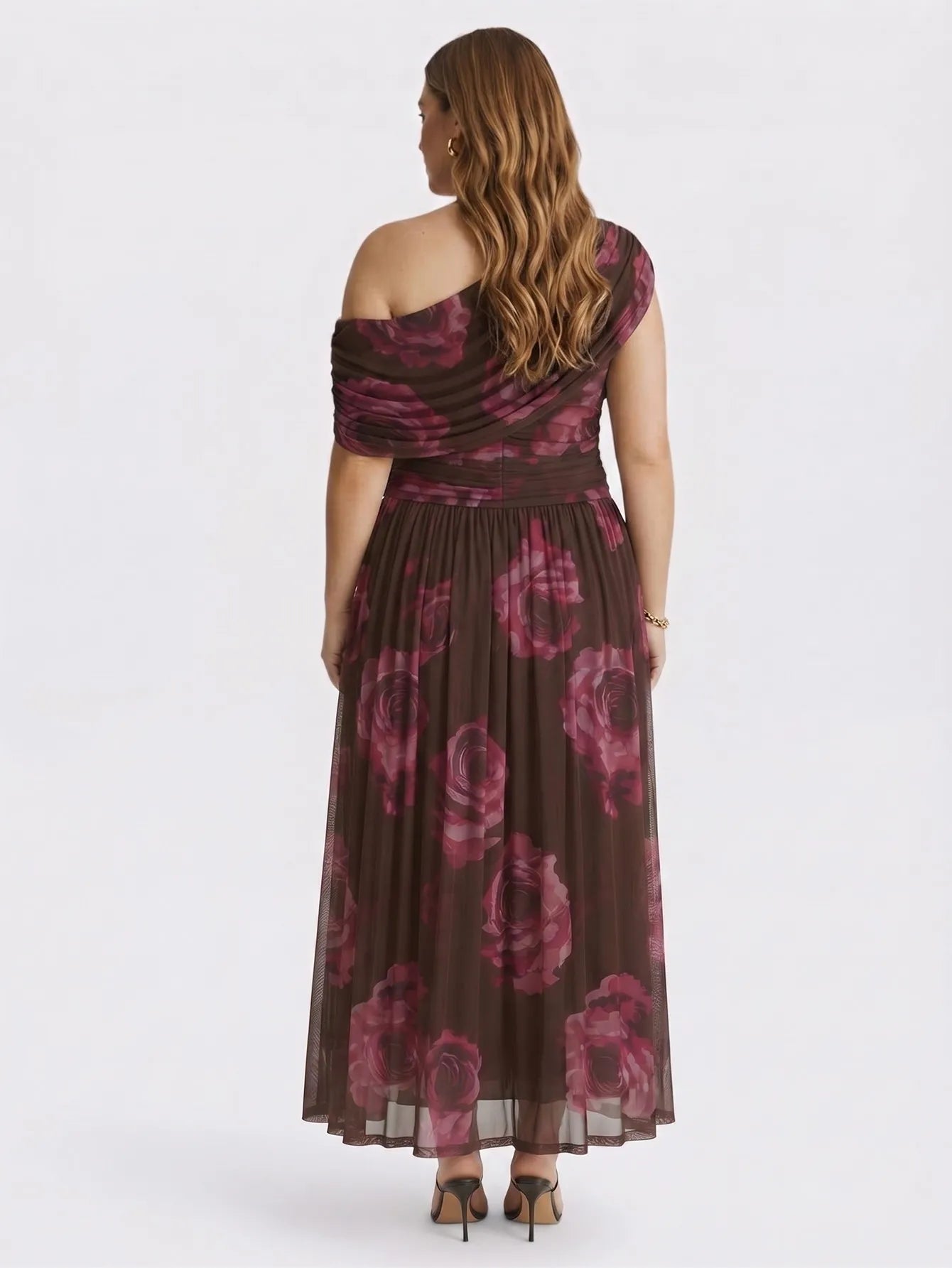
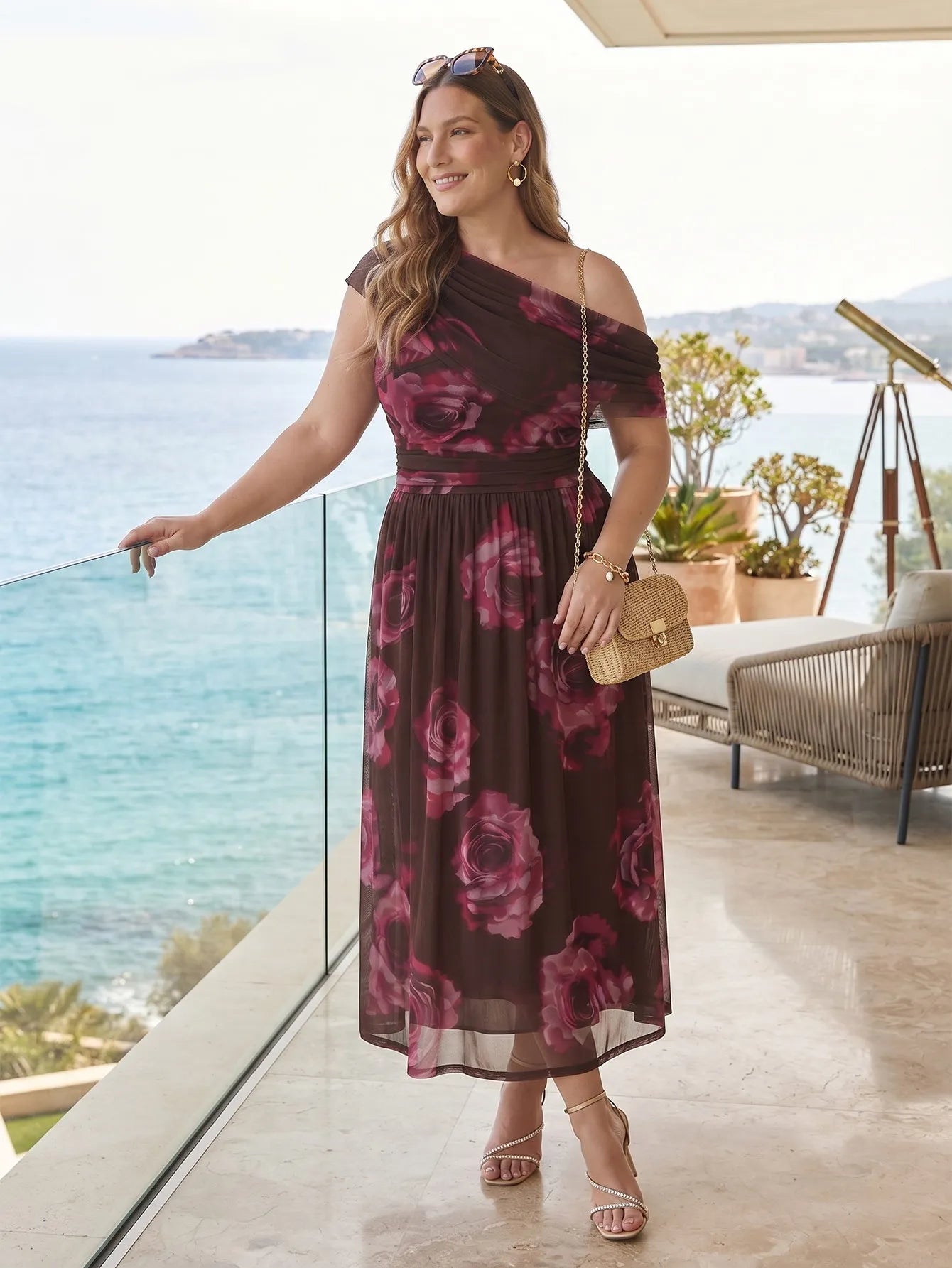
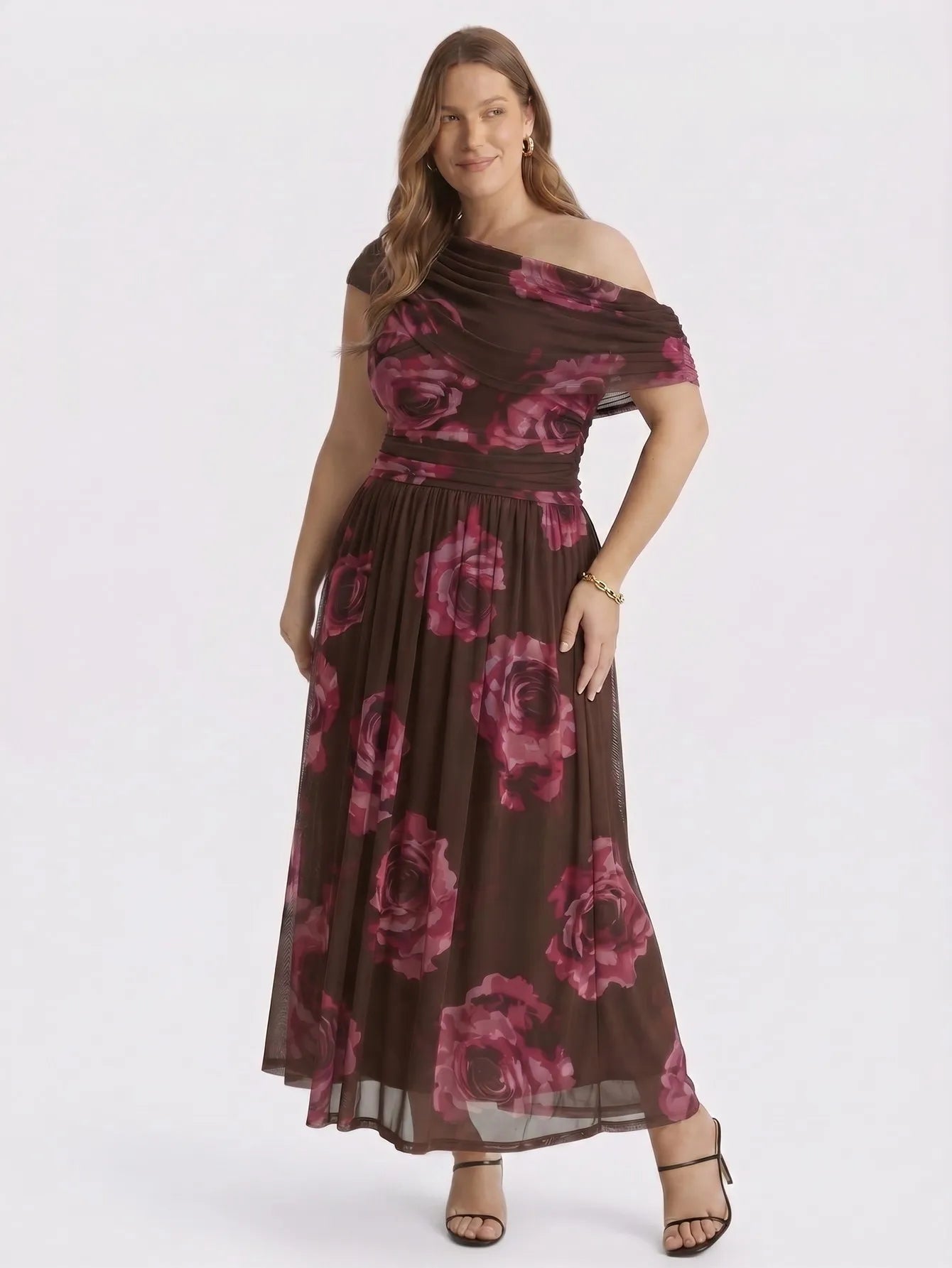
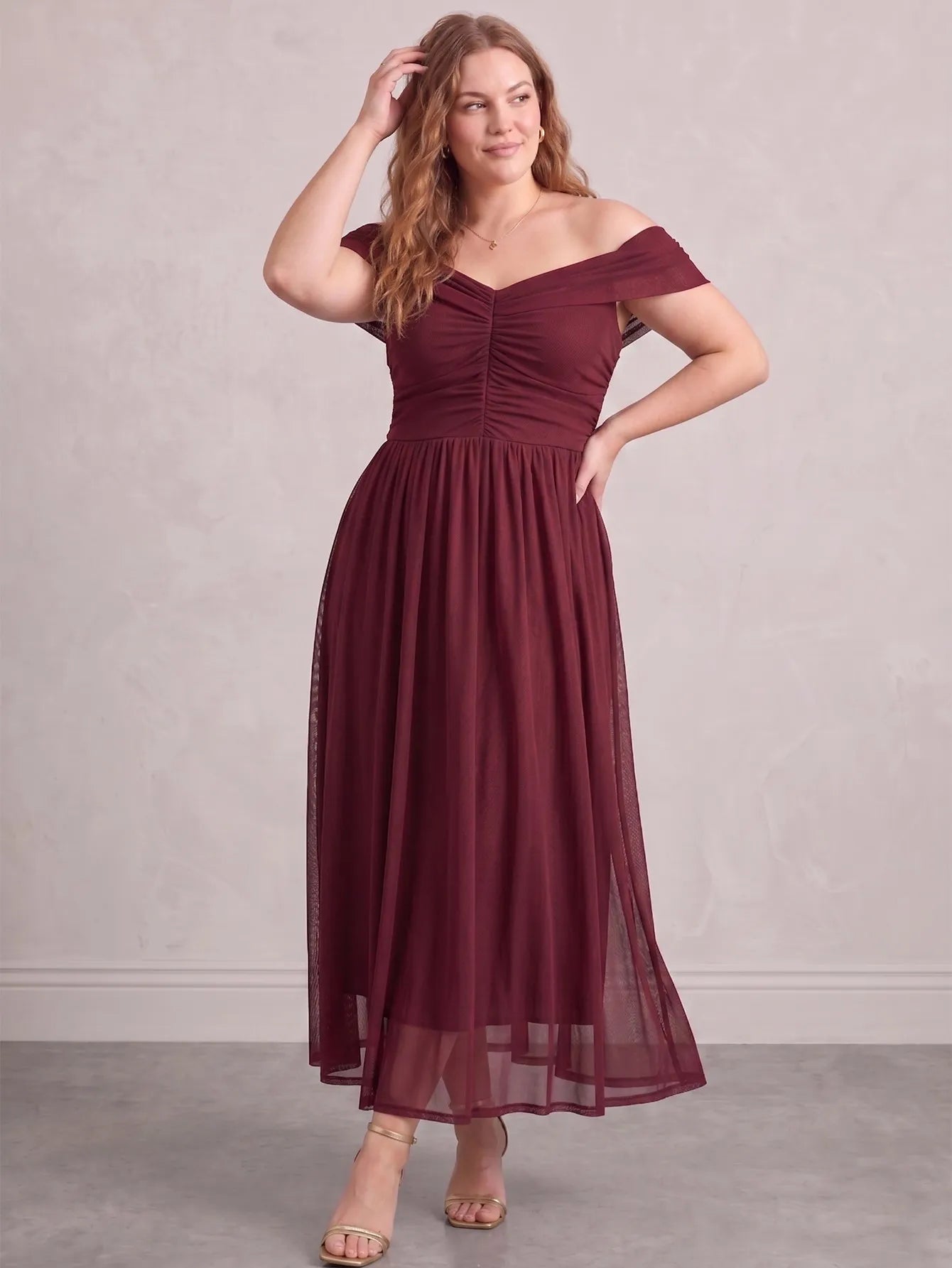
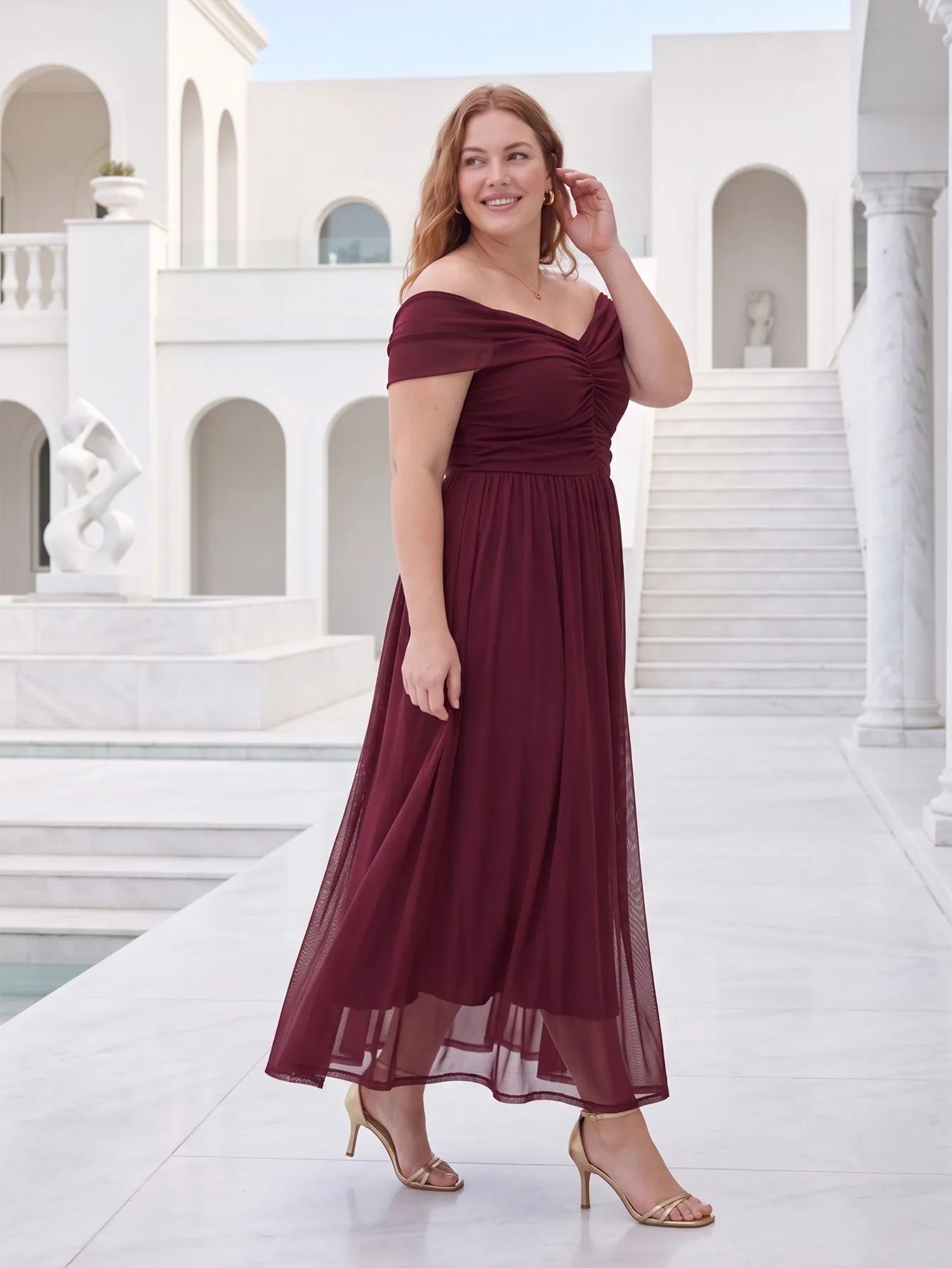
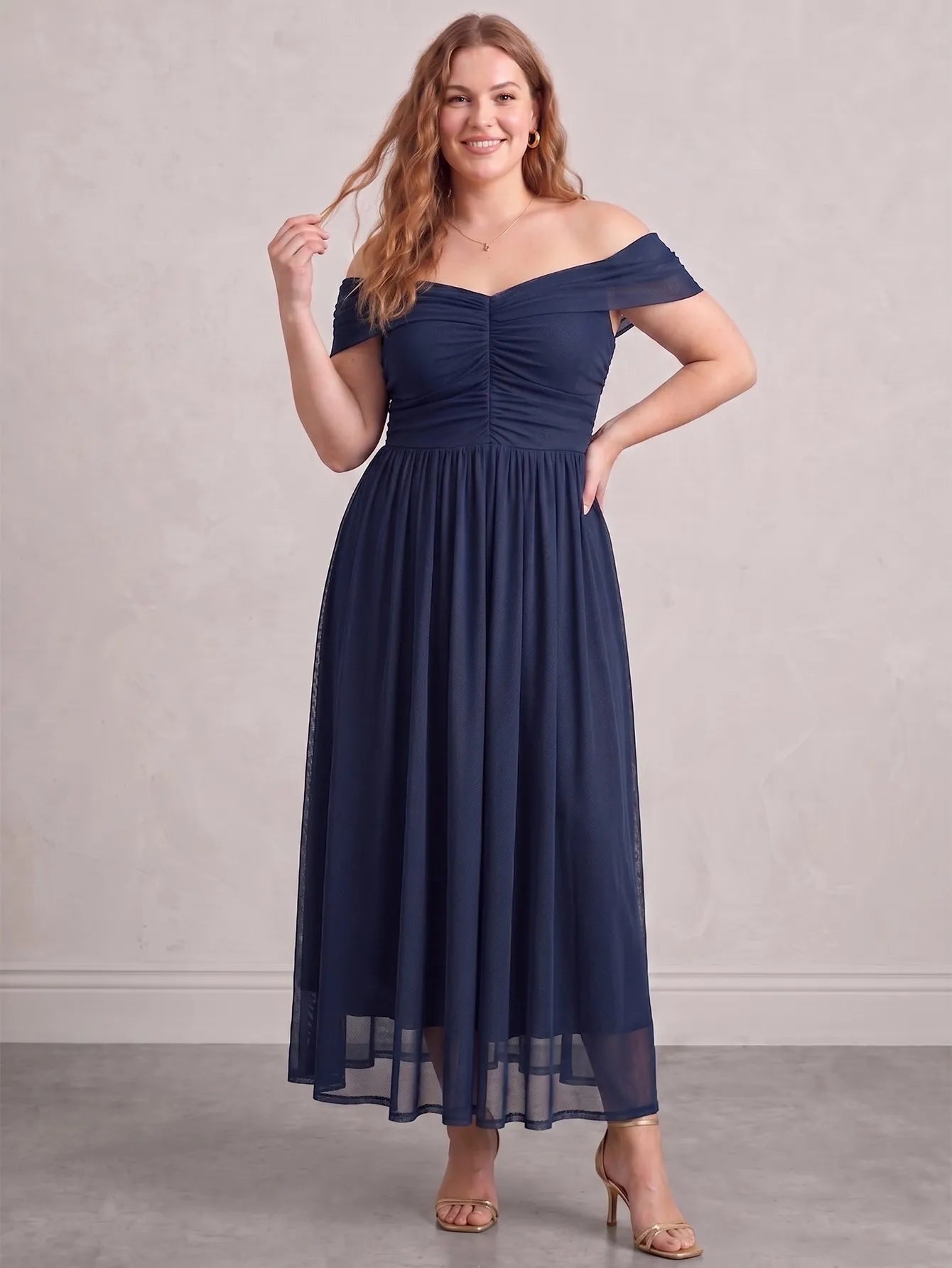
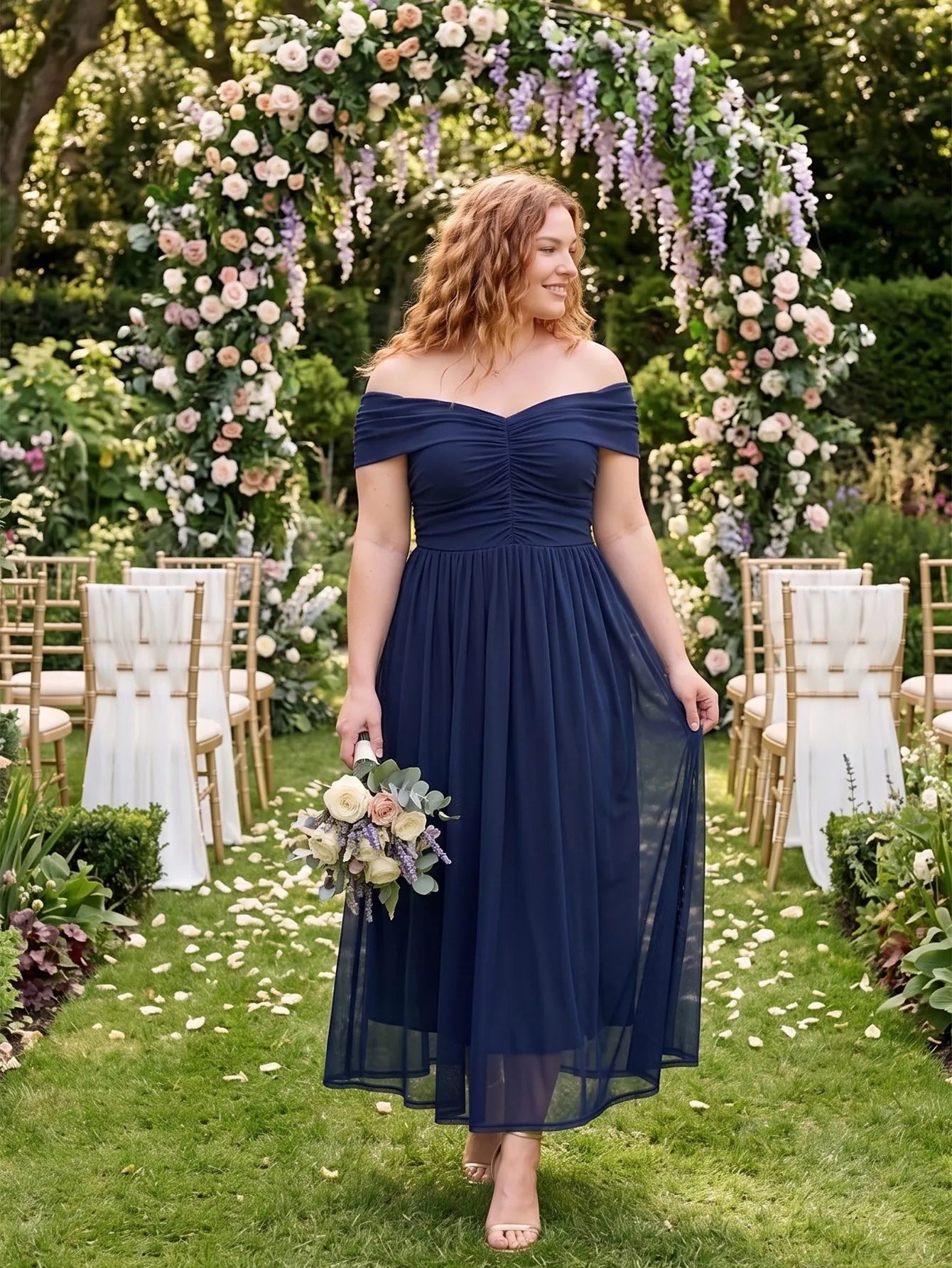
Mesh allows the lining underneath to become part of the visual design.
The same color can appear slightly different where:
- The fabric is doubled
- The lining sits underneath
- The mesh is completely sheer
- Ruching creates multiple layers
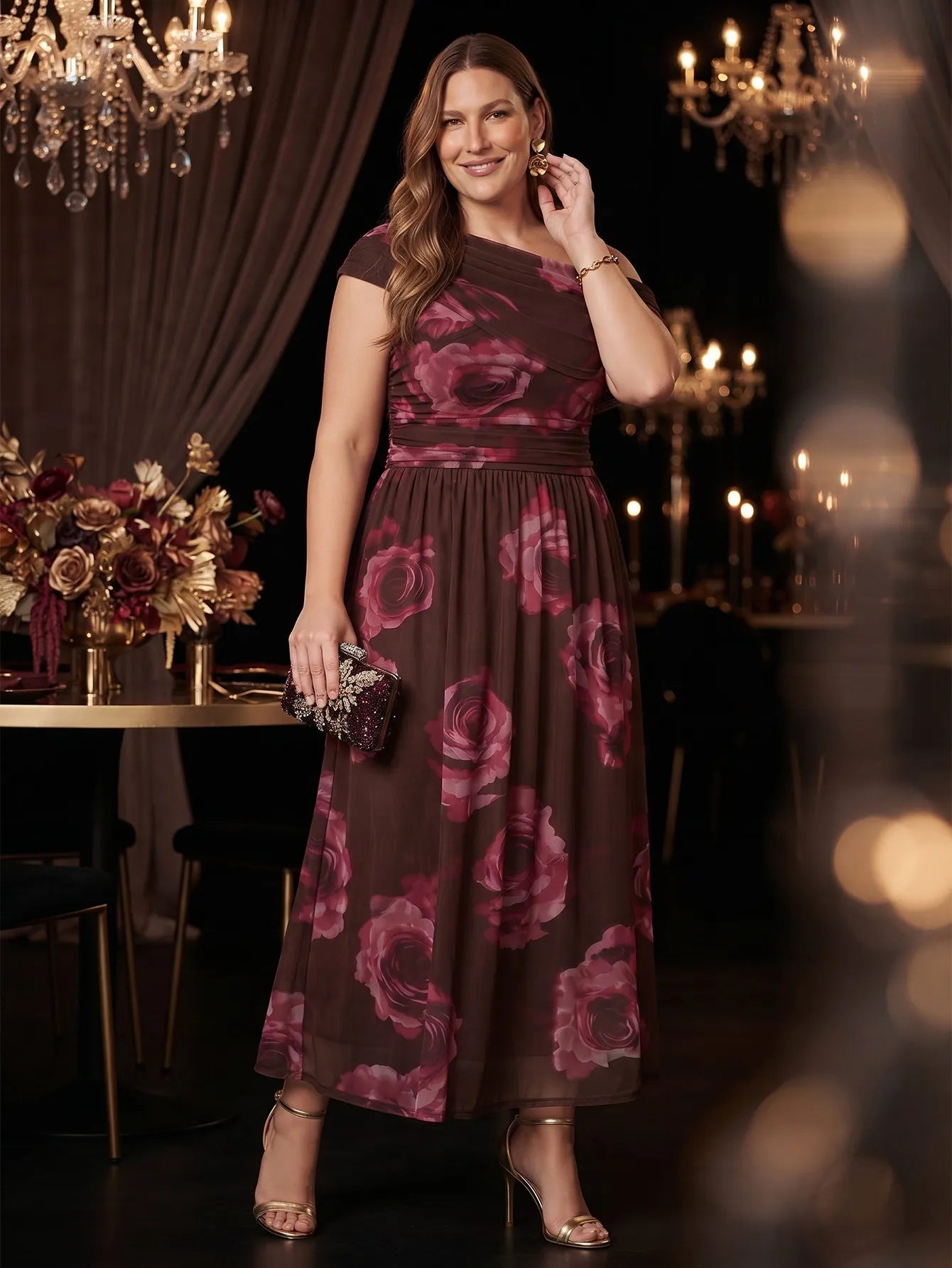
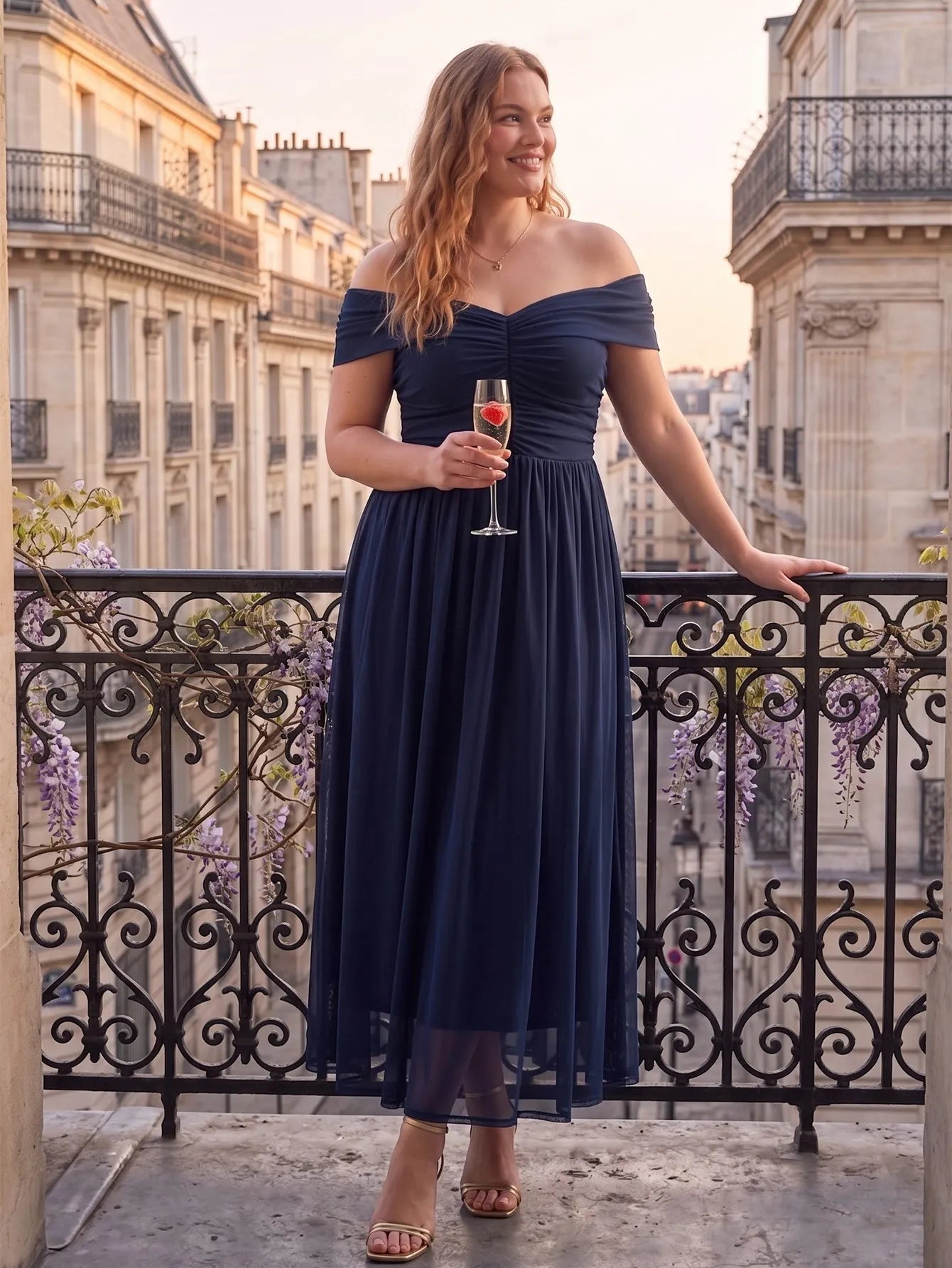
This makes mesh particularly interesting in deeper colors such as:
- Burgundy
- Deep plum
- Navy
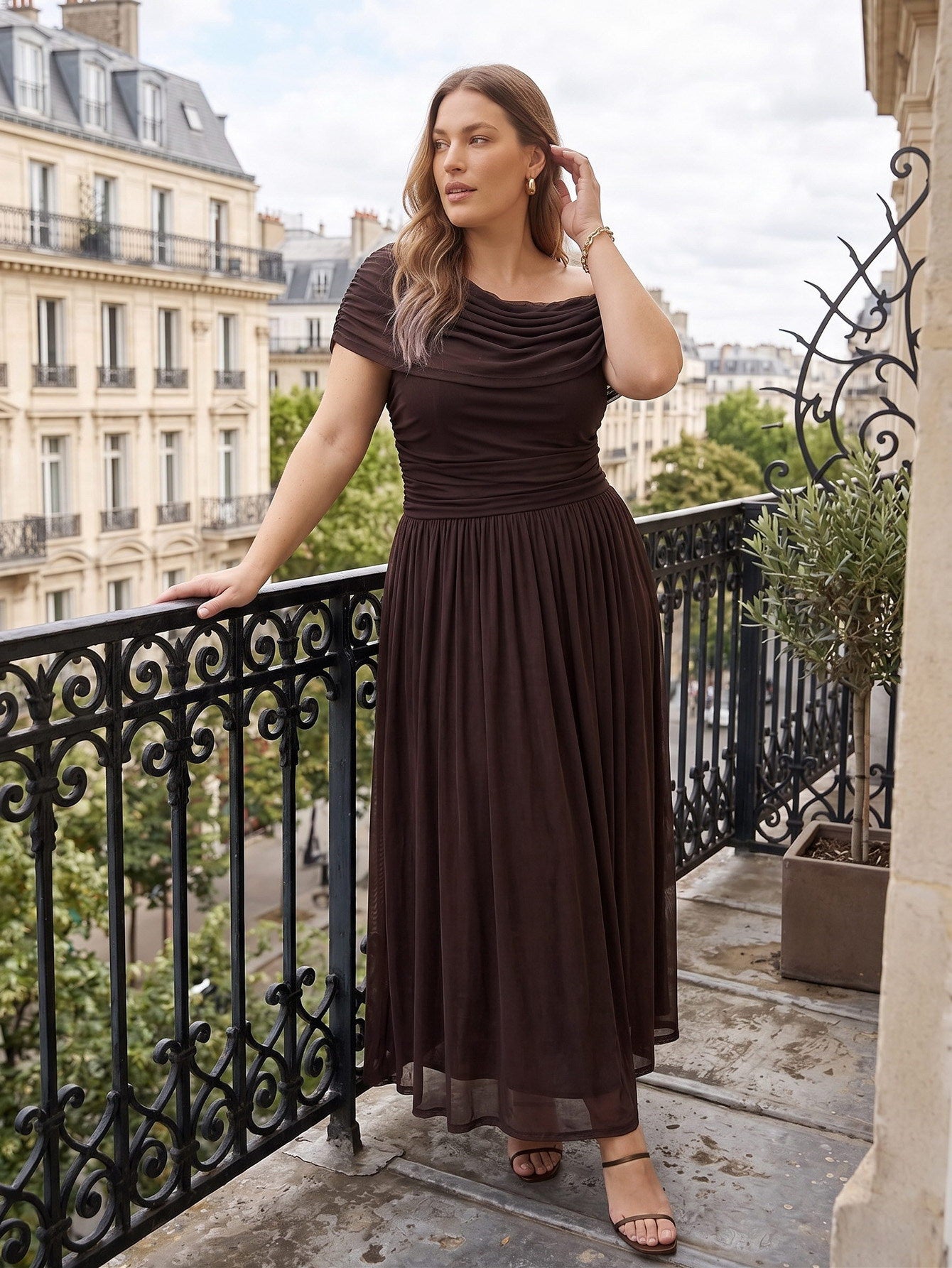
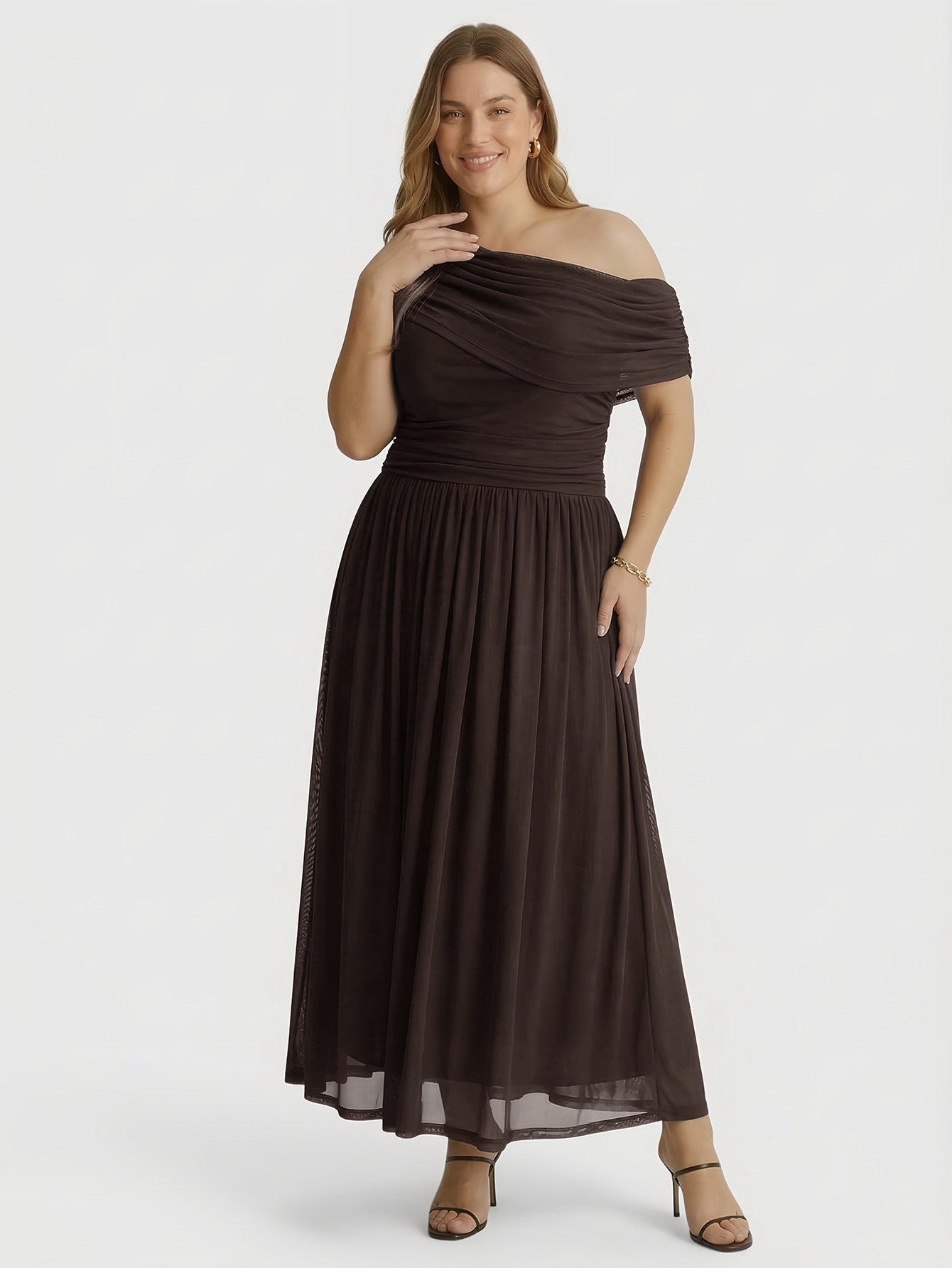
- Brown
- Black
Mesh Can Offer Stretch—But Not Always
Some mesh dresses contain elastane and provide noticeable flexibility.
Others offer little stretch.
Always check the actual product information.
The word “mesh” by itself does not tell you how flexible the dress will be.
For a more detailed look at lining, stretch, sleeves and styling, see our Plus-Size Mesh Dress Guide.
4. Which Fabric Looks Most Formal?
All three can be formal.
The idea that one fabric automatically belongs to one dress code is too simple.
Satin
Satin naturally lends itself to:
- Evening weddings
- Formal receptions
- Black-tie-optional events
- Banquets
- Holiday parties
Its sheen can make even a relatively simple silhouette feel more dressed up.
Chiffon
Chiffon has a broader range.
It can work for:
- Daytime weddings
- Garden ceremonies
- Cocktail weddings
- Formal weddings
- Destination celebrations
The exact level of formality depends on length and design.
A chiffon maxi with a structured bodice can be quite formal, while a relaxed chiffon midi may feel softer.
Mesh
Mesh can also move across several dress codes.
A fitted mesh midi might work well for a party.
A layered mesh maxi with a defined waist and long sleeves can feel appropriate for a formal evening wedding.
The construction determines the result.
5. Which Is Better for a Wedding Guest Dress?
Instead of asking which fabric is universally best, start with the wedding.
Choose Satin If You Want:
- A polished evening look
- More surface shine
- Stronger color depth
- A cleaner, more refined finish
- A dress that works particularly well indoors
Satin is especially useful for hotel, restaurant and ballroom receptions.
Choose Chiffon If You Want:
- Softer movement
- A lighter visual effect
- A romantic feel
- A dress for a garden or daytime wedding
- Ruffles, flutter sleeves or flowing skirts
Chiffon is one of the easiest fabrics to move between daytime and evening weddings.
Choose Mesh If You Want:
- Sheer or semi-sheer sleeves
- Visual layering
- More texture
- A modern evening look
- Potential stretch depending on the garment
Mesh is particularly useful when you want long sleeves without making the dress look visually heavy.
6. Which Fabric Is Best for Summer?
For warm-weather events, garment construction matters more than simply reading the fabric name.
Still, chiffon often feels visually most natural in summer because of its lightweight appearance.
Chiffon in Summer
Chiffon works particularly well for:
- Outdoor weddings
- Garden venues
- Destination weddings
- Afternoon ceremonies
Look for lighter designs and check the lining, because the lining contributes significantly to how warm the dress feels.
Satin in Summer
Satin can still work beautifully in summer, particularly for evening events.
A sleeveless or batwing-sleeve satin dress may be a better option than a heavily layered design.
Again, the fibre content and lining matter.
Mesh in Summer
Mesh can look light because of its transparency, but a fully layered or fitted mesh dress may still feel warmer than expected.
Sheer sleeves alone do not tell you how breathable the rest of the dress will be.
7. Which Fabric Is Best for Autumn?
Autumn gives all three fabrics more room to work.
Satin
Satin looks particularly effective in deeper autumn colors such as:
- Burgundy
- Plum
- Navy
- Deep green
- Black
Its sheen works well as daylight becomes softer and events move indoors.
Chiffon
Do not retire chiffon once summer ends.
Deeper colors, longer sleeves and layered construction can make chiffon entirely appropriate for September and October.
A burgundy or deep plum chiffon dress can transition easily into autumn.
Mesh
Autumn is particularly well suited to mesh.
Long sheer sleeves create more visual coverage, while the fabric can remain relatively light.
Deep plum, brown, navy and burgundy also work naturally with layered mesh.
For more autumn styling ideas, see our Plus-Size Fall Wedding Guest Guide.
8. Which Fabric Gives the Most Movement?
If movement is your priority, chiffon usually provides the most obviously fluid effect.
Chiffon
Chiffon responds easily to walking and air movement.
It works especially well for:
- Full skirts
- A-line shapes
- Flutter sleeves
- Ruffles
- High-low hems
Satin
Satin movement can be smoother and heavier.
Instead of floating, it may create longer, more defined folds.
That can look particularly elegant while walking.
Mesh
Mesh movement depends on the number of layers and construction.
A soft mesh overlay can move beautifully over a lining, while a stretch-mesh bodycon dress will behave very differently.
Again, fabric name alone is not enough.
9. Which Fabric Offers the Most Structure?
If you want the dress to hold a clearer shape, satin often appears more structured than very lightweight chiffon.
But this depends on fabric weight.
Satin
Can create:
- Defined draping
- Clearer folds
- Smooth surfaces
- More visible waist construction
Chiffon
Usually follows movement more than it holds a shape.
Structure normally comes from:
- Lining
- Seams
- Waistbands
- Pleating
- Underlayers
Mesh
Mesh sits somewhere in between.
Soft mesh follows the body or lining underneath, while layered or gathered mesh can create volume.
Stretch mesh may follow the body more closely.
10. Which Fabric Is Most Transparent?
Mesh is usually the obvious answer, but the full picture is more nuanced.
Mesh
Transparency is frequently intentional.
You may see:
- Sheer sleeves
- Sheer necklines
- Transparent overlays
The lining is often part of the design.
Chiffon
Chiffon can also be semi-sheer.
A single layer may provide much less coverage than expected.
That is why lining matters so much.
Satin
Satin is generally more opaque, but you should still check the individual garment.
Light-colored fabrics and strong backlighting can behave differently.
The practical lesson:
Never assume coverage from the fabric name alone.
11. Which Fabric Is Easiest to Photograph?
Each produces a different result.
Satin in Photographs
Satin reacts strongly to light.
That can create beautiful depth, especially in evening photography.
But strong flashes can also increase highlights.
Chiffon in Photographs
Chiffon creates a softer appearance.
It photographs particularly well when movement is involved, such as:
- Walking
- Turning
- Dancing
- Wind catching the skirt
Mesh in Photographs
Mesh creates visual detail through different levels of transparency.
Sheer sleeves and layered skirts can look especially interesting in side lighting.
If wedding photographs matter to you, do not judge the dress from a static mirror pose alone.
Take a few photographs while moving.
12. Which Fabric Is Easier to Wear for Several Hours?
There is no automatic winner.
Comfort depends on the individual dress.
For satin, check:
- Seam tension
- Waist fit
- Lining
- How the fabric behaves while sitting
For chiffon, check:
- Lining
- Armholes
- Waistband
- Whether layers twist or ride upward
For mesh, check:
- Stretch
- Sleeve fit
- Cuffs
- Lining
- Transparent areas
- Seam placement
Whichever fabric you choose, test the dress by:
- Sitting.
- Walking.
- Raising your arms.
- Bending your elbows.
- Using stairs.
- Wearing the intended shoes.
- Spending some time in the dress rather than immediately changing out of it.
A five-minute fitting cannot always tell you how the dress will feel during a five-hour event.
13. Satin vs Chiffon: Which Should You Choose?
Choose satin if you prefer:
- Shine
- A more polished evening finish
- Stronger visual structure
- Rich color under artificial light
Choose chiffon if you prefer:
- A matte finish
- Light movement
- Softer layers
- A romantic or airy impression
Neither option is inherently more flattering.
They simply create different effects.
14. Chiffon vs Mesh: Which Should You Choose?
Choose chiffon if you want:
- Flowing movement
- Soft ruffles
- A lighter, romantic aesthetic
- A fabric commonly used across daytime and formal weddings
Choose mesh if you want:
- Sheer sleeves
- Layering
- Texture
- More visible interaction between lining and outer fabric
- Potential stretch depending on composition
A chiffon dress may feel more fluid.
A mesh dress may feel more dimensional.
15. Satin vs Mesh: Which Should You Choose?
These two fabrics create perhaps the strongest contrast.
Choose satin if you want:
- Smoothness
- Shine
- A polished uninterrupted surface
- A classic evening feel
Choose mesh if you want:
- Texture
- Transparency
- Layering
- A more contemporary visual effect
The choice often comes down to whether you prefer surface shine or layered depth.
16. Do Not Choose Fabric Based on “Slimming” Rules
Plus-size fashion advice sometimes treats fabric as another tool for making the body appear smaller.
You may hear recommendations to:
- Avoid satin because it reflects light
- Wear only matte fabrics
- Avoid sheer fabrics
- Use draping to hide certain areas
These are not useful universal rules.
Satin does reflect more light.
Mesh can reveal more through transparent sections.
Chiffon can create volume through layers.
None of these facts means that a particular body size should avoid the material.
A much better checklist is:
- Does the dress fit?
- Does the fabric sit comfortably?
- Does the lining stay in place?
- Can you move easily?
- Do you like how the material looks?
- Does it suit the event?
The goal is not to make your body visually disappear.
The goal is to choose a dress you can actually enjoy wearing.
17. Think About Your Accessories Differently for Each Fabric
The fabric can guide the rest of the outfit.
Accessories With Satin
Because satin already reflects light, you may prefer cleaner accessories.
Try:
- Simple metallic earrings
- A structured clutch
- Minimal necklace
- Sleek shoes
If the dress is already highly detailed, let the satin itself provide the visual interest.
Accessories With Chiffon
Chiffon works well with softer styling.
Consider:
- Delicate earrings
- Small pendant
- Neutral clutch
- Refined sandals or pumps
With floral embellishments or ruffles, reduce the amount of additional detail.
Accessories With Mesh
Mesh often benefits from restraint.
If the dress already includes sheer sleeves, ruching or a twist-front detail, small earrings and a simple bag may be enough.
You can find more detailed suggestions in our guide to styling a plus-size mesh dress.
18. YEESE Satin, Chiffon and Mesh Dress Ideas
YEESE currently includes Satin, Chiffon and Mesh as fabric categories within its plus-size dress collection.
If You Prefer Satin
The YEESE Plus Size Satin V-Neck Batwing-Sleeve Maxi Dress is currently offered in colors including Sage Green, Black, Dusty Rose and Burgundy.
This direction works particularly well if you are looking for:
- A smooth surface
- A more polished evening finish
- A maxi silhouette
- Richer light reflection
YEESE also currently offers a Plus Size Sequin Lace and Satin Midi Party Dress in Sage Green, Deep Plum and Blue for a more decorative party direction.
If You Prefer Chiffon
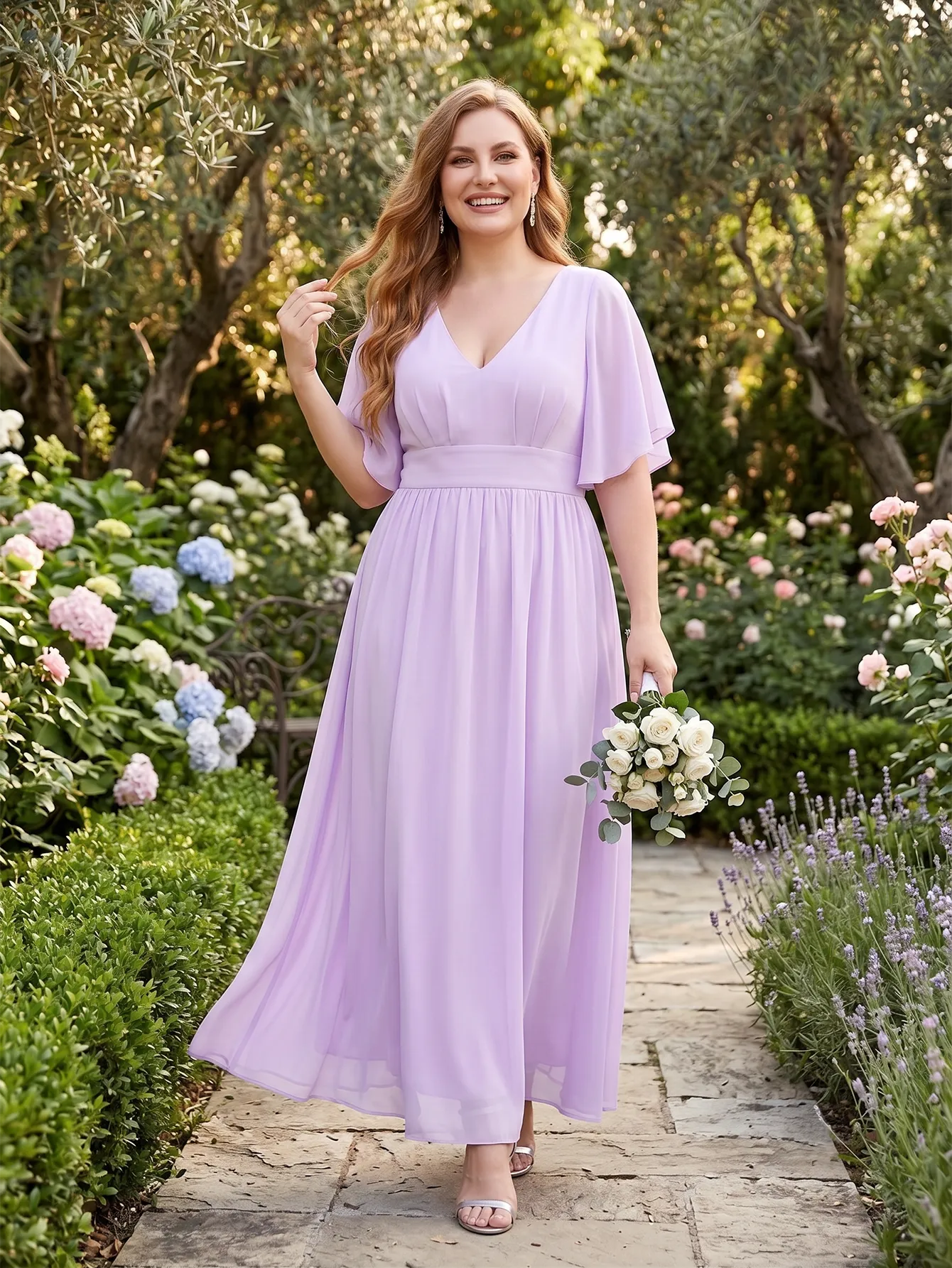
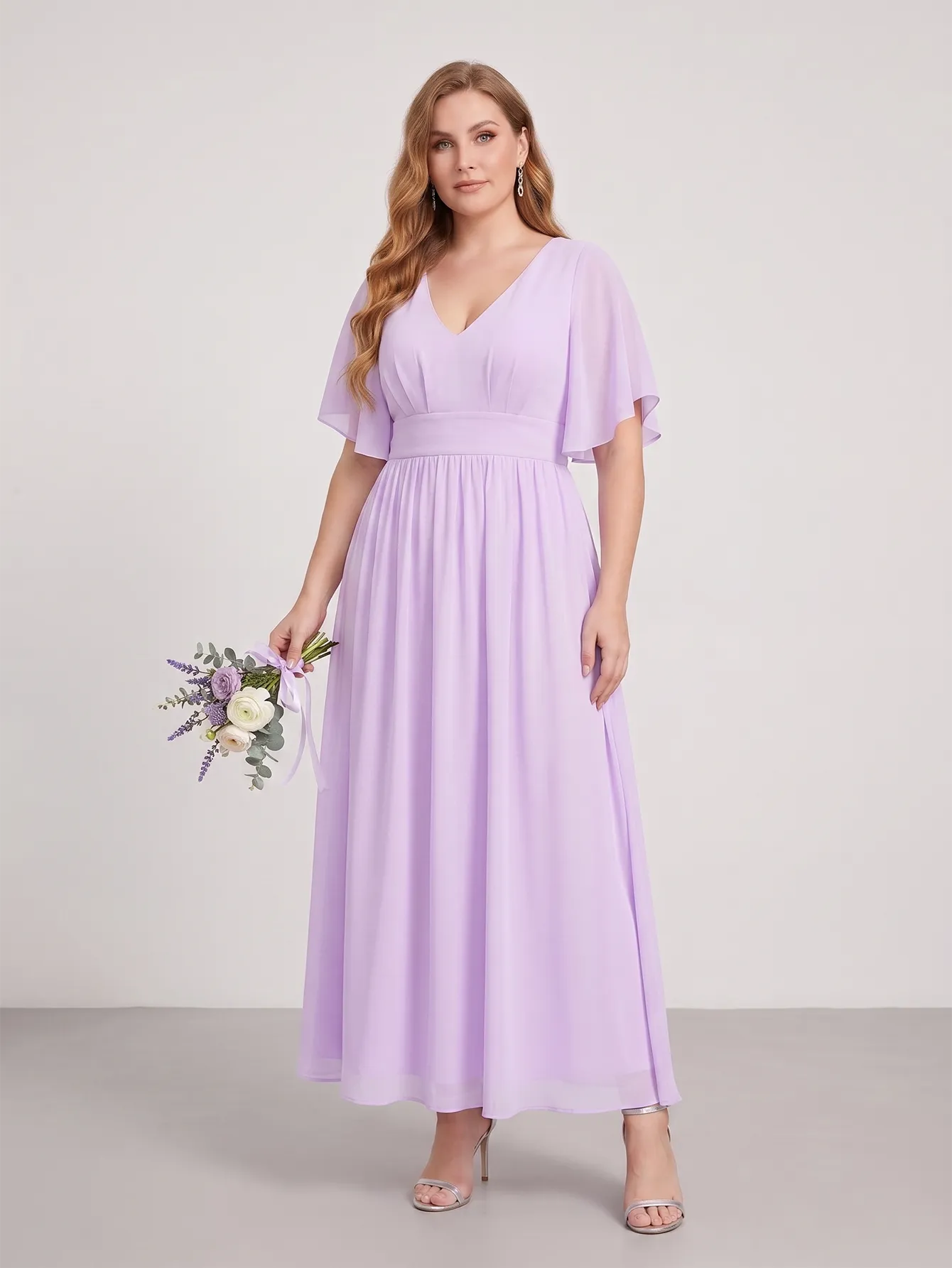
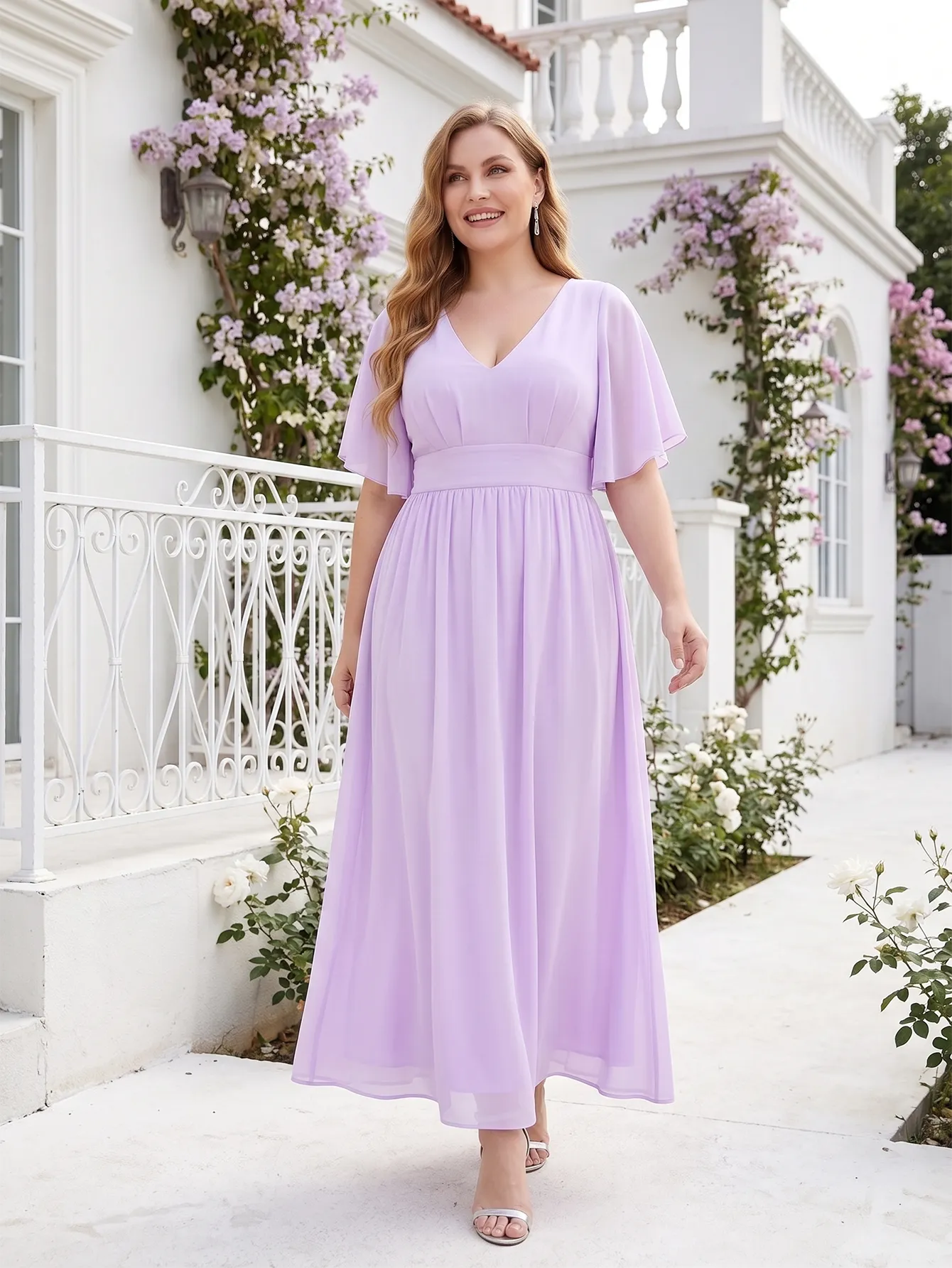
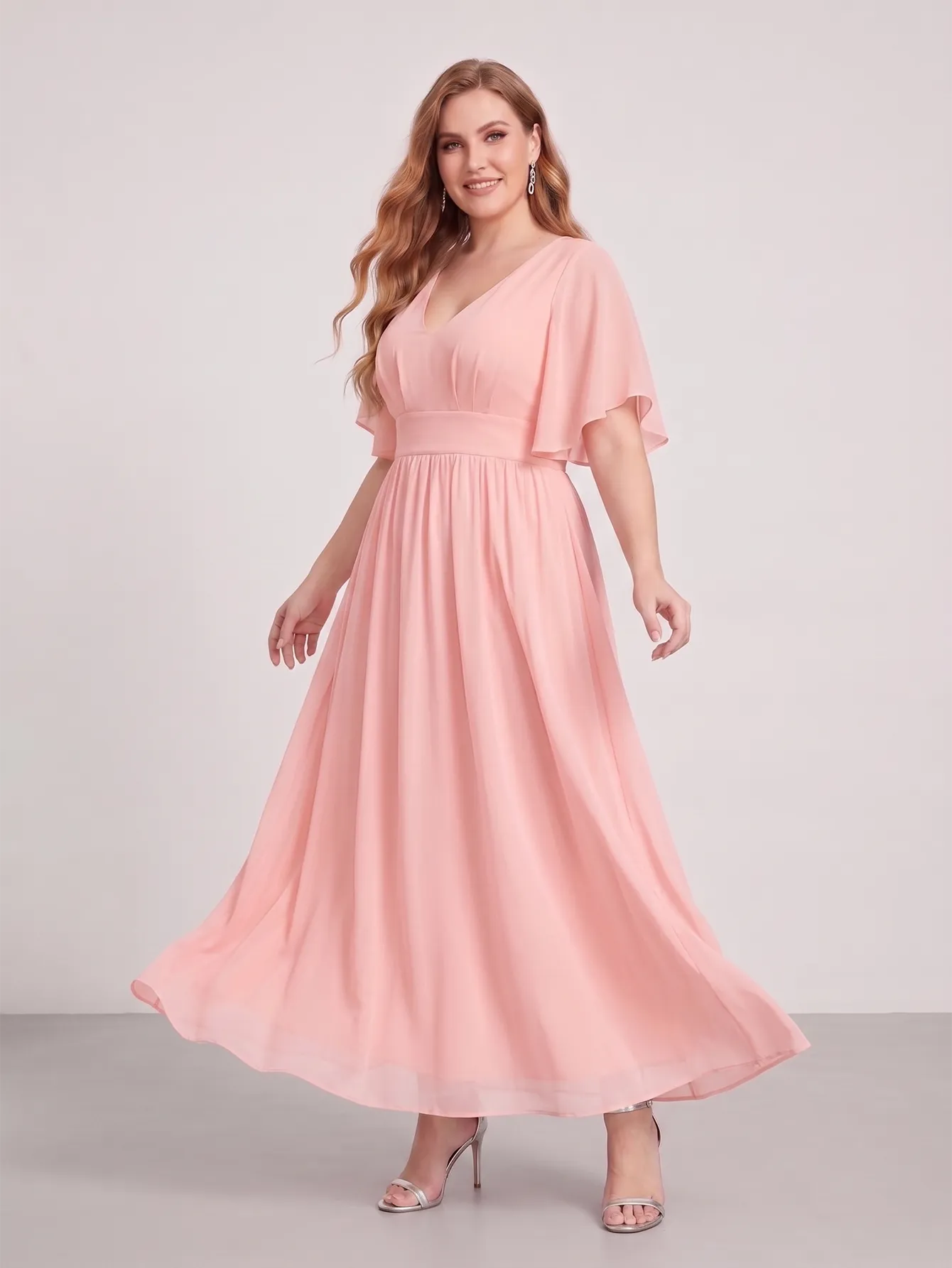
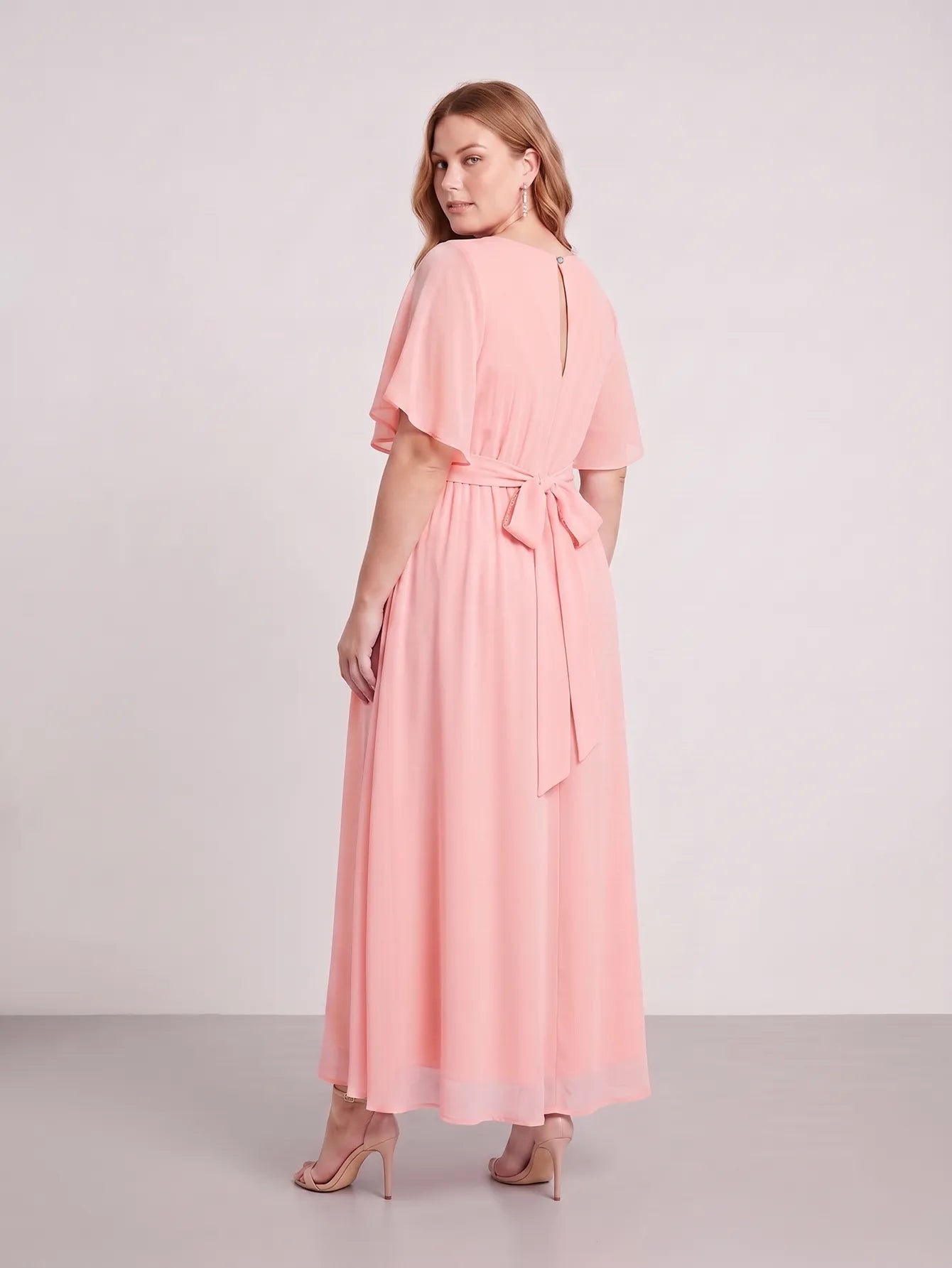
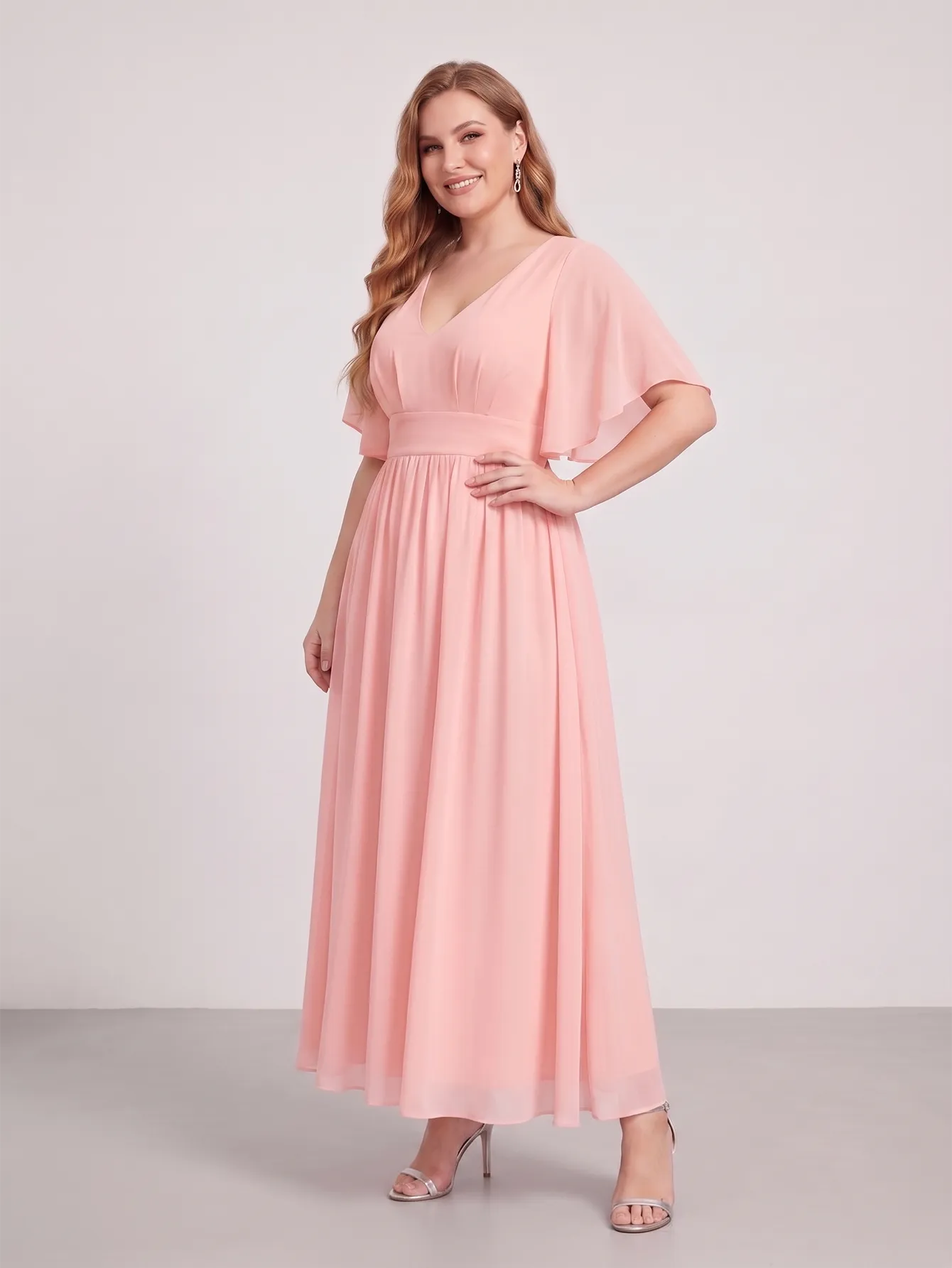
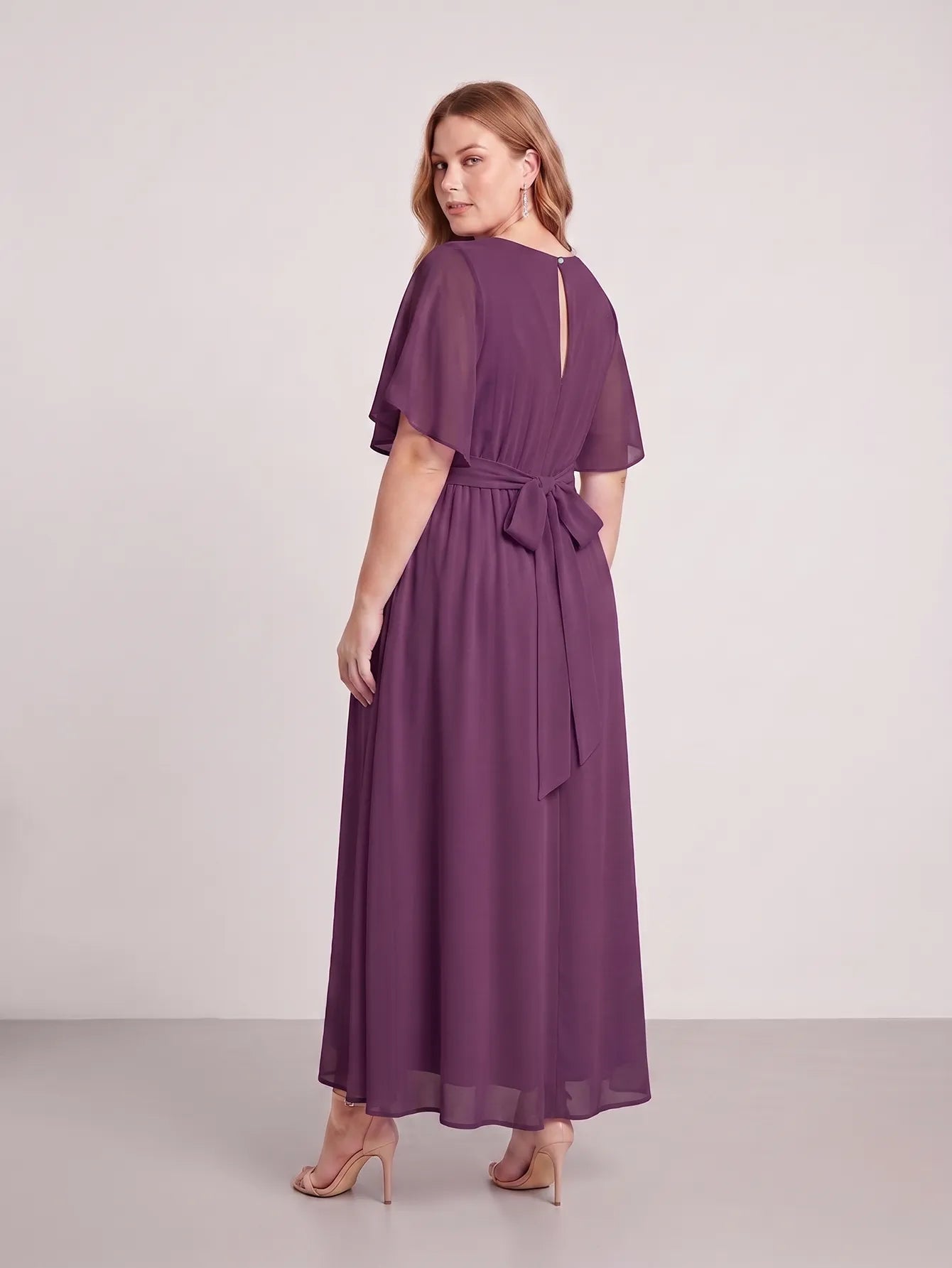
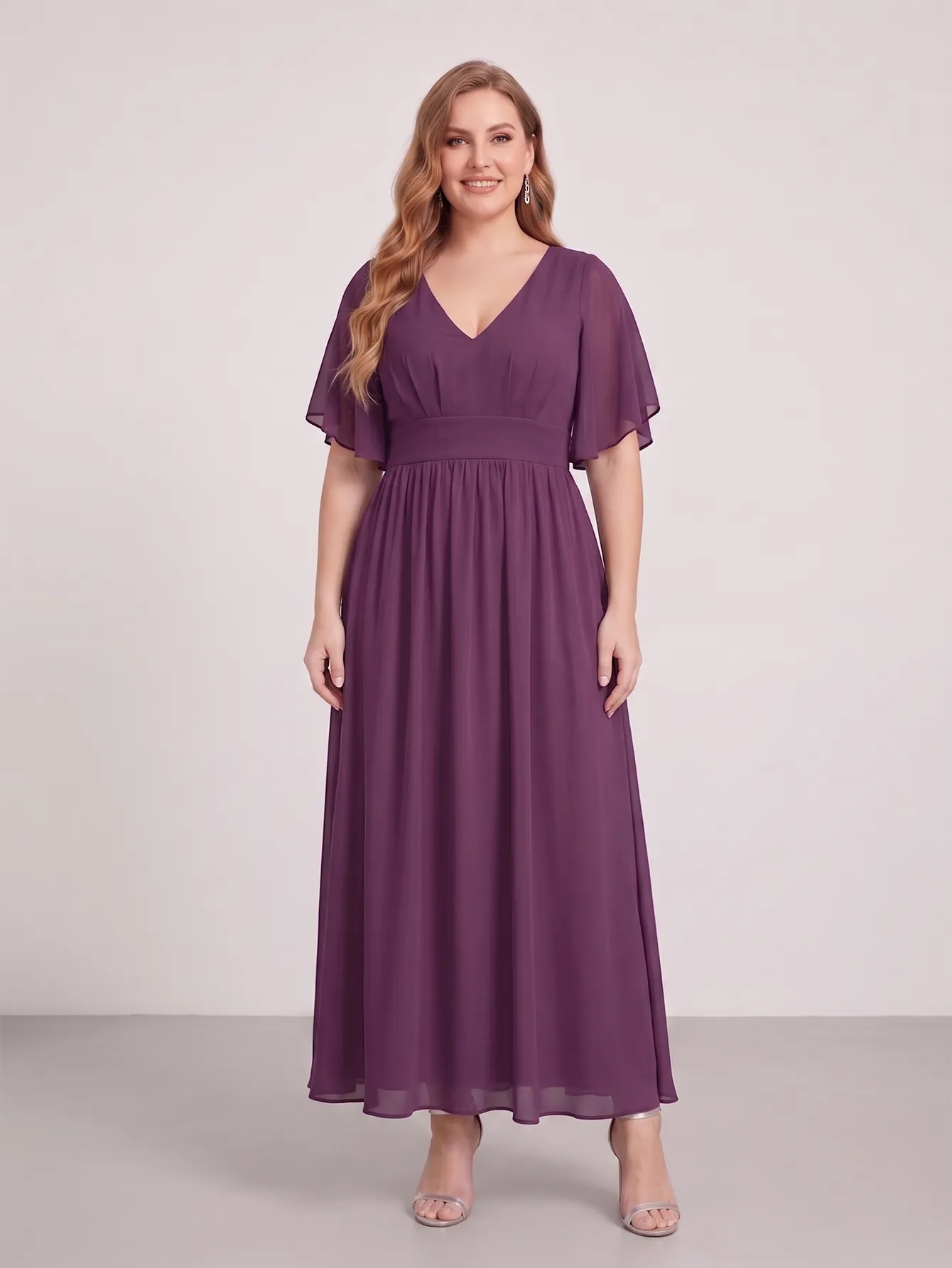
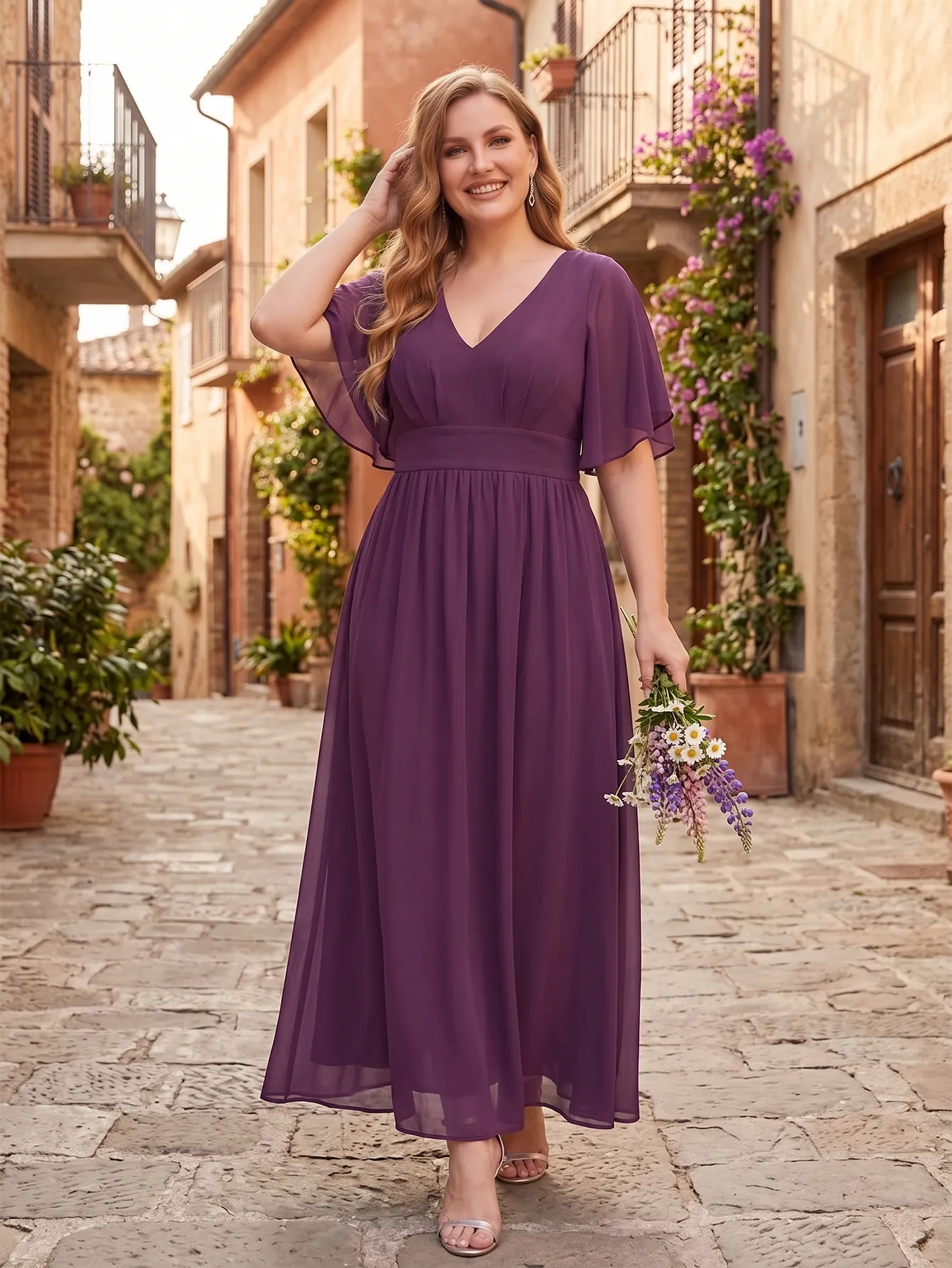
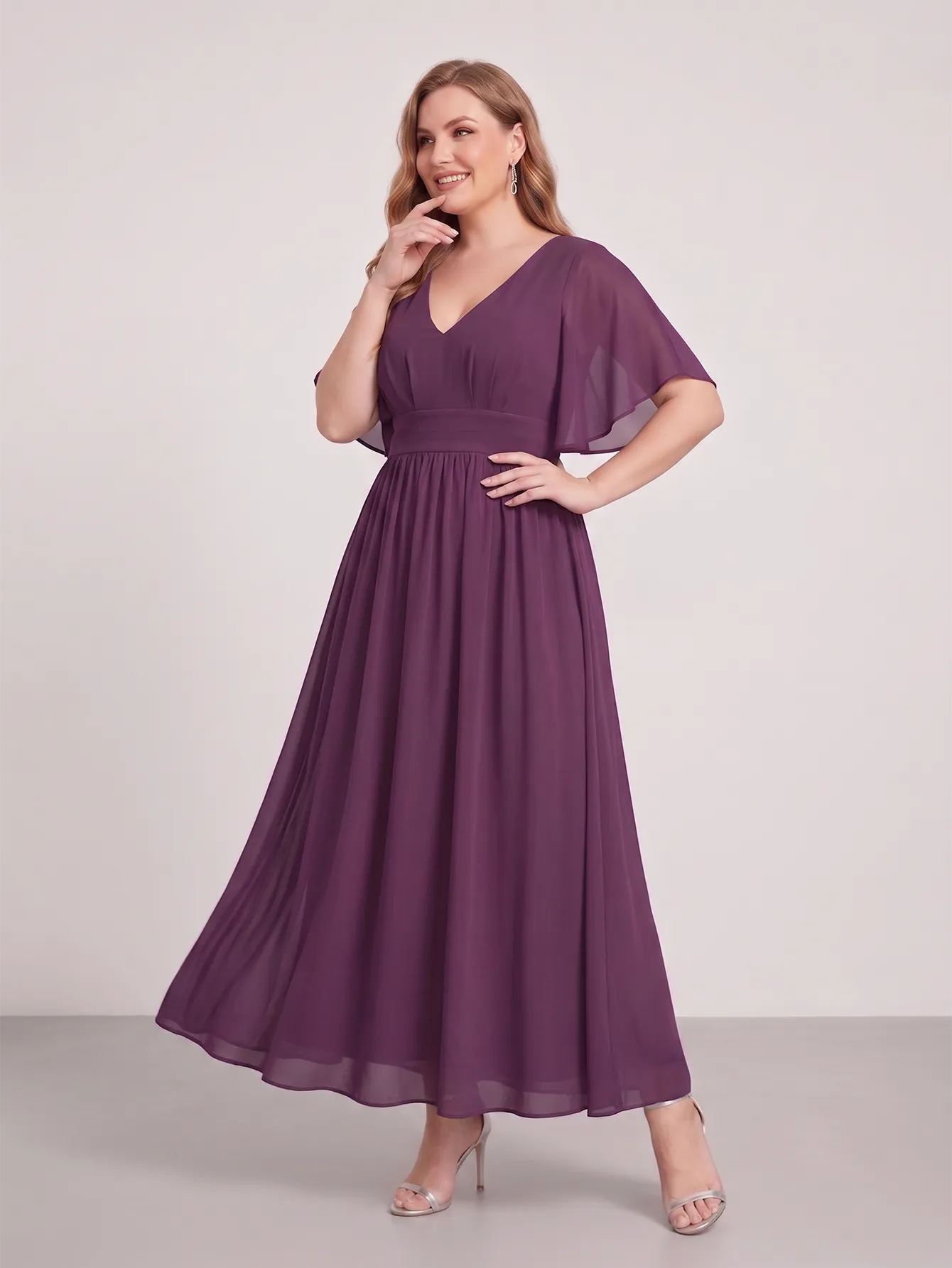
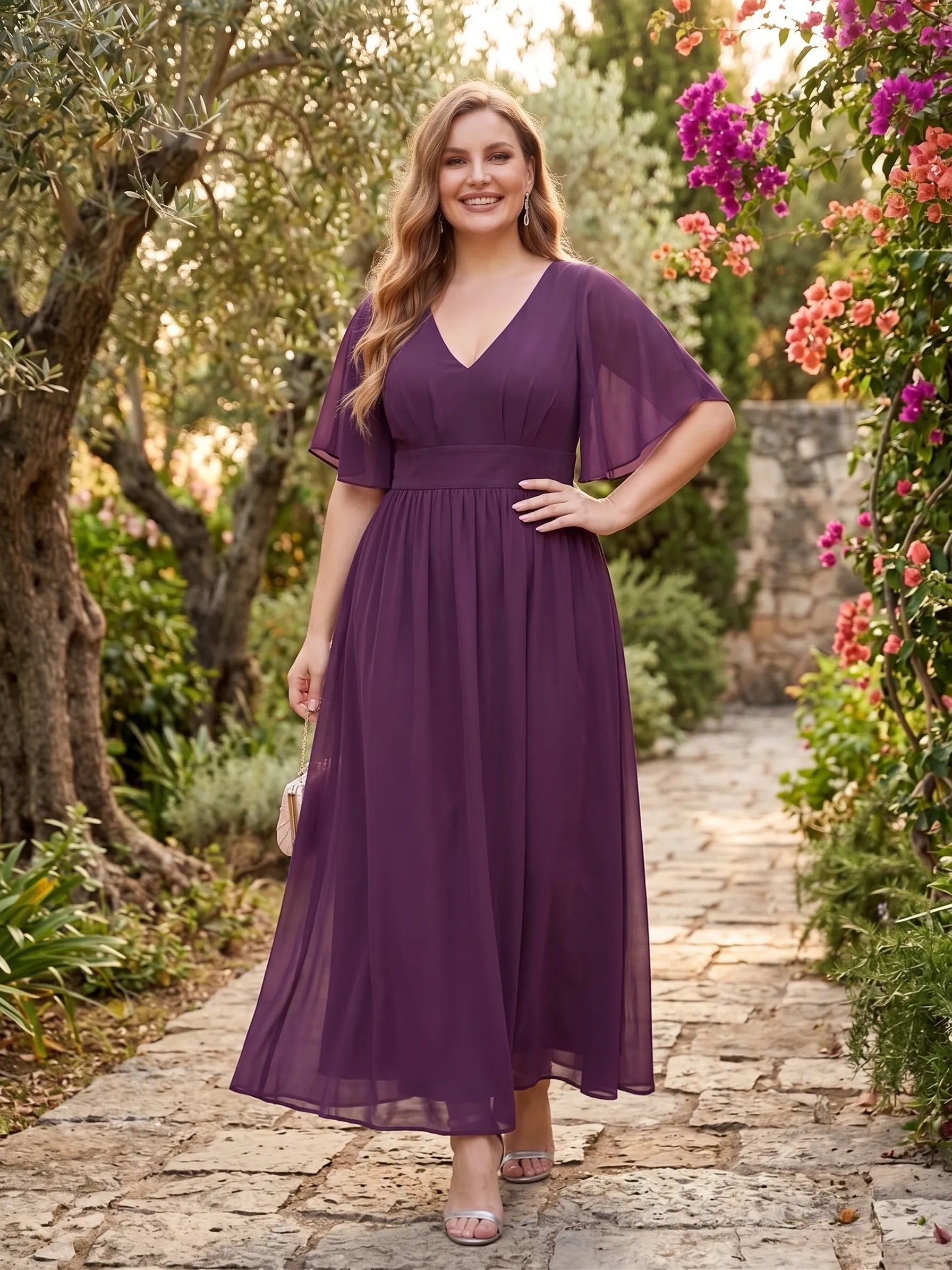
Chiffon currently forms a significant part of the YEESE occasion-dress assortment, including the YEESE Plus Size Women's V-Neck Chiffon Dress with Ruffle Sleeves and several other wedding-guest styles.
The V-Neck Chiffon Dress with Ruffle Sleeves is currently shown in colors including Lilac, Pink, Burgundy, Sage Green, Blue and Deep Plum.
YEESE's chiffon product information describes lightweight or high-density polyester chiffon designed around soft drape and movement.
This direction is useful if you prefer:
- Flowing skirts
- Ruffles
- Softer movement
- Wedding guest styling that can move between daytime and evening
If You Prefer Mesh
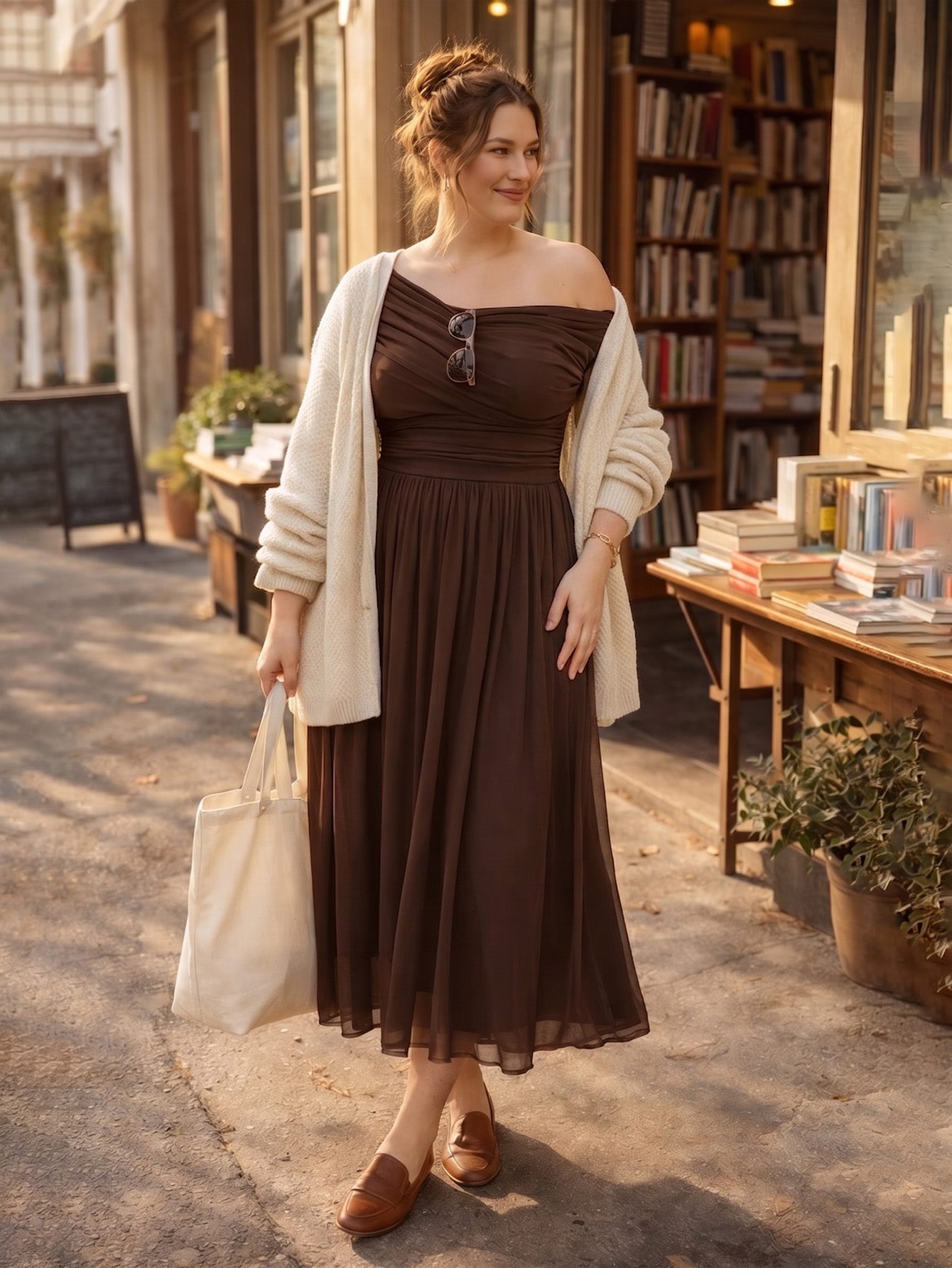
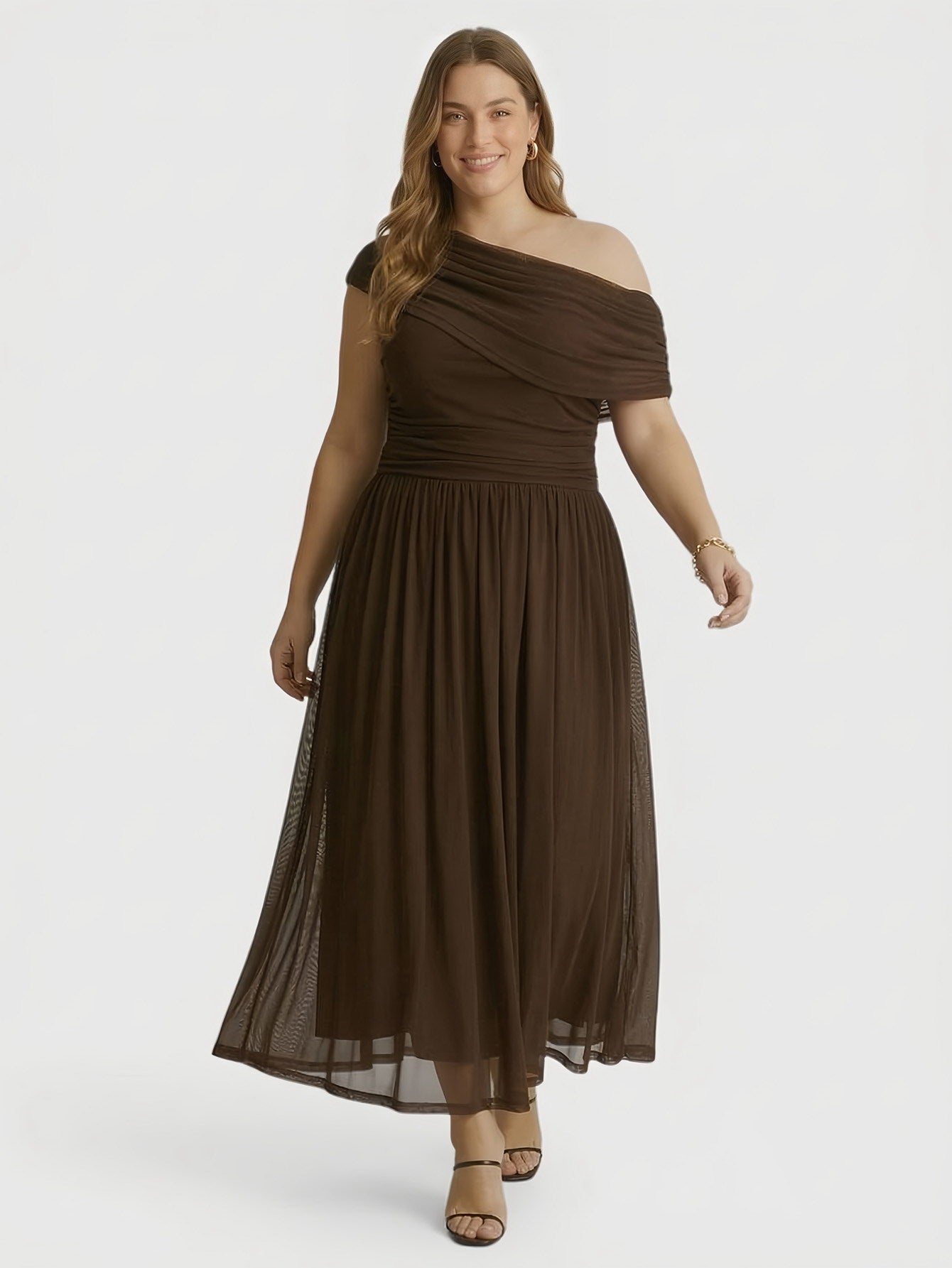
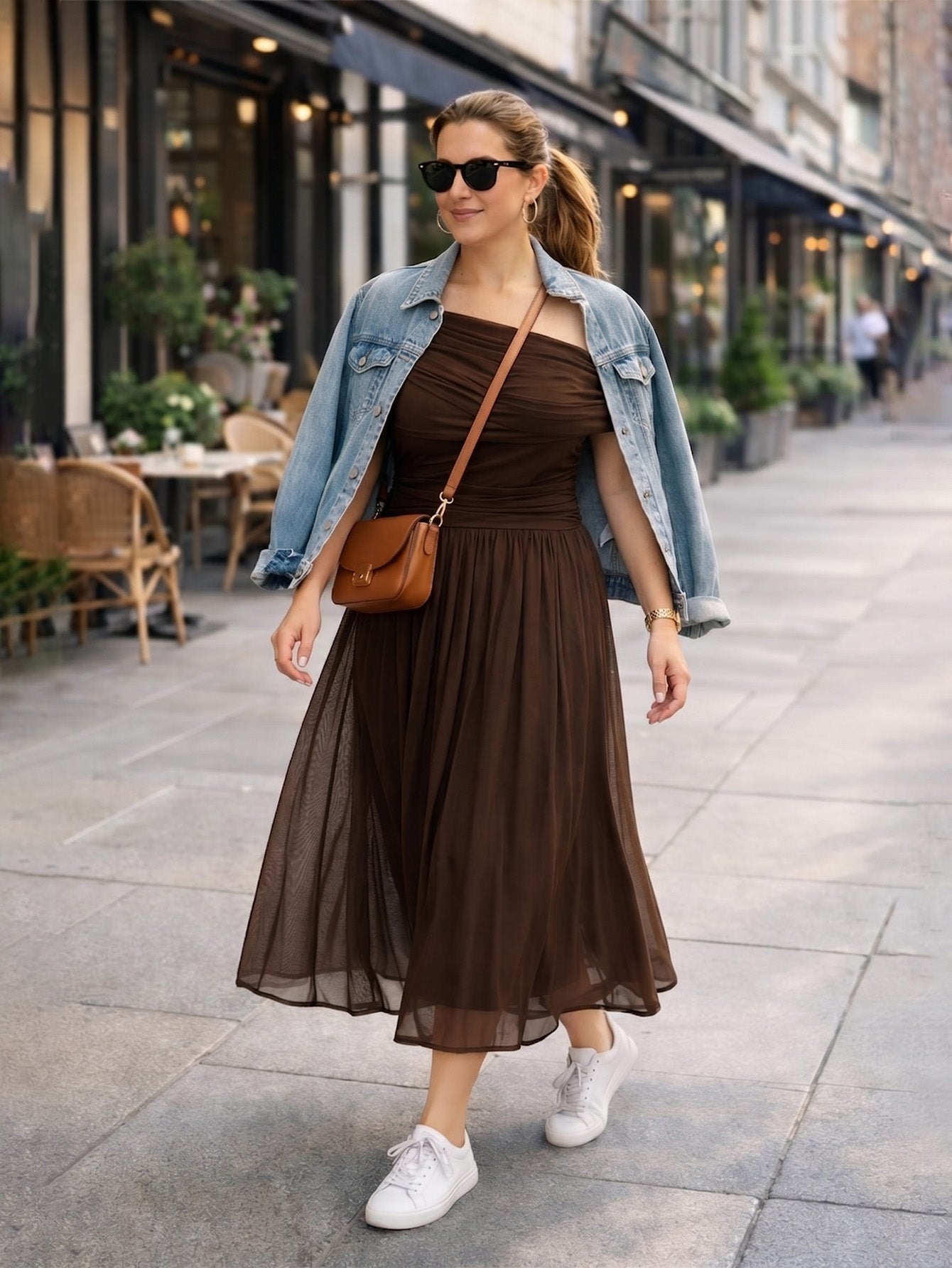
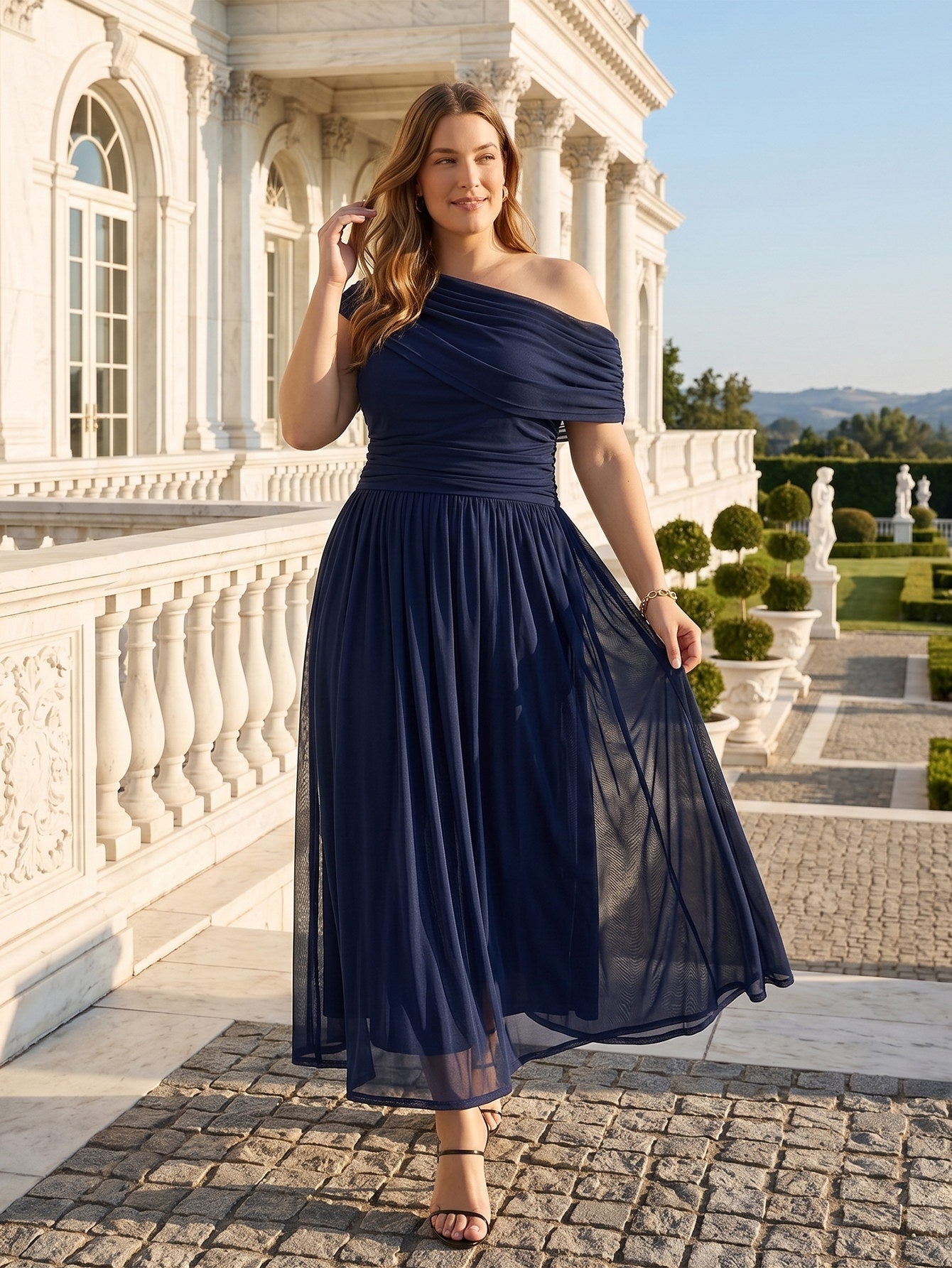
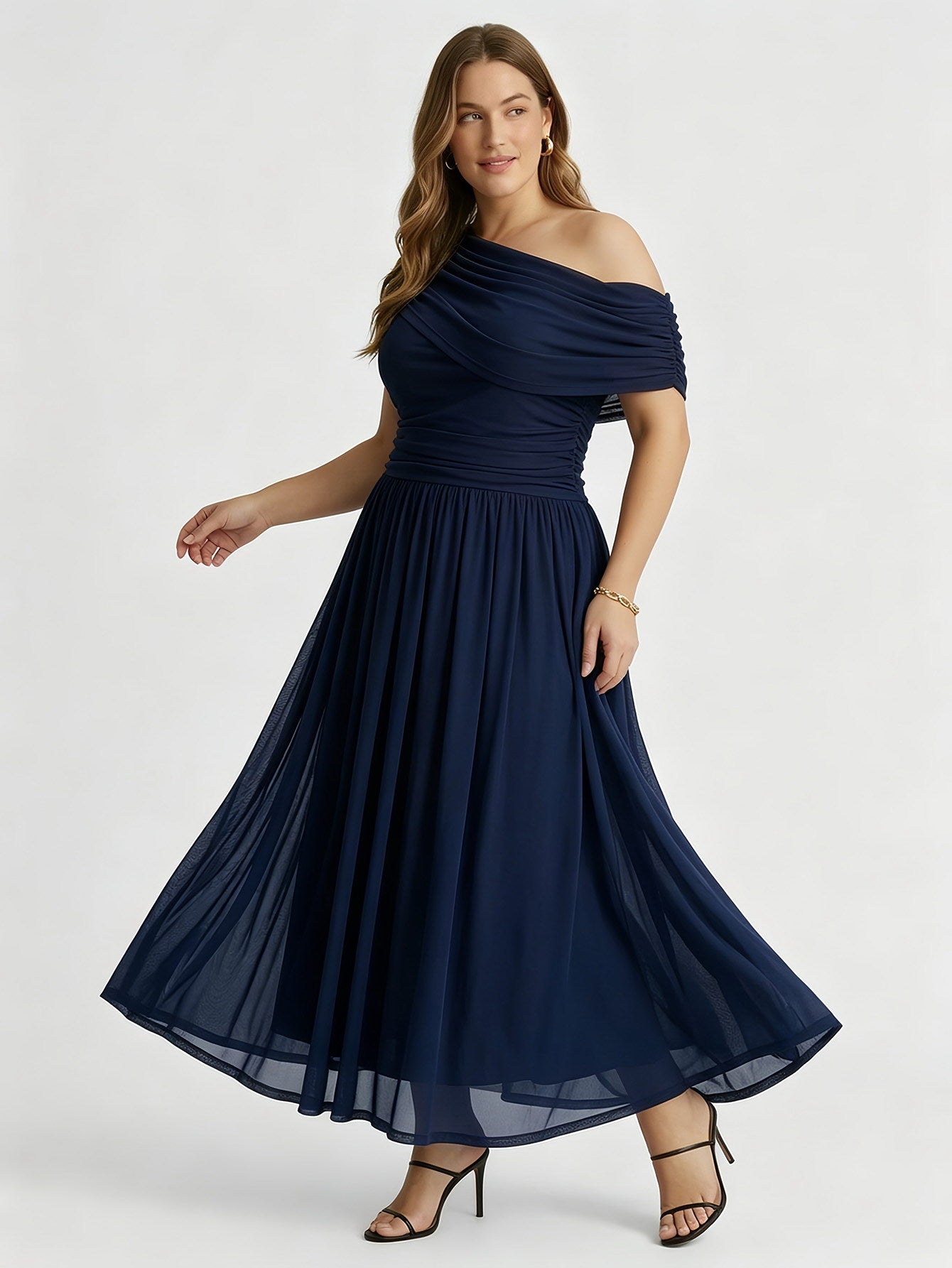
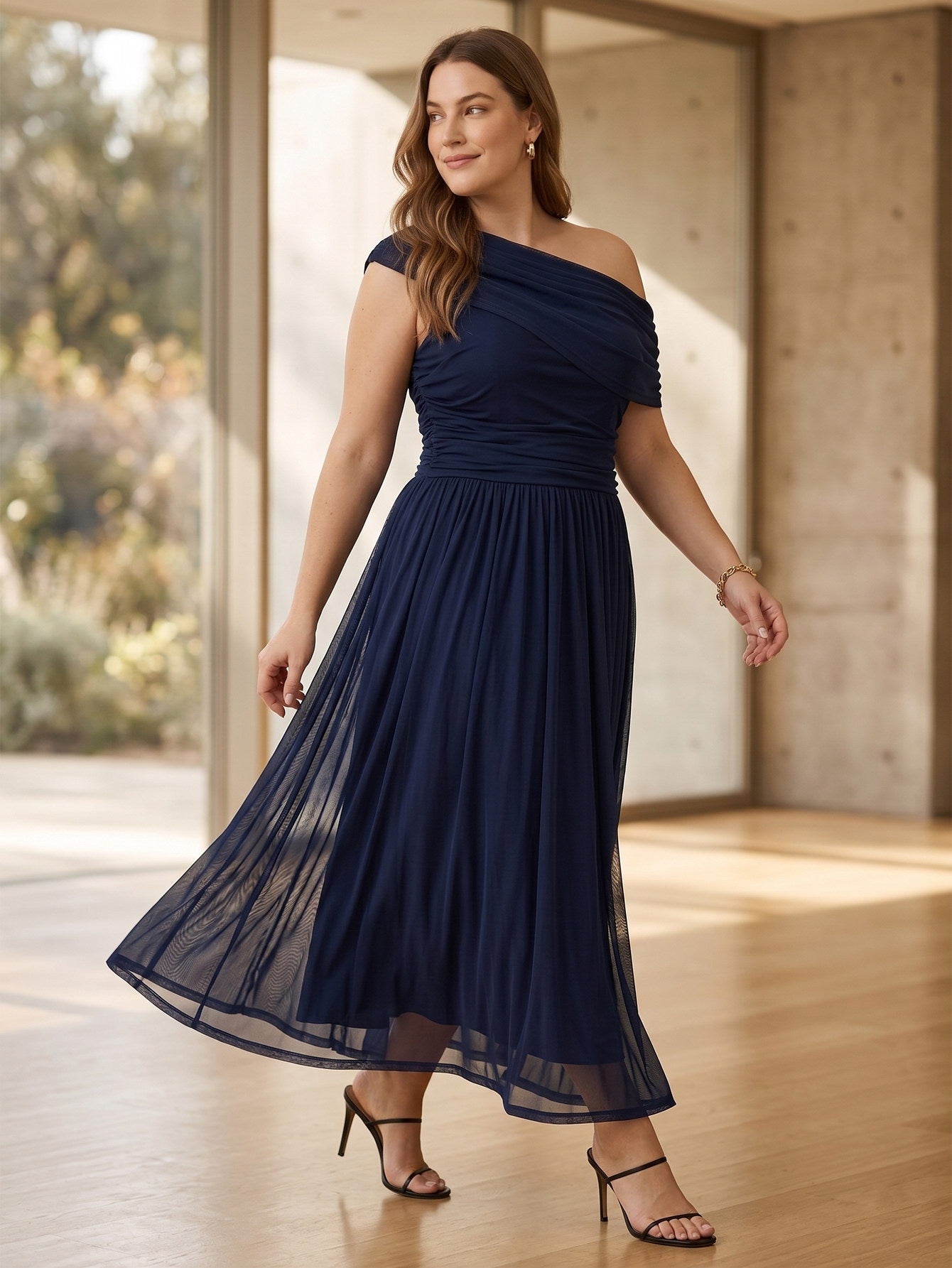
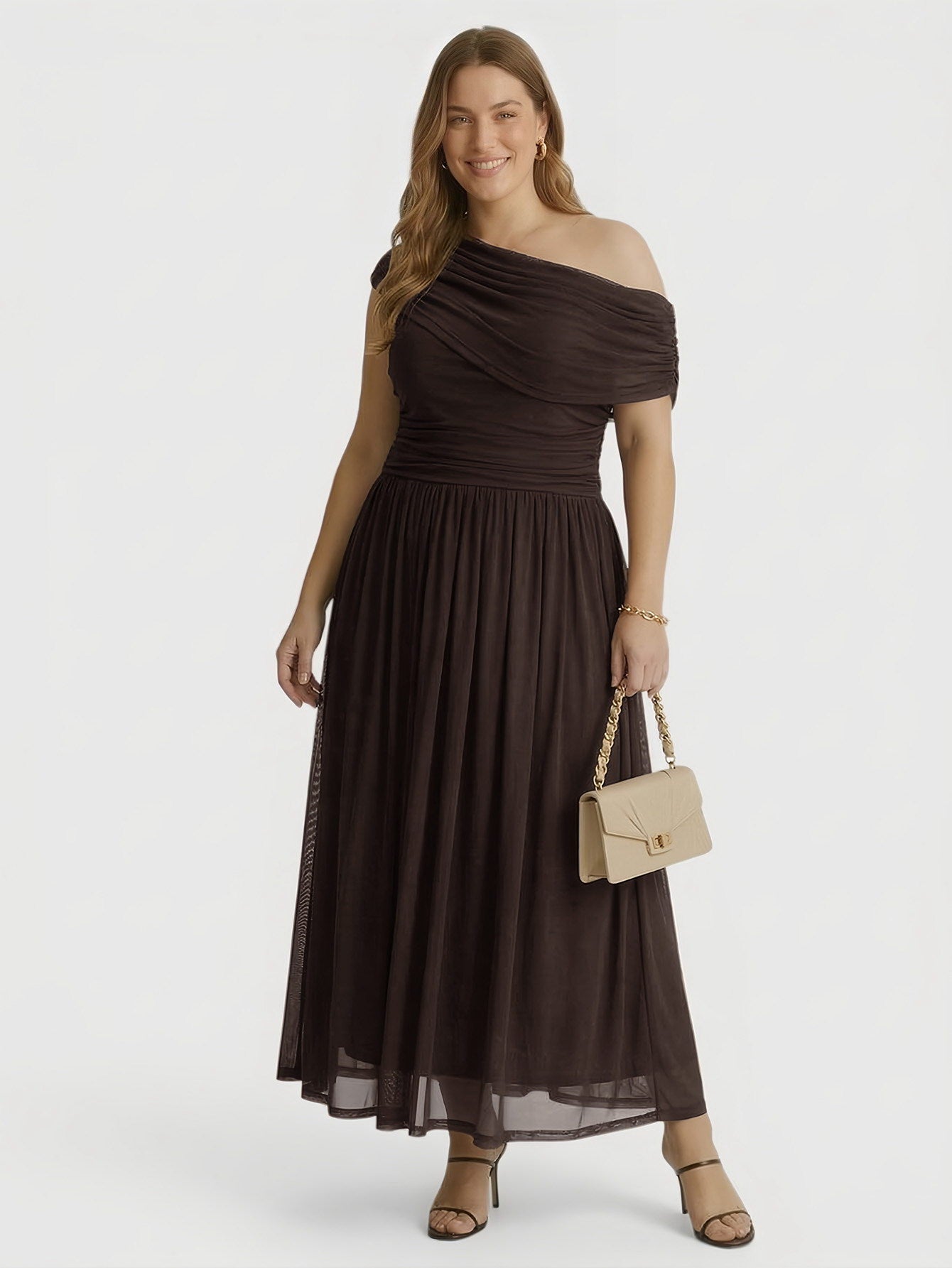
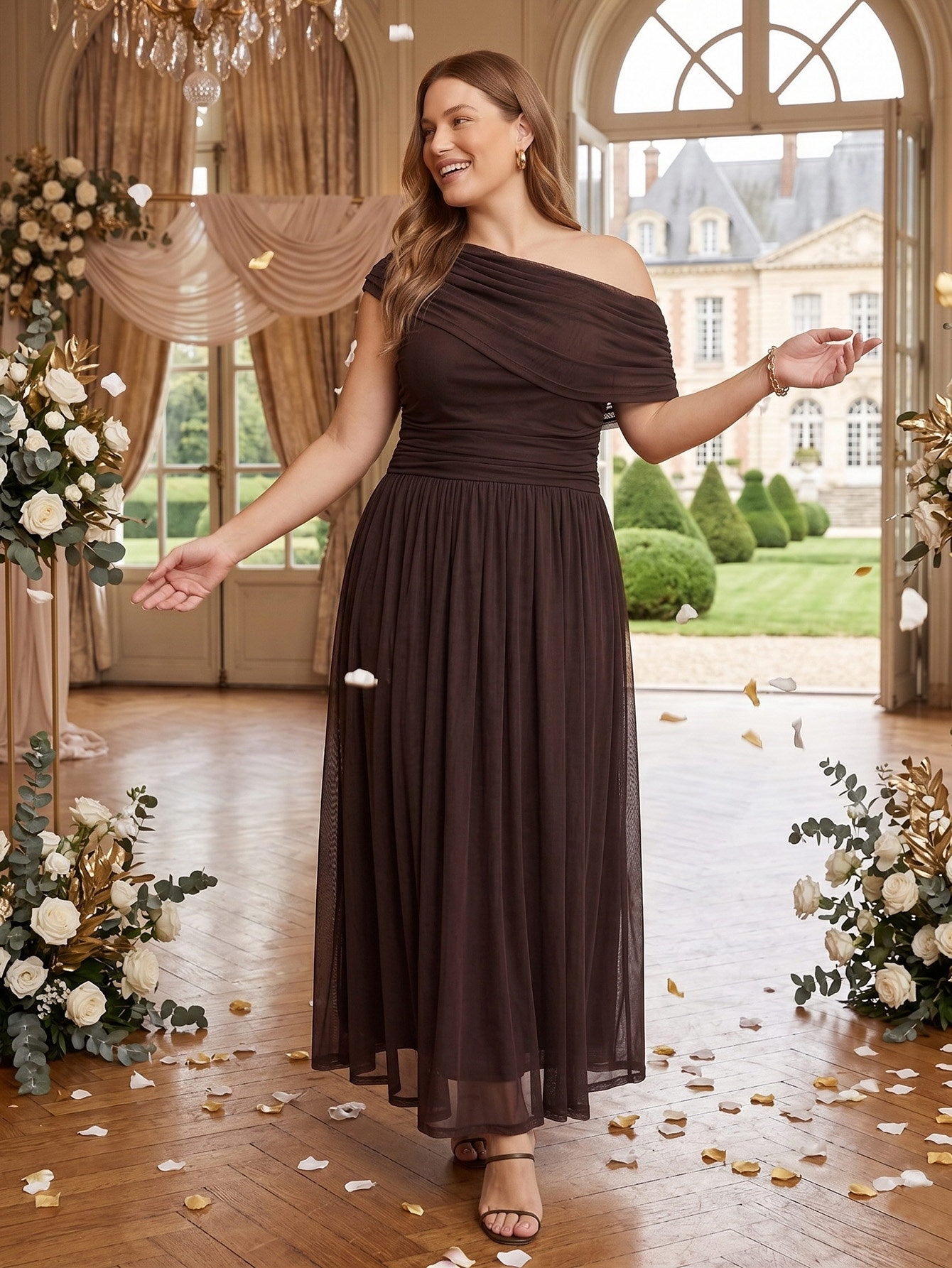
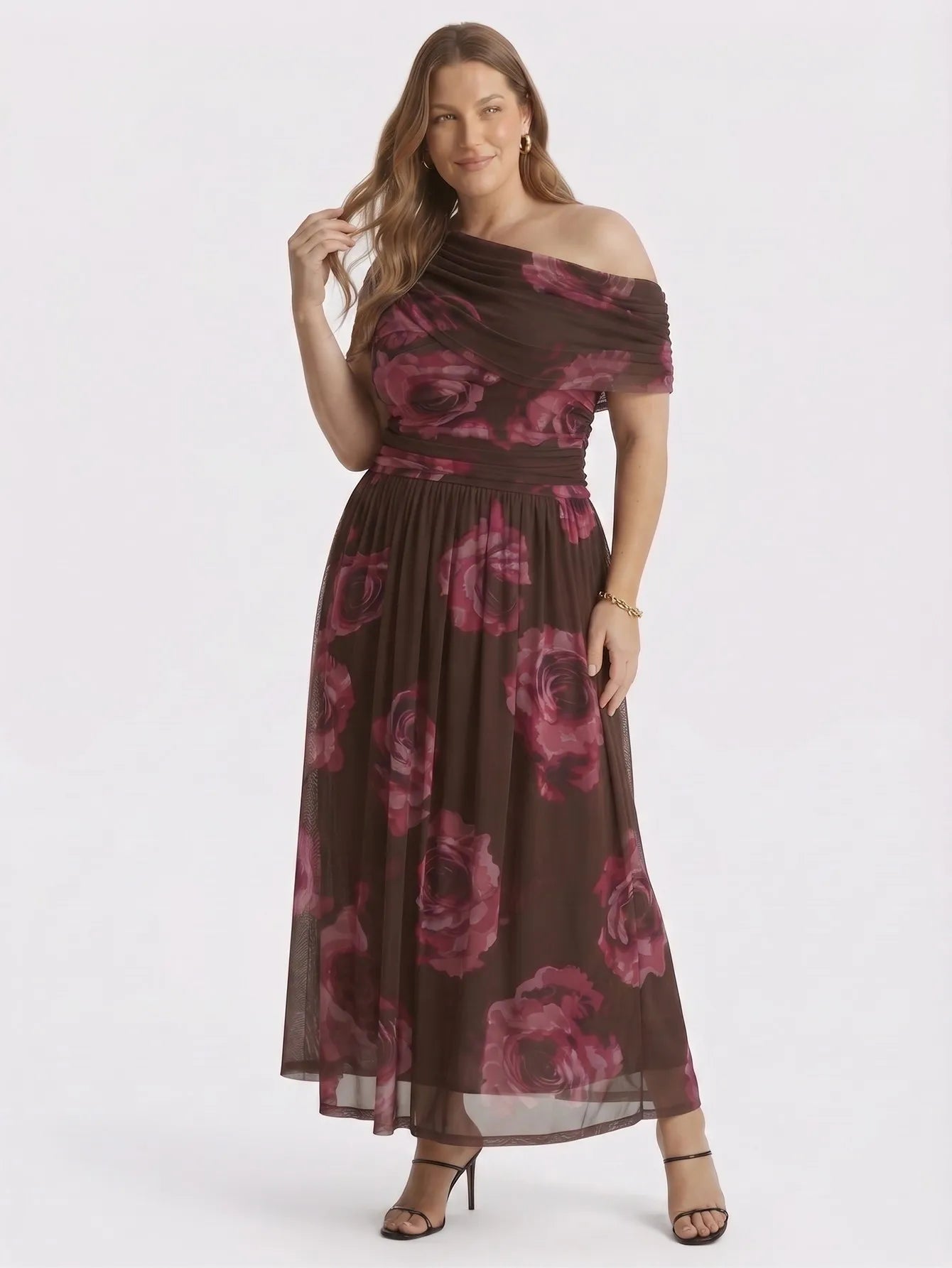
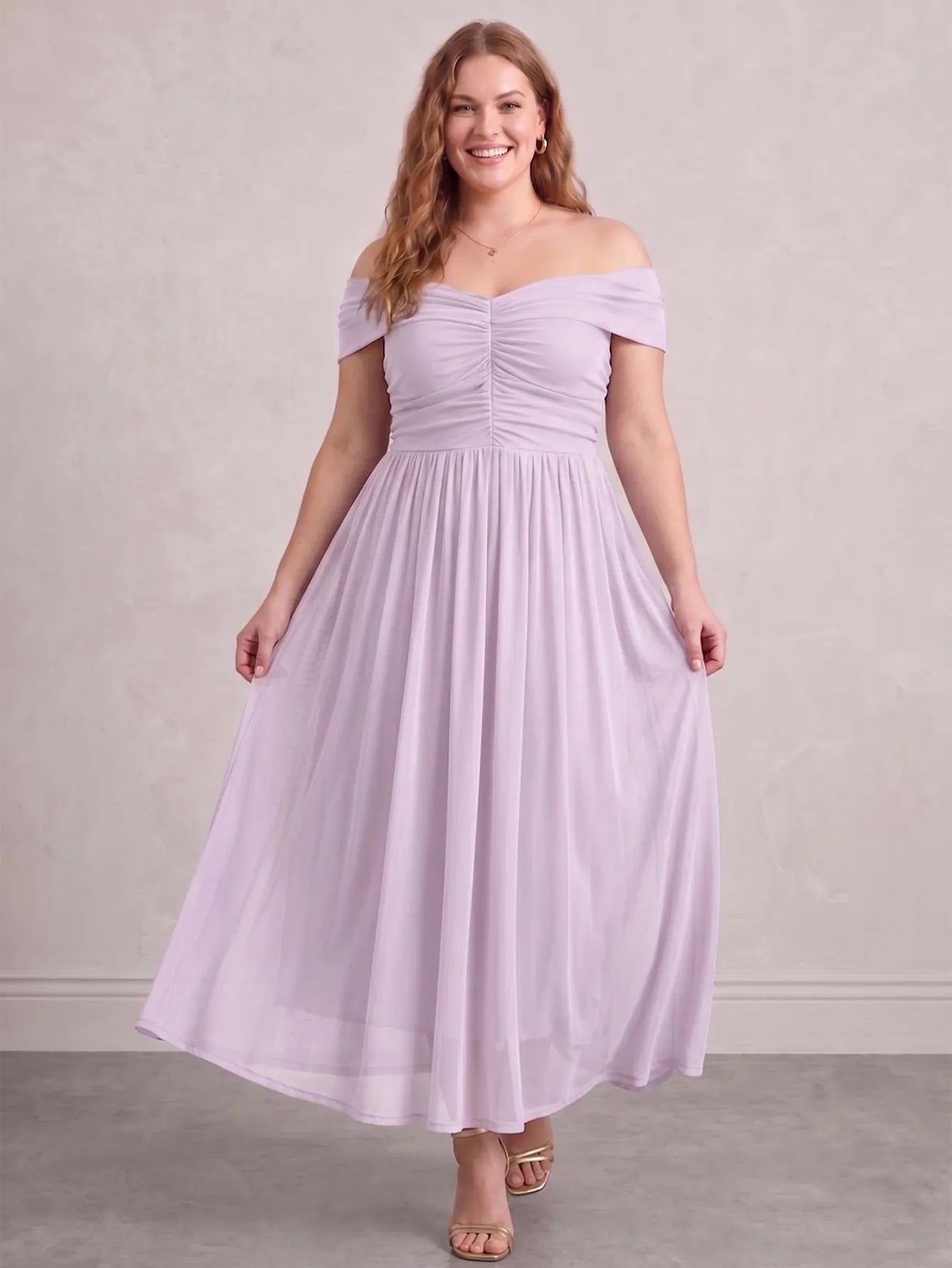
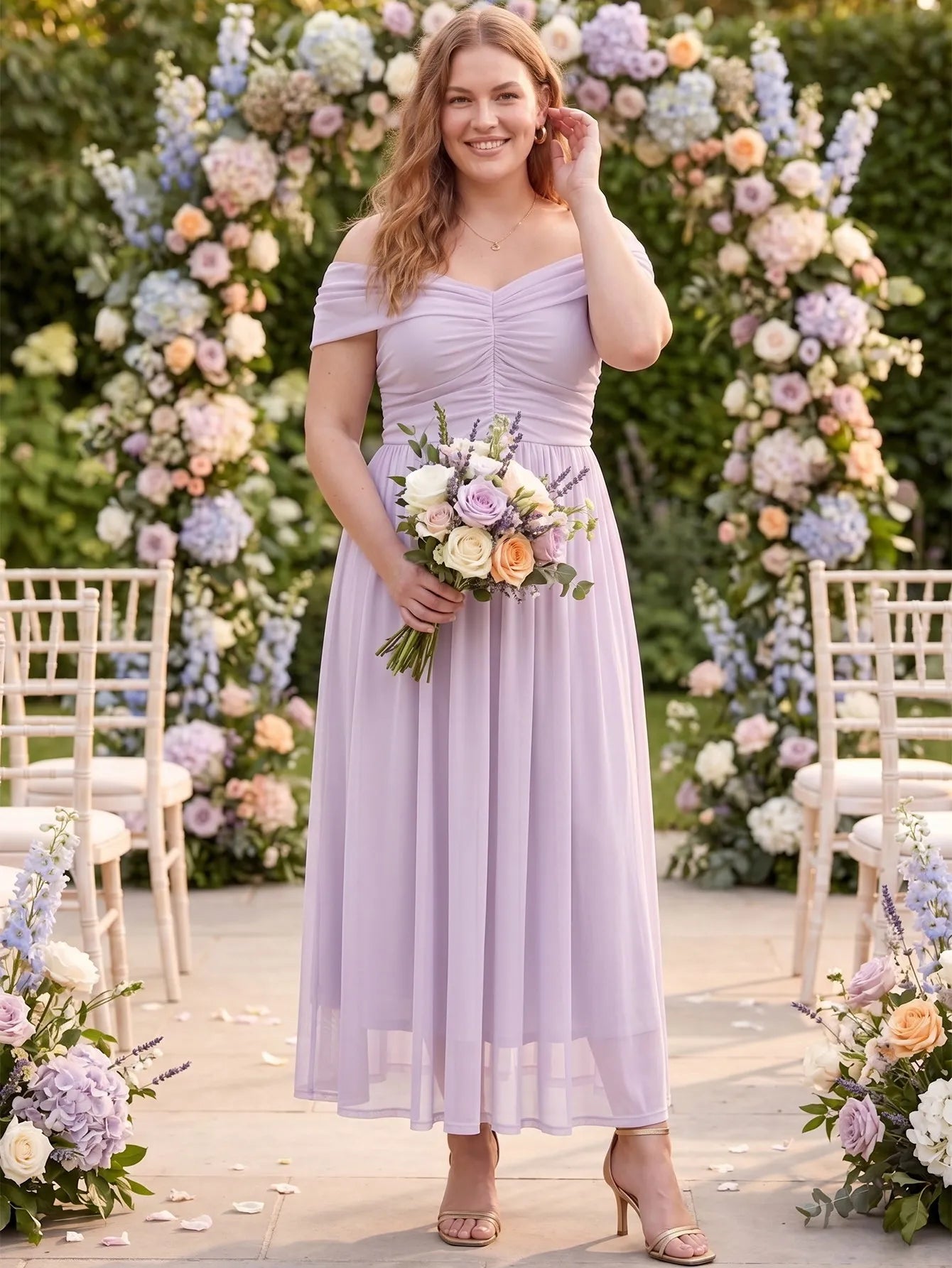
The YEESE Plus Size Mesh V-Neck Twist-Front Maxi Dress is currently offered in Burgundy, Deep Plum, Navy and Brown among its color options.
YEESE also currently carries:
- Plus Size Mesh V-Neck Ruffled Long-Sleeve Dress
- Plus Size Shimmering Stretch Mesh Dress with Waist Buckle
- Plus Size Evening Dress with Mesh Stretch Fit and Pleats
This direction works particularly well if you prefer:
- Sheer or semi-sheer elements
- Layered texture
- Long sleeves
- More contemporary evening styling
Explore YEESE Plus-Size Dresses
Always check the individual product page before ordering for current sizing, lining, fabric composition, stretch, colors and care information.
Fabric Decision Checklist
If you are still deciding between satin, chiffon and mesh, ask:
Choose Satin If:
- I like some shine.
- I want a polished evening look.
- I prefer clearer draping and structure.
- I am comfortable with a fabric that reflects more light.
- The event is formal or evening-focused.
Choose Chiffon If:
- I want more movement.
- I prefer a softer matte finish.
- I like ruffles or flowing skirts.
- I am attending a garden, destination or daytime wedding.
- I want a dress that can transition easily between levels of formality.
Choose Mesh If:
- I like sheer details.
- I want long sleeves without a completely opaque look.
- I enjoy layered texture.
- Stretch is important and the specific garment provides it.
- I want a modern evening or wedding guest look.
If several boxes apply to more than one fabric, that is completely normal.
At that point, compare the actual dresses rather than trying to choose a fabric in isolation.
Frequently Asked Questions
Is satin or chiffon better for a wedding guest dress?
Both can work. Satin usually creates a smoother, more polished and light-reflective look, while chiffon is softer, more matte and more fluid. Choose according to the venue, dress code and overall design rather than assuming one fabric is always more appropriate.
Is chiffon more formal than mesh?
Not necessarily. Both can be formal depending on the dress. A chiffon maxi and a layered mesh maxi may both work for a formal wedding, while simpler versions of either fabric may be suitable for less formal events.
Is satin appropriate for a wedding guest?
Yes. Satin can be an excellent wedding guest fabric, particularly for formal and evening celebrations. Pay attention to the color, silhouette and dress code.
Is chiffon good for an autumn wedding?
Yes. Chiffon is not limited to summer. Burgundy, deep plum, navy and other deeper colors can work very well for autumn, especially with longer sleeves or an appropriate outer layer.
Is mesh suitable for a formal wedding?
Yes. A lined mesh maxi or refined long dress can work for many formal weddings. Consider length, transparency, construction and the exact dress code.
Which fabric is least transparent?
Satin is generally more opaque than chiffon and mesh, but the actual garment, color and lighting matter. Chiffon and mesh often rely on lining for coverage.
Which fabric has the most stretch?
There is no universal answer. Stretch depends on fibre composition and garment construction. Mesh sometimes contains elastane, while some satin or chiffon blends can also provide flexibility. Always check the individual product description.
Which fabric is best for dancing?
If you enjoy a flowing skirt, chiffon often provides particularly visible movement. However, comfort depends on fit, length and construction. A well-designed mesh or satin dress can also be comfortable for dancing.
Is satin bad for plus-size women?
No. Satin reflects more light than matte fabrics, but that does not mean plus-size women should avoid it. The more useful considerations are fit, comfort, construction and whether you like the visual effect.
Should plus-size women choose chiffon instead of satin?
Only if they personally prefer chiffon. There is no body-size rule that makes chiffon automatically better than satin. They simply produce different finishes and movement.
Final Takeaway
Satin, chiffon and mesh do different jobs.
Satin brings polish and light.
Chiffon brings softness and movement.
Mesh brings texture and layered transparency.
None of them is automatically the best fabric for a plus-size dress.
And none should be ruled out because of traditional ideas about which fabrics make a body look smaller.
Start with the event.
Think about the dress code, venue and weather.
Then look at the actual garment:
- How is it lined?
- Does it stretch?
- Where does the waist sit?
- Can you move your arms?
- What happens when you sit?
- How does the fabric look in different lighting?
- Do you enjoy the way it moves?
If you want a smooth, polished evening look, satin may be your answer.
If you want a lighter dress with plenty of movement, chiffon may make more sense.
If you prefer transparent details, layered texture and a more contemporary effect, mesh may be the better direction.
The best fabric is ultimately the one that allows the entire dress—fit, movement, coverage and style—to work for the occasion and for you.